

Zoo Stock Species and the Red List
Zoo Stock Species and the Red List
Zoo Stock

This indicates that the species is included in the Second Zoo Stock Plan, which was formulated by the Tokyo Metropolitan Government in 2018. The plan sets goals for the next 10 years in three areas: "species conservation," "contribution to wildlife conservation," and "environmental education and conservation awareness." 124 animal species are included.
What is the Red List?
Based on scientific research, this is a list of wildlife classified by rank (category) indicating the degree of risk of extinction.
Livng Things Encyclopedia shows the categories (mainland and islands) assessed by the IUCN (International Union for Conservation of Nature) at the global level, the Ministry of the Environment for Japan, and the Tokyo Metropolitan Government for Tokyo.
The higher the category in each table, the higher the risk of extinction, and CR, EN, and VU are the three categories known as "endangered species." In Tokyo, species that are not at the NT (near threatened) level but are relatively rare are considered "species of concern."
|
IUCN categories |
|
|---|---|
|
EX |
extinction |
|
EW |
Extinction in the wild |
|
CR+EN |
— |
|
CR |
Serious crisis |
|
EN |
crisis |
|
VU |
emergency |
|
NT |
Near Threatened |
|
LC・○ |
Low Concern |
|
DD |
Data shortage |
|
LP |
— |
|
Japan (Ministry of the Environment) Category |
|
|---|---|
|
EX |
extinction |
|
EW |
Extinction in the wild |
|
CR+EN |
Endangered species |
|
CR |
Critically Endangered |
|
EN |
Endangered species |
|
VU |
Endangered species |
|
NT |
Near Threatened |
|
LC・○ |
— |
|
DD |
Lack of information |
|
LP |
Endangered |
|
Tokyo Category |
|
|---|---|
|
EX |
extinction |
|
EW |
Extinction in the wild |
|
CR+EN |
Endangered species |
|
CR |
Critically Endangered |
|
EN |
Endangered species |
|
VU |
Endangered species |
|
NT |
Near Threatened |
|
LC・○ |
Unranked |
|
DD |
Lack of information |
|
LP |
Endangered |
Creatures at Ueno Zoo
Creatures at Ueno Zoo

Ural Owl
Ural Owl
Strix uralensis
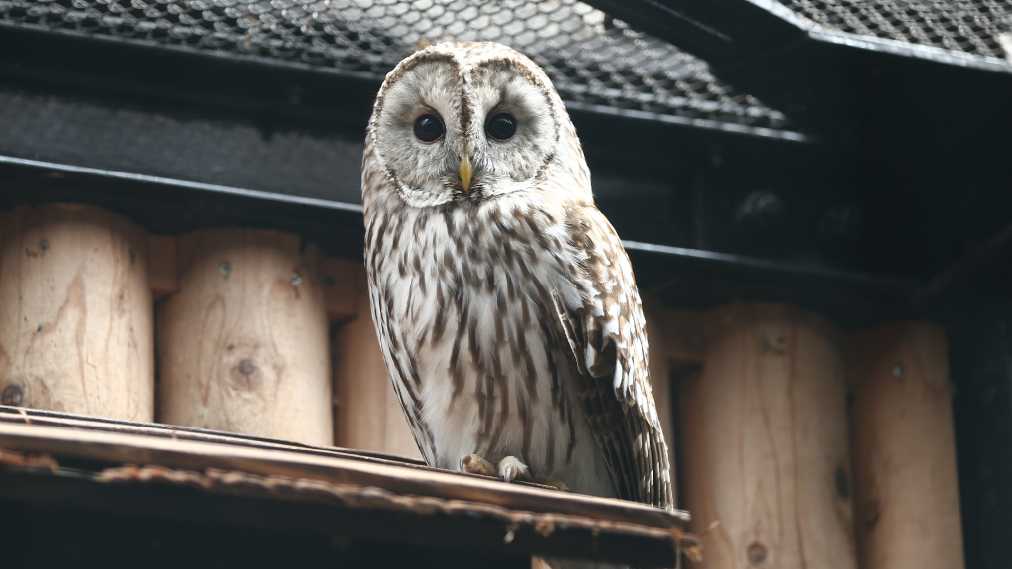
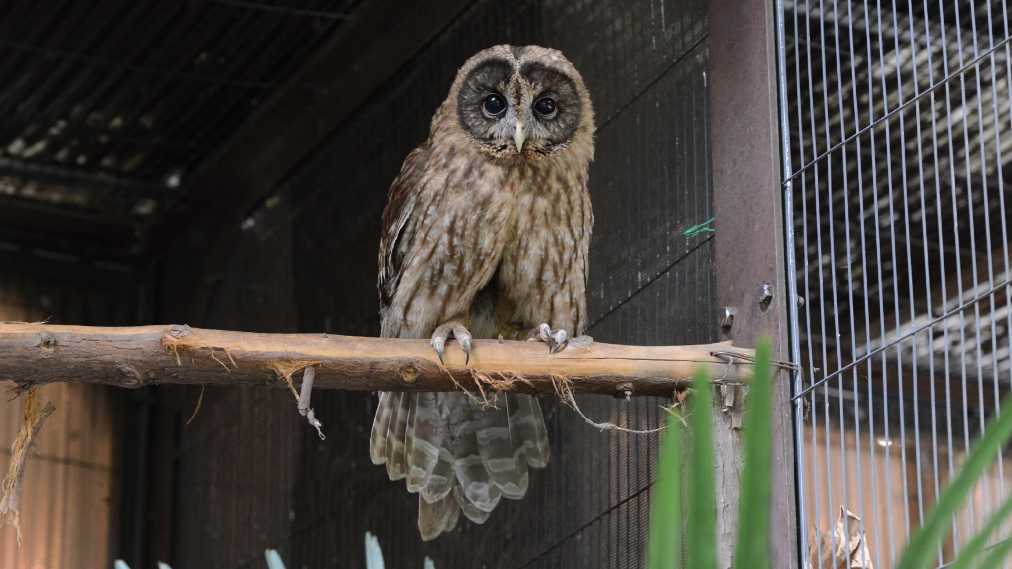
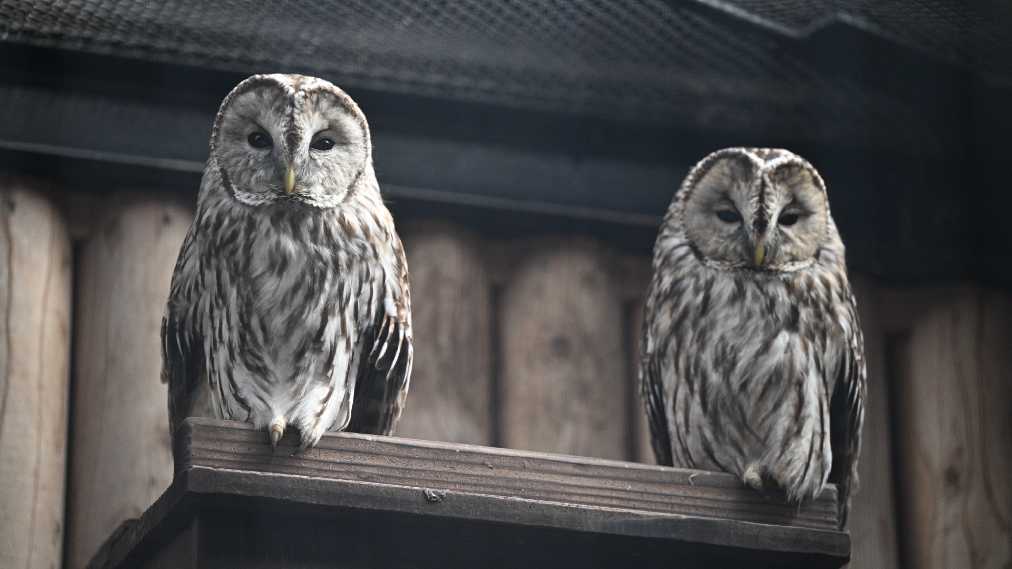
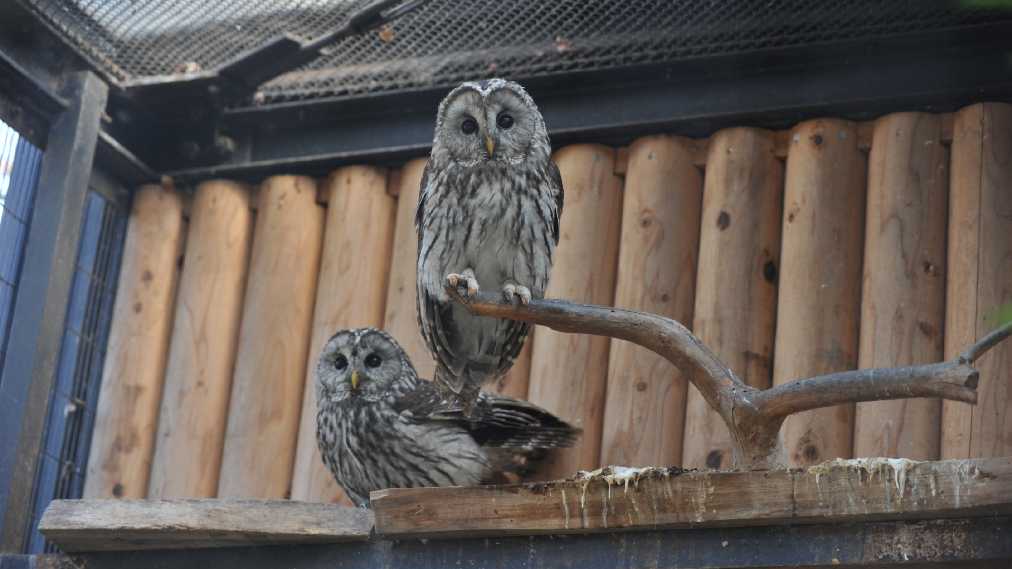
They are birds of prey that live in forests. Their plumage is a mixture of white and brown, allowing them to blend in with the trees. They build their nests in tree hollows, and single-male pairs raise their young. They rest during the day, and often fly around in the evening and at night in search of mice and small birds to eat. When they spot prey, they swoop down from directly above to grab it.
| classification | Class Aves, Order Ural Owl, Family Ural Owl |
|---|---|
| English name | Ural Owl |
| distribution | Japan, Eurasia |
| Residence | Forests from flatlands to mountains |
| Size |
Total length: approx. 50cm
|
| food | Mice, birds, insects, etc. |
| Red List |
IUCN: LC (Least Concern)
Tokyo: EN (Endangered) |
Feathers for silent hunting
Ural Owl' feathers have small jagged edges like sawtooth called "serrated leading edges." These edges effectively deflect wind that hits the feathers, reducing the sound of their wings. This allows Ural Owl to sneak up on their prey quietly and hunt effectively.
In recent years, the quietness of Ural Owl wings has attracted attention, and the structure of their wings has been applied to bullet trains and drones.