

A story about the food at Small Mammal House
November 22, 2026
Small Mammal House at Ueno Zoo houses a large number of small mammals, so their food is very diverse and varied. This time, we'll introduce you to the food that these Small Mammal House eat.
Small Mammal House currently houses approximately 380 animals of 32 different species. It may not seem like there are that many animals, but in fact, in addition to the animals on display, we keep many more of certain species in the back areas. This is because small animals have short life cycles, so we keep individuals of different generations at all times to ensure that the exhibit can continue even if an exhibited individual dies.
Furthermore, the animal groups (taxonomic groups) in Small Mammal House are diverse, including rodents, monkeys, herbivores, carnivores, as well as bats and anteaters, requiring the preparation of food appropriate for each animal. Let's take a look at how we consider and prepare such a wide variety of food.
Rats
This is the group with the largest number of species and individuals in Small Mammal House.
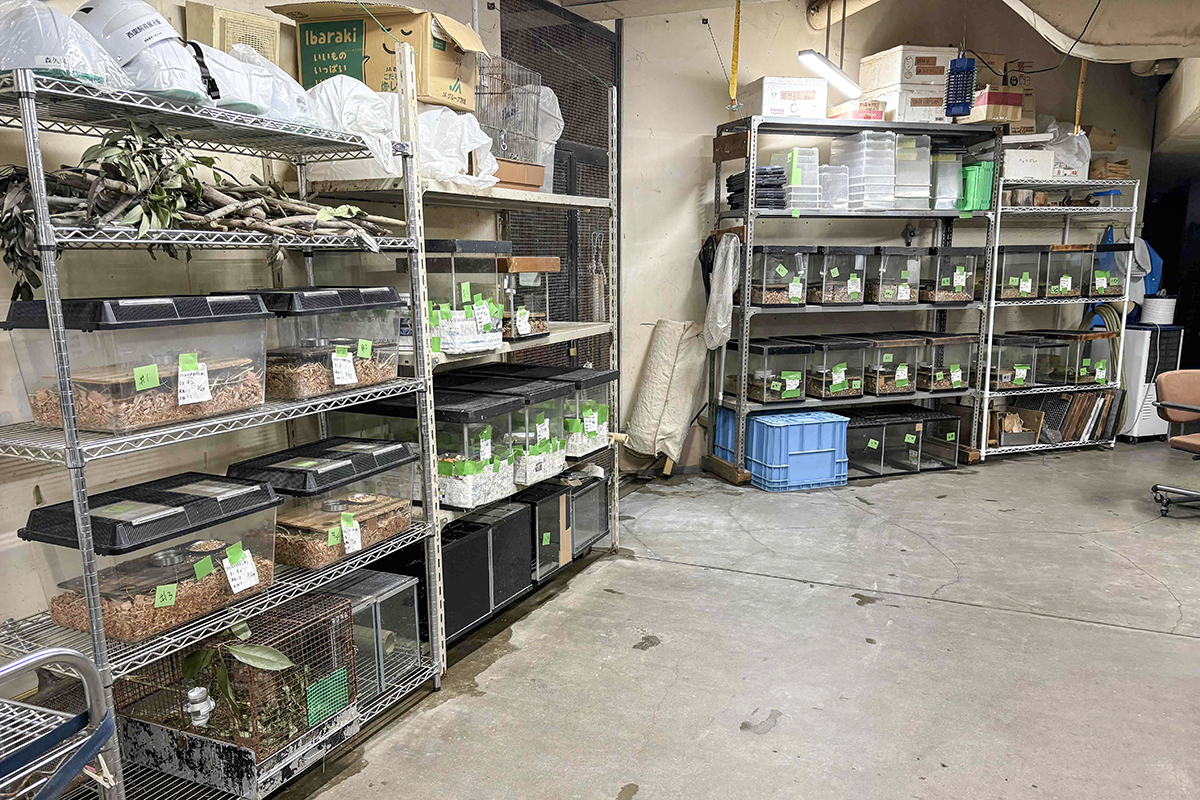
Since most rodents, such as house mice, are omnivores, their basic diet consists of a mix of various seeds, root vegetables like sweet potatoes and carrots, and insects like grasshoppers. Adjustments are then made according to the specific characteristics of each species.
For example, smaller pygmy mice are given finely chopped root vegetables and small seeds. Naked Mole-rat, which live underground, don't eat many seeds or insects, so their diet mainly consists of root vegetables. Japanese Grass Vole, which are predominantly herbivores, are given solid feed intended for rabbits, which also eat grass, rather than seeds. African dormice, which live in trees, prefer animal products such as fruits and insects to root vegetables, so their diet is more in the form of those.
As you can see, even within the rodent family, differences in size and wild habitat lead to variations in what they eat, resulting in a wide variety of food sources.
monkeys
Surprisingly, after mice, monkeys are the second most numerous species in Small Mammal House.
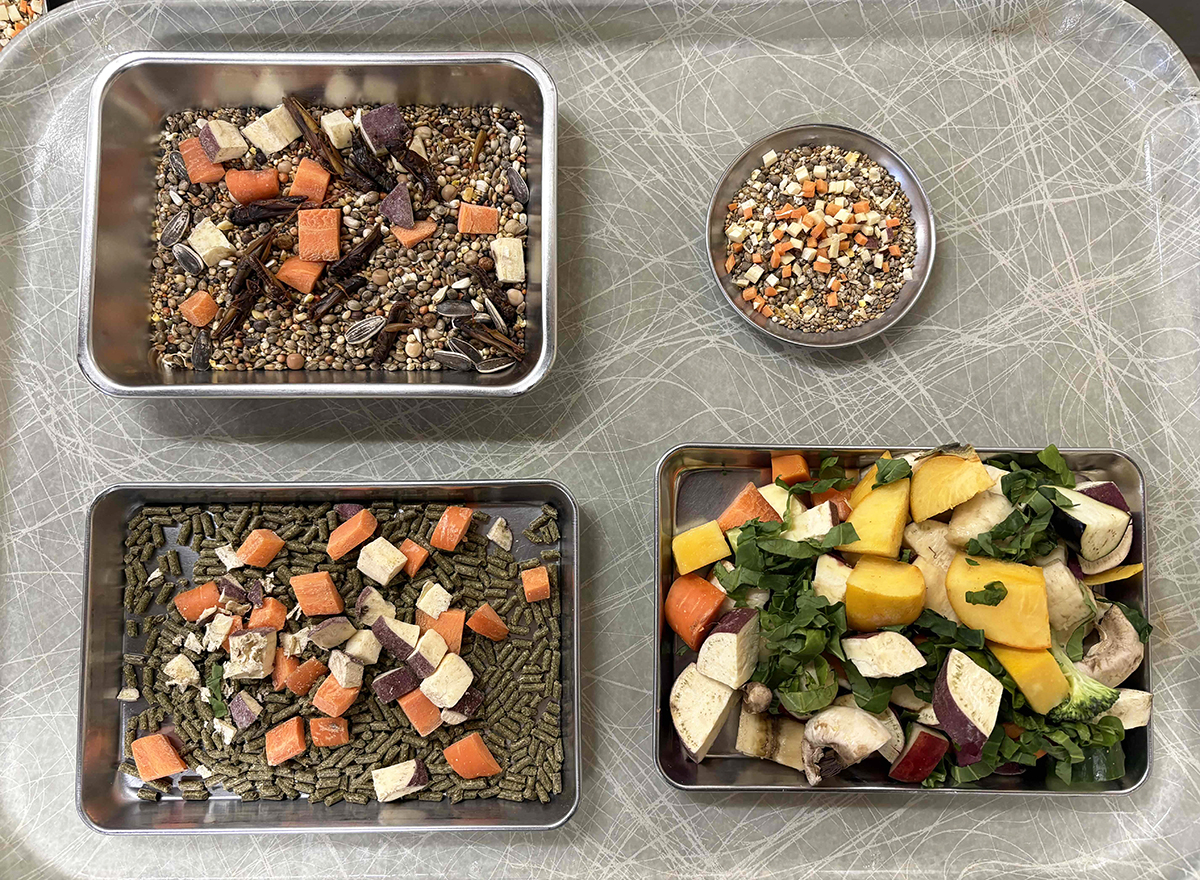
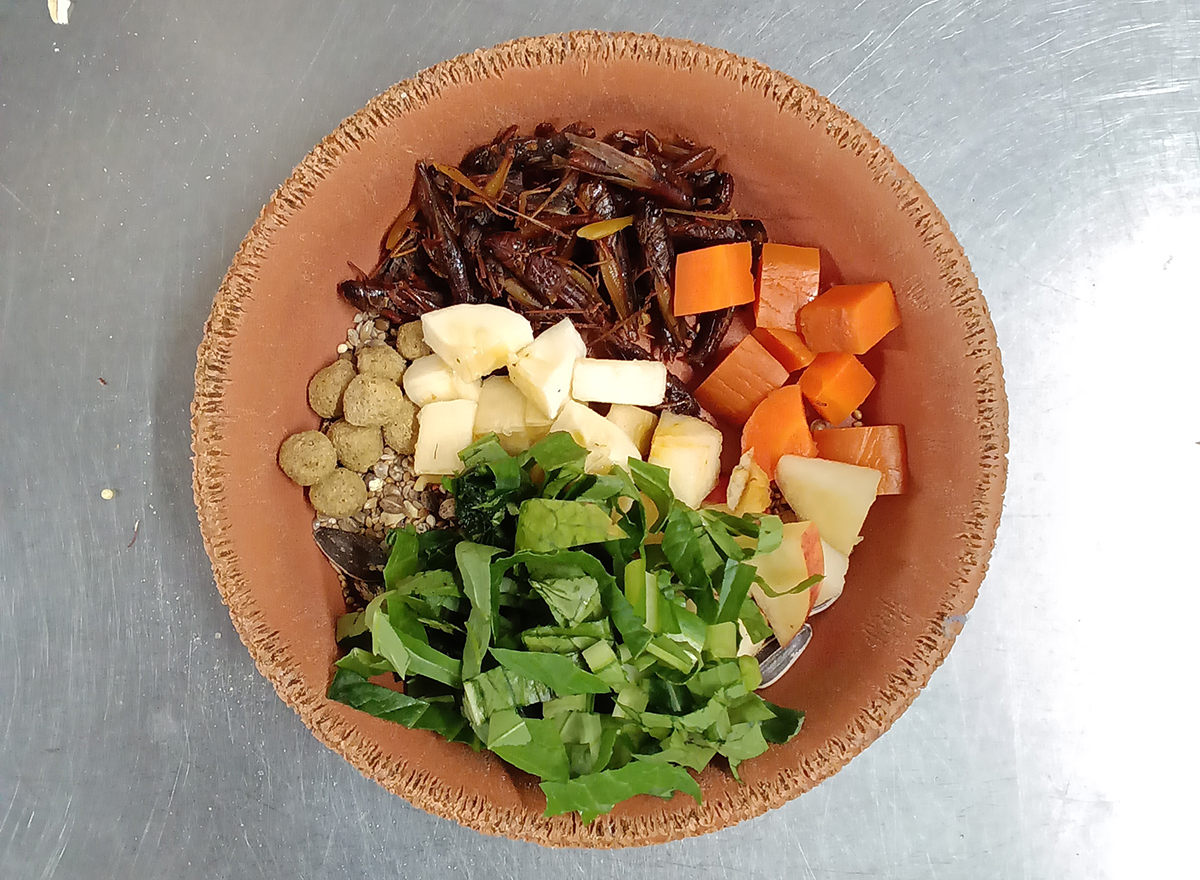
While monkeys may not be associated with small animals, common marmosets, Lesser Slow Loris, and Lesser Bushbaby are all members of the monkey family. Although these animals live in different regions, they eat similar foods. Previously, their diet consisted mainly of fruit, supplemented with solid monkey feed and insects such as grasshoppers and mealworms. However, problems such as tooth decay and obesity, which were thought to be caused by their diet, led to a review of their diet based on recent research.
In the wild, they mainly feed on tree sap and insects, with fruits making up a small portion of their diet. So, I tried giving them gum arabic, a type of tree sap, and even though it was their first time, they ate it as if they had been eating it before, so I decided to continue giving it to them.
We also added crickets to the insect diet, increasing the quantity and proportion of insects in the overall food. Furthermore, we replaced all the fruits with vegetables. This is because many of the fruits that wild animals actually eat are lower in sugar and higher in fiber than those selectively bred for human consumption, making them closer to commercially available vegetables.
After switching from sweet fruits to vegetables, their preferred foods, in the same order as in the wild, became gum arabic, insects, and then vegetables. It seems they are supplementing what they don't get from eating gum arabic and insects with vegetables. However, we believe that sweet fruits are still useful as rewards during training and when administering medication. We will need to monitor how this change progresses to see if it solves problems such as tooth decay and obesity.
When considering the contents of their diet, we also try to make it as close as possible to their natural diet in the wild.

Animals that primarily feed on ants and termites
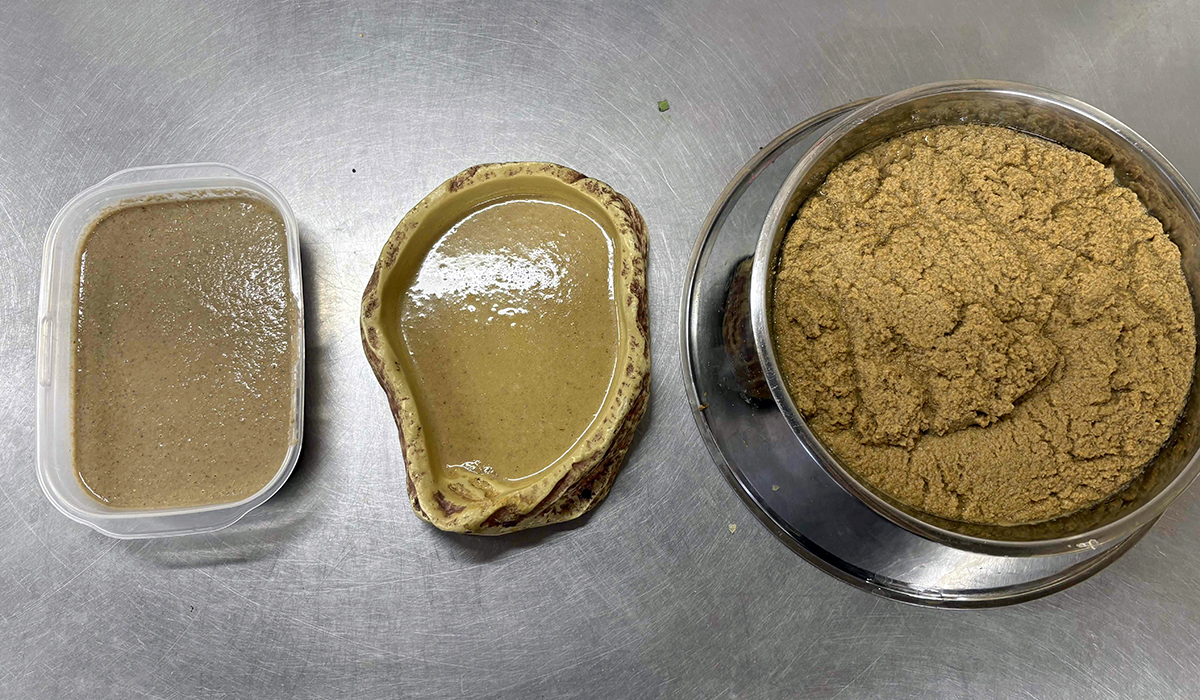
Southern tamanduas, Aardvark, Short-beaked Echidna are examples of this. These animals are said to eat tens of thousands of ants and termites a day, but since ants and termites are not commercially available as food, they have to create substitute foods. These three animals, which are completely different in terms of classification, share the same way of eating: "They stick their long, sticky tongues in and out of ant nests and lick off the ants that stick to them." Since they don't eat large things, their mouths don't open very wide, and anteaters and Short-beaked Echidna don't have teeth.
Therefore, their food must be made to be high in protein and in a paste form so that they can lick it up. Previously, we fed them a paste made by softening solid feed for carnivores with hot water and mixing it with high-protein ingredients such as minced meat and eggs. It's completely different from ants, but once they recognize it as food, they lick it up cleanly. However, their stool consistency wasn't very good, so we revised that as well. Currently, we don't use minced meat or eggs, and we feed them a mixture of several powdered solid feeds dissolved in hot water, and their stool consistency has improved compared to before.
In reviewing their diet, we first researched their nutritional and energy needs using literature and other sources. Then, based on the nutritional and energy data of potential solid feeds, we calculated how much of each would provide the necessary nutrients and energy, resulting in the current feed. It's similar to how a nutritionist plans a meal menu.
For ingredients that are difficult to obtain, like ants, you have to substitute them with commonly available ingredients, and for that, you need some knowledge of nutrition.
Food is extremely important when raising animals. In zoos with a variety of animals, the best food is determined through trial and error, taking into account the ecology of each species, its natural habitat, and nutritional perspectives.
[Ueno Zoo West Garden Animal Care and Exhibition Staff]