

Inca Tern breeding season in 2025
April 5, 2026
In 2025, Inca Tern chicks were born at the "Children's Zoo STEP" in Ueno Zoo for the first time in three years.
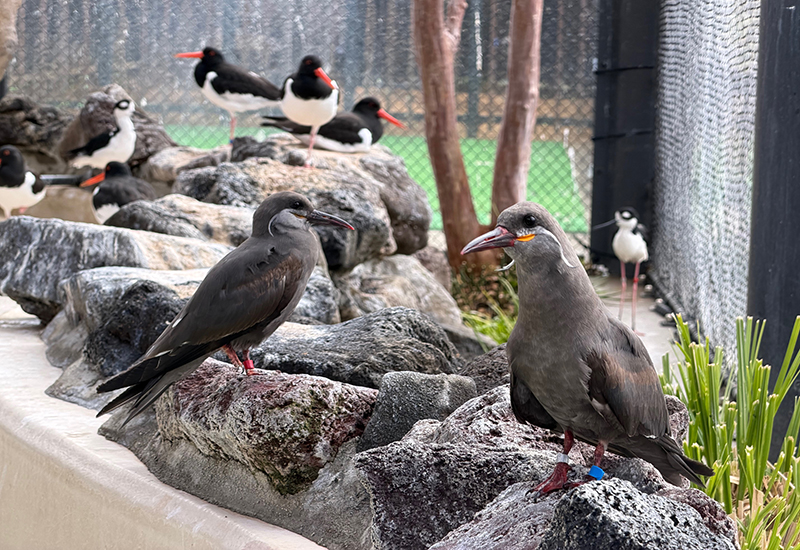
Inca Tern inhabit rocky areas along the Pacific coast from Ecuador to Chile in South America, breeding by building nests in rock crevices, gaps between rocks, or utilizing nests left by other birds. Inca Tern exhibit at Ueno Zoo is designed to mimic their habitat, with rugged artificial rocks creating a rocky environment. There are eight nesting holes here.

Inca Tern breeds from spring to summer, laying two eggs at a time. In 2025, three pairs were formed and laid eggs from early April to early May. A total of four eggs hatched from the nests of two of these pairs (two hatched on May 4th, and one each on May 12th and 14th, 2025).
For about a month after hatching, the chicks' bodies are covered in fluffy gray downy feathers. Also, the beard-like ornamental feathers that are characteristic of Inca Tern have not yet grown, and their beaks are black, not the bright red of the adults.
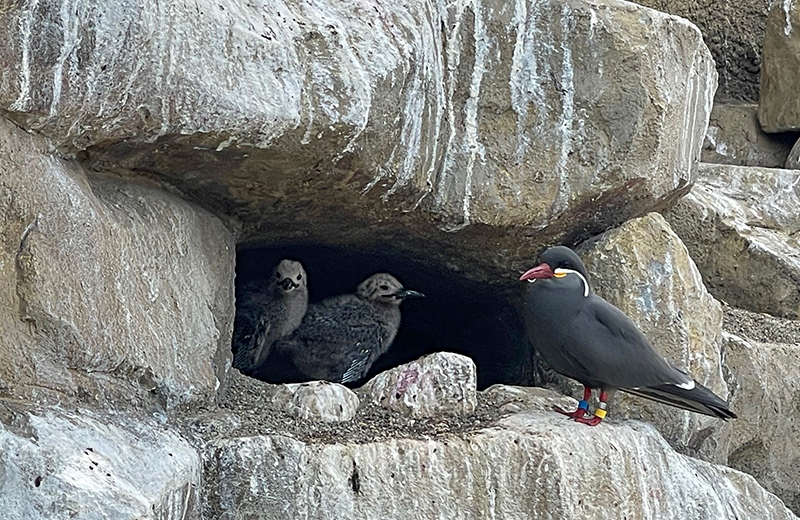
Inca Tern work in pairs, from incubation to raising their young. The parent birds divide roles, with one responsible for protecting the chicks and the other for bringing food. They sometimes switch roles, making numerous trips between the food dish and the nest to feed their chicks.
The chicks eat the same food as their parents right after hatching. At Ueno Zoo, they are given sardines, krill, and solid feed for Crested Ibis, but the parent birds mainly carry krill and sardines back to the nest to feed the chicks. Since the chicks swallow their food whole, animal keeper cut the larger sardines in half beforehand to make them easier for the chicks to swallow.
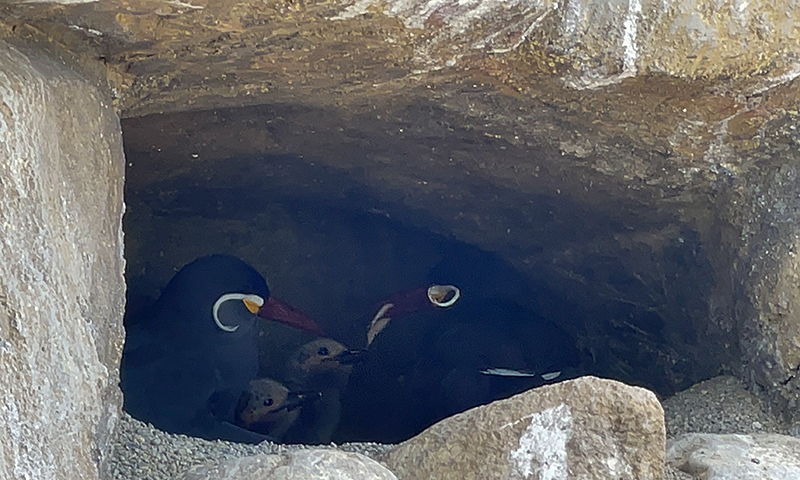
About 10 days after hatching, the chicks began peeking their heads out of the nest and chirping near the entrance, begging their parents for food. They were often seen standing on the edge of the nest, so I spent my days anxiously watching over them, worried they might fall off.
About a month after hatching, the fluffy downy feathers began to be replaced by firmer, adult-like feathers. Occasionally, they would flap their wings, appearing as if they were about to take flight.
Unfortunately, two of the four chicks that hatched died, but the remaining two grew up healthy and strong. A month and a half after hatching, we confirmed that the chicks were in a location away from the nest for the first time. At that point, we determined that they had fledged.
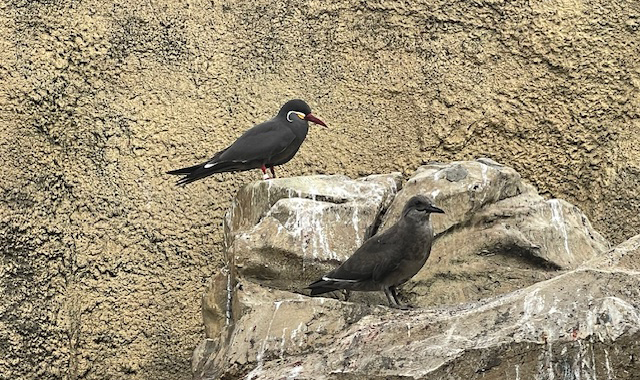
Since leaving the nest, they have increasingly begun to exhibit behaviors similar to adult birds, such as foraging for food on their own and bathing in the pool. They have become better at flying day by day, and now they can even catch sardines thrown by animal keeper while flying.
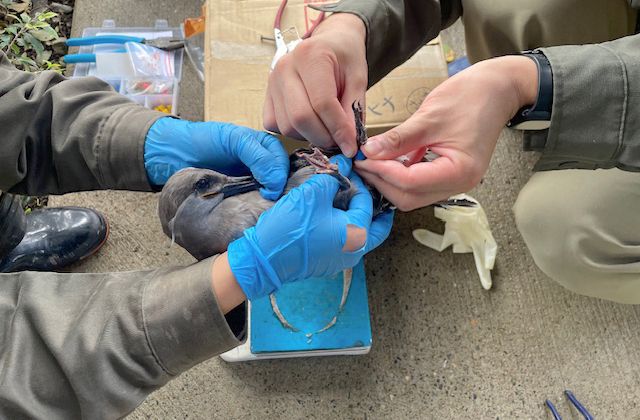
Then, in late October, we conducted the chicks' first health checkup.
The birds living in Inca Tern enclosure undergo a health checkup once a year, including weight measurements and blood tests. In addition to the health check, the chicks are fitted with leg bands and have microchips containing individual identification numbers inserted. The leg bands serve as name tags, allowing animal keeper to identify them by appearance.
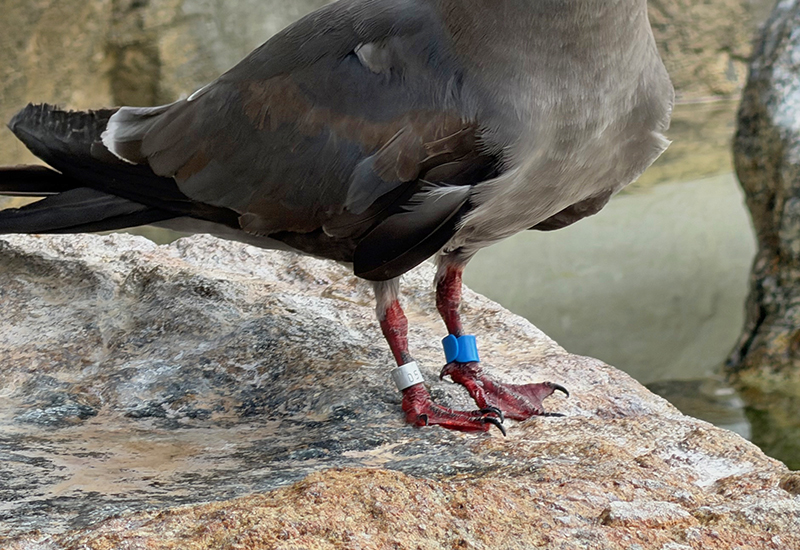
Eleven months have passed since hatching, and the chick has grown into a fine young bird. Recently, yellow skin has started to appear on its cheeks, and it's becoming clear that its appearance is gradually approaching that of an adult. It will take another year before it becomes a full-grown adult.
The adult birds began laying eggs in early March this year (2026). We are quietly watching over them, hoping that chicks will hatch again this year.
Please come visit Inca Tern enclosure to observe the young birds born last year, who are gradually becoming adults, and the adult birds, who have entered a new breeding season.
[Ueno Zoo Children's Zoo Staff]