

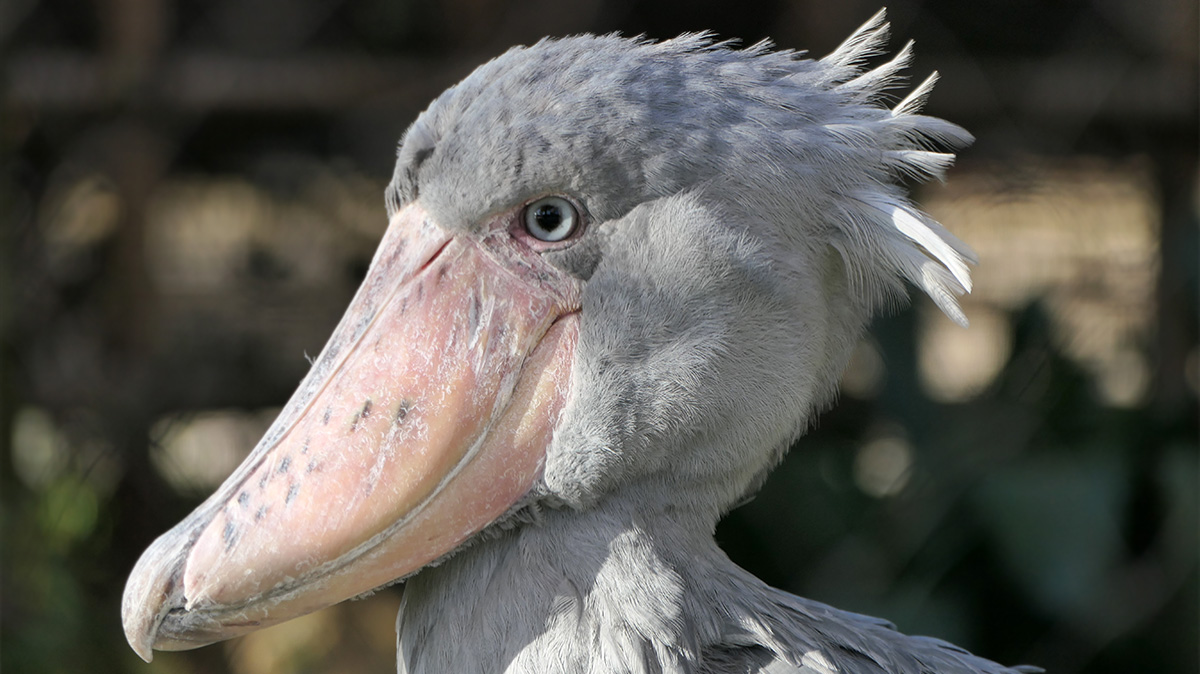
Aim to become Shoebill expert!
The "Shoebill Research Lab" is a fictional online research lab dedicated to observing and studying Shoebill. One of its goals is to increase the number of people who are dedicated to protecting the future of Shoebill.
Aim to become Shoebill expert through quizzes! You're sure to make new discoveries by observing them in person. Be sure to try observing them at Ueno Zoo!
Research topic: Let's learn the basics of Shoebill
Research topic: Let's learn the basics of Shoebill
Q1. What are you going to eat?
①Fish
② Grass
③ Fruit.
The correct answer is ① Fish.
Shoebill primarily feed on fish such as lungfish and catfish. They may also eat aquatic snakes and frogs.
At Ueno Zoo, they feed Shoebill live carp. While opportunities to see them eating are rare, try waiting patiently and observing them, just like Shoebill do.
★★★★★

Q2. Why don't they move around much?
① Because I'm sleepy
② To catch fish
③ Because it makes it harder for the enemy to spot you.
The correct answer is ② To catch fish.
Shoebill wait patiently by the water's edge for fish to come near. By remaining still, they make it harder for fish to notice them.
Let's see how long it stays still by stopping our own movements and observing!
★☆☆☆☆
Q3. Which bird species does Shoebill belong to?
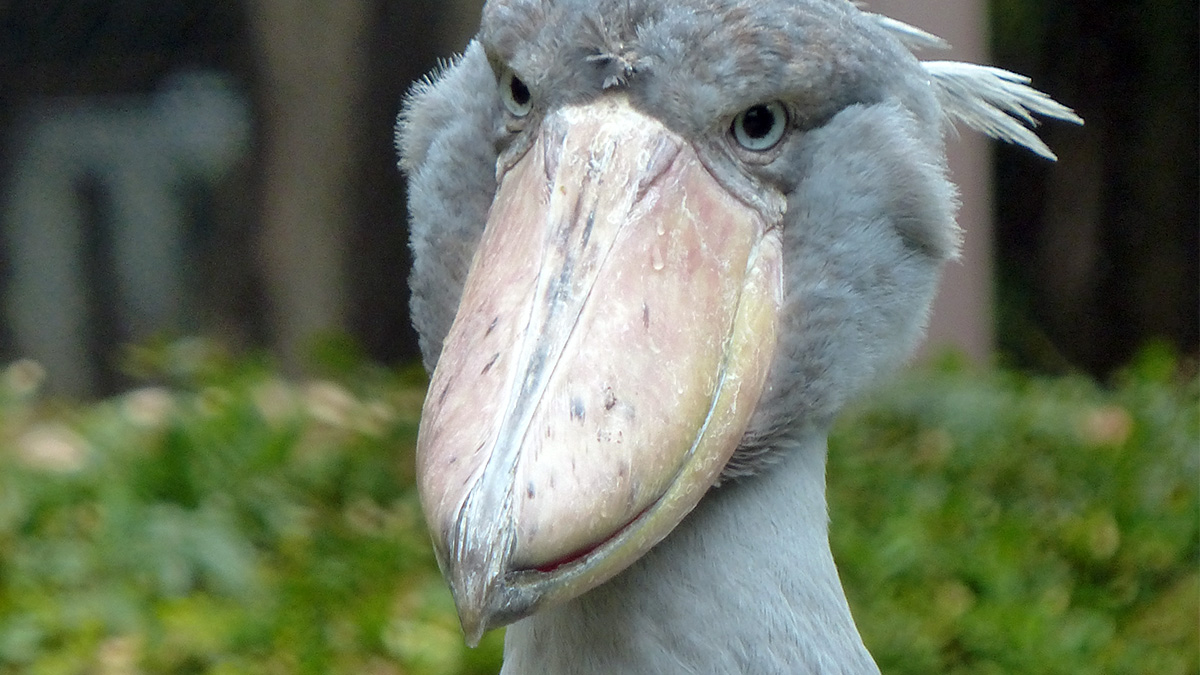
① Cranes
② Flamingo relatives
③ Pelican relatives
The correct answer is ③ a type of pelican.
When Shoebill comes near the water's surface, it quickly catches it with its broad, large beak. The tip of the beak is curved and sharply pointed, allowing it to firmly grip the fish.
Let's compare how Great White Pelican and Shoebill at Tama Zoo eat fish!
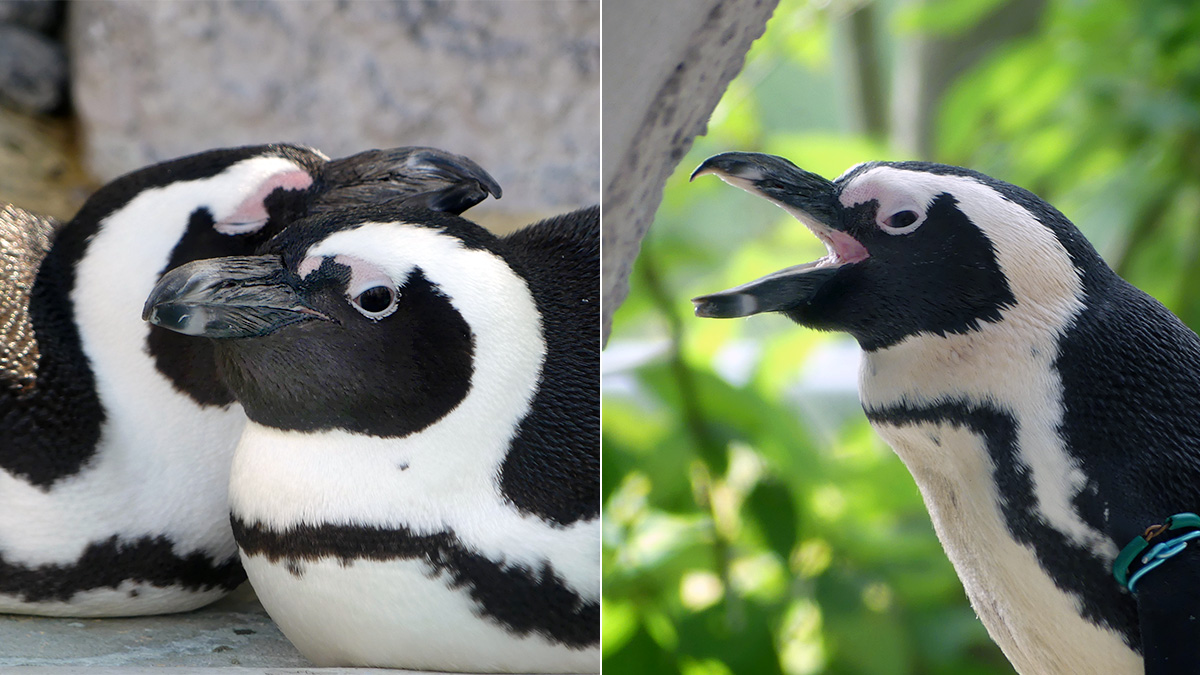
Just like Shoebill, let's observe the beaks of African Penguin, which eats fish. The tip of its upper beak is also curved and pointed, so try waiting for the moment the penguin opens its mouth.
★★★★☆
Q4. Where do you live?
①Forest
②Wetland
③Coast
The correct answer is ② Wetland.
Shoebill live in swamps and rivers with abundant aquatic plants in east-central Africa, preferring areas with many tall plants. Compared to open areas, these locations likely attract more fish and also allow them to hide from predators.
Where can you find Shoebill? Let's observe some common habitats. In reality, they are often found on land rather than in the water. They can also be seen standing in high places, such as on top of bushes.
★☆☆☆☆
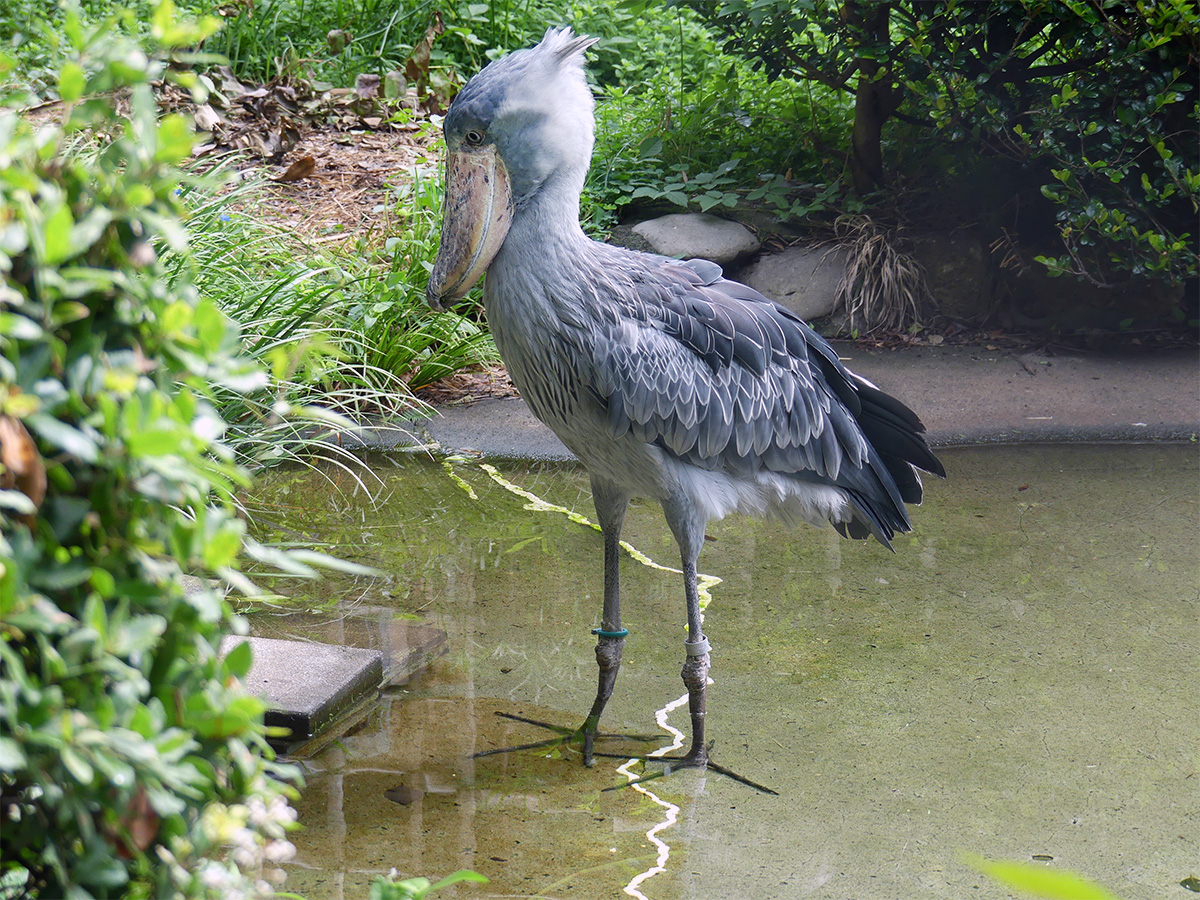
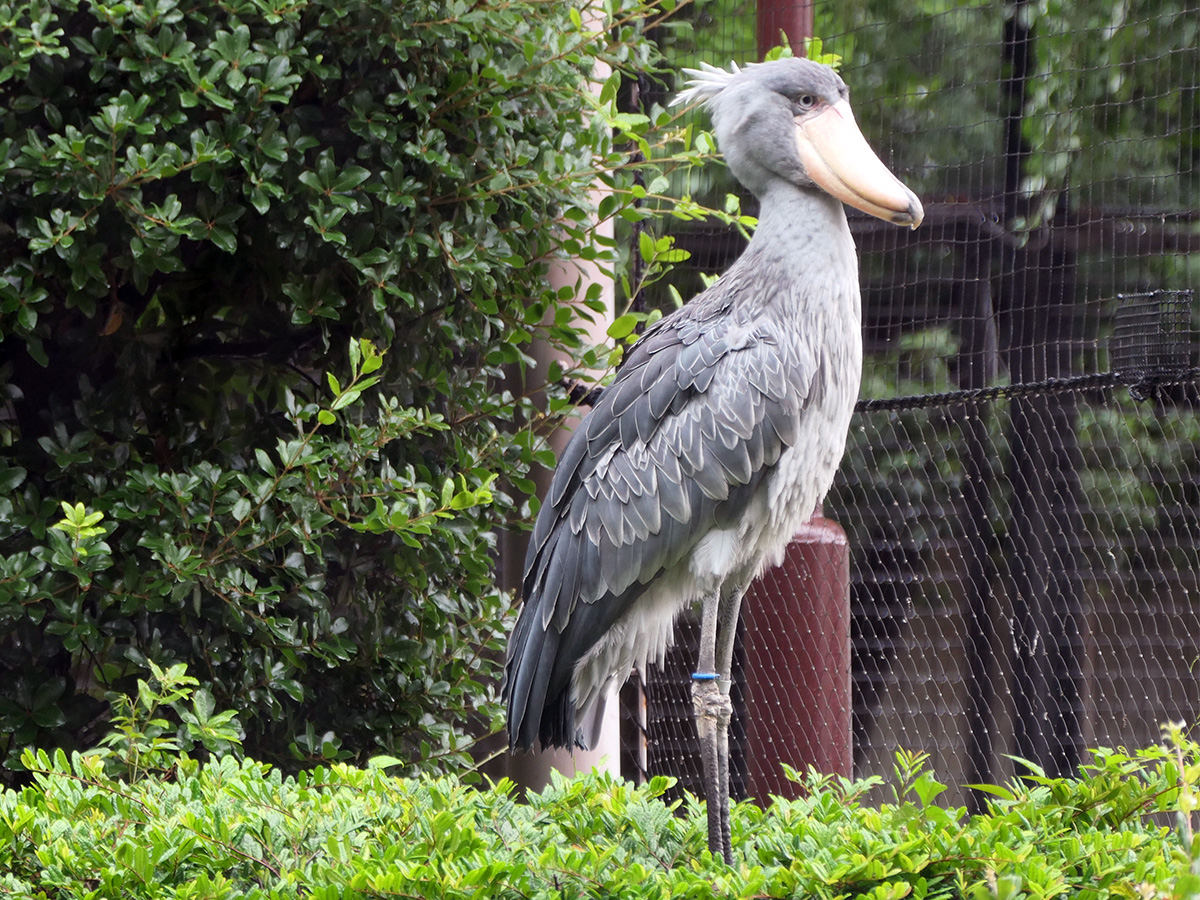
Q5. Which one is Shoebill 's foot?
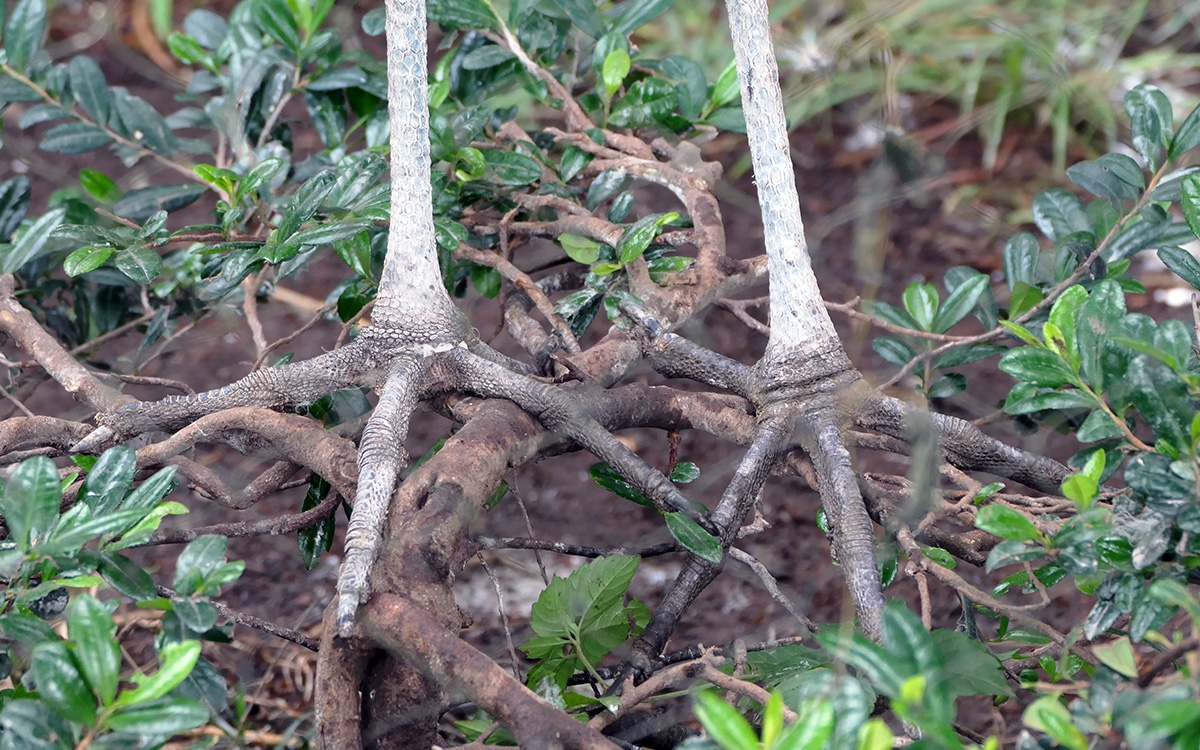
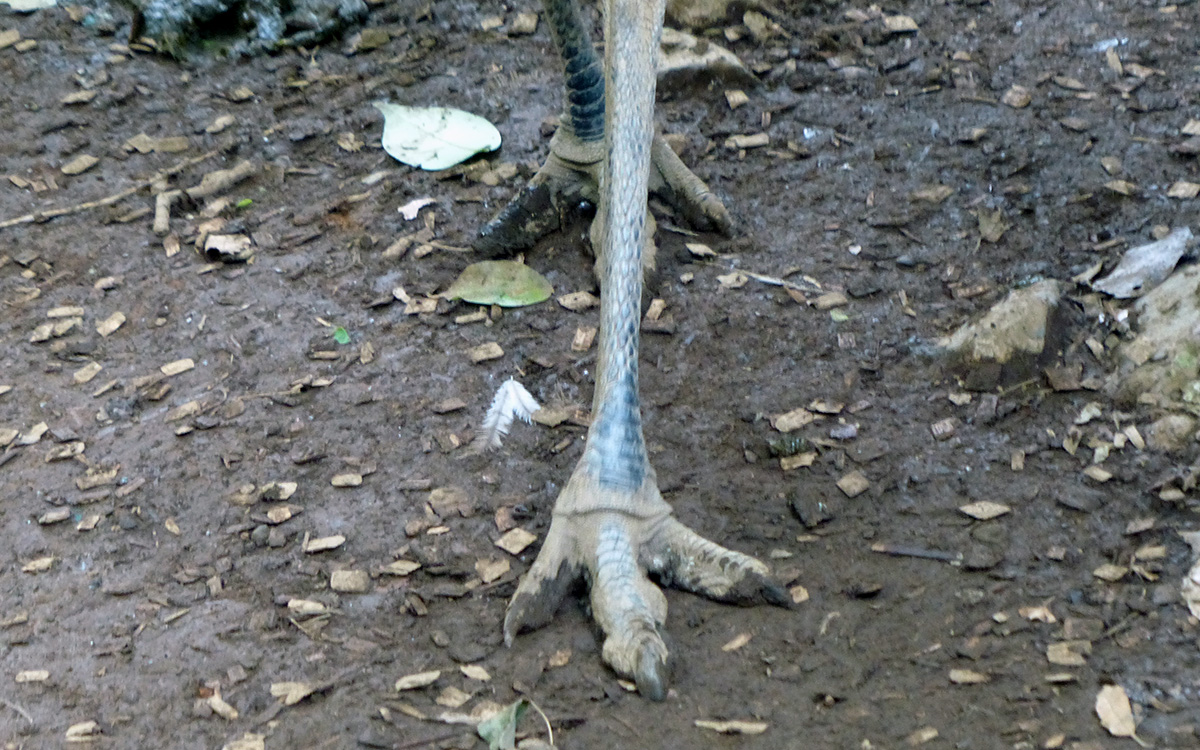
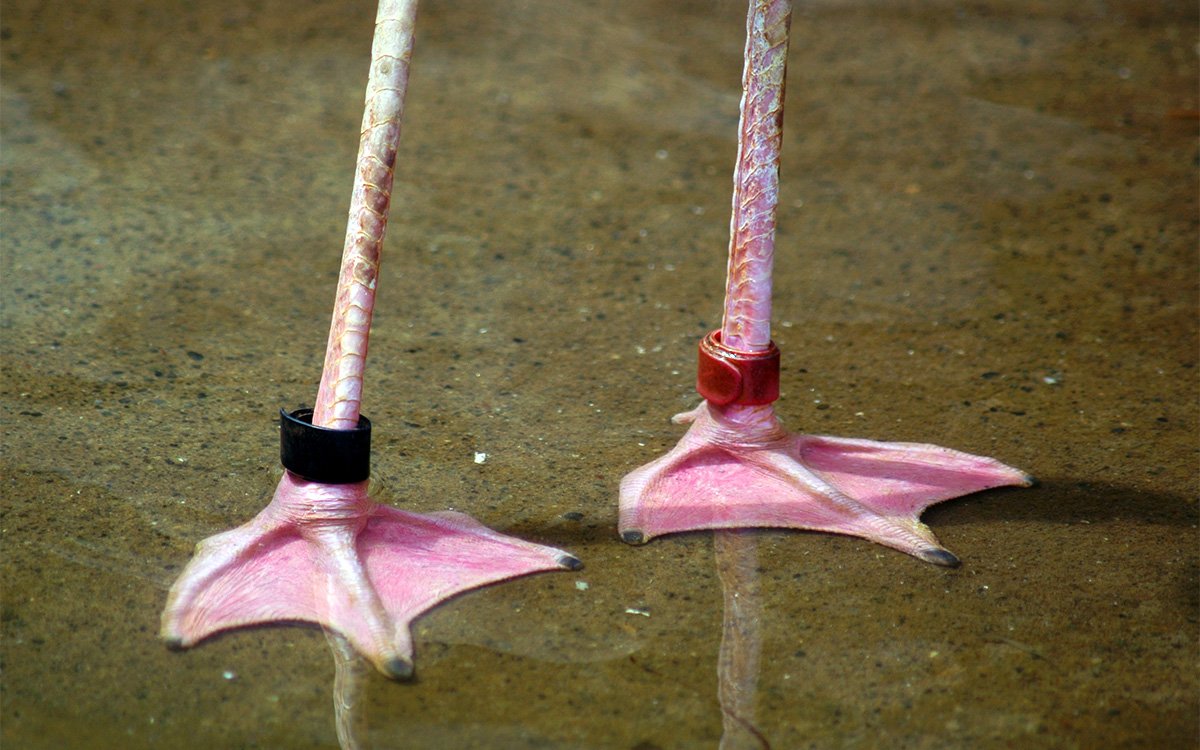
The correct answers are: ① Shoebill, ② Emu, ③ Flamingo.
They have long legs that make it easy to walk in water and through tall grass. Additionally, their four toes are very long, which prevents them from sinking easily when walking on aquatic plants or mud.
Let's observe the feet of other birds as well!
② is Emu 's foot. Emu can run at high speeds using their long, sturdy feet. The backward-facing toes have atrophied because they would get in the way when running, resulting in three toes.
③ shows a flamingo's foot. Like Shoebill, flamingos have long feet that make it easy for them to walk in shallow water, but they also have webbed feet and can swim in deeper water.
★★☆☆☆
summary
Did you learn about Shoebill? Please come and observe them in person at Ueno Zoo!
If you observe something and wonder "why?", be sure to investigate it. The more you learn, the more interesting it will become!
In the next "Researcher Course," you will focus on the life of Shoebill and learn more about Shoebill in depth.
The "Researcher" course is scheduled to begin around July 2026. Please look forward to it!
Research topic: Let's investigate the life of Shoebill!
Research topic: Let's investigate the life of Shoebill!
Q1. Many birds communicate by making noises. How do Shoebill communicate?
① to cry out
② Clapping their beaks
③ Make noise with your wings.
The correct answer is ② clapping their beaks together.
Shoebill are birds that rarely make any vocalizations, but instead they sometimes make a "clattering" sound by clicking their beaks together. This behavior is called "clattering." Clattering is used for communication between males and females, and also when defending their territory.
Let's listen to the sounds that Shoebill make with their beaks!
★★★★★
Are there any other birds that clatter? Oriental White Stork also clatter.
★★★★★
Q2. Do Shoebill form flocks? Or do they not?
① Make
② Don't make it
The correct answer is ② Don't make it.
Shoebill are generally solitary birds. While they breed in pairs, they do not form flocks. They maintain their own territories, and when other Shoebill enter their territory, they will make a clattering sound with their beaks or spread their wings to make themselves appear larger, in order to signal to the other bird that "this is my place."
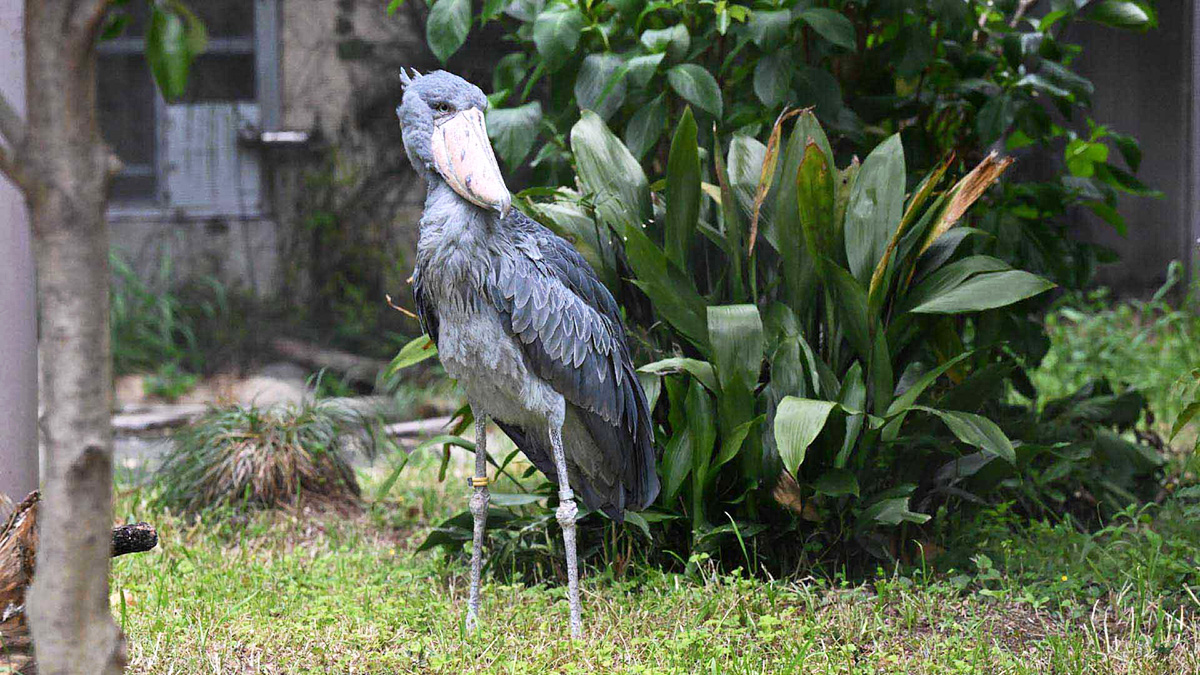
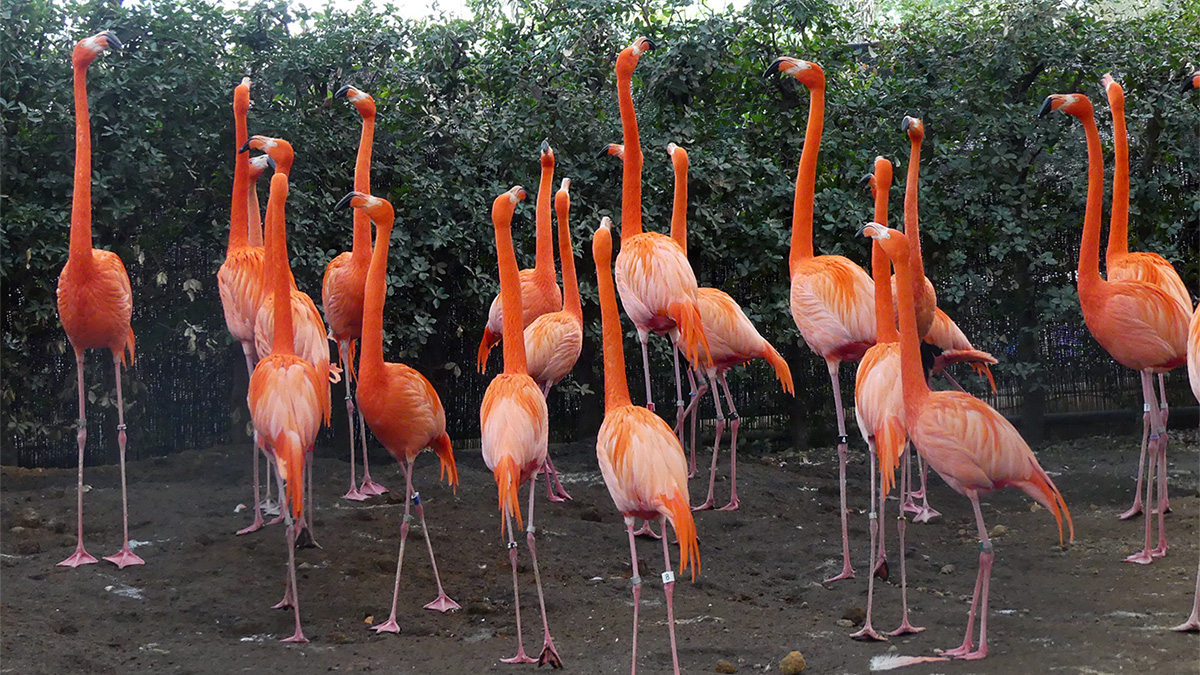
Observe other birds and investigate the differences in their lifestyles! Some bird species form flocks, while others do not. Some species also form flocks temporarily depending on the season. Ueno Zoo strives to recreate the natural lifestyles of these birds as closely as possible.
★☆☆☆☆
How are American Flamingo in West Garden doing?
How about Wattled Crane in East Garden crane enclosure?
Q3. Shoebill appear to remain perfectly still. Do they blink or not?
① do
② Do not do
The correct answer is ①.
If you observe Shoebill closely, you'll notice they blink. There are two types of blinks. One type uses a white, translucent membrane that closes from the inner corner to the outer corner of the eye. This membrane is called the "nictitating membrane." When quickly plunging their beaks into the water to catch fish, they close this nictitating membrane to protect their eyes.
Another type of blinking, like in humans, involves closing the eyelids. However, the direction in which Shoebill close is different. Humans close their eyelids from top to bottom, while Shoebill close them from bottom to top. Shoebill have feathers on their eyelids, which distinguishes their blinking from that of the nictitating membrane.
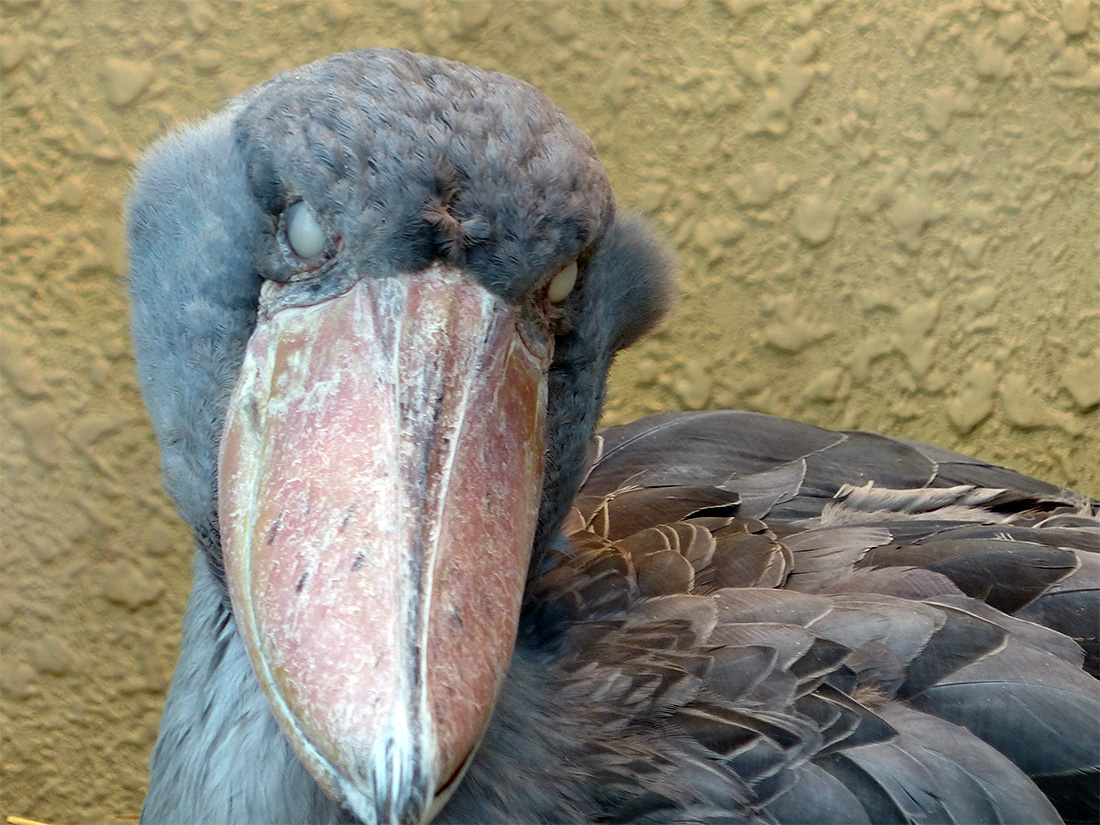
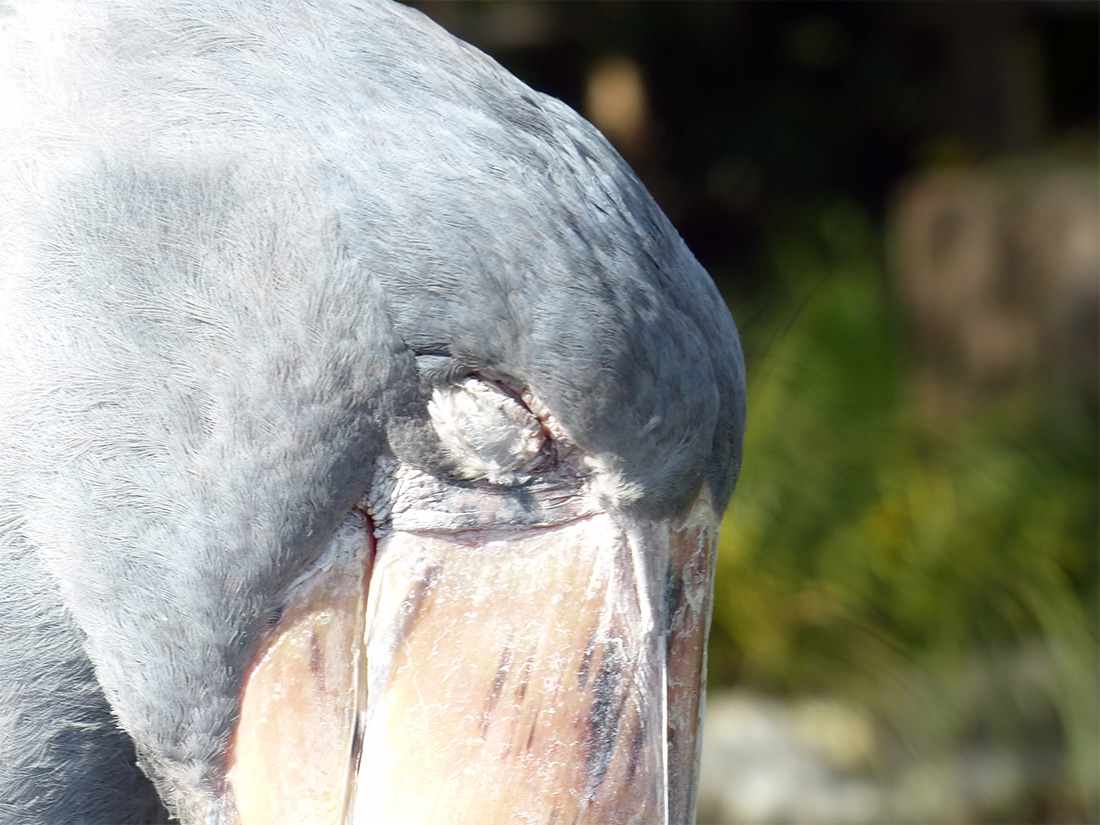
Let's observe the blinking of Shoebill! Which type of blink does it do more often?
★★☆☆☆
Q4. This photo shows the feathers of Shoebill on a rainy day. You can see that the water is beading up even when it rains. Shoebill applies something to its feathers to repel water. What is it?
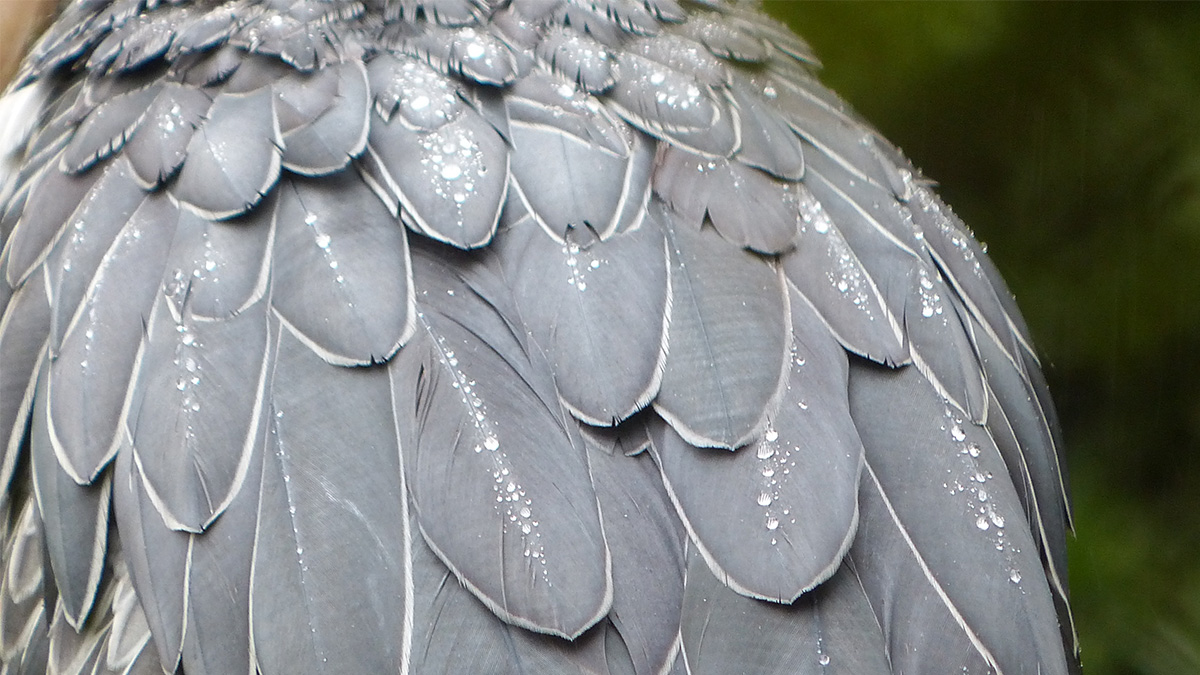
① Fat that comes out from the base of the tail
② Powder made from crushed feathers
③ The oil from the fish used as bait
The correct answer is ② the powder made from crushed feathers.
Shoebill have a special type of feather called "powdered down" around their waist. Powdered down is feather that gradually breaks down into powder after it grows in. First, let's watch a video of Shoebill preening its feathers!
When Shoebill preen their feathers, they rub their beaks and heads against their lower backs, coating their feathers with this powder. This powder helps repel water and dirt.
Let's watch the experiment video!
Besides Shoebill, other birds such as pigeons and herons use powdered down feathers. On the other hand, many birds coat their feathers with oil secreted from glands at the base of their tails.
Let's observe other birds preening their feathers too! Where do they rub their beaks?
★★☆☆☆
Q5. Shoebill 's wingspan can reach approximately 2.5 meters. Can Shoebill fly? Or not?
① Can fly
② Cannot fly
The correct answer is ① It can fly.
Shoebill can fly. When searching for fish to eat, they not only walk but also spread their large wings and fly. They can also use updrafts to circle in the sky. You can see them spreading their wings and flying short distances at zoos.
Let's wait until it flies and then observe it.
★★★★★
You might be able to see them flying in the large enclosure on the flamingo side!
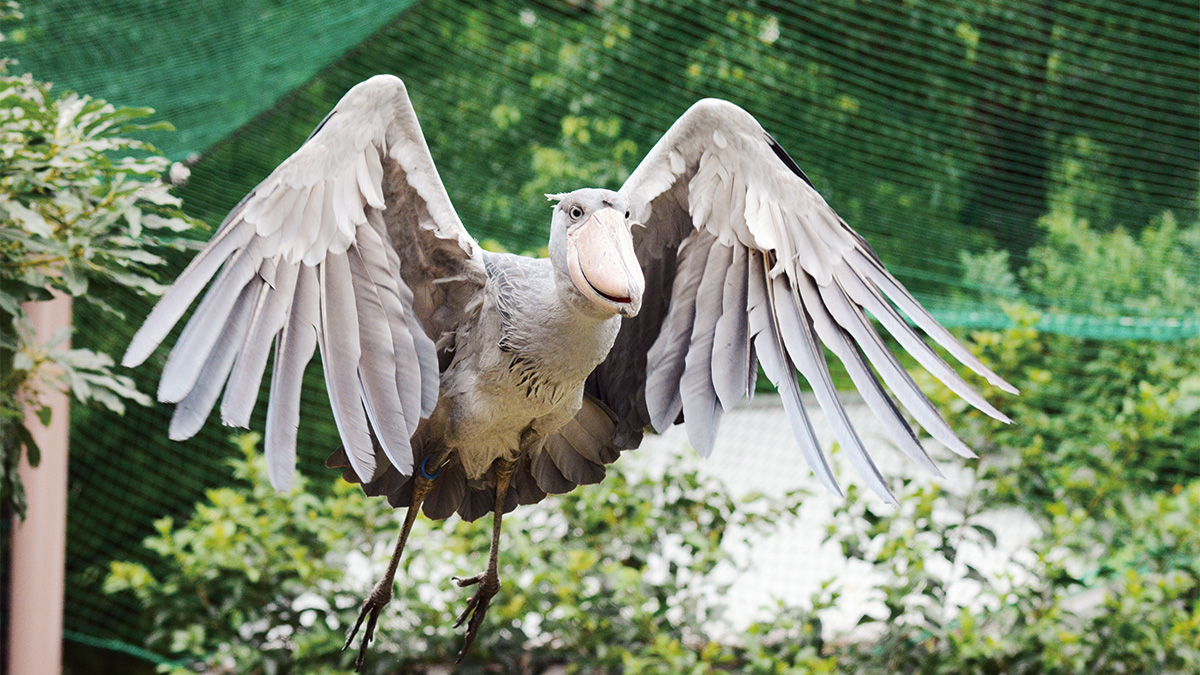
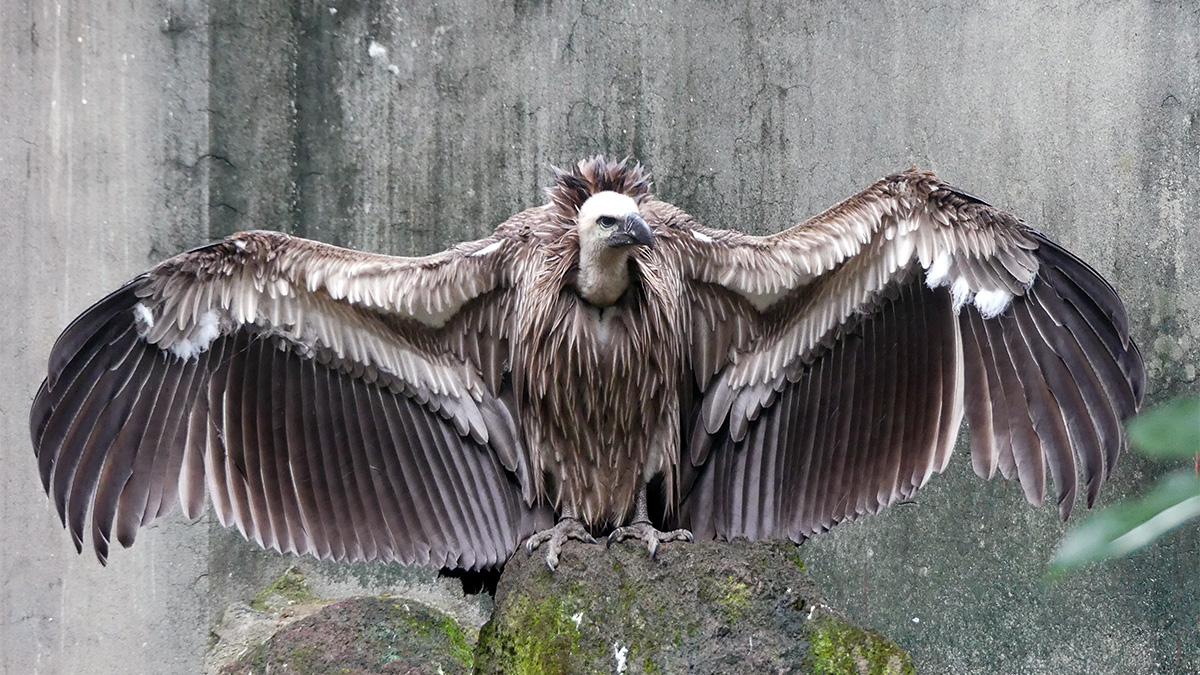
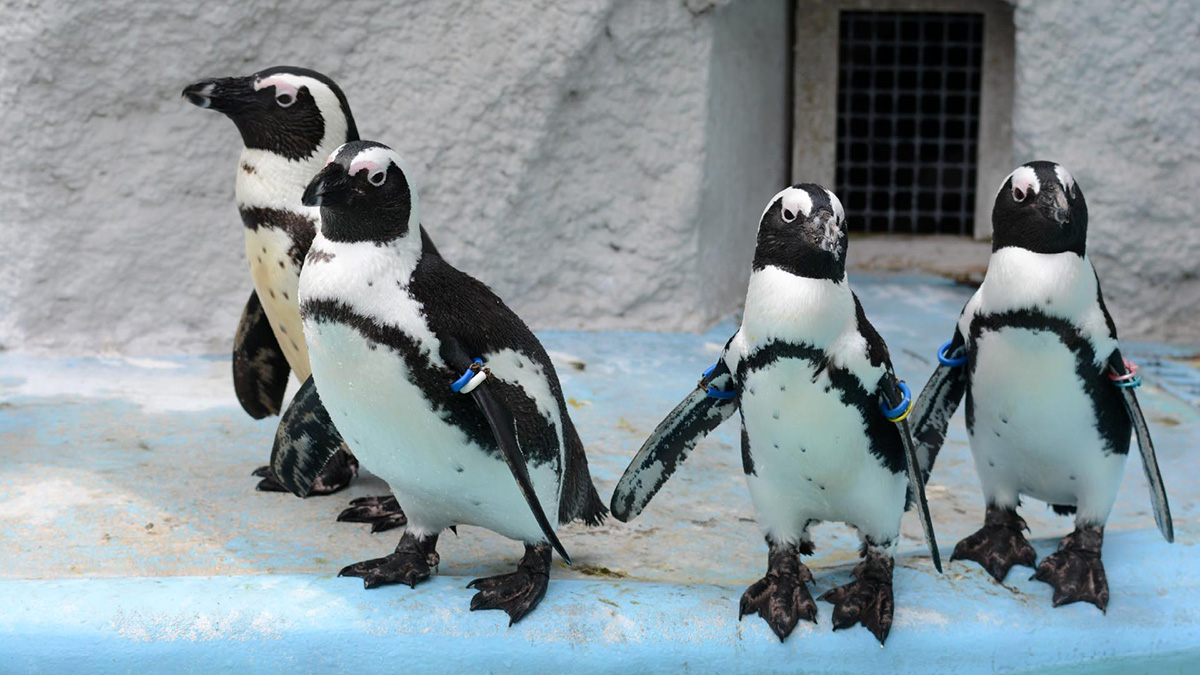
Let's compare the wings of flying birds (like Shoebill) and swimming birds (African Penguin)! What are the differences in wing shape and size?
★★★☆☆
Flying birds: The wings of African White-backed Vulture in East Garden Eagle and Hawk House spread wide, which helps them to fly.
Swimming birds: African Penguin in West Garden have short, stiff wings that help them propel themselves through the water and swim.
summary
Did you make any interesting discoveries about Shoebill 's lifestyle?
The physical characteristics and behaviors of Shoebill offer many clues to understanding how they live. By observing, thinking, and researching, you can learn even more about Shoebill.
In this "Researcher Course," we explored the secrets of Shoebill 's life, but next up is the "Doctoral Course"! In the Doctoral Course, we will learn about the current situation of wild Shoebill and consider what we can do to protect Shoebill.
It's scheduled for release around November 2026. Stay tuned!
Research topic: Let's learn about the current situation of Shoebill and think about what we can do to protect them!
Research topic: Let's learn about the current situation of Shoebill and think about what we can do to protect them!
*Scheduled for release around November 2026. Please wait.