

Zoo Stock Species and the Red List
Zoo Stock Species and the Red List
Zoo Stock
This indicates that the species is included in the Second Zoo Stock Plan, which was formulated by the Tokyo Metropolitan Government in 2018. The plan sets goals for the next 10 years in three areas: "species conservation," "contribution to wildlife conservation," and "environmental education and conservation awareness." 124 animal species are included.
What is the Red List?
Based on scientific research, this is a list of wildlife classified by rank (category) indicating the degree of risk of extinction.
Livng Things Encyclopedia shows the categories (mainland and islands) assessed by the IUCN (International Union for Conservation of Nature) at the global level, the Ministry of the Environment for Japan, and the Tokyo Metropolitan Government for Tokyo.
The higher the category in each table, the higher the risk of extinction, and CR, EN, and VU are the three categories known as "endangered species." In Tokyo, species that are not at the NT (near threatened) level but are relatively rare are considered "species of concern."
|
IUCN categories |
|
|---|---|
|
EX |
extinction |
|
EW |
Extinction in the wild |
|
CR+EN |
— |
|
CR |
Serious crisis |
|
EN |
crisis |
|
VU |
emergency |
|
NT |
Near Threatened |
|
LC・○ |
Low Concern |
|
DD |
Data shortage |
|
LP |
— |
|
Japan (Ministry of the Environment) Category |
|
|---|---|
|
EX |
extinction |
|
EW |
Extinction in the wild |
|
CR+EN |
Endangered species |
|
CR |
Critically Endangered |
|
EN |
Endangered species |
|
VU |
Endangered species |
|
NT |
Near Threatened |
|
LC・○ |
— |
|
DD |
Lack of information |
|
LP |
Endangered |
|
Tokyo Category |
|
|---|---|
|
EX |
extinction |
|
EW |
Extinction in the wild |
|
CR+EN |
Endangered species |
|
CR |
Critically Endangered |
|
EN |
Endangered species |
|
VU |
Endangered species |
|
NT |
Near Threatened |
|
LC・○ |
Unranked |
|
DD |
Lack of information |
|
LP |
Endangered |
Creatures at Ueno Zoo
Creatures at Ueno Zoo
Leschenault's Rousette
Leschenault's Rousette
Rousettus leschenaultii
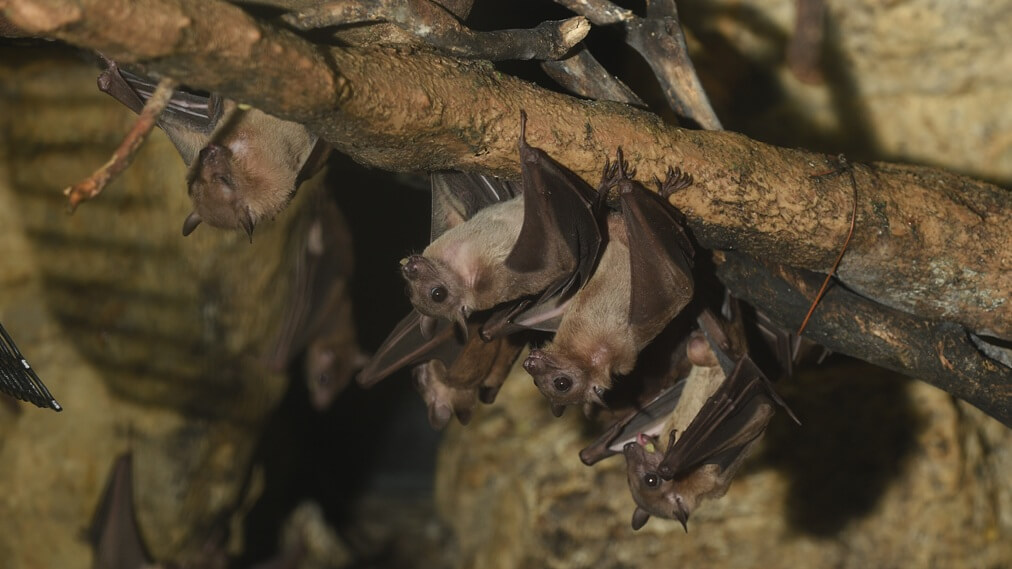
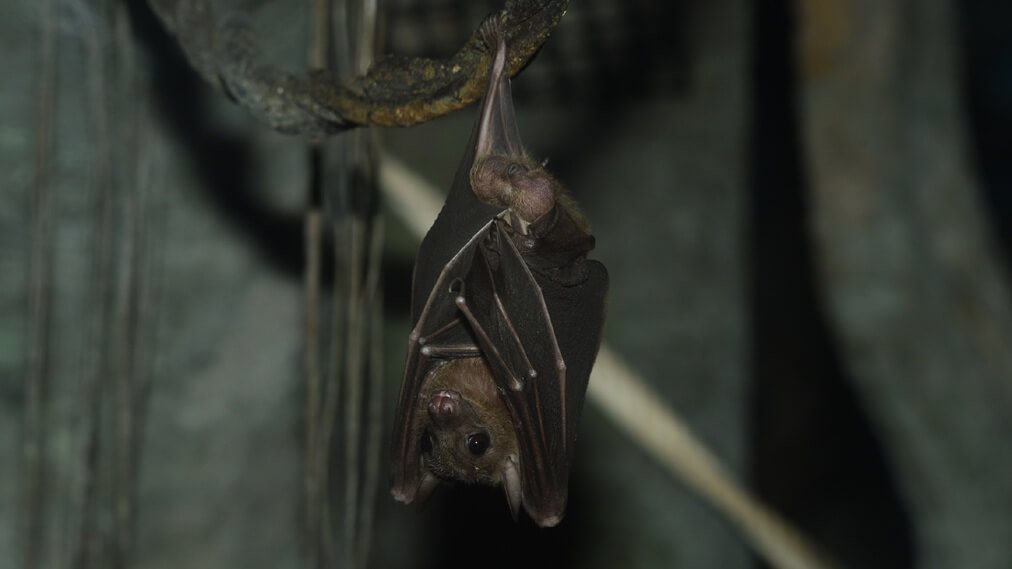
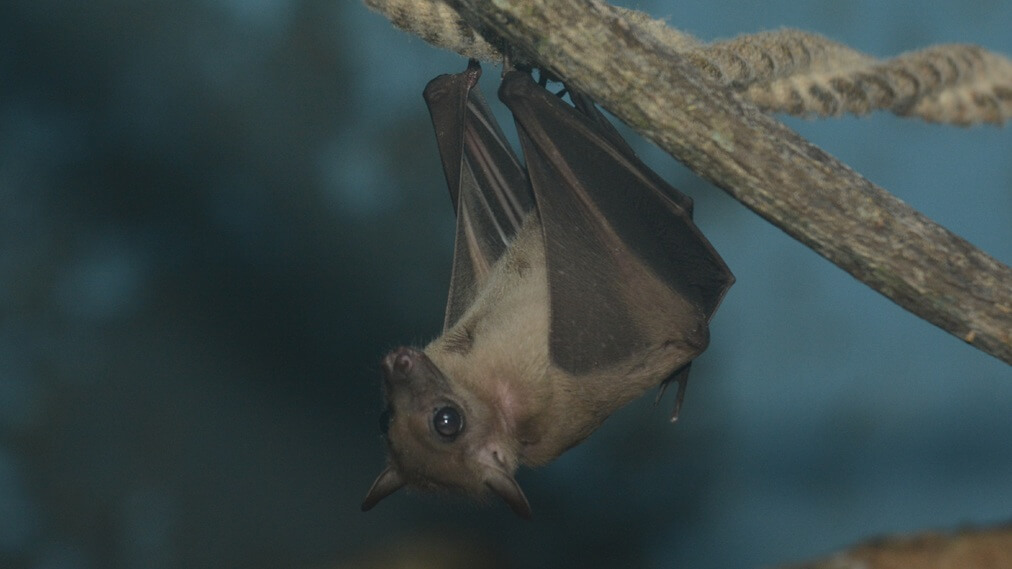
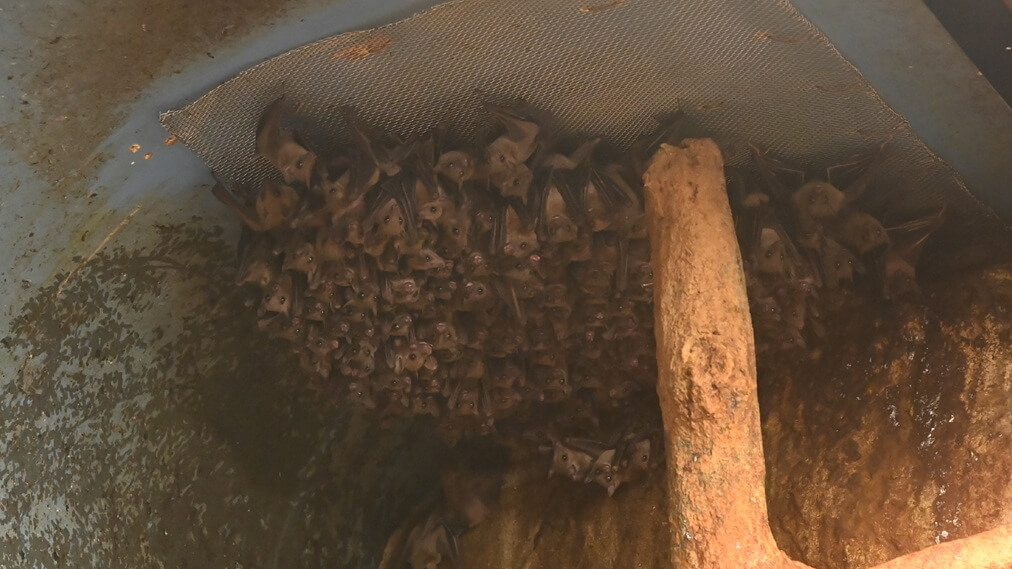
They are a type of fruit bat that lives in caves. Unlike ordinary fruit bats, which do not emit ultrasonic waves, they are able to fly through pitch-black caves using primitive echolocation (echolocation = emitting ultrasonic waves and determining the location of objects by their reflections). In order to pick up on reflected sounds, their ears are large and well-developed for a fruit bat.
| classification | Mammals, Chiroptera, Pteropodidae |
|---|---|
| English name | Leschenault's Rousette |
| distribution | South and Southeast Asia (India, Pakistan, Nepal, Sri Lanka, Southern China, Myanmar, Thailand, Laos, Cambodia, Vietnam, Indonesia, etc.) |
| Residence | From tropical rainforests and subtropical to tropical forests to urban areas |
| Size |
Head torso length: approx. 9.5-12cm
Tail length: 1.0–1.8 cm Forearm length: 7.5-8.6cm Weight: 45-106g |
| food | Fruit, nectar, flowers |
| Red List |
IUCN: NT (Near Threatened)
|