

Zoo Stock Species and the Red List
Zoo Stock Species and the Red List
Zoo Stock

This indicates that the species is included in the Second Zoo Stock Plan, which was formulated by the Tokyo Metropolitan Government in 2018. The plan sets goals for the next 10 years in three areas: "species conservation," "contribution to wildlife conservation," and "environmental education and conservation awareness." 124 animal species are included.
What is the Red List?
Based on scientific research, this is a list of wildlife classified by rank (category) indicating the degree of risk of extinction.
Livng Things Encyclopedia shows the categories (mainland and islands) assessed by the IUCN (International Union for Conservation of Nature) at the global level, the Ministry of the Environment for Japan, and the Tokyo Metropolitan Government for Tokyo.
The higher the category in each table, the higher the risk of extinction, and CR, EN, and VU are the three categories known as "endangered species." In Tokyo, species that are not at the NT (near threatened) level but are relatively rare are considered "species of concern."
|
IUCN categories |
|
|---|---|
|
EX |
extinction |
|
EW |
Extinction in the wild |
|
CR+EN |
— |
|
CR |
Serious crisis |
|
EN |
crisis |
|
VU |
emergency |
|
NT |
Near Threatened |
|
LC・○ |
Low Concern |
|
DD |
Data shortage |
|
LP |
— |
|
Japan (Ministry of the Environment) Category |
|
|---|---|
|
EX |
extinction |
|
EW |
Extinction in the wild |
|
CR+EN |
Endangered species |
|
CR |
Critically Endangered |
|
EN |
Endangered species |
|
VU |
Endangered species |
|
NT |
Near Threatened |
|
LC・○ |
— |
|
DD |
Lack of information |
|
LP |
Endangered |
|
Tokyo Category |
|
|---|---|
|
EX |
extinction |
|
EW |
Extinction in the wild |
|
CR+EN |
Endangered species |
|
CR |
Critically Endangered |
|
EN |
Endangered species |
|
VU |
Endangered species |
|
NT |
Near Threatened |
|
LC・○ |
Unranked |
|
DD |
Lack of information |
|
LP |
Endangered |
Creatures at Ueno Zoo
Creatures at Ueno Zoo
American Bison
American Bison
Bison bison
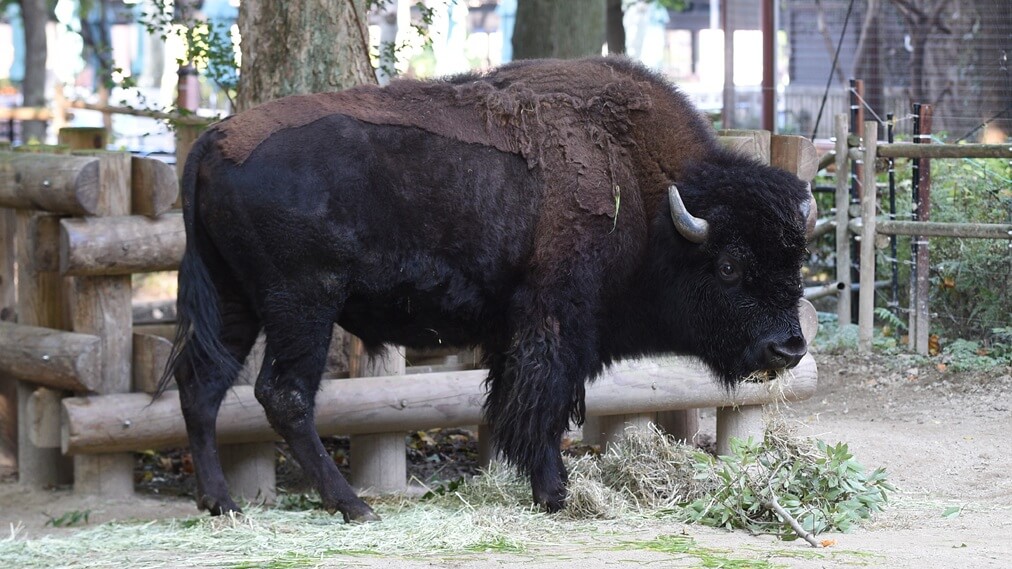
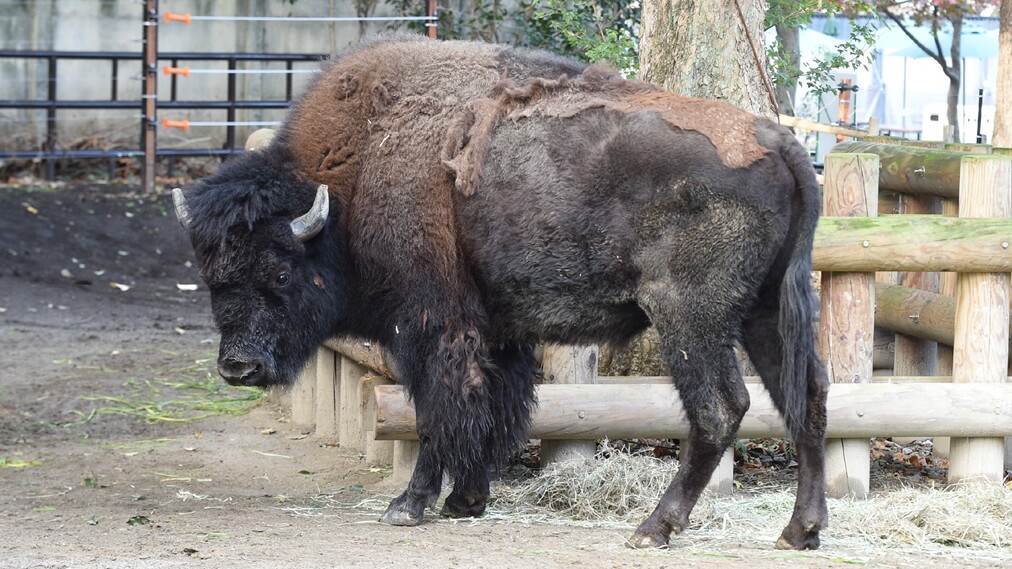
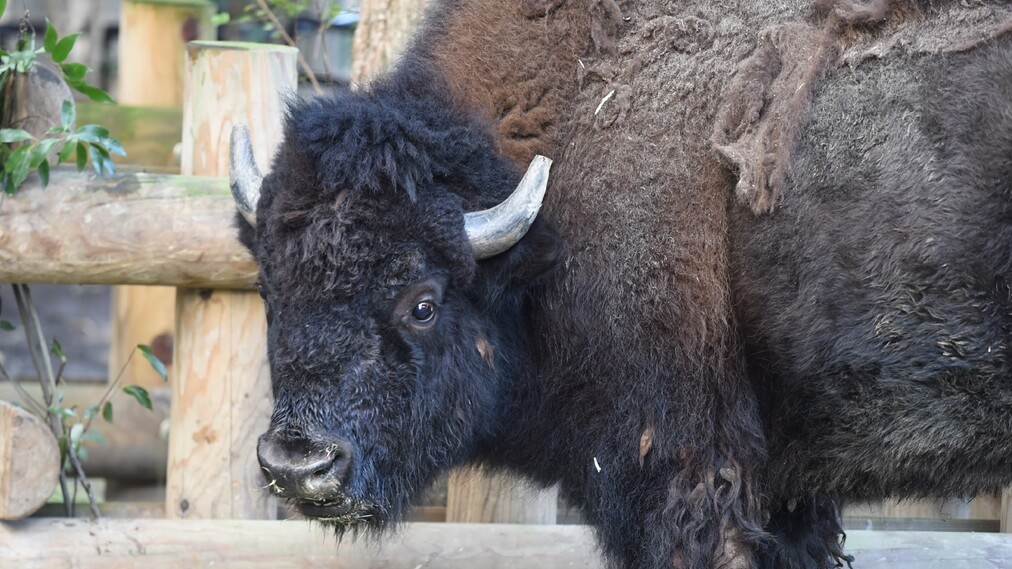
They have a unique body shape with high, raised shoulders. Their heads are large and the shoulders that support them are also sturdy, and because their heads, shoulders, and front legs are covered in thick, curly hair, their front half appears very large. Males are particularly large, sometimes reaching shoulder heights of nearly 2 meters. Males fight by vigorously clashing their large heads and horns against each other.
| classification | Mammalia, Artiodactyla, Bovidae |
|---|---|
| English name | American Bison |
| distribution | North America (mainly national parks and protected areas) |
| Residence | Grasslands, Poplar Park, Coniferous Forest |
| Size |
Head torso length: 380cm
Tail length: 90cm Weight: Males approximately 800 kg, females approximately 540 kg |
| food | grass |
| Red List |
IUCN: NT (Near Threatened)
|
Recovering from the brink of extinction
They once ranged from Alaska and Canada to northern Mexico, and numbered in the tens of millions in the early 19th century, but overhunting brought their numbers to the brink of extinction in the early 20th century. Thanks to conservation efforts, their numbers have now increased to tens of thousands in parks and protected areas.