

The Secret of Edward's Pheasant 's Feathers
October 19, 2026
Ueno Zoo has two Eurasian Edward's Pheasant on display. When you hear the name Edward's Pheasant, what kind of bird comes to mind?
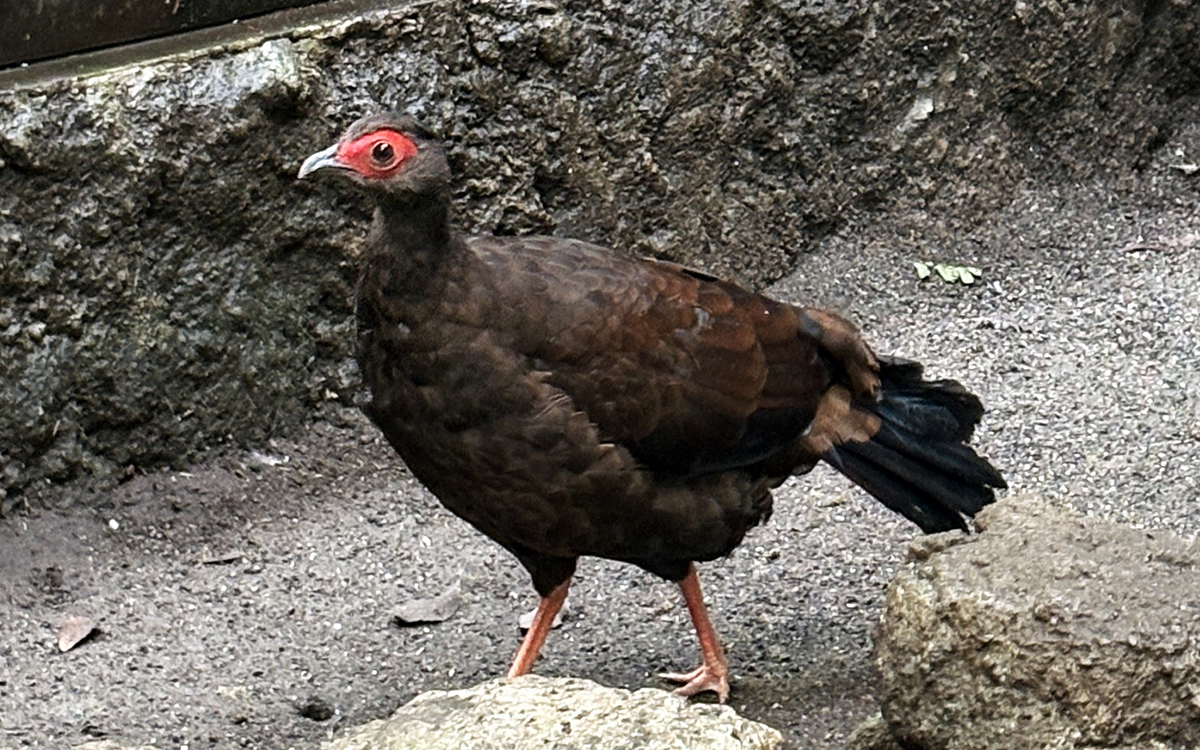
Edward's Pheasant is a species of pheasant found only in Vietnam. Males and females have different feather colors. Females are mostly covered in brown feathers, with only their tail feathers being blue and glossy.
On the other hand, the male has glossy blue feathers all over its body, and its color appears to change depending on how the light hits it. In addition, it has a white crest on its head, which stands up when it is on alert or when it is trying to attract females during the breeding season.
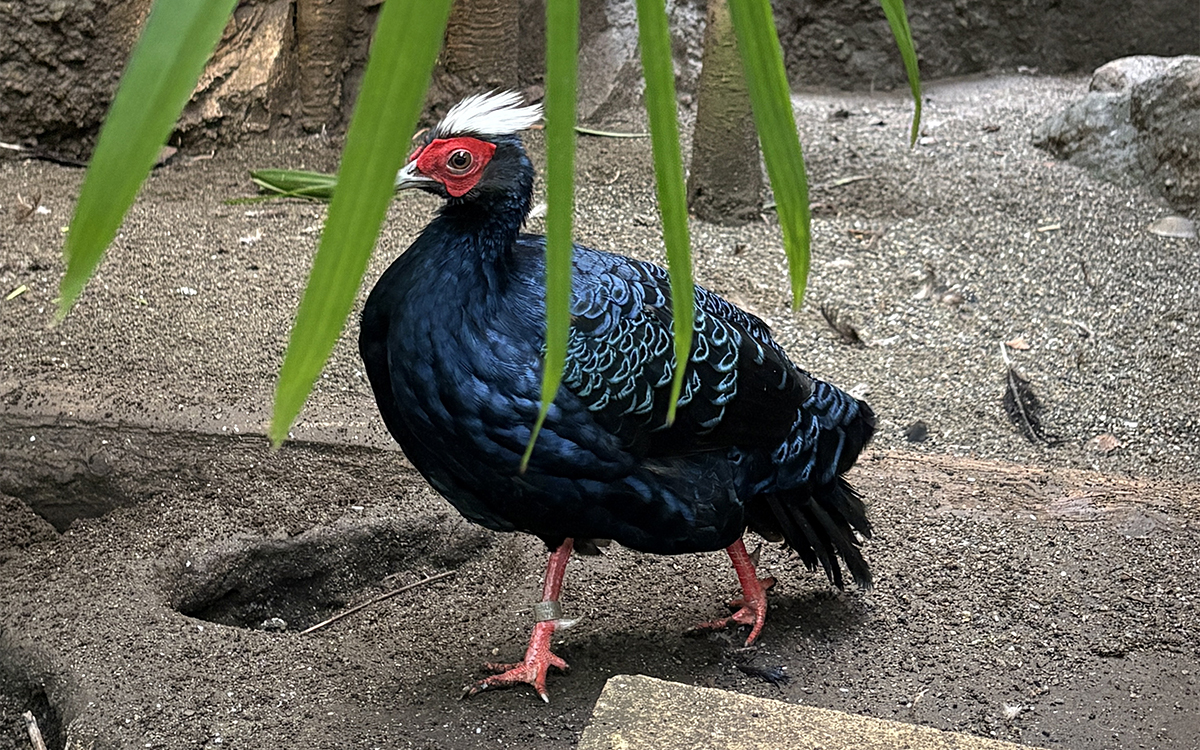
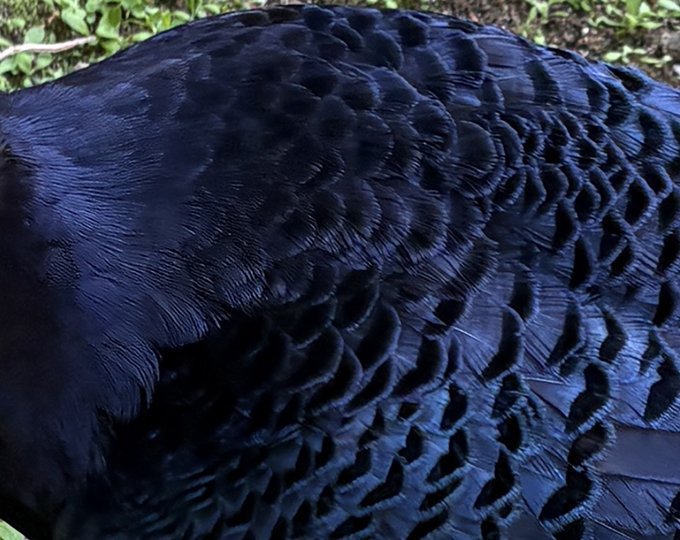
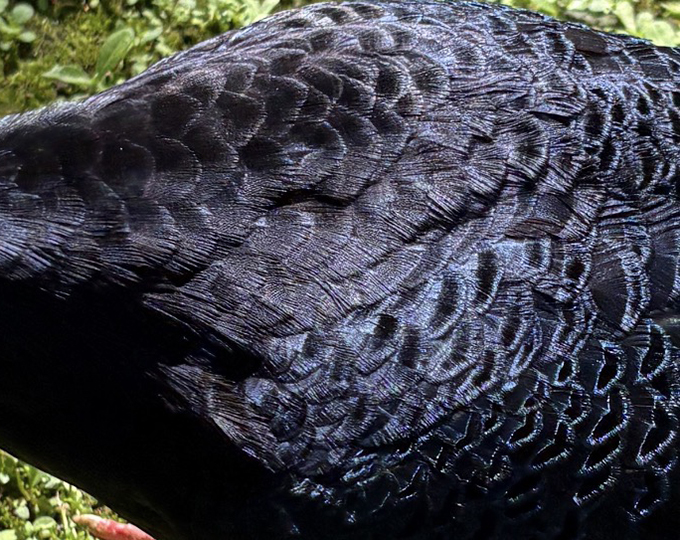
These glossy feathers are beautifully colored by a mechanism called "structural coloration."
Many of the colors of objects and living things that we see every day are created by pigments. An apple appears red because the surface of its peel contains a pigment that reflects red light and absorbs light of other colors. Structural color, on the other hand, is a mechanism that produces color without relying on pigments. Light is reflected by a very fine and complex surface structure, and when light of a specific wavelength is strongly reflected, we can see color.
Edward's Pheasant isn't the only organism that possesses structural coloration. It can be found in the feathers of many different birds, such as peacocks and kingfishers, as well as in the wings of insects like jewel beetles. Even in familiar animals, the feathers of crows and pigeons have a structural coloration mechanism.
Edward's Pheasant at Ueno Zoo may appear blue at first glance, but depending on the viewing angle, it can sometimes appear as a deep purple. When you visit the zoo, be sure to observe Edward's Pheasant 's feathers from various angles.
I've shared some fascinating facts about the feathers of Edward's Pheasant, but there's one more thing I'd like you to know. Edward's Pheasant hasn't been seen in the wild since 2000, and is considered endangered.
During the Vietnam War, the heavy use of defoliants caused forests to die, reducing the habitat of Edward's Pheasant. Furthermore, even after the war ended, its population declined due to land development and poaching.
Edward's Pheasant currently kept in captivity in Japan and around the world are descendants of 28 birds captured in Vietnam between 1924 and 1930. Breeding efforts in captivity have led to the current population of over 1,000 birds worldwide. Efforts are underway to transfer these captive-bred Edward's Pheasant to a breeding center in Vietnam, with the aim of reintroducing them into the wild in the future. In Japan, zoos and aquariums that keep Edward's Pheasant are also collaborating on breeding programs.
However, it takes a long time to restore habitats once they have been lost. War takes not only human lives, but also the animals that live there and their habitats.
What we can do is, first, learn about the current situation of Edward's Pheasant, and then share that information with many people. When you see the beautiful feathers of Edward's Pheasant, please not only admire the wonder of their colors, but also take a look at the ecology and current situation of Edward's Pheasant that lies beyond.
[Ueno Zoo East Garden Animal Care and Exhibition Staff]