

Training of Asian Elephant "Arun"
September 24, 2026
Ueno Zoo houses three Asian Elephant: Surya (female, 32 years old), Uthai (female, 28 years old), and Arun (male, 5 years old). Each elephant undergoes training for health management purposes. This time, we will introduce the training of Arun, the youngest of the three.
Arun, who was born at our nursery, began training at around 1 year and 2 months old. We started with simple actions such as touching his head to a target bar that we provided, and progressed the training as he grew.
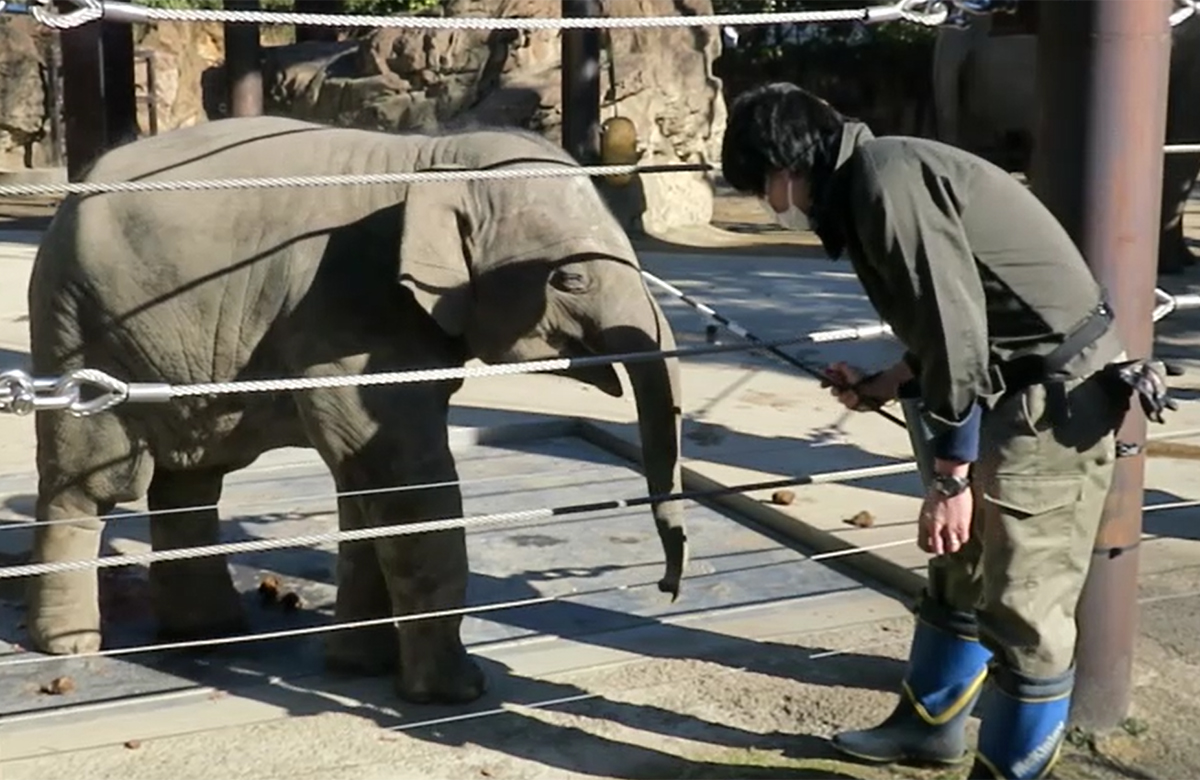
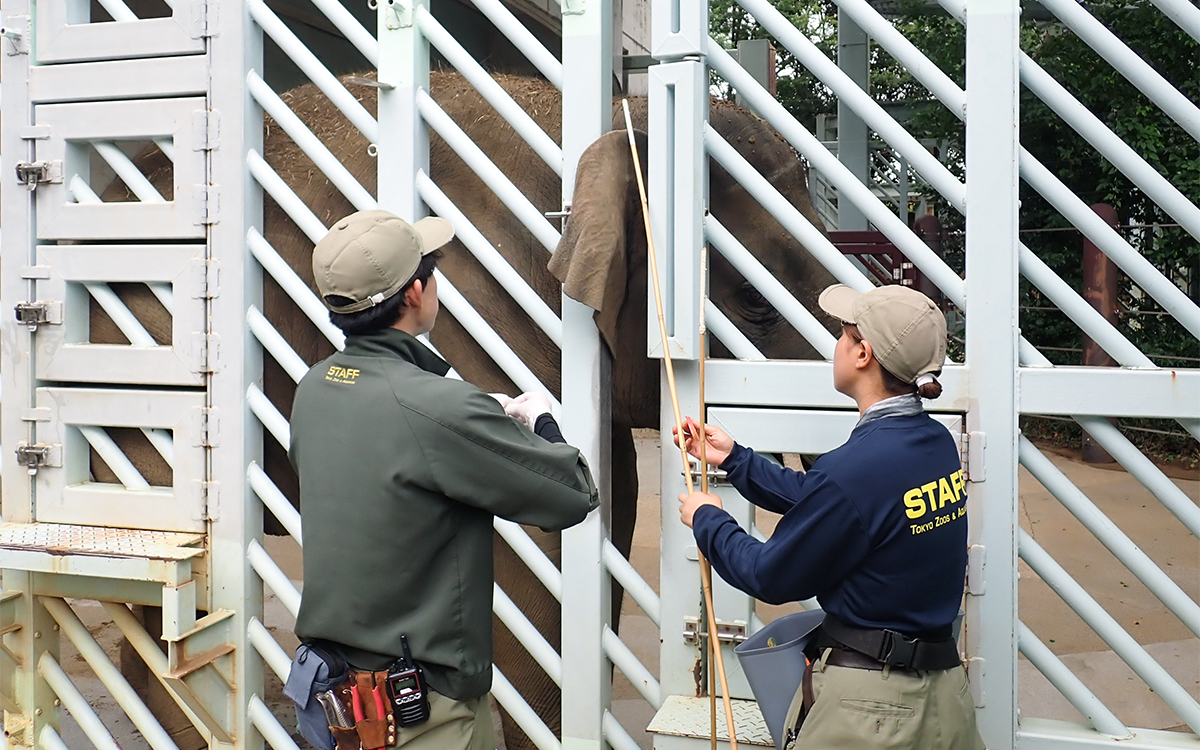
Now that he's five years old, he can do a variety of things. When I give him commands and hold out a target bar through a training fence called a "PC Wall," he can perform tasks such as sticking his ears, nose, feet, and tail through the gaps in the fence. Each of these tasks has the following purpose:
ear
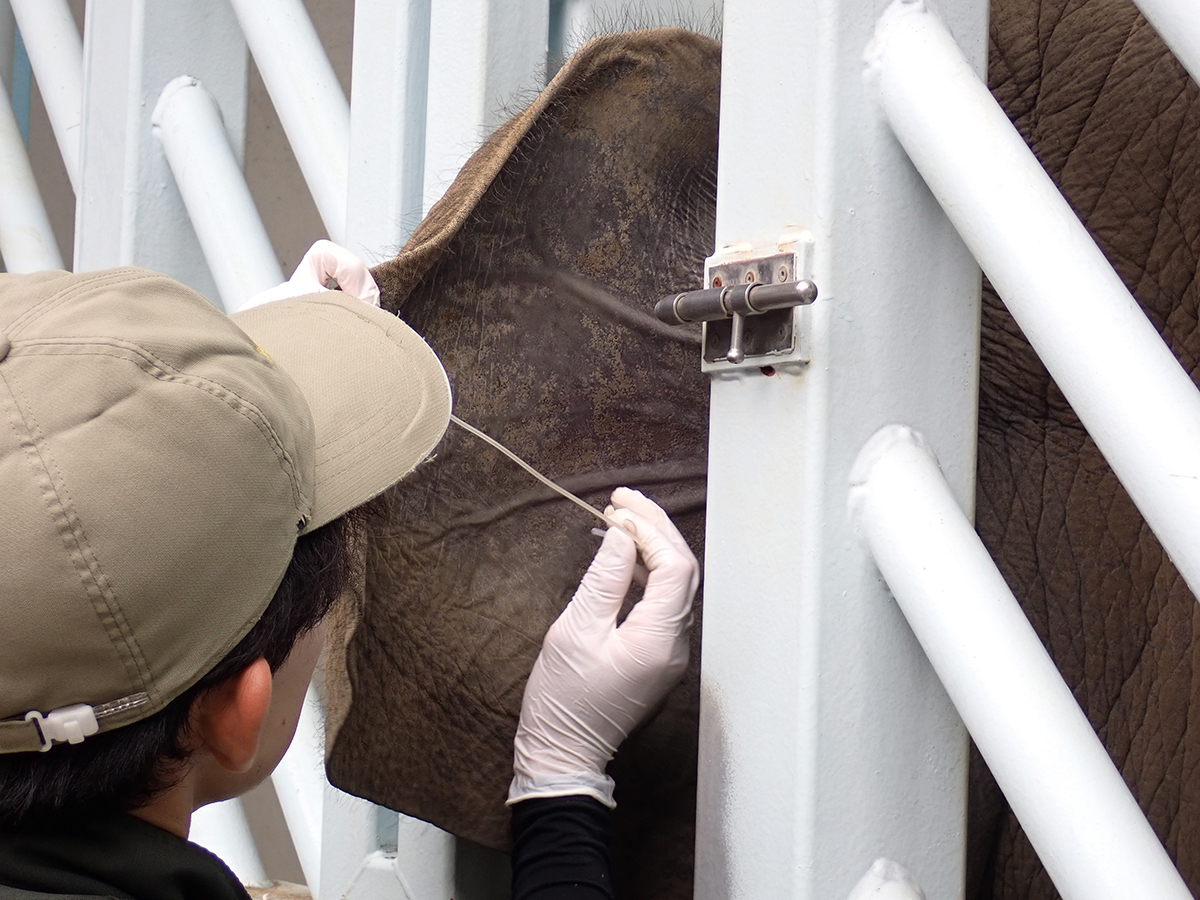
We are practicing drawing blood by inserting a needle into a blood vessel behind the ear. This is to check the patient's health status through blood tests. The area behind the ear is very sensitive, and when the needle is inserted, the patient pulls their ear back, making it difficult to draw blood. Therefore, we are trying to reduce the pain by applying anesthetic cream to the surface of the skin, and are continuing our training to be able to draw blood steadily.
nose
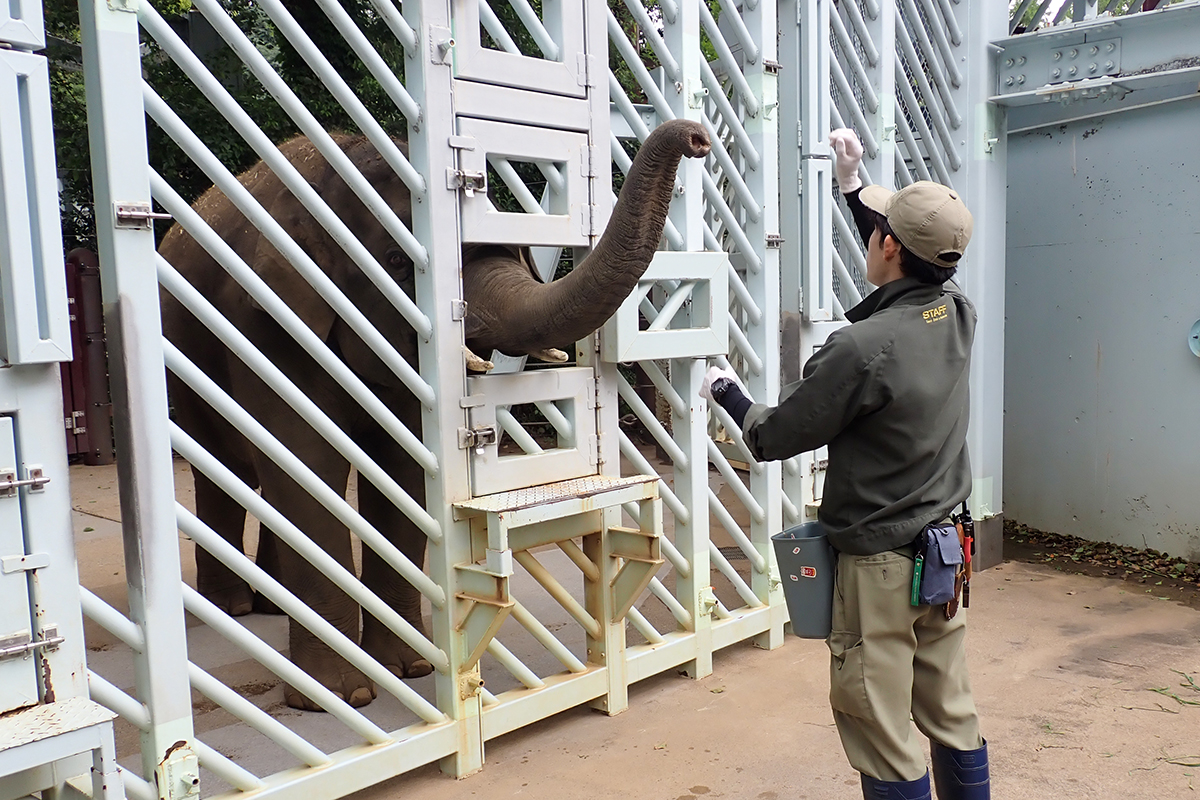
This is being done to test nasal discharge. Elephants have a disease unique to them called "elephant herpes," which can cause severe symptoms, especially in young elephants. The virus can be detected in nasal discharge before symptoms appear, so this is training to ensure that samples can be collected routinely.
A small amount of water is placed inside the nose to raise the nose, and then the water, which has reached deep into the nose, is collected by lowering the nose. Collecting water that has been used to wash the mucous membrane deep inside the nose is to improve the accuracy of the test. This is called a "trunk wash." We are almost at the final stage.
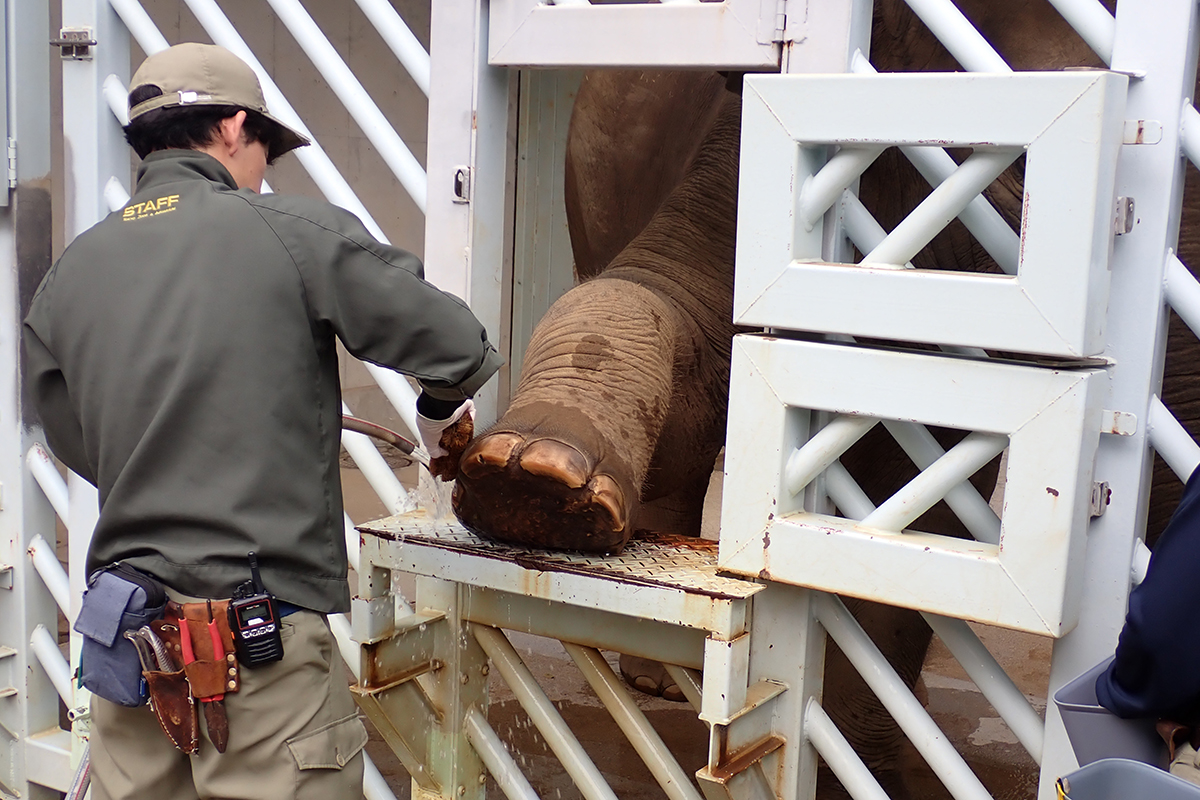
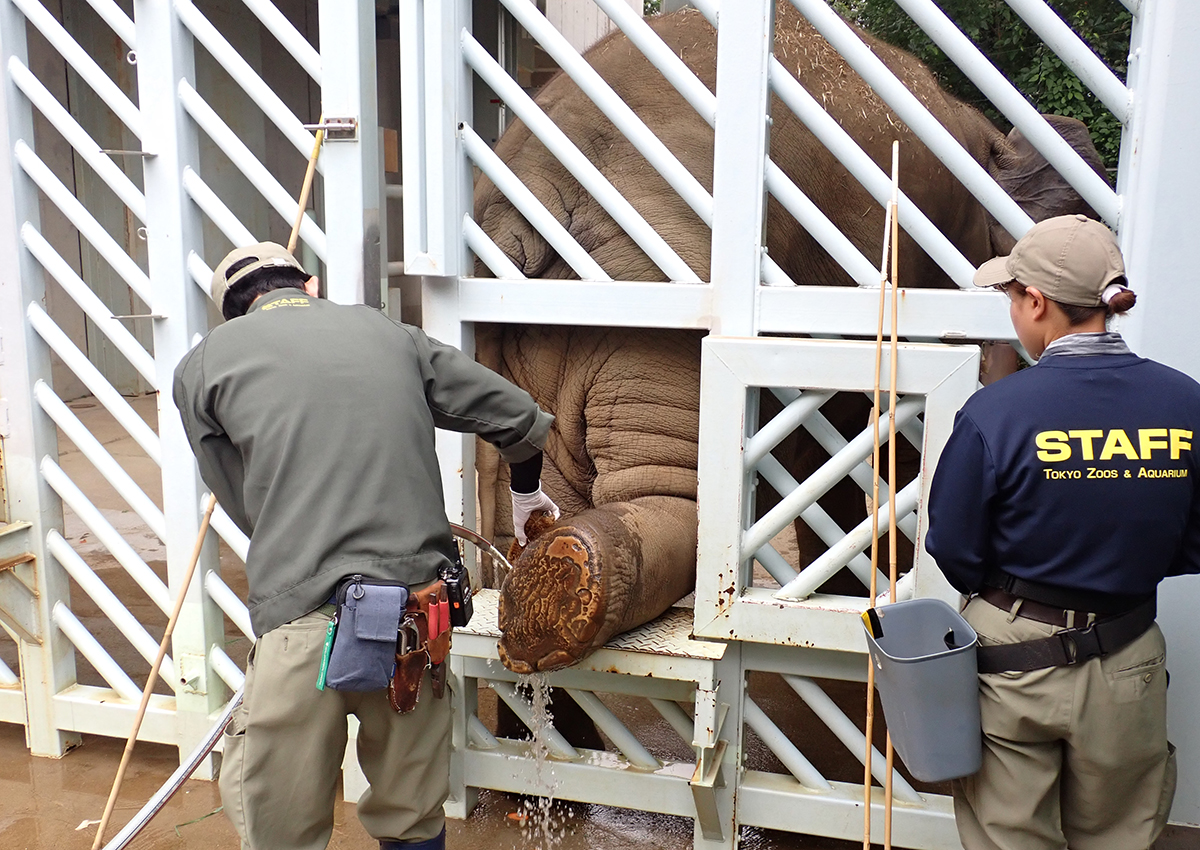
feet
This is done to keep the hoofs and the "pads" on the soles of the feet in good condition. In the wild, they are naturally worn down by walking long distances, but in zoos where this is less common, the hoofs and pads grow daily, so they are trimmed using tools such as hoof knives, knives, and files. Keeping the feet that support tons of weight healthy is extremely important for elephants.
Arun's claws sometimes develop small cracks, but there are no major problems at the moment. We hope to continue maintaining their good condition.
tail
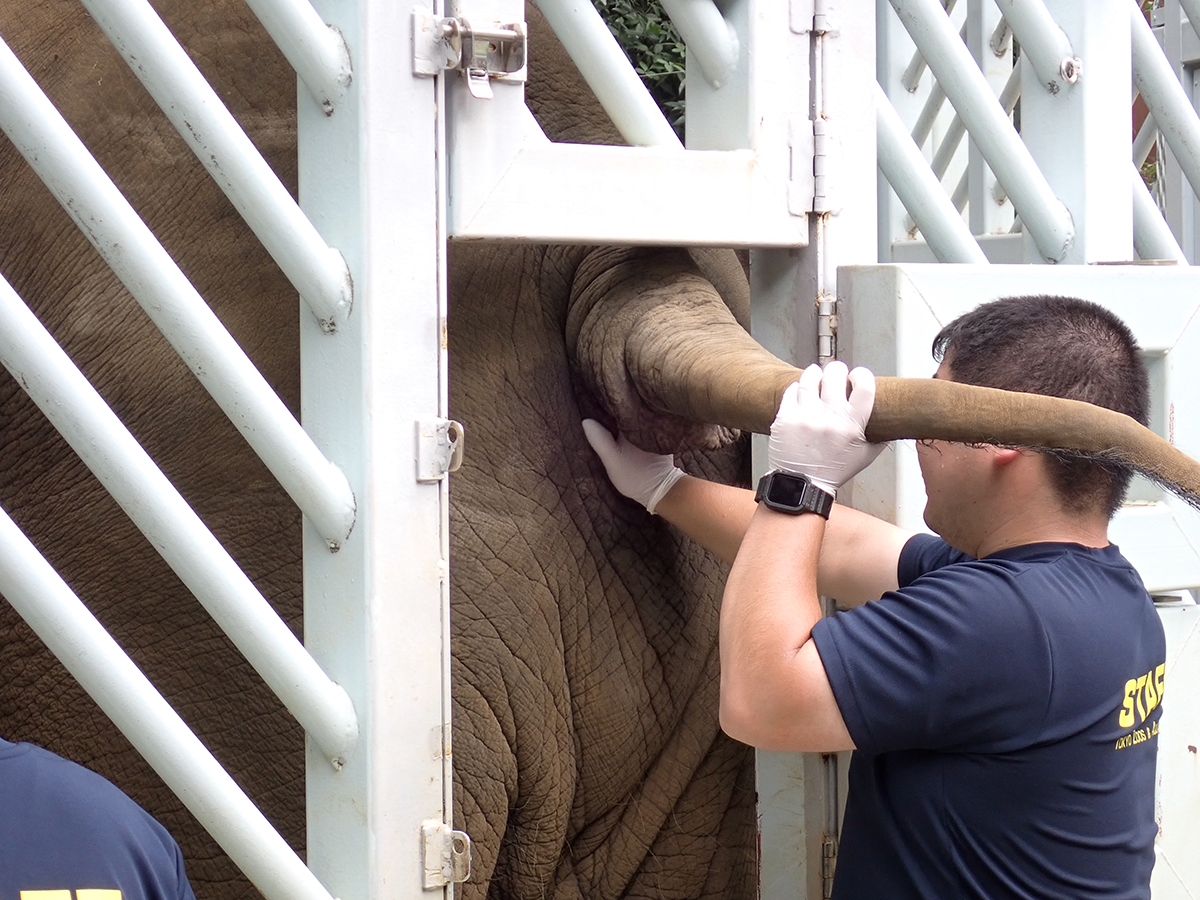
Turn the animal so that it faces away from you, and touch its tail and the area around its anus. The hairy part at the tip of the tail is prone to skin irritation, and in winter it can become dry and chapped, so apply olive oil or something similar to moisturize it.
Furthermore, regarding the anus, we practice touching it regularly as a precaution, since in case of illness, we may need to insert a tube through the anus to administer fluids. Since the rear is a complete blind spot for elephants, we do this carefully to avoid startling Arun and losing his trust.
Arun doesn't always behave the same way; sometimes he lacks focus and wanders off, gets frustrated and leaves midway, or headbutts the target bar. Compared to the stable adult females, he requires a bit more attention from us. That said, overall he's calmer than last year and seems to be growing both physically and mentally.
Looking back at the training from the beginning until now, even with movements that seem difficult, Arun quickly grasps our intentions, so we don't really feel like it was "hard to get this far." Also, we feel that we have been able to improve our own skills through Arun's training. Going forward, we would like to continue to support Arun's healthy lifestyle by flexibly changing the content of his training in line with his growth.
[Ueno Zoo East Garden Animal Care and Exhibition Staff]