

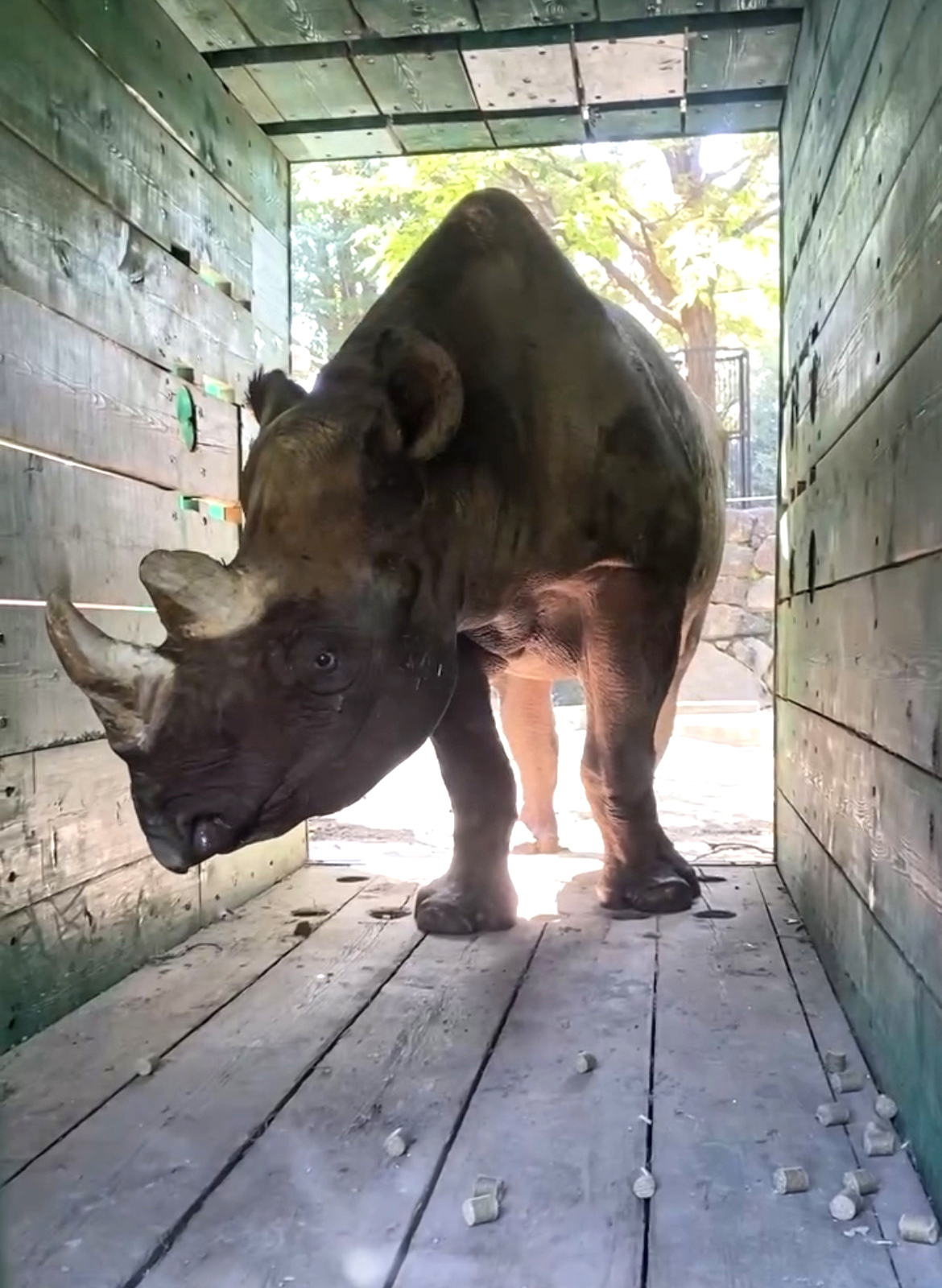
Eastern Black Rhinoceros "Argo" practices "packing" in preparation for its journey.
September 19, 2026
Argo, a female Eastern Eastern Black Rhinoceros who has lived in West Garden of Ueno Ueno Zoo for 27 years, will be returning this autumn to the Yokohama Municipal Kanazawa Zoo (Yokohama City, Kanagawa Prefecture), where she was born. Argo is a female born in 1995 and came to Ueno Zoo in 1999. In 2009, she also succeeded in the zoo's first successful breeding of Eastern Black Rhinoceros.
Currently, we are working on "packing" the animals to help them get used to the transport boxes we use for moving them. This time, we'll give you a behind-the-scenes look at that process.
Starting with preparations to withstand the power of a rhino.
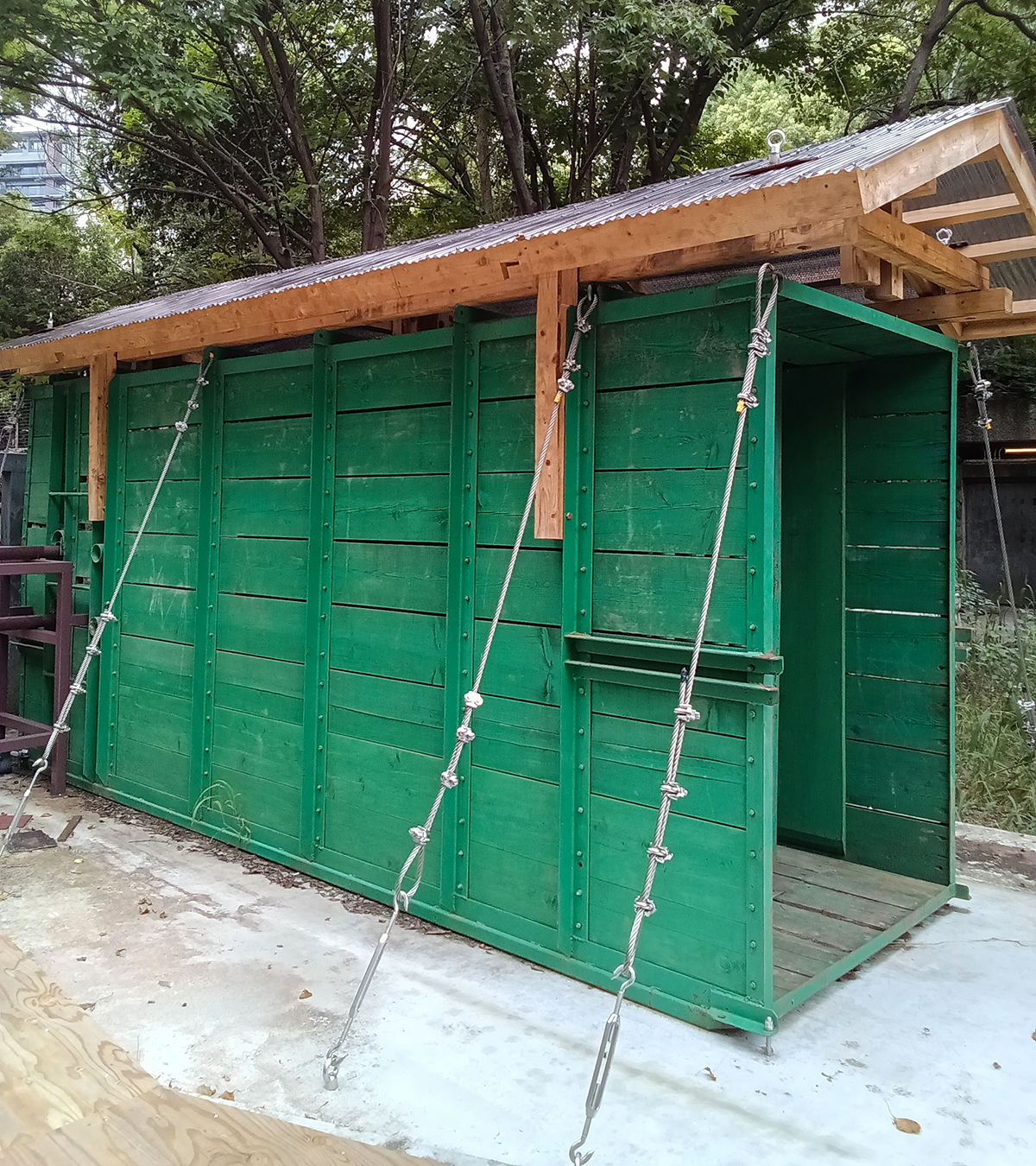
Black Rhinoceros are large animals that can weigh over 1 ton, and when startled, they can run at speeds of 45-50 km/h. If this massive body moves inside the transport crate, there is a possibility that the entire crate will move. The crate itself had been placed in the enclosure since spring to allow the rhino to get used to it, but practice entering it could not begin until the crate was securely fixed in place so that it would not move.
The installation work was completed in late July 2026, and practice sessions to get into the box finally began on August 17th.
The concept of box-packing practice
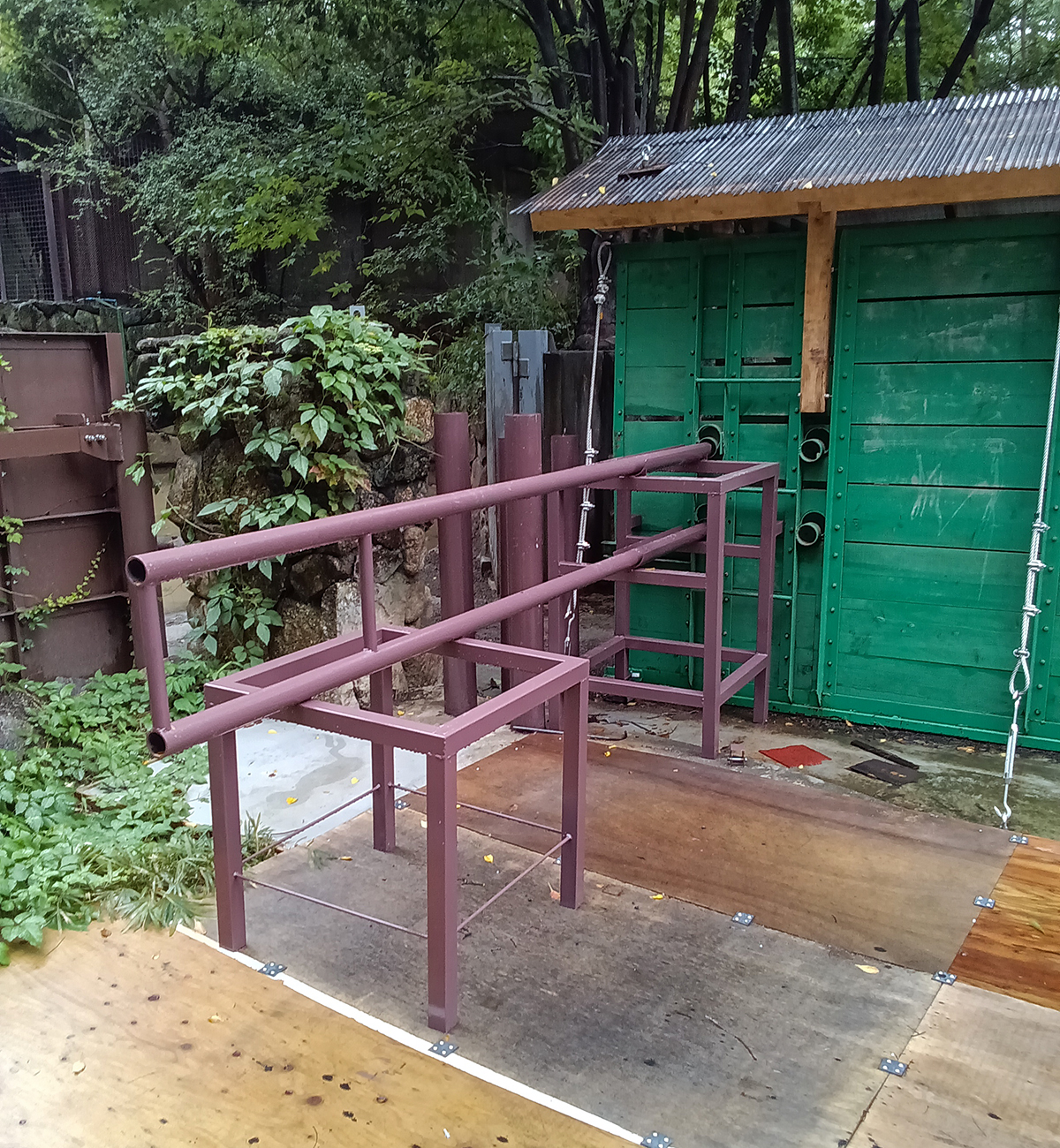
The process of getting an animal into a box is divided into two main stages: (1) getting the animal into the box without any problems, and (2) being able to remain calm even when a "barrier" (a horizontal bar that blocks the entrance) is placed inside. In both stages, the goal is the same: to create a situation where the "good things" outweigh the "things and places that are scary" for the animal, and through repetition, to teach the animal that "the box is not scary." In short, it's about getting the animal used to it.
There are two main tasks involved in achieving this. First, increase the sense of security. "Good things" are not limited to favorite foods; anything that makes the animal feel safe, such as its familiar scent, is a candidate. At the same time, remove as many aversive stimuli as possible—things that the animal dislikes or finds frightening.
What we especially want to avoid is a situation where something unpleasant happens while inside the box, creating the association of "box = scary place." Once this association is formed, it's not easy to break. We conduct practice sessions during calm hours every morning to reduce these unexpected stimuli.
Identifying where the problem lies and determining how to provide reassurance—this identification and environment setup greatly influence the progress of practice.
Step by step, into the box
On the first day of training on August 17th, we placed green grass and apples inside the box and at the entrance, but Argo only sniffed the entrance and returned to the center of the enclosure, refusing to take a single step inside. So we added some of Argo's own feces inside the box to provide a comforting scent, and switched his food to his favorite solid feed. On the third training session, he put both his front paws inside the box. On the fourth session, he cautiously entered his entire body for the first time.
However, things didn't always go smoothly. There were days when he wouldn't go in at all, and on August 25th, he was two-thirds of the way in when he got startled by a small noise and jumped out of the box. It was a classic case of "something unpleasant happening inside the box." We didn't push him any further that day and ended the practice session there. If we forced him to go in again and made him have another unpleasant experience, he might end up associating the box with a scary place.
In subsequent training sessions, to encourage the horse to take that first step of "putting its hind legs in," which it had been struggling with, we began scattering solid feed mainly at the back of the box. Please see the following three photos for details on how we did this.
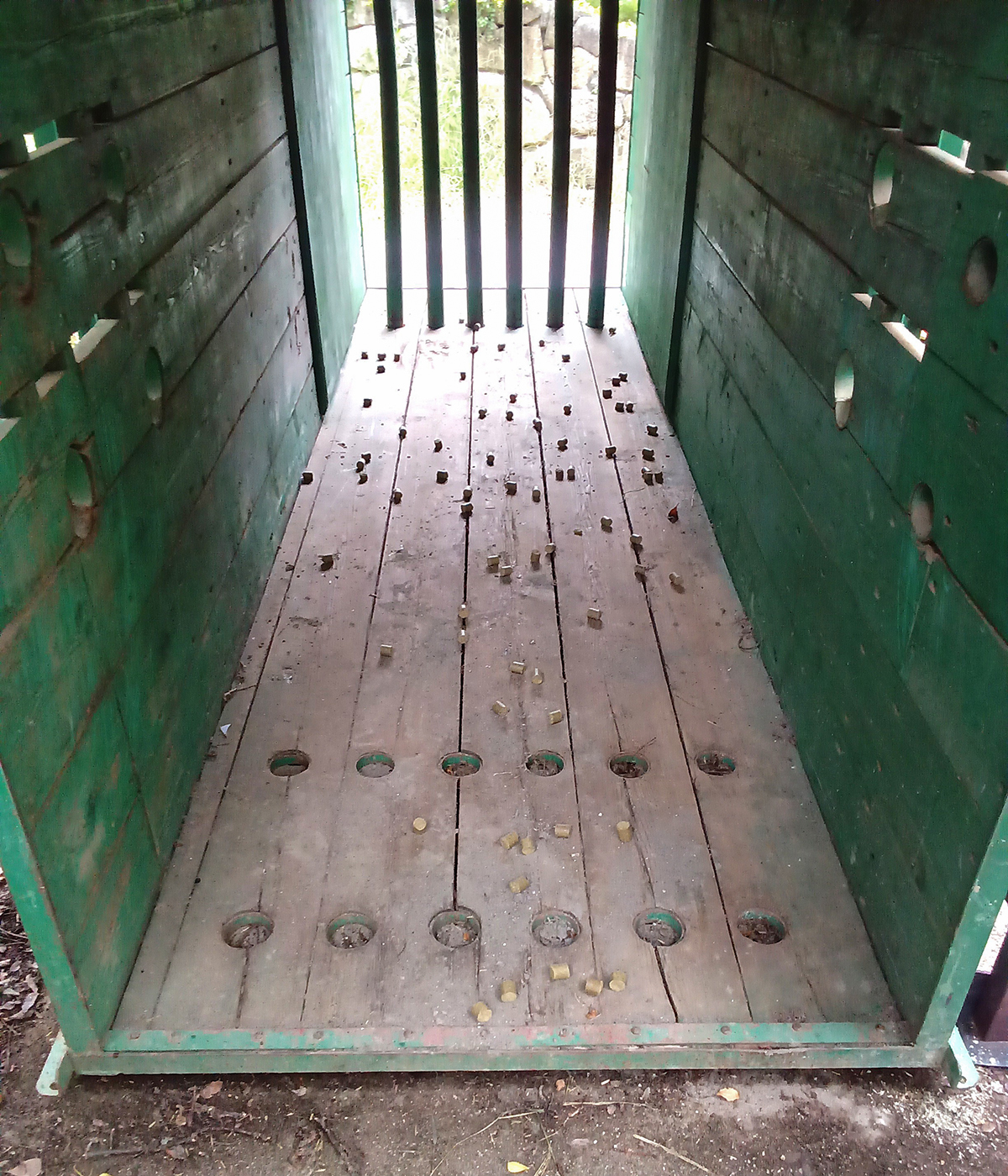
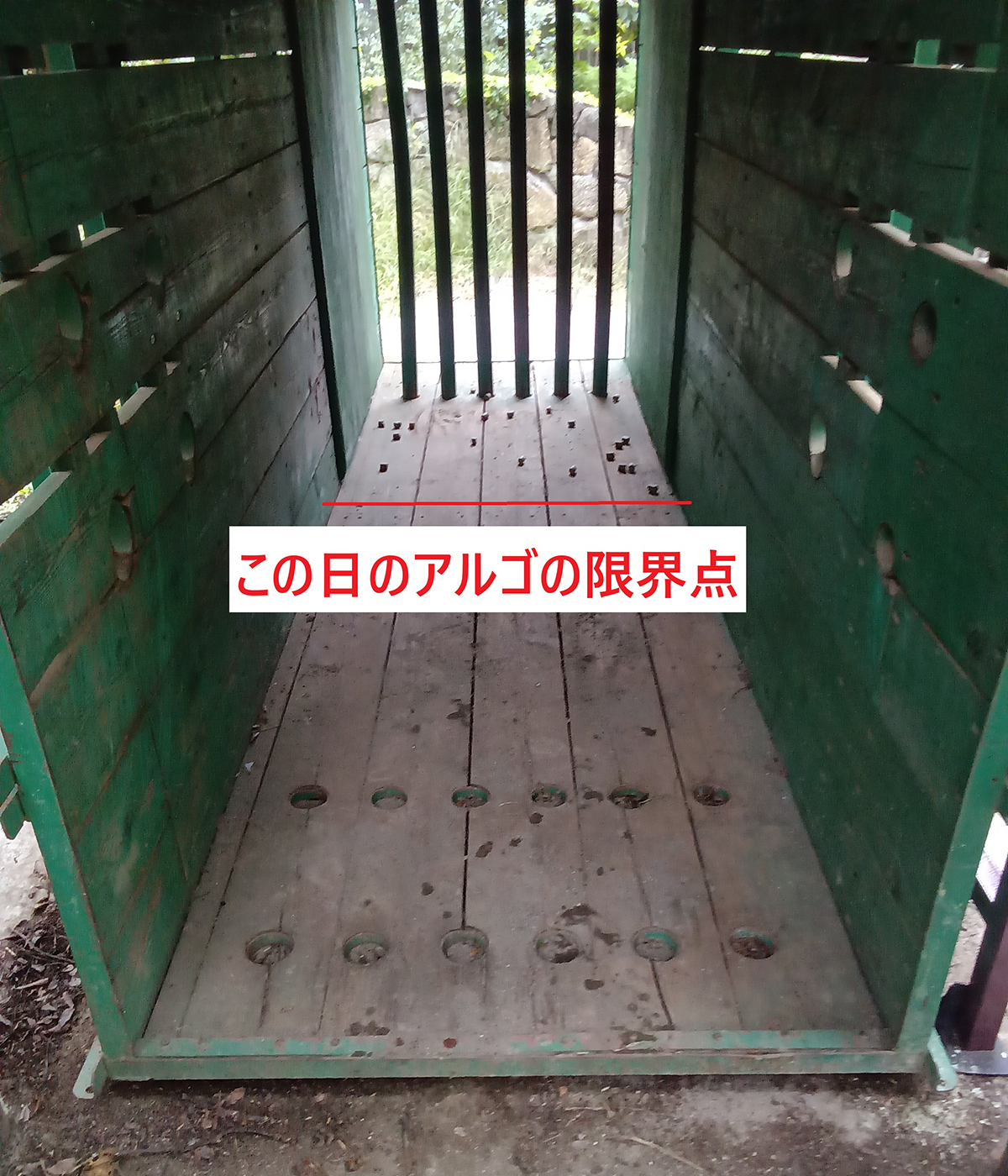

Then, on August 29th, the dog was able to stay inside the box for about 40 seconds, and on September 1st, for 5 minutes and 30 seconds, with its hind legs fully inside. This means it was able to get in close enough to close the lock on the entrance side.
However, he still seems wary, so we will continue practicing diligently until he can enter without hesitation. The next stage we aim for, (2), is the task of "temporarily confining him after he enters the box," which is a significant challenge for Argo. We will proceed without rushing and without raising the bar too high.
We will continue practicing step by step so that Argo can enter the box with peace of mind and have a safe journey. We would appreciate your quiet support when you visit the park.
[Ueno Zoo West Garden Animal Care and Exhibition Staff]