

I examined the crocodile specimen I found in the specimen room.
August 14, 2026
Zoos keep live animals, but unfortunately, when animals die, they are sometimes preserved as taxidermied specimens or skeletal specimens. These specimens are important not only for passing on the appearance of animals to future generations, but also for use in academic research, education, and exhibitions. This time, we will introduce the crocodile specimen survey that the reptile house's animal care and exhibition staff undertook.
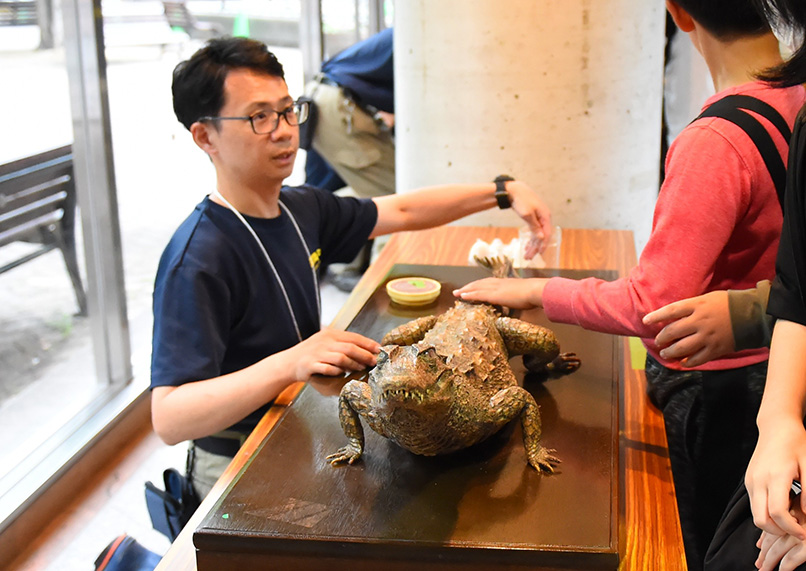
On June 15th of this year, Ueno Zoo held an event called "Relaxing Zoo Dream Night & Evening" to allow people with disabilities to enjoy the zoo. As part of the event, the reptile exhibit staff decided to give a talk about amphibians and reptiles, using specimens that visitors could touch and learn from.
Around the time we started preparing for it, the person in charge of specimen management asked me if we could use some specimens that we don't normally use for the event. So I looked around the specimen room and found a stuffed crocodile that was old but in relatively good condition.
However, this taxidermied specimen did not have a label indicating its species name or the year it was made. Ueno Zoo has a history of over 140 years, and records have been lost for some of its older specimens. Fortunately, the taxidermied specimen was in good condition, so we decided to investigate what species this crocodile was so that the event participants could touch it.
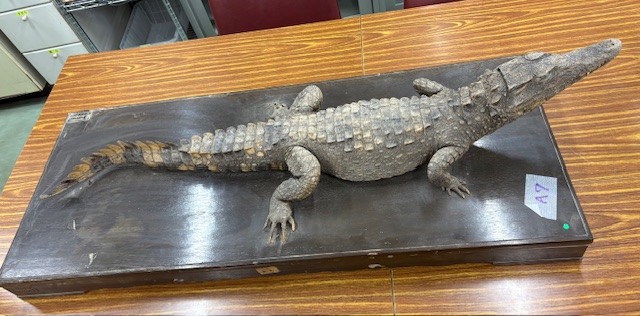
First, we carefully observed the features that distinguish crocodile species, such as the shape of the snout, the alignment of the teeth, and the arrangement of scales on the head and neck. As a result, we determined that this individual was likely a crocodile of the Alligatoridae family, as the teeth on the lower jaw were hardly visible even when the mouth was closed. Next, we checked each of the scales on the back of the neck and the shape of the snout one by one, narrowing down the candidate species one by one by thinking, "If it has this feature, it's not this species." As a result, based on the external characteristics, it seemed most likely to be a spectacled caiman. However, we could not confirm the definitive features that identify the species, such as the ridge between the eyes that gives the spectacled caiman its name, from this taxidermied specimen.
Therefore, to support this hypothesis, we checked the records of crocodiles that were kept at Ueno Zoo in the past and looked to see if any individuals had been taxidermied. As a result, we were able to confirm records of spectacled caimans being kept there in the past, but we could not find any records of any individuals being taxidermied.
As described above, each investigation had its limitations, and ultimately, we were unable to identify the species of this taxidermied specimen. In order to definitively identify the species in the future, it is thought that investigations beyond external characteristics will be necessary, such as examining any bones remaining in the taxidermied specimen using X-rays or CT scans, and conducting DNA analysis on skin tissue, etc. Therefore, the final identification of the species remains a challenge. For this reason, at the event, we decided to use the taxidermied specimen after explaining to the participants that "it is highly likely to be a spectacled caiman, but we cannot say for certain at this time."
On the day of the event, many people were able to actually touch the stuffed crocodile and experience its size and body structure. Some people were surprised and asked, "Is this a real crocodile?", others carefully felt the texture of the scales with their hands, and some small children were frightened by its imposing presence. It was particularly memorable that people were able to feel the size and physical characteristics of crocodiles more closely through this experience of actually touching them, as they are usually only observed through glass.
At the zoo, in addition to raising and exhibiting live animals, we also preserve deceased animals as specimens and utilize them as much as possible for exhibits and educational outreach. We intend to continue to carefully utilize these specimens and expand opportunities for learning about animals.
[Ueno Zoo Reptile House Keeper]