

The animals of West Garden are moving.
August 7, 2026
At Ueno Zoo 's West Garden, several animals were moved between June and July. Changes to the exhibits resulting from these moves have been announced on the Ueno Ueno Zoo official website and on notices posted within the zoo, but here we will provide a more detailed explanation.
First, the six-banded armadillo, which had been on display in the basement of Small Mammal House was moved to Chiba City Zoological Park on June 29th, ending its exhibit at Ueno Zoo. After that, the three-banded armadillo, which had been on display on the first floor Small Mammal House, was moved to the basement exhibit room.
Armadillos are naturally nocturnal animals, and when they were exhibited on the first floor, they mostly stayed curled up and resting in their nest boxes. However, in the underground exhibit, their day-night cycle has been reversed, so they can now be seen actively walking around during exhibit hours.
All of the Japanese flying squirrels that were on display in the basement Small Mammal House were moved to Kobe Animal Kingdom on June 8th. Southern tamanduas have been on display in the now-empty exhibit room since July 14th.
The Southern Tamandua was previously exhibited in Bird House in East Garden, but Bird House closed last June, and it had been off-limits to the public ever since. Southern Tamanduas are arboreal, just like Japanese Flying Squirrels. Therefore, we were able to renovate the exhibit room using trees that were already there and create a new exhibit space for the Southern Tamanduas. As Southern Tamanduas are mainly nocturnal, visitors can now observe them being more active than before.
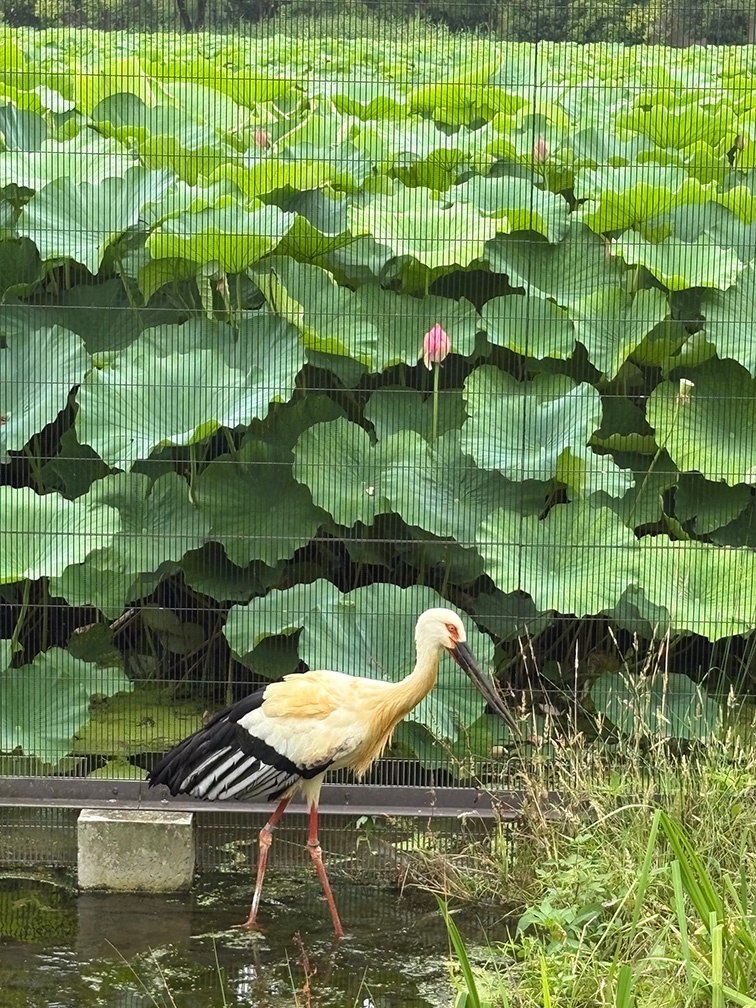
Next, outdoors, the Japanese storks—Cackling Goose and Swan Goose—which had been sheltered in indoor exhibition halls and restricted areas as a precaution against avian influenza, have been moved to the enclosure facing Shinobazu Pond next to Aesop Bridge following the end of the domestic avian influenza outbreak.
Prior to this move, the trees inside the enclosure were pruned and the overgrown grass was cut back. Since the lotus flowers had just begun to bloom at Shinobazu Pond behind the enclosure, visitors can now enjoy a scene unique to this time of year, featuring the birds and the lotus flowers.
Please note that before the implementation of avian influenza prevention measures, the birds here were also on display in the cage located just past Benten Bridge; however, they are currently on display only in the cage next to Aesop Bridge.
For animals, moving to a new exhibit is a major change in their environment. After they have safely moved, we animal keeper carefully monitor them to make sure they are eating properly and resting peacefully.
There are various reasons for moving animals, but important objectives include creating a better environment for the animals and allowing visitors to see new aspects of them. Please pay attention to the animals' new lives.
[Ueno Zoo West Garden Animal Care and Exhibition Staff]