

Regarding the training of the Western Lowland Gorilla "Haoko"
July 24, 2026
It is said that male gorillas are at increased risk of heart disease once they reach the age of 30. Therefore, we have been continuously conducting blood sampling training for our male gorilla, Haoko (who is 33 this year), as part of his health management.
Like humans, gorillas have blood vessels that can be felt near the inside of their elbows, so blood is drawn from that area. To do this, the gorilla extends its arm through a specially designed iron tube that exposes the inside of its elbow, and is asked to maintain a grip on the end of the tube. When the gorilla performs the action as intended, it is rewarded (as a stimulus to help it remember the action and perform it spontaneously) with fruit that is not normally included in its diet, and the training continues.
In Haoko's case, she was able to consistently extend her arm from the blood collection device as described above, but when the veterinarian tried to insert the needle, she would pull her arm away, making blood collection impossible. Therefore, a few years ago, we changed our approach to applying a local anesthetic cream to the blood collection site to minimize the discomfort when inserting the needle.
Even after we started applying anesthetic cream, Haoko would still pull her arm away when we tried to insert the needle, but since around March of this year (2026), Haoko's concentration has improved dramatically, and she has become able to endure the needle insertion without moving her arm.
Then, in April, since he didn't pull his arm away when the needle was inserted and maintained a high level of motivation for training, we actually performed a blood draw. At first, we could only collect a very small amount, but by extending the time the needle was inserted, we were able to gradually increase the amount of blood we could draw.
Recent blood draws have allowed us to collect the necessary amount of blood for testing, and we have confirmed that there are no health issues. We will continue to extend the blood collection time to ensure that blood can be collected regularly and reliably.
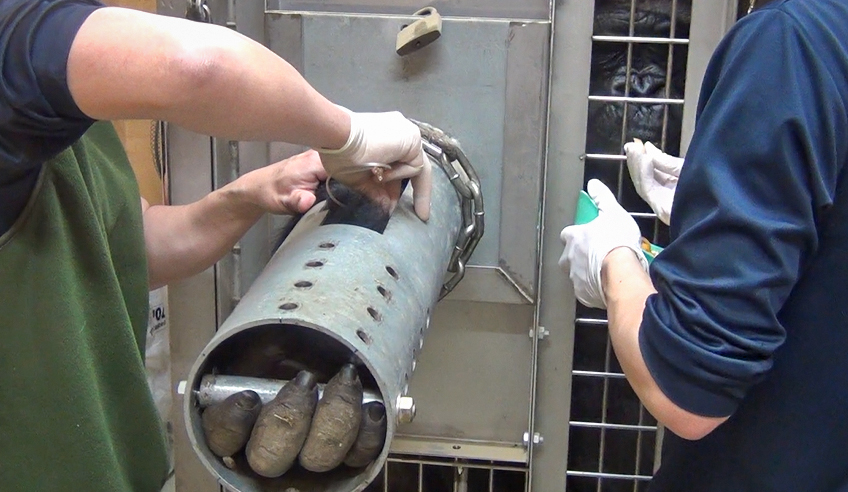
The training took some time before we were able to draw blood, but I believe it was the culmination of Haoko's efforts, as well as animal keeper, and everyone involved up to that point. I am pleased that we were able to report that there were no health problems and that Haoko has grown in this way.
As for the other gorillas, we have also started training for blood sampling for Riki (9 years old this year), the son of Haoko, another male in the group. Until now, he was often near someone even indoors, but as he has gotten older, he has been spending more time alone, which has made it possible to conduct regular training sessions.
Previously, staff could only briefly touch the bars by having the patients place their hands or other body parts on them. However, by using a marker stick and training the patients to extend the time they could touch the stick, we were able to allow them to put their bodies against the bars and allow staff to touch them. As the next step, we began familiarizing the patients with the equipment used for blood sampling.
Perhaps because we had previously observed Haoko's training, she quickly became accustomed to the blood collection equipment, and we were able to proceed to the point where she could hold the edge of the device for blood collection. However, with Riki, getting him used to the needle proved difficult. Even when we tried to ease his apprehension with a painless capped needle, he would repeatedly pull his arm away whenever a staff member approached with the needle.
By continuously feeding him, he still seems wary when the needle is brought near, but he is increasingly tolerating the needle touching his elbow. It is still difficult to keep the needle in place for extended periods, but we are gradually increasing the time and hoping he will get more used to it. Riki is more restless than Haoko, and his enthusiasm for training is inconsistent, making it often difficult to carry out the training. However, we are working to gradually increase what he can do while observing his reactions.
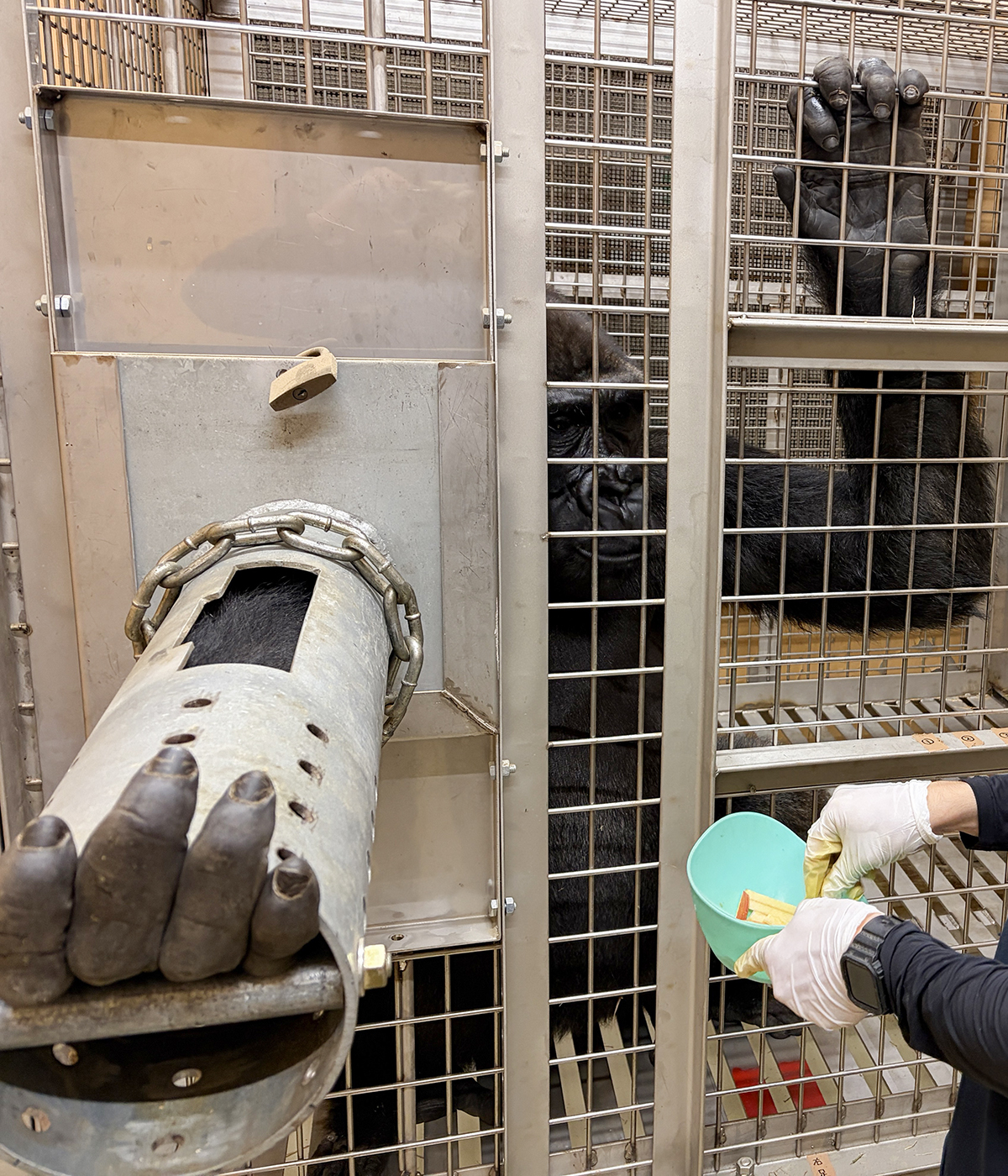
Because males are at a higher risk of heart disease, blood sampling training is primarily conducted with males, but other training is also carried out with females. This training includes having them place parts of their body such as their ears, hands, feet, shoulders, back, abdomen, and chest against a grate so that staff can touch them through the grate, and having them open their mouths to check the condition inside their mouths.
Riki and "Sumomo" (female) can now do almost all the tasks, and "Komomo" (female) is also gradually expanding the range of things she can do.
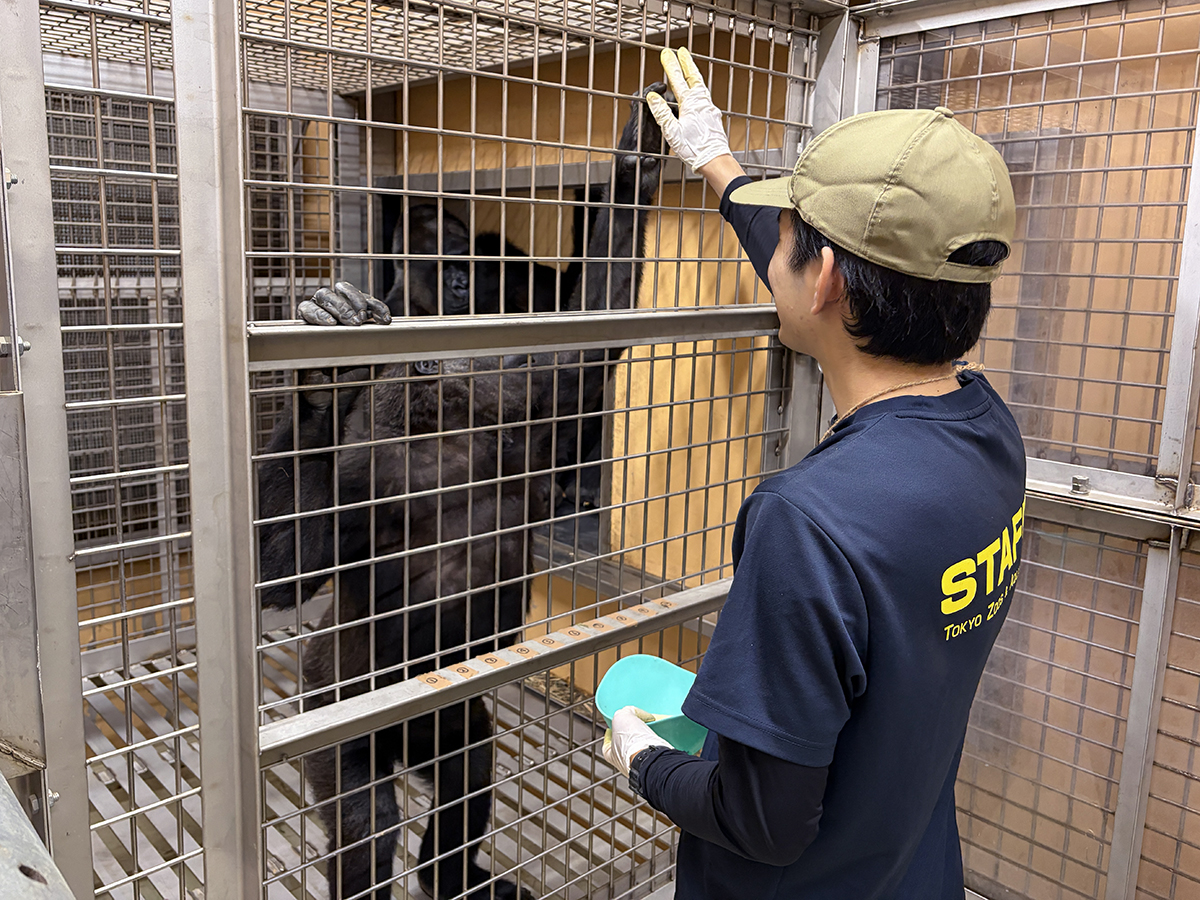
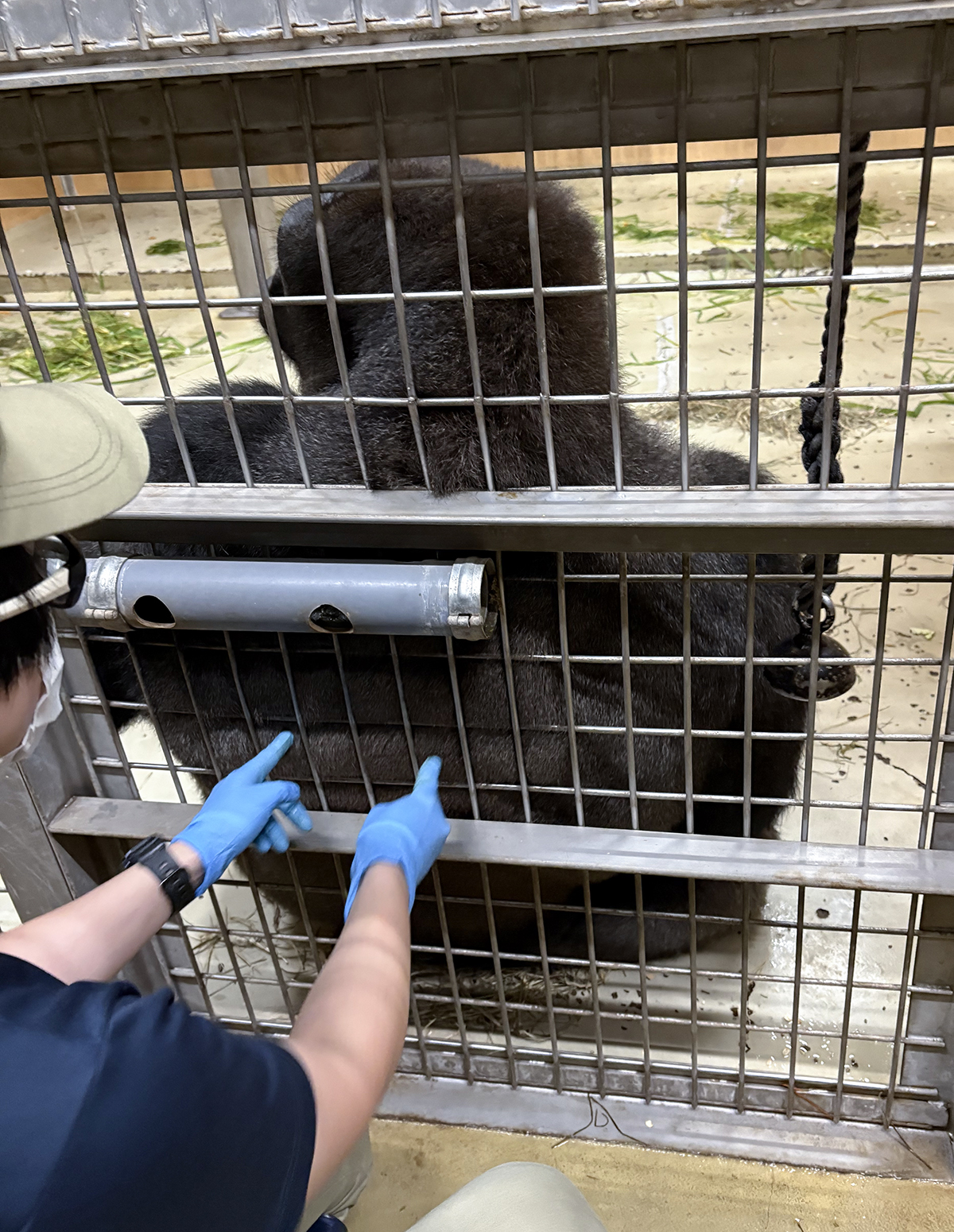
We plan to continue monitoring the condition of each gorilla and gradually increase the things they can do.
[Ueno Zoo East Garden Animal Care and Exhibition Staff]