

Get to know Giant Panda!
Giant Panda Classification
Giant Panda Classification
There has been much debate about what Giant Panda should be classified as. When examining their teeth, skeletons, digestive organs, etc., common characteristics are seen in both the Procyonidae and the Bears families of the Carnivora order. However, there is no definitive match between the two, so some have argued that they should be placed in a separate family, Giant Panda. Currently, they are classified as part of the Bears family based on the results of DNA testing and other factors.
Giant Panda 's Body
Giant Panda 's Body
From nose to tail: Approximately 150cm
Tail: 10-15cm
Shoulder height: approximately 90 cm
Weight: Males 100-120 kg, Females 90-100 kg
There are various theories about the reason for Giant Panda 's body color. One theory is that in the snowy alpine forests, their black and white bodies blend into the ink-painting-like scenery, making them ideal for protecting themselves from predators. Another theory is that their ears, limbs, and other parts of their bodies easily get cold in cold weather, so black helps absorb heat better and helps protect them from the cold. Another theory is that the black around their eyes is a way to intimidate predators or to communicate with other pandas.
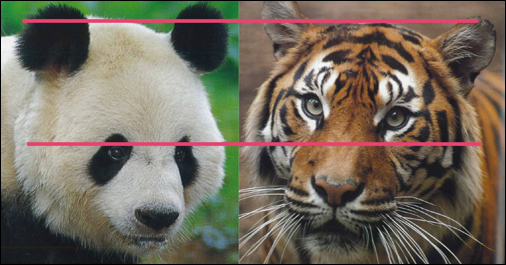
Compared to other animals, you'll notice that pandas' eyes and noses are closer together at the bottom of their faces, and that they have wide foreheads. This facial feature is common to infants and young animals. Also, many animals have large heads when they are babies, but as they grow, their bodies and legs get bigger and their head proportions get smaller. However, Giant Panda maintain a large head proportion even when they become adults. These two features -- a "young-looking face" and a "baby-like body shape" -- are two major points that make pandas "cute."
In fact, both of these reasons are due to the fact that they eat bamboo. The powerful jaw muscles that are required to chew and crush the tough bamboo are thick and extend from the temples to the top of the head, making the head look large and the facial features appear to be tilted downwards.
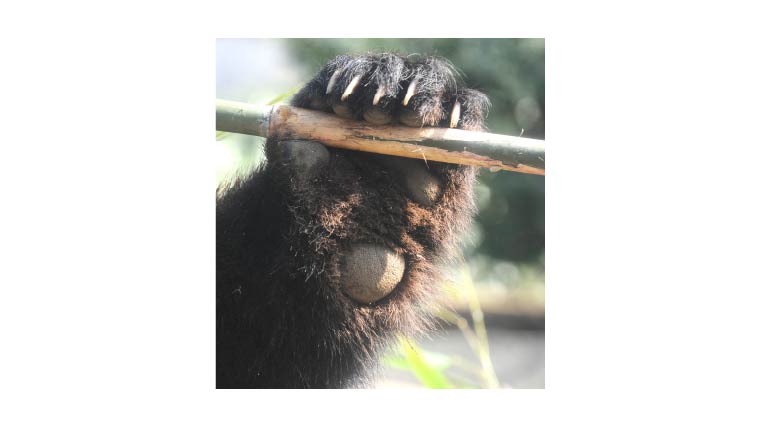
Like many other mammals, pandas have five fingers on each of their front and back feet. However, their front feet have a knob-like protrusion formed by an extension of the wrist bone, which allows them to firmly grip bamboo leaves and stems by pinching them between the original fingers. This protrusion is commonly known as the panda's "sixth finger" because it allows them to use their hands in the same way that humans use their thumbs to grasp objects. This "sixth finger" is an extension of the wrist bone on the thumb side, but there is also a similar protrusion under the pinky side, which some say also helps with grasping objects.
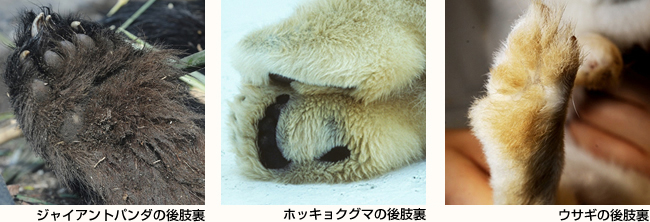
Giant Panda have cushions called paw pads on the soles of their feet, just like other bears, dogs, and cats. However, pandas have a lot of fur growing around their paw pads, and some pandas have such fluffy soles that the paw pads are no longer visible.
For pandas, who live in extremely cold, snowy regions, this hair appears to help them stay warm and prevent them from slipping on the snow. Polar Bear and hares also have similarly hairy soles.
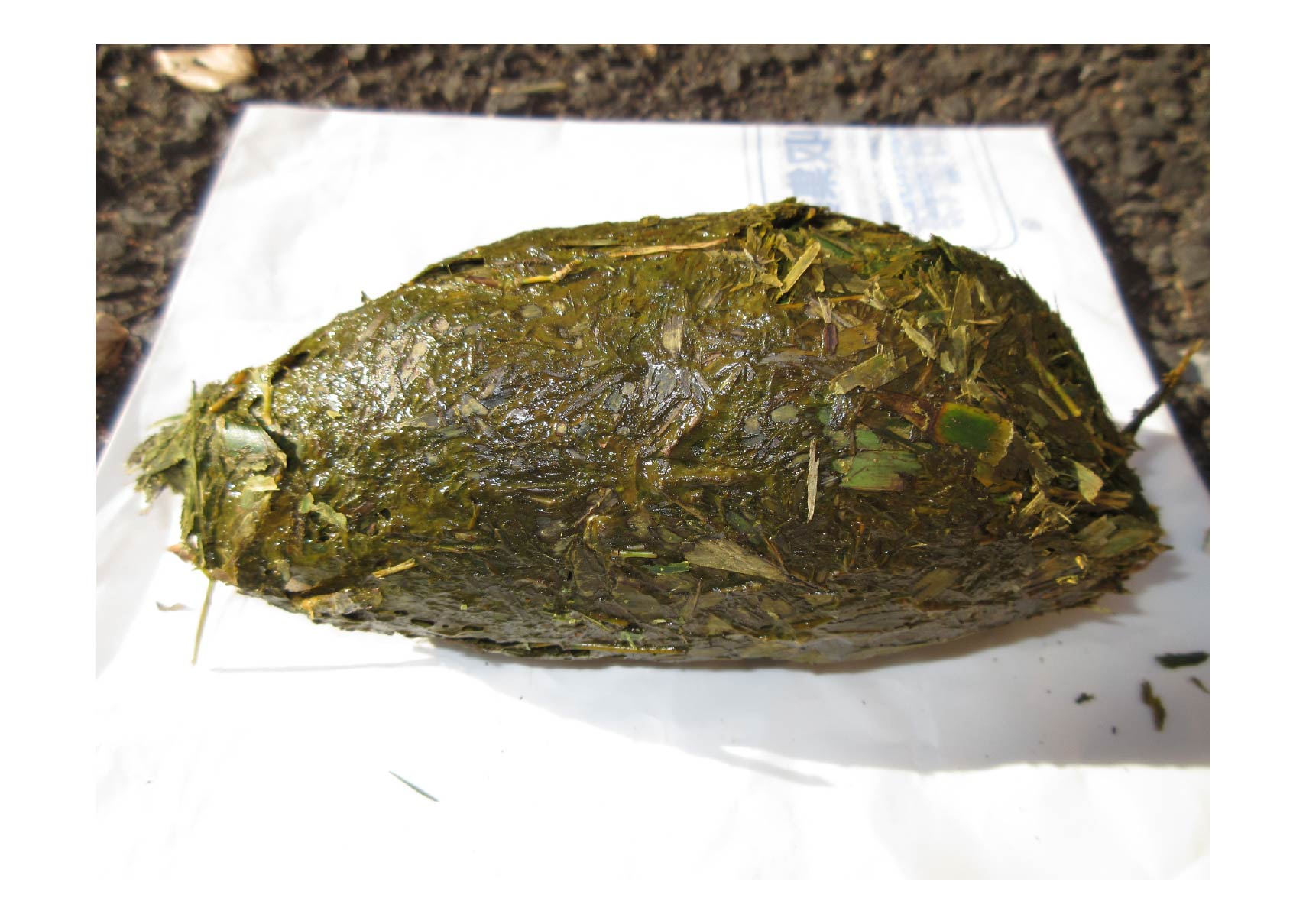
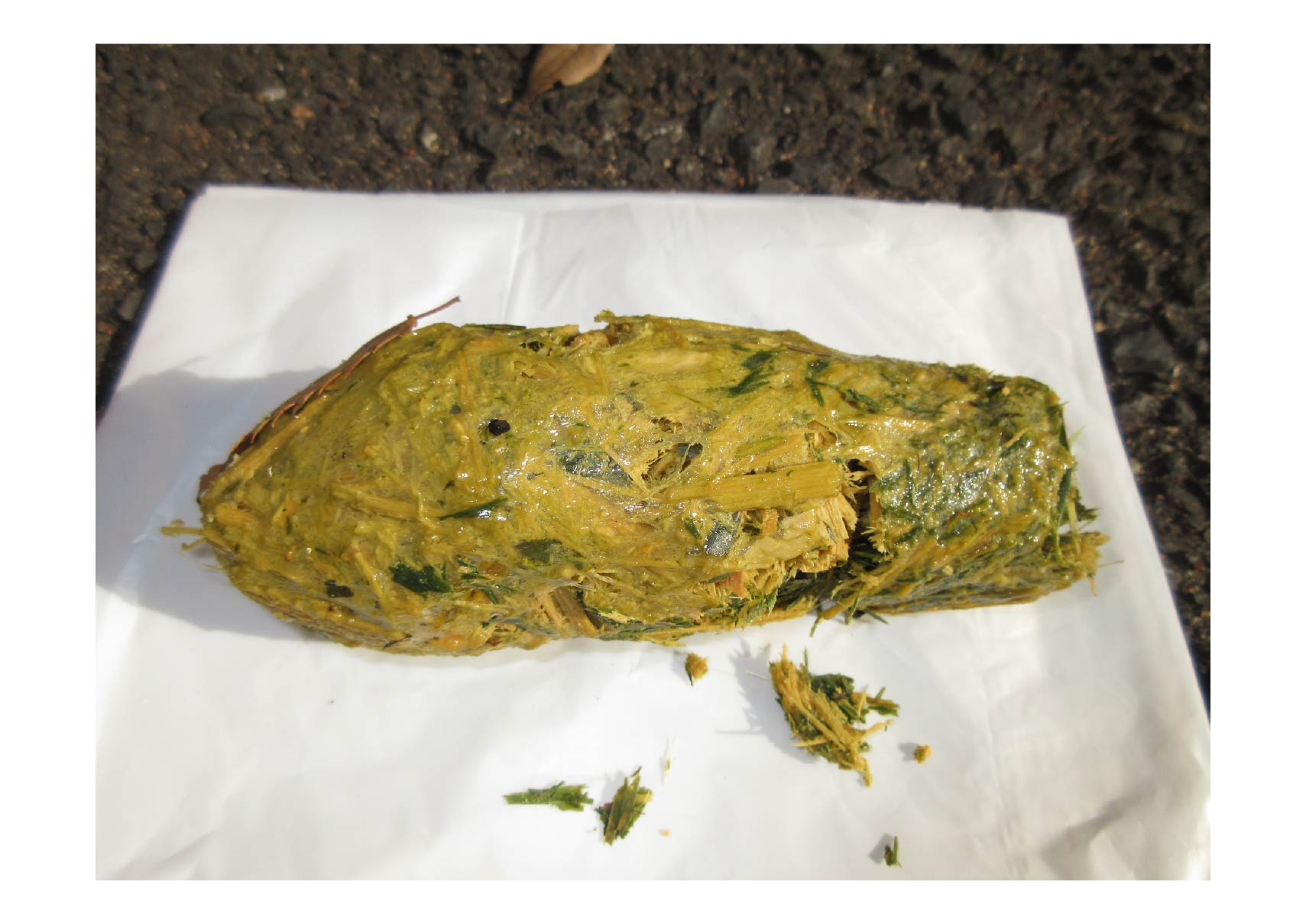
Giant Panda, like many carnivores, have intestines that are only about four times their body length (herbivores such as cows and sheep have intestines that are 20 to 25 times longer), and they do not have as many enzymes and microorganisms to digest plant fiber as herbivores. As a result, even if they eat bamboo, they are only able to digest about 20 to 30% of it, and most of it ends up in their feces intact. After eating bamboo leaves, they produce dark green feces that look like many leaves tightly pressed together. And after eating bamboo stalks, they produce yellowish feces that look like many clumps of bamboo stalks that have been cut into small pieces and crushed.
The life of Giant Panda
The life of Giant Panda
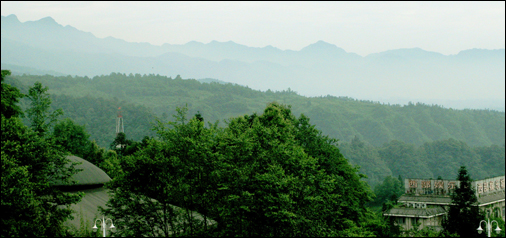
Wild Giant Panda currently live in the mountain forests of Sichuan, Shaanxi, and Gansu provinces in southwestern China, at altitudes of approximately 1,300 to 3,500 meters. According to research on fossils and other sources, the ancestors of Giant Panda appear approximately 3 million years ago, but at that time they were widely distributed in areas at lower altitudes than they are today.
After that, the panda's habitat was restricted to high mountains, likely to avoid natural predators and competition for food. However, the areas where pandas live rapidly decreased in the 19th century, mainly due to habitat development caused by population growth.
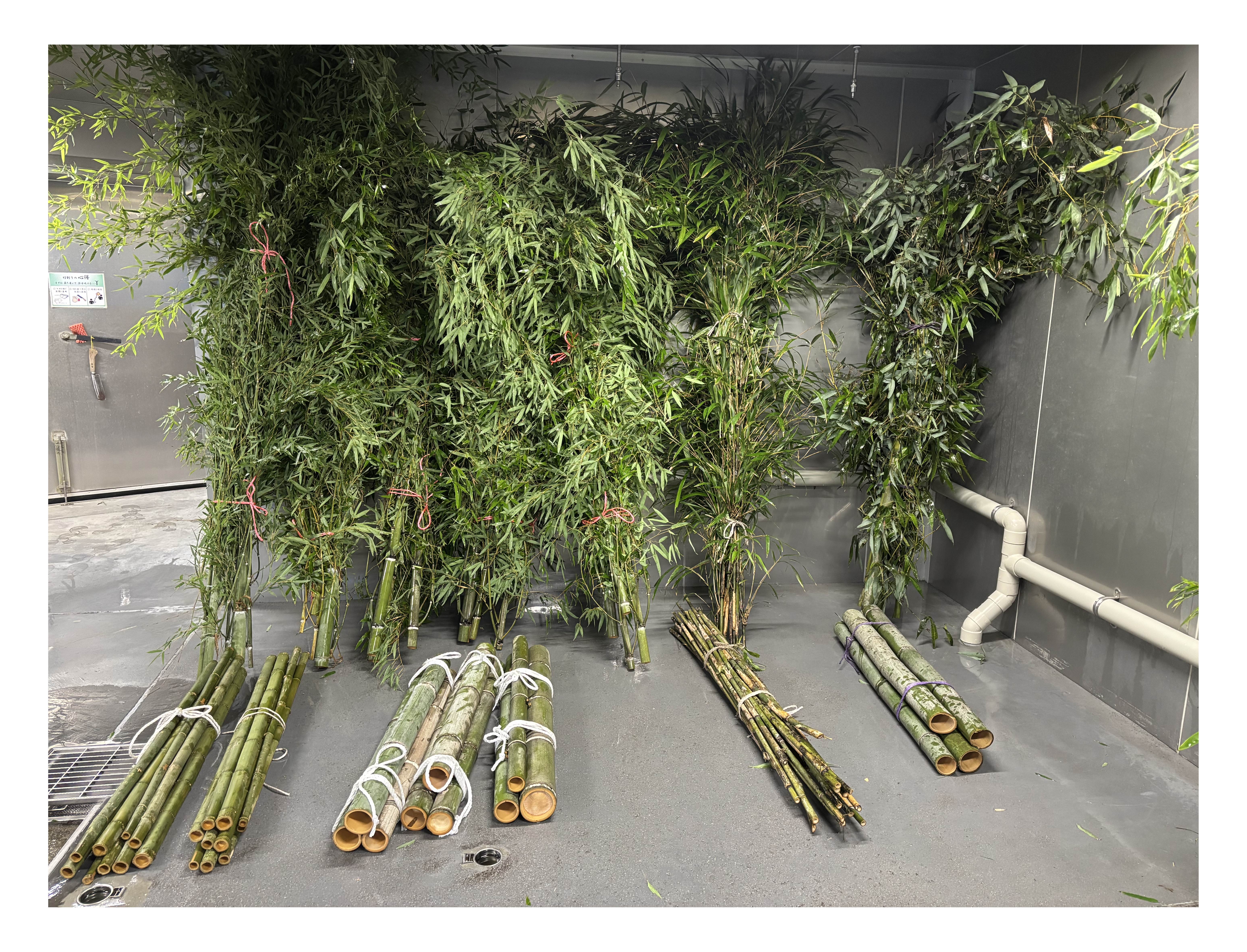
Giant Panda' main food source is bamboo. In the wild, more than 90% of their diet consists of bamboo leaves, stems, and shoots. However, they may also eat leaves and fruits of other plants, as well as small animals.
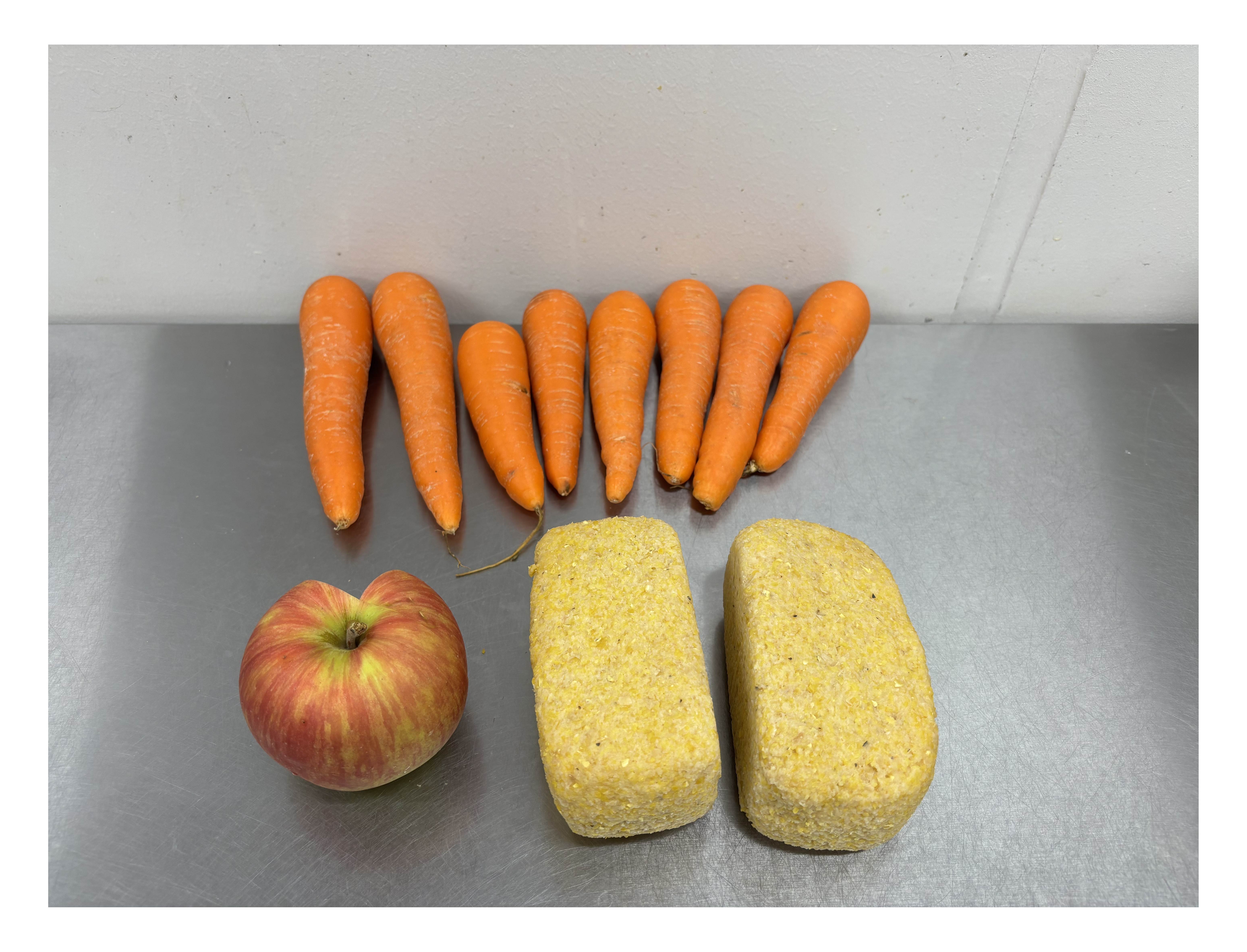
At Ueno Zoo, the animals are mainly fed bamboo leaves and stems, and in the spring they are also given bamboo shoots.However, as supplementary food or as a reward for training, they are also given small amounts of rice flour or corn flour dumplings, as well as vegetables and fruits such as carrots, apples, and persimmons.
Many bears are omnivorous, eating plant buds, flowers, fruits, small animals, etc. However, the mountainous regions of China where Giant Panda live are extremely cold and there is not much for bears to eat. On the other hand, bamboo grows in abundance, and it does not wither even in winter, keeping its green leaves all year round. It can be said that Giant Panda are animals that have chosen to live in the high mountains, eating bamboo, in order to avoid competition for food.
Although it is often misunderstood that bamboo has low nutritional value, it actually contains the same or more protein as other plants. Bamboo shoots in particular are even higher in protein and are rich in minerals.
Giant Panda often climb trees both in the wild and in captivity. They use them to check their surroundings from the tops of tall trees, and young pandas in particular seem to use them to rest in trees to protect themselves from predators.
They have very sharp claws that they use to climb tree trunks and branches, and their flexible bodies allow them to balance very well even on thin branches.
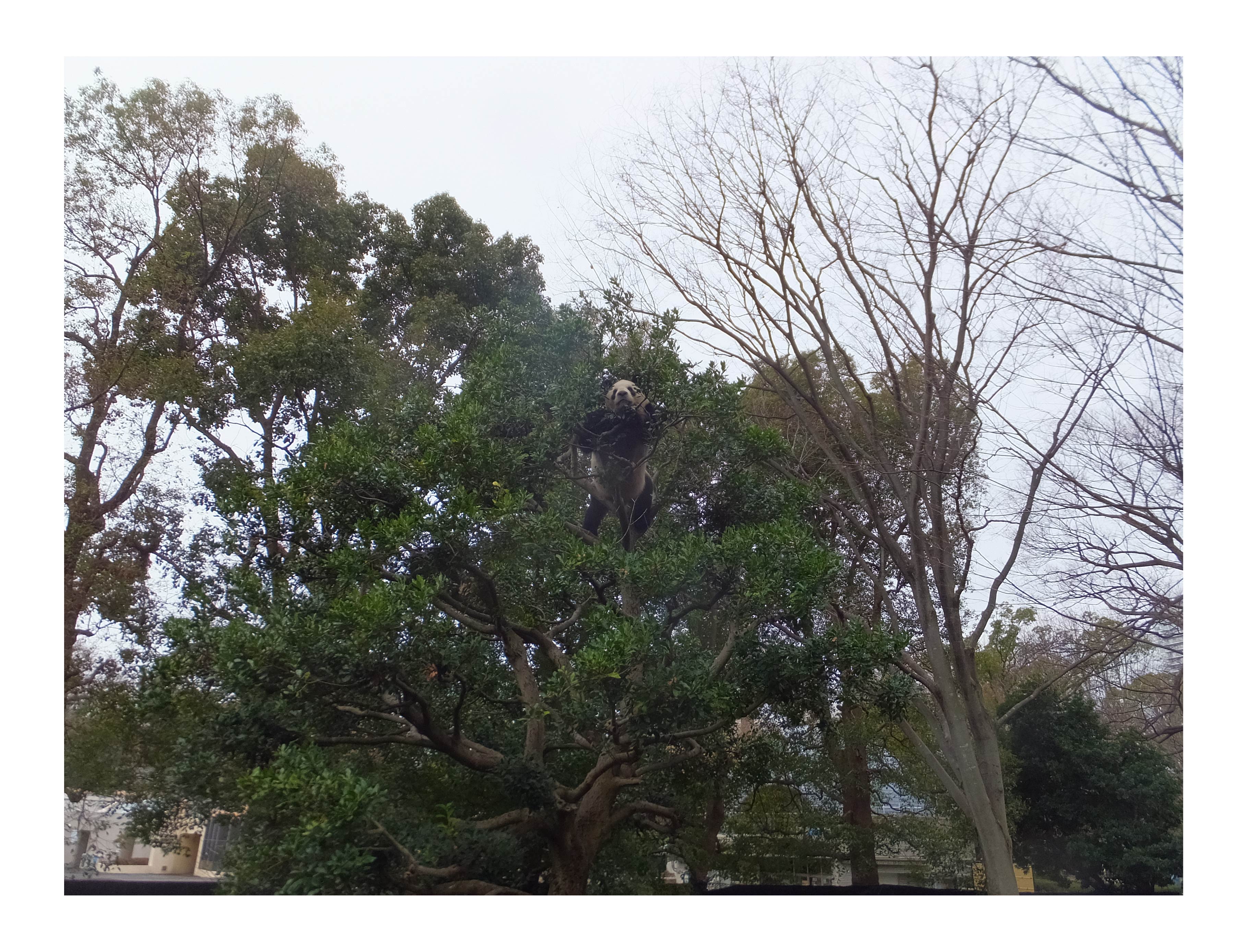
Giant Panda do not live in groups. Both males and females spend their time alone, except for a few short days during the mating season. The mother raises the cubs, but when they reach the age of one and a half, they begin to live away from their mothers. For this reason, even in zoos, they are usually kept individually. This is a "normal" lifestyle for Giant Panda.
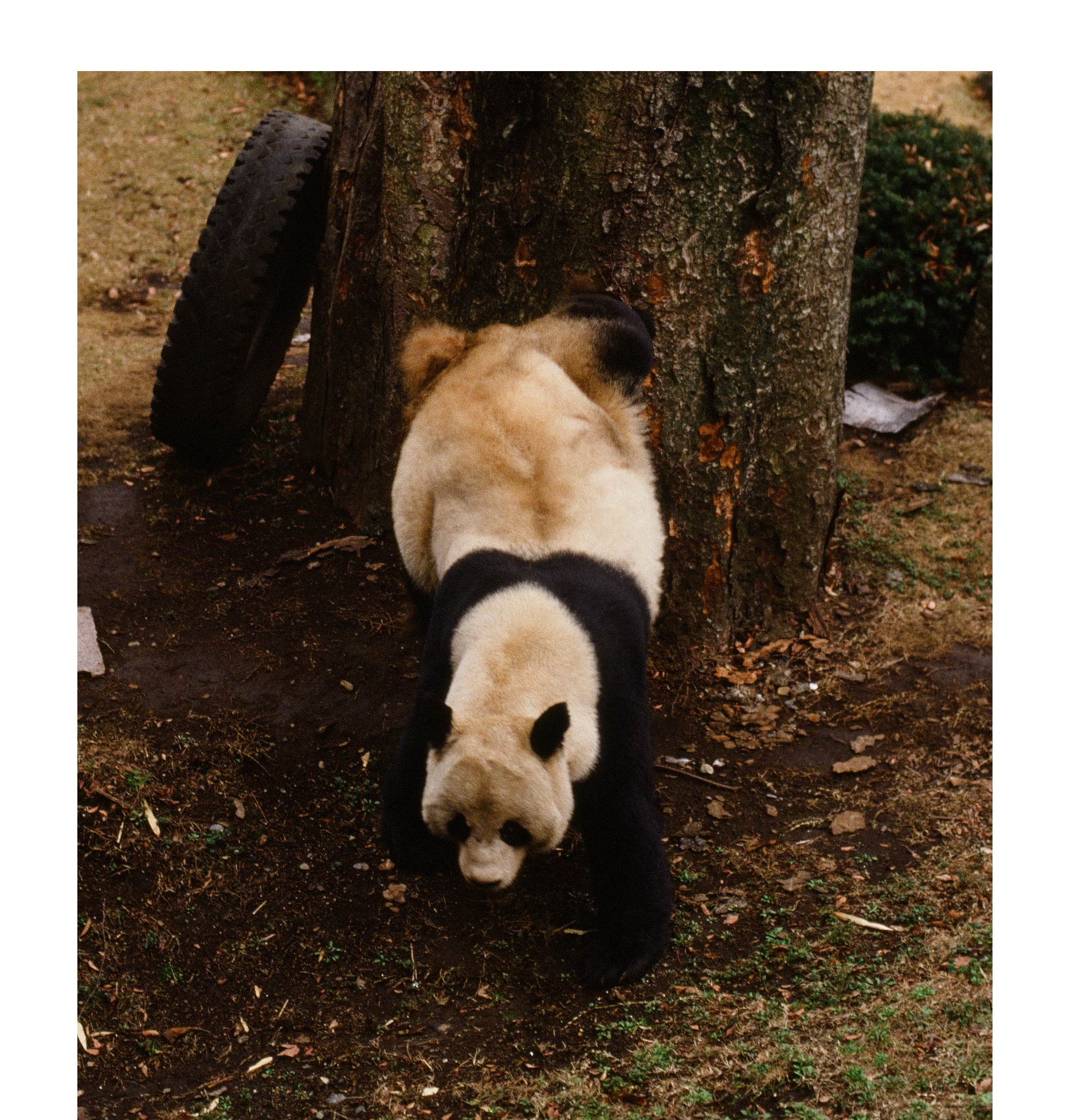
In the blind forest, scent is a convenient way to communicate information. Giant Panda use a behavior called "scent marking" to let other pandas know of their presence and to become aware of the presence of other pandas. This allows them to claim their territory, avoid each other, and even for males to sense when females are in heat and approach them.
To mark the area, they use secretions and urine from around the anus. They lower their tails and rub the secretions on the ground or on the protruding parts of trees or stones. Males may also stand upside down to mark the area higher.
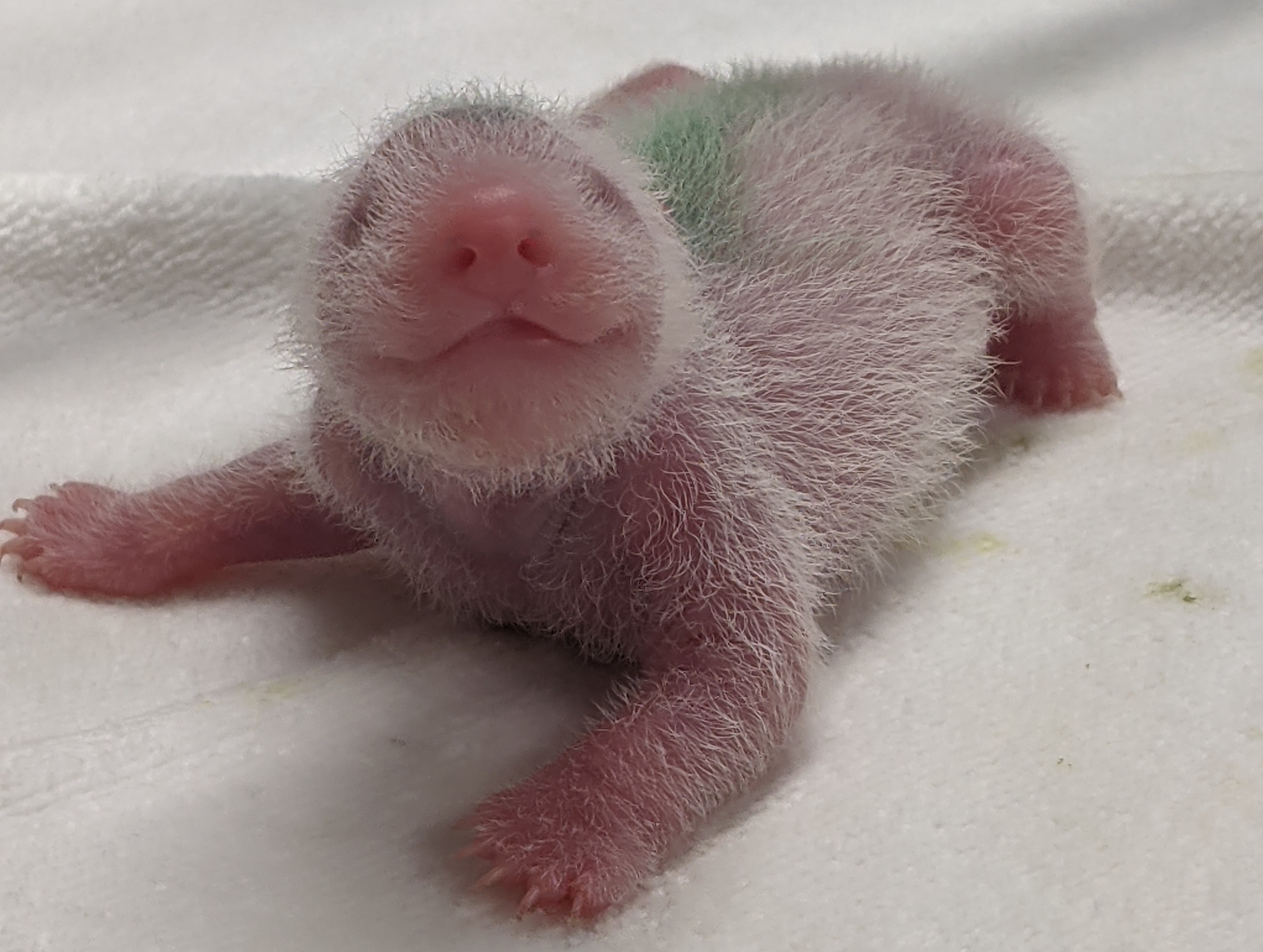
Giant Panda usually give birth to one cub at a time, but twins may also be born. At birth, the baby is about 15-17cm long and weighs about 100-150g. At about 1/1000th the size of an adult, they are born very small compared to other common mammals.
Immediately after birth, they have pink skin with short, sparse white hairs and no black or white markings. After about one week, black areas gradually begin to appear, and by the time they are one month old, they have developed the typical black and white markings of Giant Panda.
Generally, wild animals have a very high child mortality rate, and even after they manage to grow up, they continue to die due to various factors such as predators and lack of food, so it is very difficult to know how long their "lifespan" is.
Although captive animals live longer than in the wild, there are not enough examples to calculate an "average lifespan."