

Zoo Stock Species and the Red List
Zoo Stock Species and the Red List
Zoo Stock

This indicates that the species is included in the Second Zoo Stock Plan, which was formulated by the Tokyo Metropolitan Government in 2018. The plan sets goals for the next 10 years in three areas: "species conservation," "contribution to wildlife conservation," and "environmental education and conservation awareness." 124 animal species are included.
What is the Red List?
Based on scientific research, this is a list of wildlife classified by rank (category) indicating the degree of risk of extinction.
Livng Things Encyclopedia shows the categories (mainland and islands) assessed by the IUCN (International Union for Conservation of Nature) at the global level, the Ministry of the Environment for Japan, and the Tokyo Metropolitan Government for Tokyo.
The higher the category in each table, the higher the risk of extinction, and CR, EN, and VU are the three categories known as "endangered species." In Tokyo, species that are not at the NT (near threatened) level but are relatively rare are considered "species of concern."
|
IUCN categories |
|
|---|---|
|
EX |
extinction |
|
EW |
Extinction in the wild |
|
CR+EN |
— |
|
CR |
Serious crisis |
|
EN |
crisis |
|
VU |
emergency |
|
NT |
Near Threatened |
|
LC・○ |
Low Concern |
|
DD |
Data shortage |
|
LP |
— |
|
Japan (Ministry of the Environment) Category |
|
|---|---|
|
EX |
extinction |
|
EW |
Extinction in the wild |
|
CR+EN |
Endangered species |
|
CR |
Critically Endangered |
|
EN |
Endangered species |
|
VU |
Endangered species |
|
NT |
Near Threatened |
|
LC・○ |
— |
|
DD |
Lack of information |
|
LP |
Endangered |
|
Tokyo Category |
|
|---|---|
|
EX |
extinction |
|
EW |
Extinction in the wild |
|
CR+EN |
Endangered species |
|
CR |
Critically Endangered |
|
EN |
Endangered species |
|
VU |
Endangered species |
|
NT |
Near Threatened |
|
LC・○ |
Unranked |
|
DD |
Lack of information |
|
LP |
Endangered |
Creatures at Ueno Zoo
Creatures at Ueno Zoo

White-mantled Black Colobus
White-mantled Black Colobus
Colobus guereza
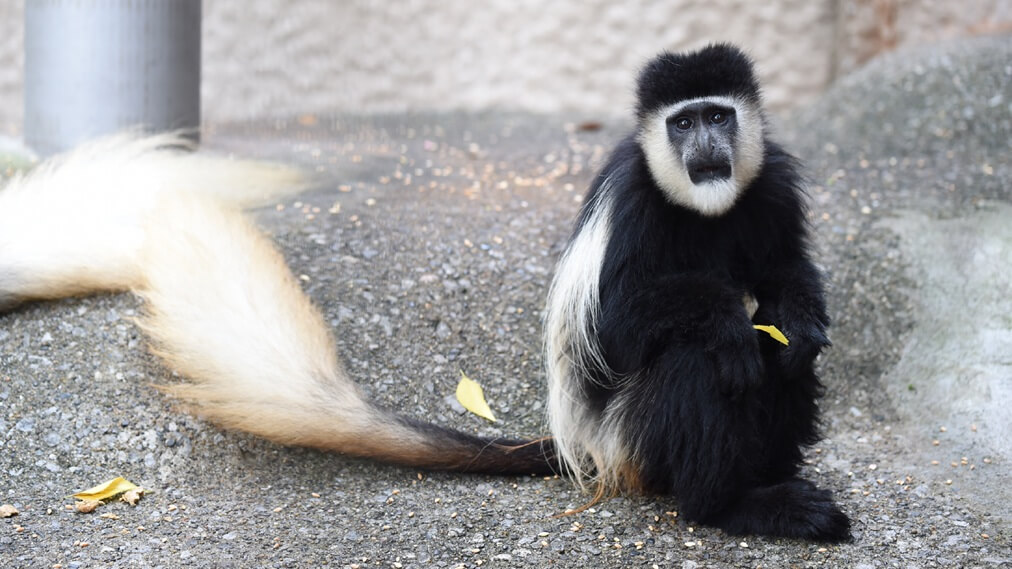
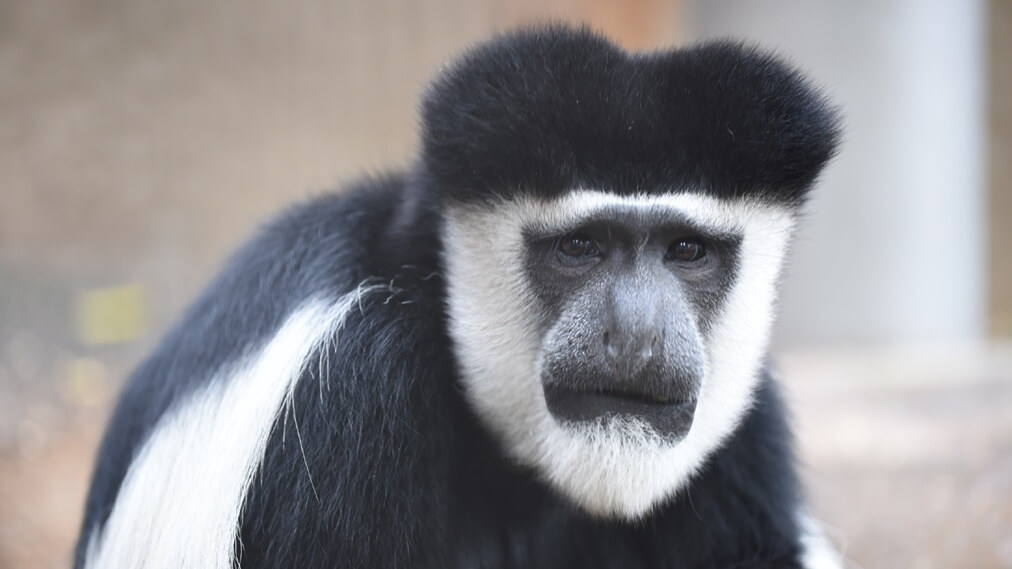
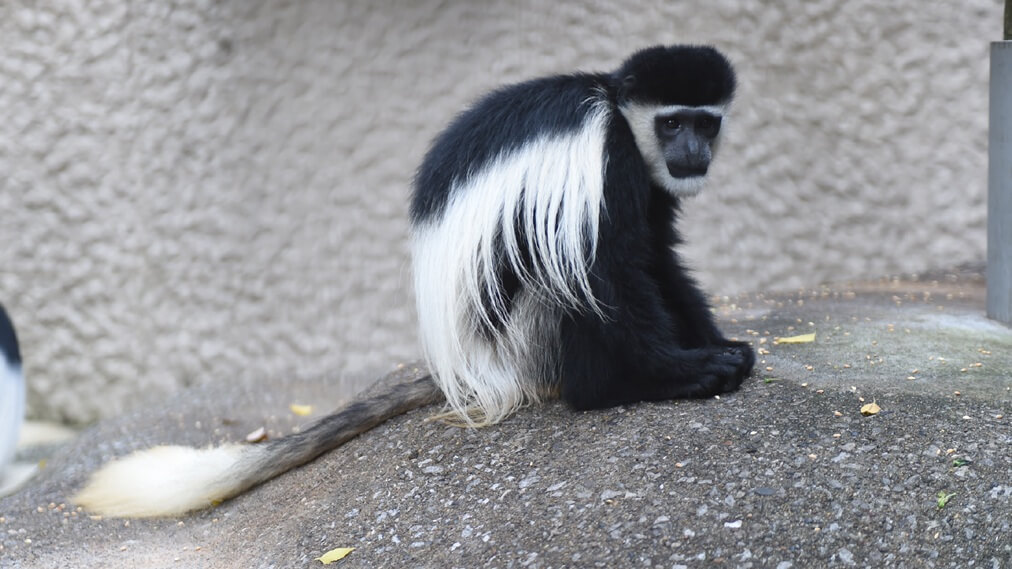
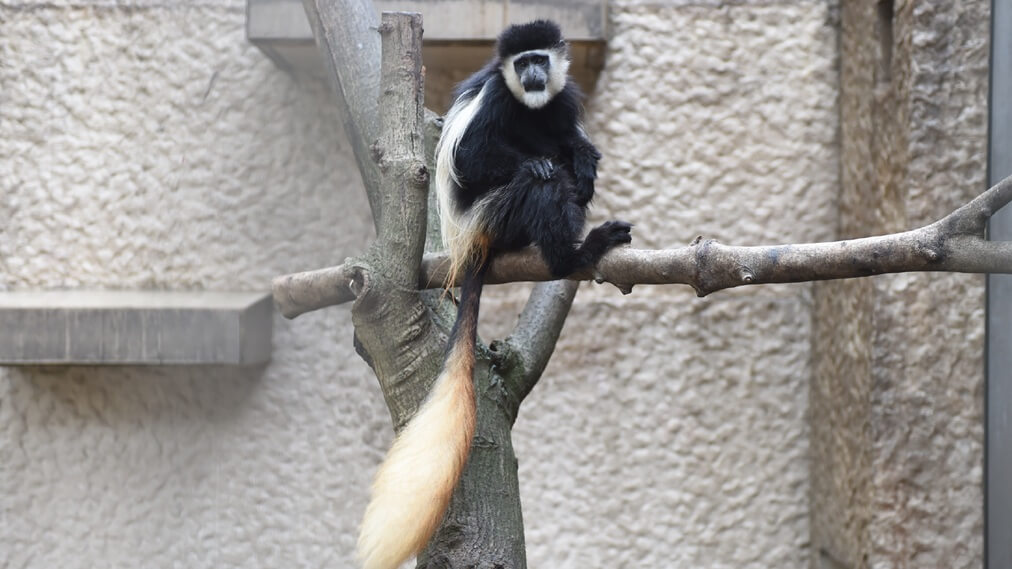
They have a beautiful coat with a striking black and white contrast, a long, bushy tail, and live in groups of several individuals. They use their tails for balance, leaping from branch to branch to move around. Newborn pups are covered in white fur, which is completely different from the adult coat color.
| classification | Mammalia, Primates, Azure-winged Magpie |
|---|---|
| English name | White-mantled Black Colobus |
| distribution | Tropical and subtropical regions of Central and East Africa (northern Congo, eastern Gabon, Cameroon, eastern Nigeria, Central African Republic, northeastern Zaire, northwestern Rwanda, Uganda, southern Sudan, Ethiopia, western Kenya, and Tanzania) |
| Residence | Forests and sparsely cultivated forests |
| Size |
Head torso length: approx. 58-62cm
Tail length: Approximately 67-69 cm Weight: Approximately 9.2 to 13.5 kg |
| food | They eat leaves, but also seeds, buds, young shoots, and immature fruits. |
| Red List |
IUCN: LC (Least Concern)
|
Watch your head while eating!
Their main food is leaves. Because they need to break down the hard fiber of plants into small pieces, they have thick chewing muscles from their cheeks to the top of their head. Therefore, you can see the muscles on their head moving every time they chew a leaf.