

Zoo Stock Species and the Red List
Zoo Stock Species and the Red List
Zoo Stock
This indicates that the species is included in the Second Zoo Stock Plan, which was formulated by the Tokyo Metropolitan Government in 2018. The plan sets goals for the next 10 years in three areas: "species conservation," "contribution to wildlife conservation," and "environmental education and conservation awareness." 124 animal species are included.
What is the Red List?
Based on scientific research, this is a list of wildlife classified by rank (category) indicating the degree of risk of extinction.
Livng Things Encyclopedia shows the categories (mainland and islands) assessed by the IUCN (International Union for Conservation of Nature) at the global level, the Ministry of the Environment for Japan, and the Tokyo Metropolitan Government for Tokyo.
The higher the category in each table, the higher the risk of extinction, and CR, EN, and VU are the three categories known as "endangered species." In Tokyo, species that are not at the NT (near threatened) level but are relatively rare are considered "species of concern."
|
IUCN categories |
|
|---|---|
|
EX |
extinction |
|
EW |
Extinction in the wild |
|
CR+EN |
— |
|
CR |
Serious crisis |
|
EN |
crisis |
|
VU |
emergency |
|
NT |
Near Threatened |
|
LC・○ |
Low Concern |
|
DD |
Data shortage |
|
LP |
— |
|
Japan (Ministry of the Environment) Category |
|
|---|---|
|
EX |
extinction |
|
EW |
Extinction in the wild |
|
CR+EN |
Endangered species |
|
CR |
Critically Endangered |
|
EN |
Endangered species |
|
VU |
Endangered species |
|
NT |
Near Threatened |
|
LC・○ |
— |
|
DD |
Lack of information |
|
LP |
Endangered |
|
Tokyo Category |
|
|---|---|
|
EX |
extinction |
|
EW |
Extinction in the wild |
|
CR+EN |
Endangered species |
|
CR |
Critically Endangered |
|
EN |
Endangered species |
|
VU |
Endangered species |
|
NT |
Near Threatened |
|
LC・○ |
Unranked |
|
DD |
Lack of information |
|
LP |
Endangered |
Creatures at Ueno Zoo
Creatures at Ueno Zoo

Tokyo Salamander
Tokyo Salamander
Hynobius tokyoensis
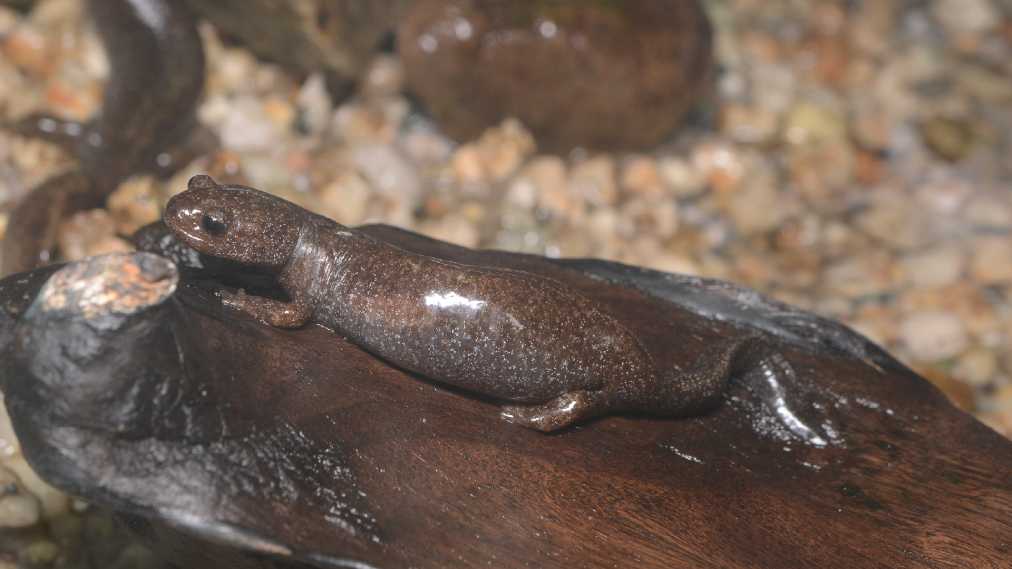
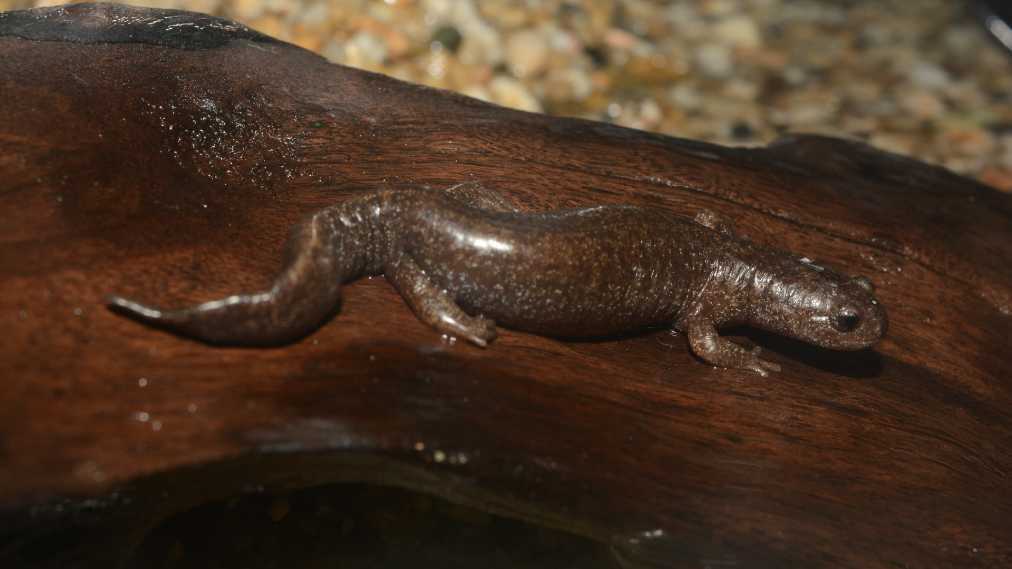
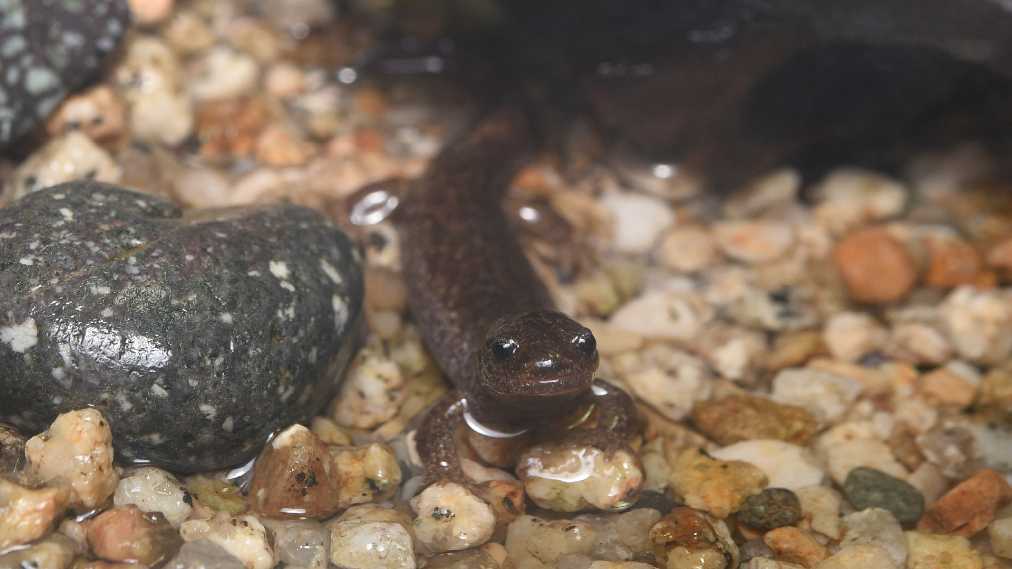
They have a rounded body and short legs. Their body color varies, from ochre to nearly black, and some have spots on the sides of their bodies. They live alone and are nocturnal, spending the day hiding in fallen leaves or in mole or mouse nests. The breeding season runs from early spring through the rainy season, with several males fighting over one female. Some live for around 10 years.
| classification | Amphibians, Caudata, Hynobiidae |
|---|---|
| English name | Tokyo Salamander |
| distribution | Kanto region to southern Fukushima Prefecture |
| Residence | Hilly areas up to about 300m above sea level, and low mountain forests with spring water |
| Size |
Total length 8~13cm
Weight: 3-10g |
| food | Larvae: Eat animals such as zooplankton and aquatic insects After metamorphosis: Eats spiders, insects, earthworms, and other animals |
| Red List |
IUCN: VU (Very)
Japan: EN (Endangered Category IB) Tokyo Metropolitan Government: EN (Endangered Species Category IB) |