

Zoo Stock Species and the Red List
Zoo Stock Species and the Red List
Zoo Stock
This indicates that the species is included in the Second Zoo Stock Plan, which was formulated by the Tokyo Metropolitan Government in 2018. The plan sets goals for the next 10 years in three areas: "species conservation," "contribution to wildlife conservation," and "environmental education and conservation awareness." 124 animal species are included.
What is the Red List?
Based on scientific research, this is a list of wildlife classified by rank (category) indicating the degree of risk of extinction.
Livng Things Encyclopedia shows the categories (mainland and islands) assessed by the IUCN (International Union for Conservation of Nature) at the global level, the Ministry of the Environment for Japan, and the Tokyo Metropolitan Government for Tokyo.
The higher the category in each table, the higher the risk of extinction, and CR, EN, and VU are the three categories known as "endangered species." In Tokyo, species that are not at the NT (near threatened) level but are relatively rare are considered "species of concern."
|
IUCN categories |
|
|---|---|
|
EX |
extinction |
|
EW |
Extinction in the wild |
|
CR+EN |
— |
|
CR |
Serious crisis |
|
EN |
crisis |
|
VU |
emergency |
|
NT |
Near Threatened |
|
LC・○ |
Low Concern |
|
DD |
Data shortage |
|
LP |
— |
|
Japan (Ministry of the Environment) Category |
|
|---|---|
|
EX |
extinction |
|
EW |
Extinction in the wild |
|
CR+EN |
Endangered species |
|
CR |
Critically Endangered |
|
EN |
Endangered species |
|
VU |
Endangered species |
|
NT |
Near Threatened |
|
LC・○ |
— |
|
DD |
Lack of information |
|
LP |
Endangered |
|
Tokyo Category |
|
|---|---|
|
EX |
extinction |
|
EW |
Extinction in the wild |
|
CR+EN |
Endangered species |
|
CR |
Critically Endangered |
|
EN |
Endangered species |
|
VU |
Endangered species |
|
NT |
Near Threatened |
|
LC・○ |
Unranked |
|
DD |
Lack of information |
|
LP |
Endangered |
Creatures at Ueno Zoo
Creatures at Ueno Zoo
Brown Bear
Ursus arctos yesoensis
Brown Bear
Ursus arctos yesoensisSubspecies: Hokkaido Brown Bear
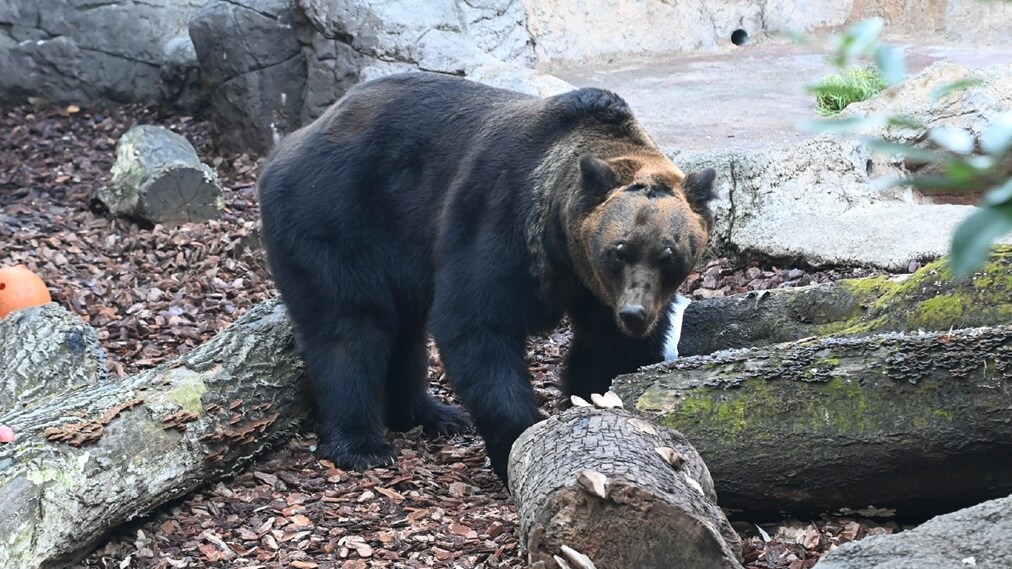
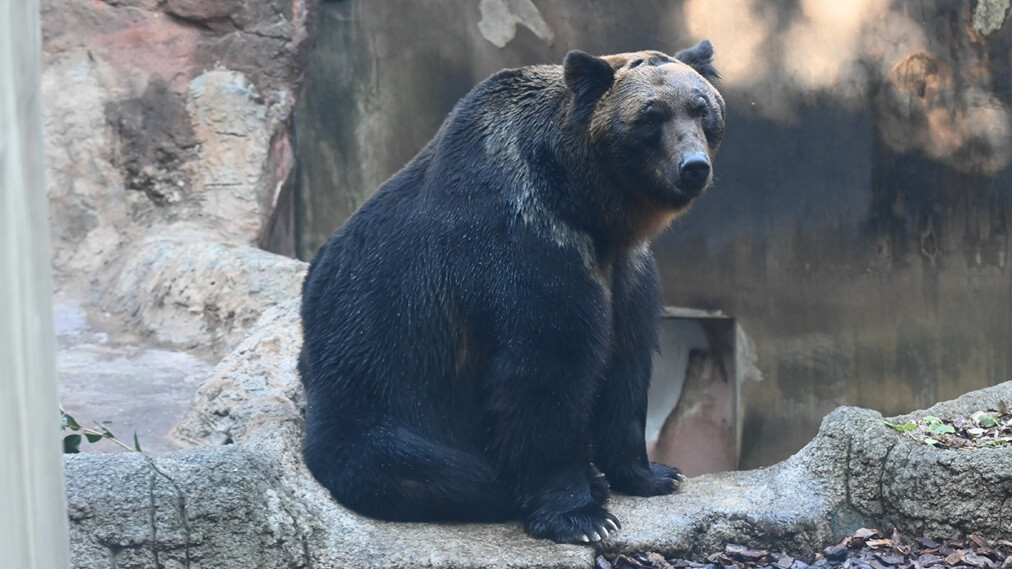
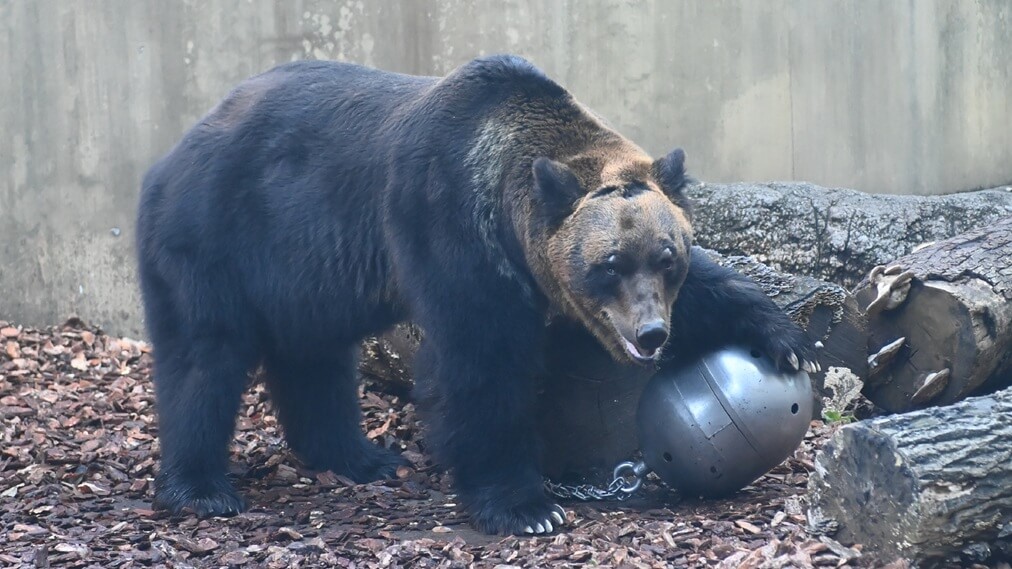
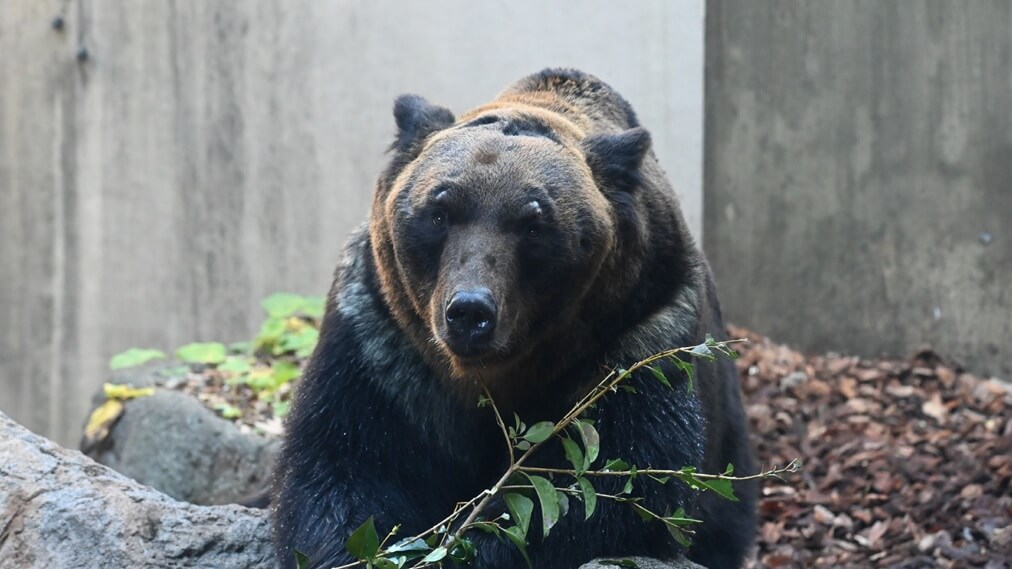
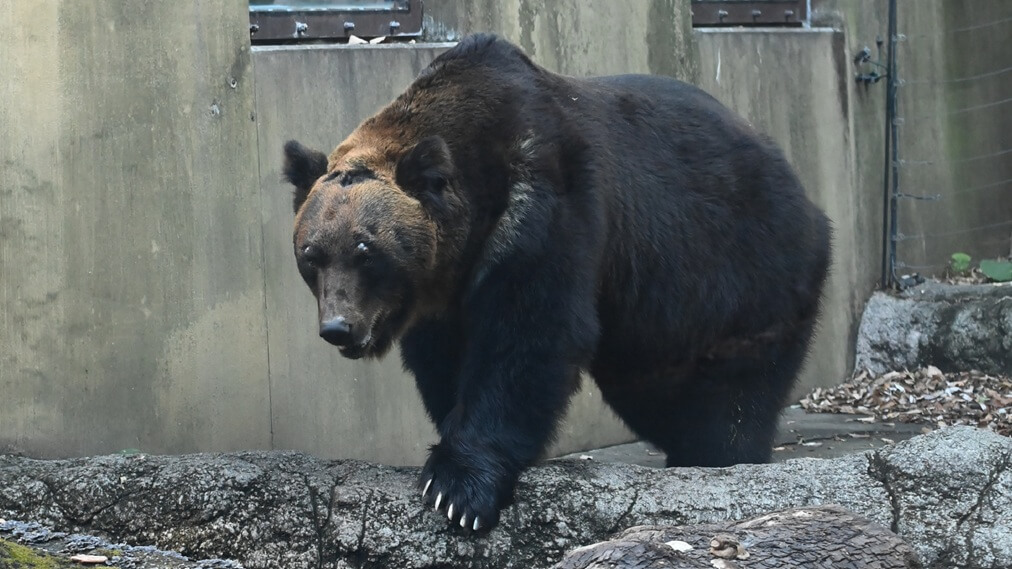
This subspecies of Brown Bear is found in Hokkaido, Japan, and is the largest land animal found in Japan. Although it is a carnivore, Hokkaido Brown Bear 's diet is mostly plant-based. It eats a lot in the fall to store up fat, and then hibernates in its den in winter. However, its body temperature only drops by a few degrees, and females give birth to 1 to 3 cubs during the winter.
| classification | Mammalia, Carnivora, Ursidae |
|---|---|
| English name | Hokkaido Brown Bear |
| distribution | Japan (Hokkaido) |
| Residence | Forest areas in mountainous and hilly regions and the natural herbaceous areas between them |
| Size |
Head torso length: 1.3~2m
Weight: Males 150-400 kg, females 100-200 kg |
| food | They are omnivorous, mainly eating plants and insects such as ants. In autumn, they feed on fruits, acorns, salmon, etc. |
| Red List |
IUCN: LC (Least Concern)
|
What front legs?
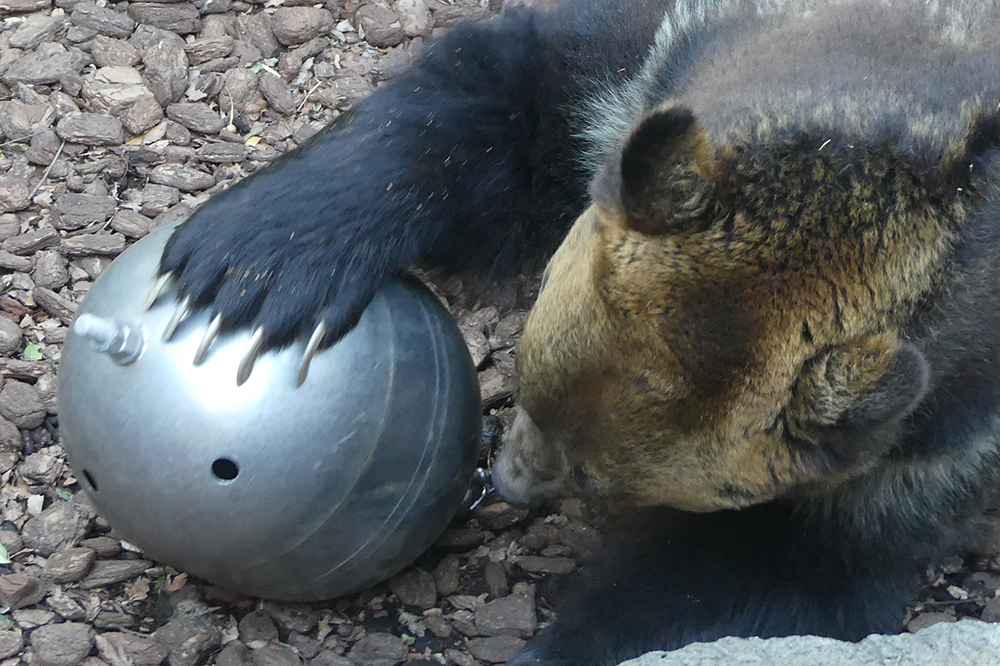
They have large front paws with five sharp claws. They use these paws to dig in the ground in search of food, and to push fallen trees aside to feel underneath. At Ueno Zoo, they roll an iron ball weighing over 20 kg to extract food from inside.
Blackened wall
The flat wall at the back of the exhibit is black and dirty all the way up to the top. This is where Brown Bear stand up and rub their backs against the wall, spreading their scent and making their presence known.