

Zoo Stock Species and the Red List
Zoo Stock Species and the Red List
Zoo Stock
This indicates that the species is included in the Second Zoo Stock Plan, which was formulated by the Tokyo Metropolitan Government in 2018. The plan sets goals for the next 10 years in three areas: "species conservation," "contribution to wildlife conservation," and "environmental education and conservation awareness." 124 animal species are included.
What is the Red List?
Based on scientific research, this is a list of wildlife classified by rank (category) indicating the degree of risk of extinction.
Livng Things Encyclopedia shows the categories (mainland and islands) assessed by the IUCN (International Union for Conservation of Nature) at the global level, the Ministry of the Environment for Japan, and the Tokyo Metropolitan Government for Tokyo.
The higher the category in each table, the higher the risk of extinction, and CR, EN, and VU are the three categories known as "endangered species." In Tokyo, species that are not at the NT (near threatened) level but are relatively rare are considered "species of concern."
|
IUCN categories |
|
|---|---|
|
EX |
extinction |
|
EW |
Extinction in the wild |
|
CR+EN |
— |
|
CR |
Serious crisis |
|
EN |
crisis |
|
VU |
emergency |
|
NT |
Near Threatened |
|
LC・○ |
Low Concern |
|
DD |
Data shortage |
|
LP |
— |
|
Japan (Ministry of the Environment) Category |
|
|---|---|
|
EX |
extinction |
|
EW |
Extinction in the wild |
|
CR+EN |
Endangered species |
|
CR |
Critically Endangered |
|
EN |
Endangered species |
|
VU |
Endangered species |
|
NT |
Near Threatened |
|
LC・○ |
— |
|
DD |
Lack of information |
|
LP |
Endangered |
|
Tokyo Category |
|
|---|---|
|
EX |
extinction |
|
EW |
Extinction in the wild |
|
CR+EN |
Endangered species |
|
CR |
Critically Endangered |
|
EN |
Endangered species |
|
VU |
Endangered species |
|
NT |
Near Threatened |
|
LC・○ |
Unranked |
|
DD |
Lack of information |
|
LP |
Endangered |
Creatures at Ueno Zoo
Creatures at Ueno Zoo
Harbor Seal
Harbor Seal
Phoca vitulina stejnegeri
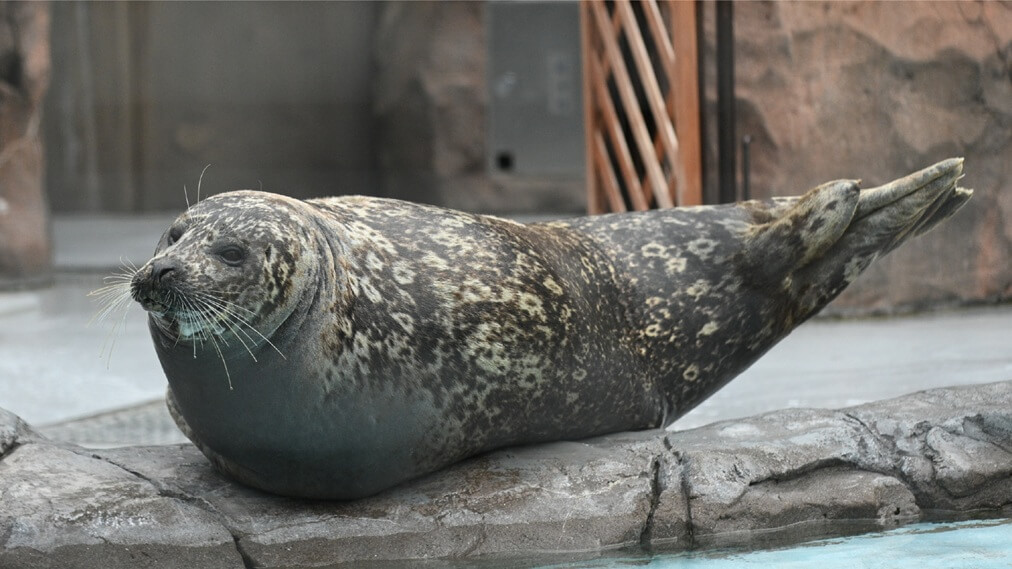
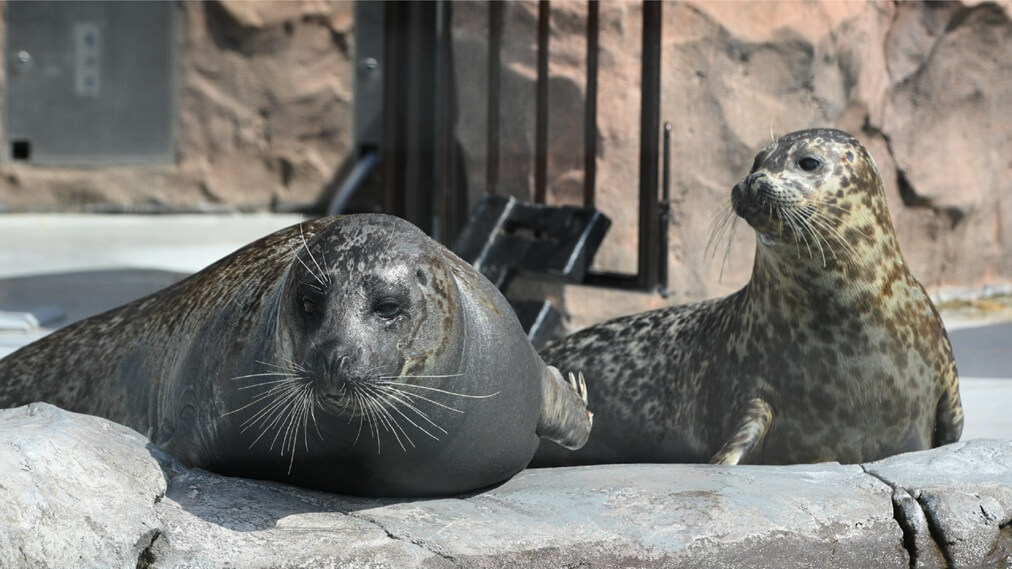
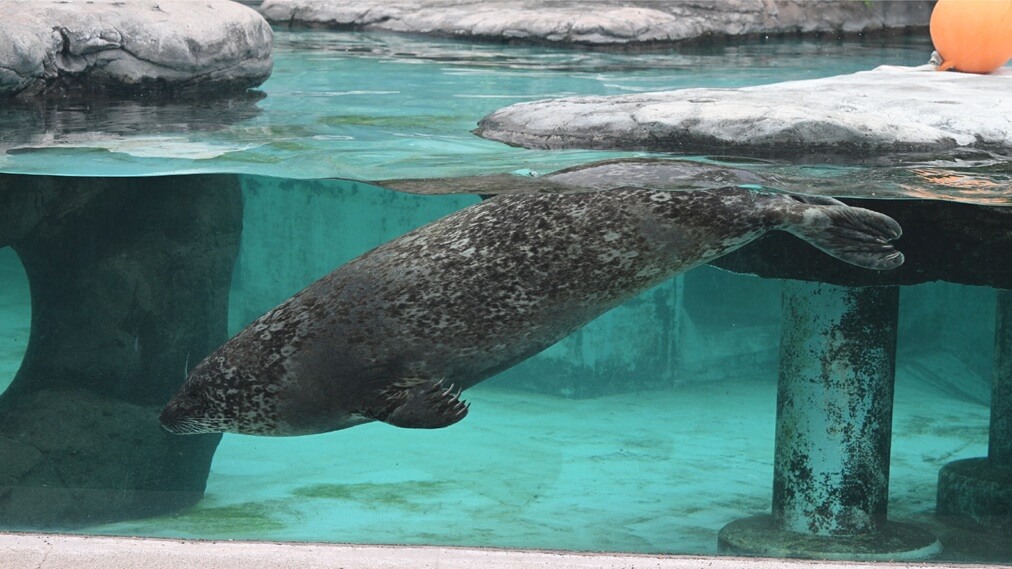
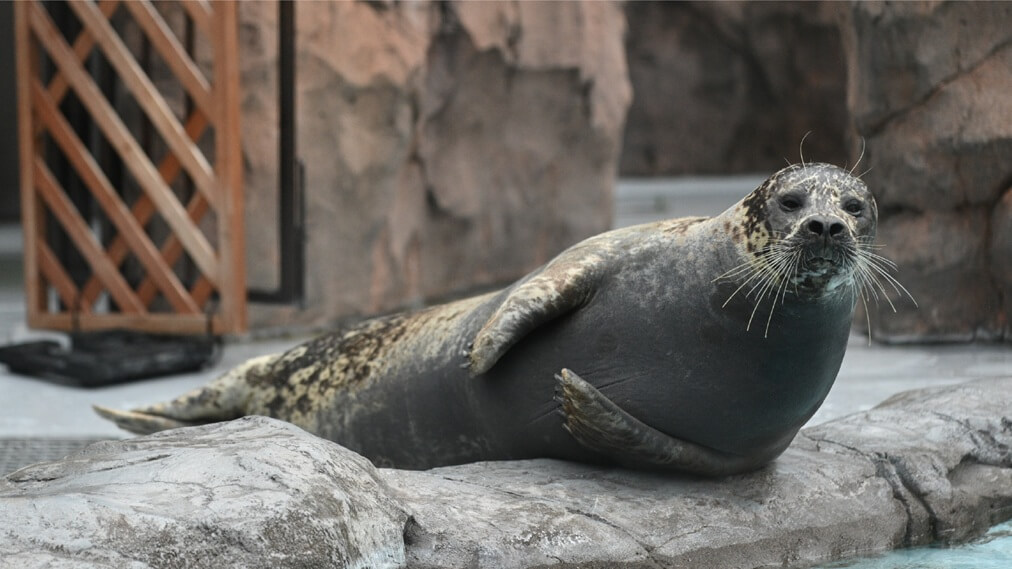
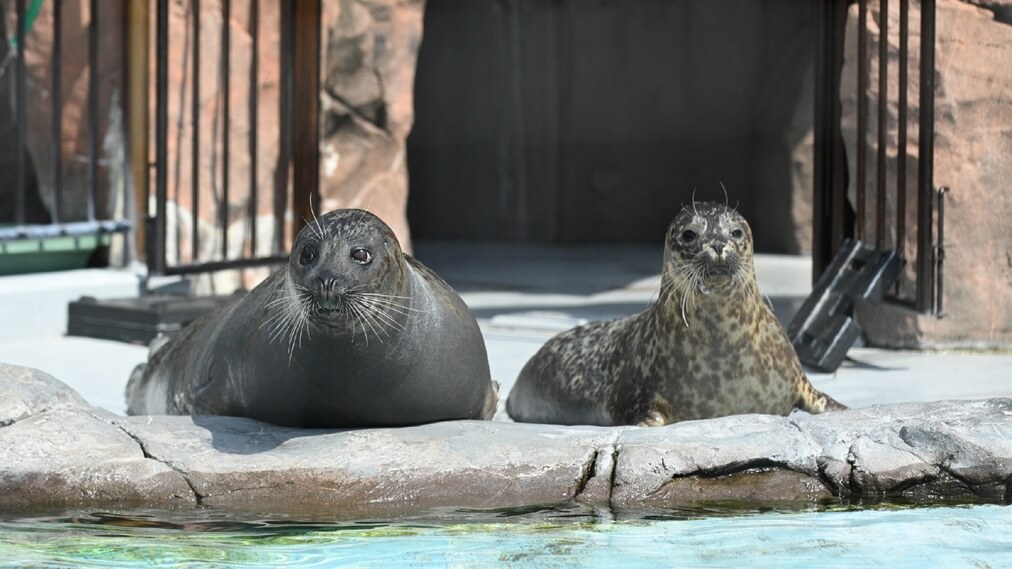
The spotted pattern on its body resembles the shape of a coin with holes in it, hence the name "zenigata" (money-shaped) seal. Its streamlined body offers almost no resistance to water, and it swims quickly, paddling with its two fan-shaped hind legs like a fish's tail fin, to catch fish. It generally rests on land, but because it can stay submerged for long periods of time, it will sometimes rest at the bottom of the water.
| classification | Mammalia, Carnivora, Phocidae |
|---|---|
| English name | Harbor Seal |
| distribution | North Pacific to North Atlantic |
| Residence | Coastal, reef, freshwater, marine |
| Size |
Head and body length: Male 160-170cm, Female 150-156cm
Weight: Males 110-120 kg, females 80-90 g |
| food | Fish, shrimp, and other crustaceans |
| Red List |
IUCN: LC (Least Concern)
Japan: NT (Near Threatened) |
Let's look for ears
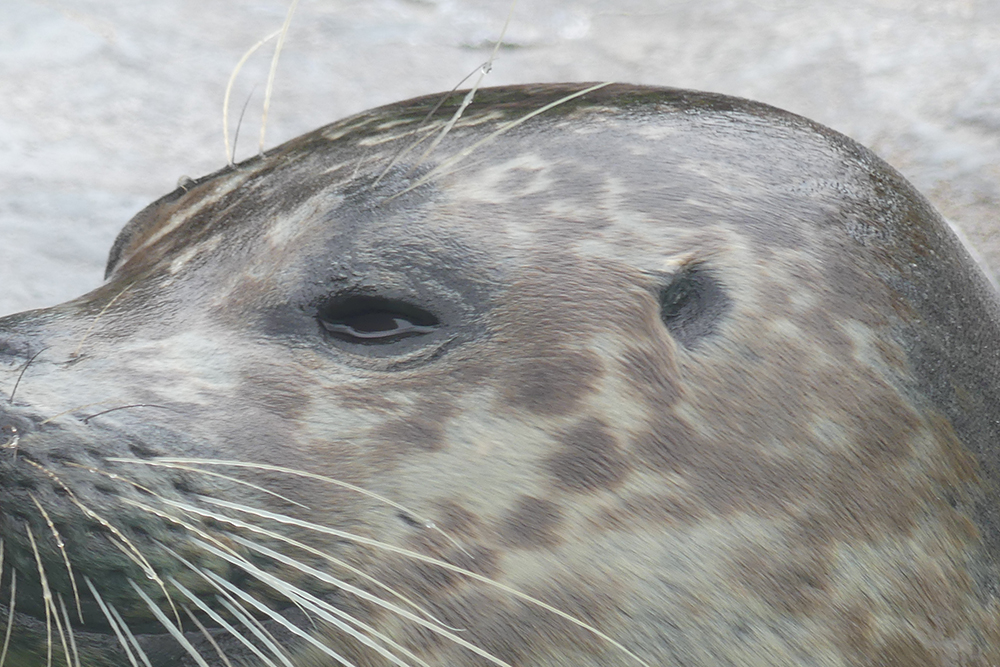
There are no protruding parts (ears) at all, just holes. It is thought that if there were protruding parts, they would increase resistance in the water, and furthermore, body heat would be lost through these holes in the cold water.
His face is covered in beard
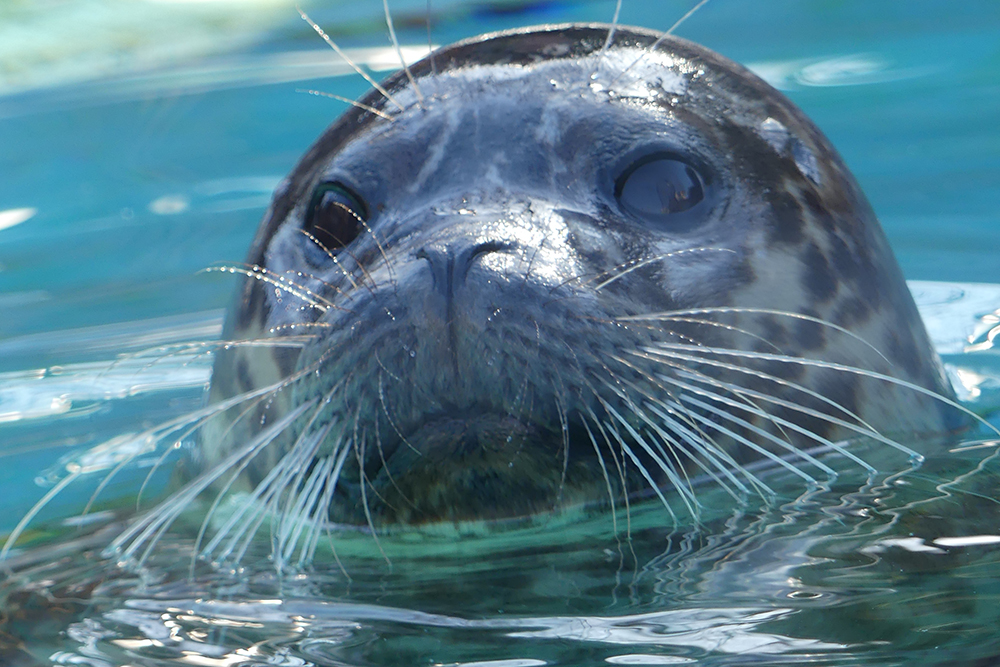
They have many whiskers on their cheeks and above their eyes. In the water, they use their whiskers to sense the water currents, allowing them to locate fish and obstacles. These whiskers are thicker and sturdier than the whiskers used by animals like tigers in the air.