

Zoo Stock Species and the Red List
Zoo Stock Species and the Red List
Zoo Stock
This indicates that the species is included in the Second Zoo Stock Plan, which was formulated by the Tokyo Metropolitan Government in 2018. The plan sets goals for the next 10 years in three areas: "species conservation," "contribution to wildlife conservation," and "environmental education and conservation awareness." 124 animal species are included.
What is the Red List?
Based on scientific research, this is a list of wildlife classified by rank (category) indicating the degree of risk of extinction.
Livng Things Encyclopedia shows the categories (mainland and islands) assessed by the IUCN (International Union for Conservation of Nature) at the global level, the Ministry of the Environment for Japan, and the Tokyo Metropolitan Government for Tokyo.
The higher the category in each table, the higher the risk of extinction, and CR, EN, and VU are the three categories known as "endangered species." In Tokyo, species that are not at the NT (near threatened) level but are relatively rare are considered "species of concern."
|
IUCN categories |
|
|---|---|
|
EX |
extinction |
|
EW |
Extinction in the wild |
|
CR+EN |
— |
|
CR |
Serious crisis |
|
EN |
crisis |
|
VU |
emergency |
|
NT |
Near Threatened |
|
LC・○ |
Low Concern |
|
DD |
Data shortage |
|
LP |
— |
|
Japan (Ministry of the Environment) Category |
|
|---|---|
|
EX |
extinction |
|
EW |
Extinction in the wild |
|
CR+EN |
Endangered species |
|
CR |
Critically Endangered |
|
EN |
Endangered species |
|
VU |
Endangered species |
|
NT |
Near Threatened |
|
LC・○ |
— |
|
DD |
Lack of information |
|
LP |
Endangered |
|
Tokyo Category |
|
|---|---|
|
EX |
extinction |
|
EW |
Extinction in the wild |
|
CR+EN |
Endangered species |
|
CR |
Critically Endangered |
|
EN |
Endangered species |
|
VU |
Endangered species |
|
NT |
Near Threatened |
|
LC・○ |
Unranked |
|
DD |
Lack of information |
|
LP |
Endangered |
Creatures at Ueno Zoo
Creatures at Ueno Zoo

Black Rhinoceros
Subspecies: Eastern Black Rhinoceros
Black Rhinoceros
Subspecies: Eastern Black RhinocerosDiceros bicornis michaeli
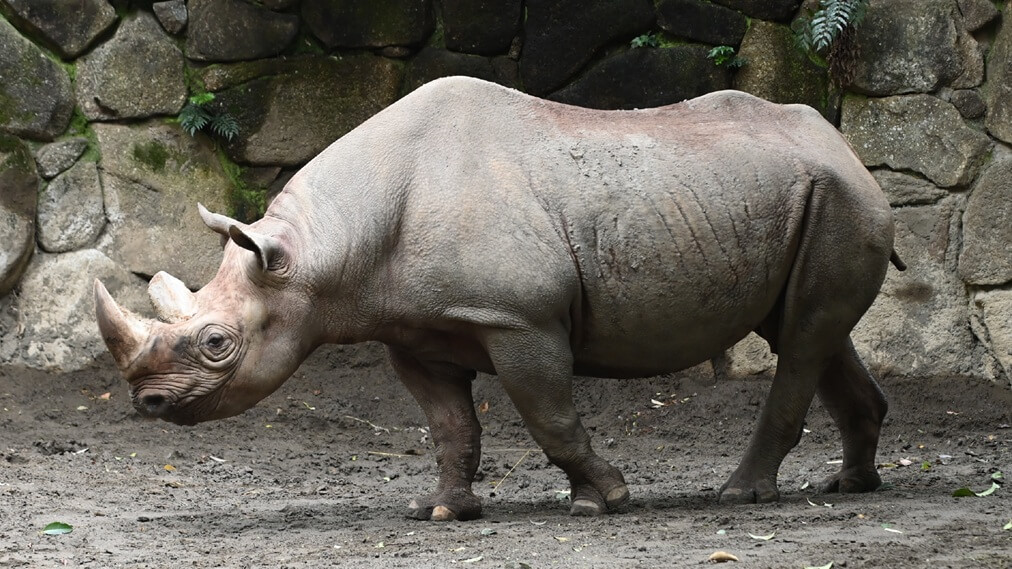
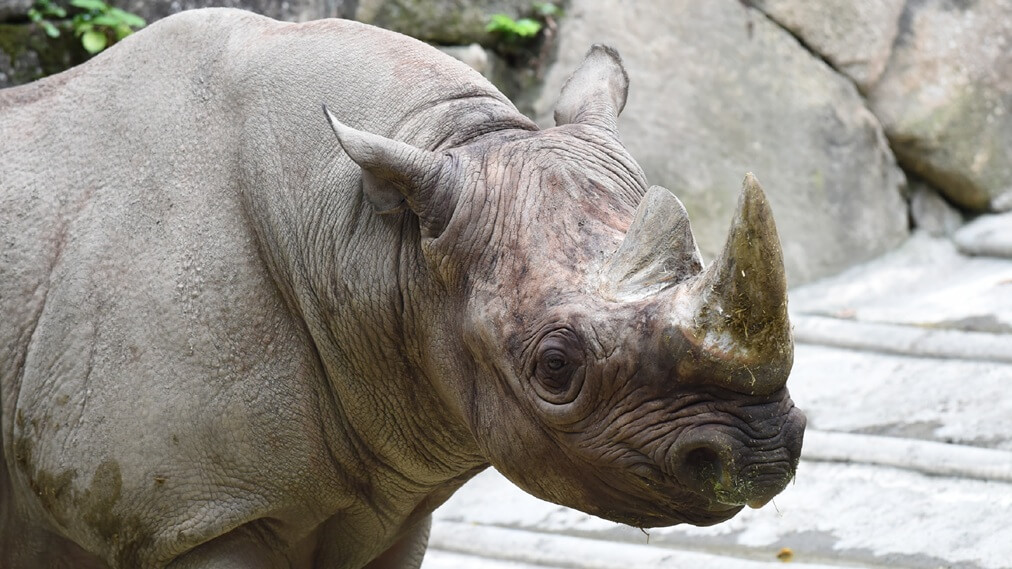
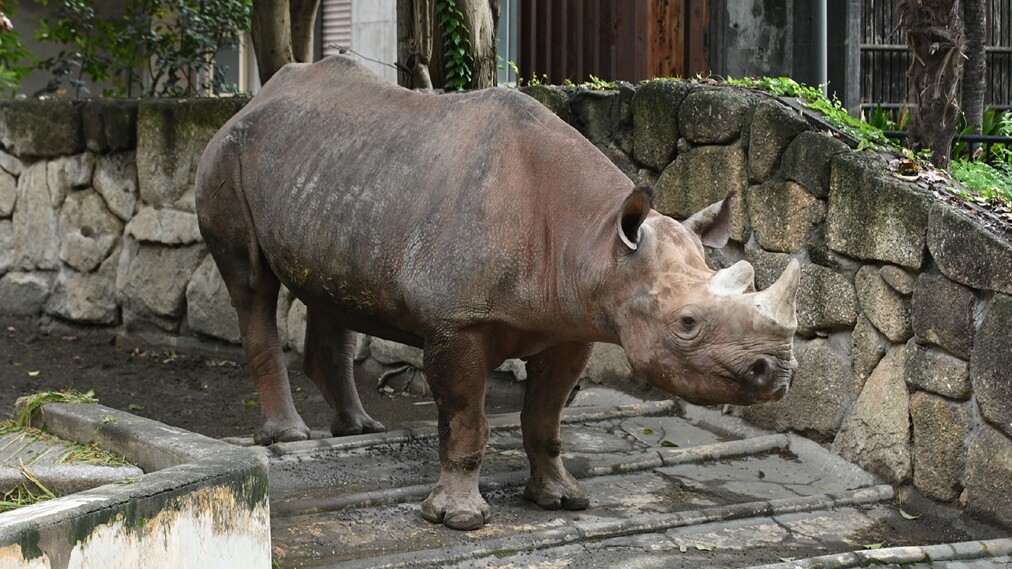
This is a subspecies of Black Rhinoceros that lives in Kenya, Tanzania, and other areas. It has two horns that it uses to intimidate rivals and enemies. The horns are made from keratinized skin and continue to grow throughout its life. Rhinos sharpen their horns by rubbing them against nearby rocks to adjust their length and shape. Poaching for these horns has put the species at risk of extinction.
| classification | Mammalia, Perissodactyla, Rhinoceros |
|---|---|
| English name | Eastern Black Rhinoceros |
| distribution | Eastern and northern Kenya and northern Tanzania |
| Residence | Tropical scrubland and Eurasian Moorhen |
| Size |
Head and body length: 3-3.8m
Shoulder height: 1.4-1.7m Weight: 800-1,350 kg |
| food | Leaves and branches |
| Red List |
IUCN: Critically Endangered
|
What kind of mouth?
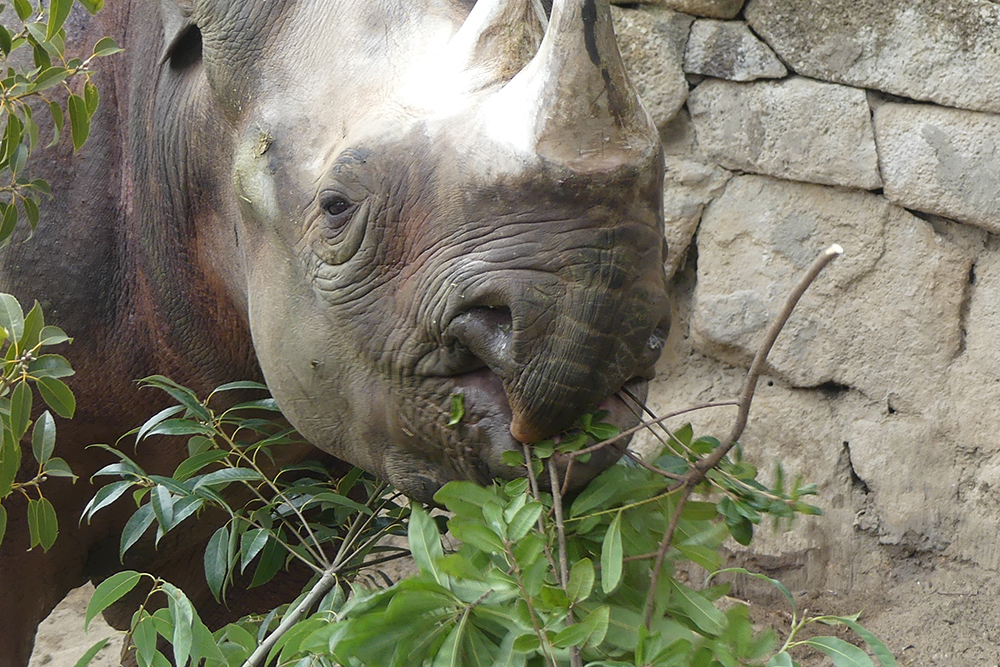
Its upper lip is triangular and pointed. Black Rhinoceros mainly eat leaves. They extend their pointed upper lip to pull tree branches towards them and pull leaves into their mouths. White rhinos, which eat grass on the ground, have wide, square-shaped mouths.
Do the ears move?
Let's take a look at their large trumpet-shaped ears. They move them independently to listen to sounds from all directions. Their ears move even when they are resting. Although they may look strong, they are still cautious herbivores.
poaching
They were poached mainly for their horns, which were used in traditional Chinese medicine and for ornaments, and at one point their numbers had dropped to just a few hundred. Thanks to conservation policies, such as strengthened crackdowns on poaching, their numbers are gradually increasing, but they are still not in a position where we can relax.