

Zoo Stock Species and the Red List
Zoo Stock Species and the Red List
Zoo Stock

This indicates that the species is included in the Second Zoo Stock Plan, which was formulated by the Tokyo Metropolitan Government in 2018. The plan sets goals for the next 10 years in three areas: "species conservation," "contribution to wildlife conservation," and "environmental education and conservation awareness." 124 animal species are included.
What is the Red List?
Based on scientific research, this is a list of wildlife classified by rank (category) indicating the degree of risk of extinction.
Livng Things Encyclopedia shows the categories (mainland and islands) assessed by the IUCN (International Union for Conservation of Nature) at the global level, the Ministry of the Environment for Japan, and the Tokyo Metropolitan Government for Tokyo.
The higher the category in each table, the higher the risk of extinction, and CR, EN, and VU are the three categories known as "endangered species." In Tokyo, species that are not at the NT (near threatened) level but are relatively rare are considered "species of concern."
|
IUCN categories |
|
|---|---|
|
EX |
extinction |
|
EW |
Extinction in the wild |
|
CR+EN |
— |
|
CR |
Serious crisis |
|
EN |
crisis |
|
VU |
emergency |
|
NT |
Near Threatened |
|
LC・○ |
Low Concern |
|
DD |
Data shortage |
|
LP |
— |
|
Japan (Ministry of the Environment) Category |
|
|---|---|
|
EX |
extinction |
|
EW |
Extinction in the wild |
|
CR+EN |
Endangered species |
|
CR |
Critically Endangered |
|
EN |
Endangered species |
|
VU |
Endangered species |
|
NT |
Near Threatened |
|
LC・○ |
— |
|
DD |
Lack of information |
|
LP |
Endangered |
|
Tokyo Category |
|
|---|---|
|
EX |
extinction |
|
EW |
Extinction in the wild |
|
CR+EN |
Endangered species |
|
CR |
Critically Endangered |
|
EN |
Endangered species |
|
VU |
Endangered species |
|
NT |
Near Threatened |
|
LC・○ |
Unranked |
|
DD |
Lack of information |
|
LP |
Endangered |
Creatures at Ueno Zoo
Creatures at Ueno Zoo

Cotton-top Tamarin
Cotton-top Tamarin
Oedipomidas oedipus
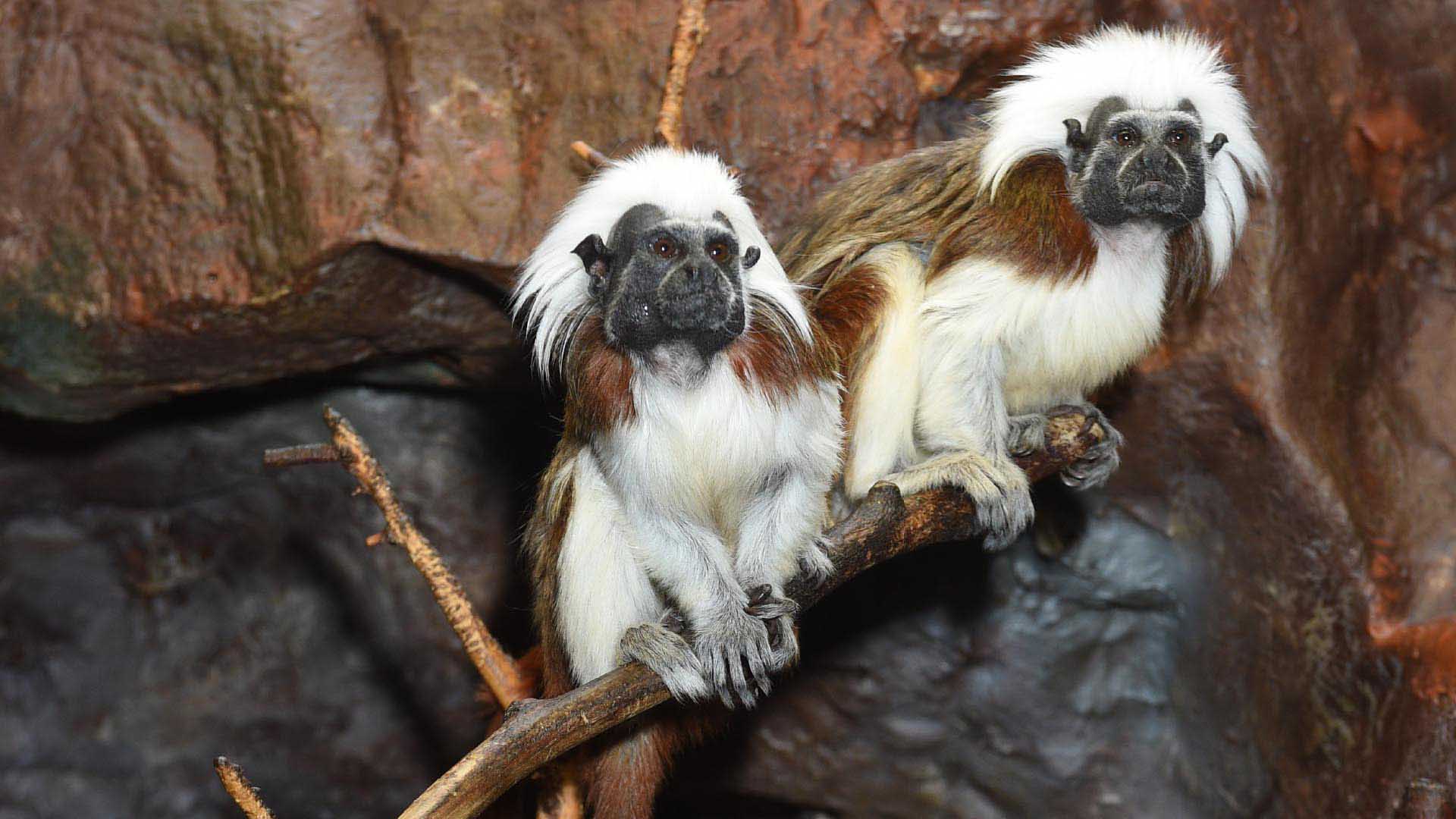
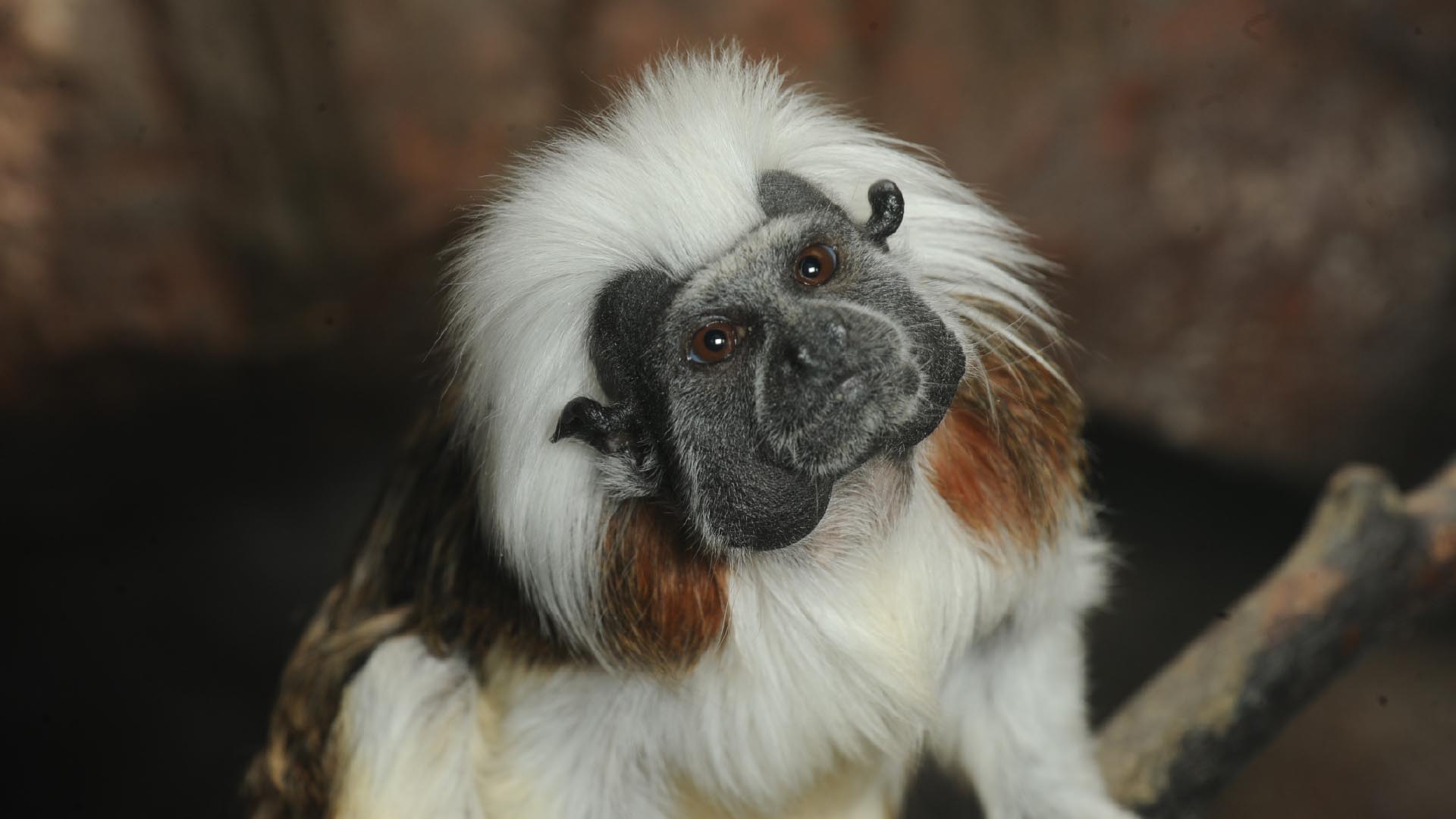
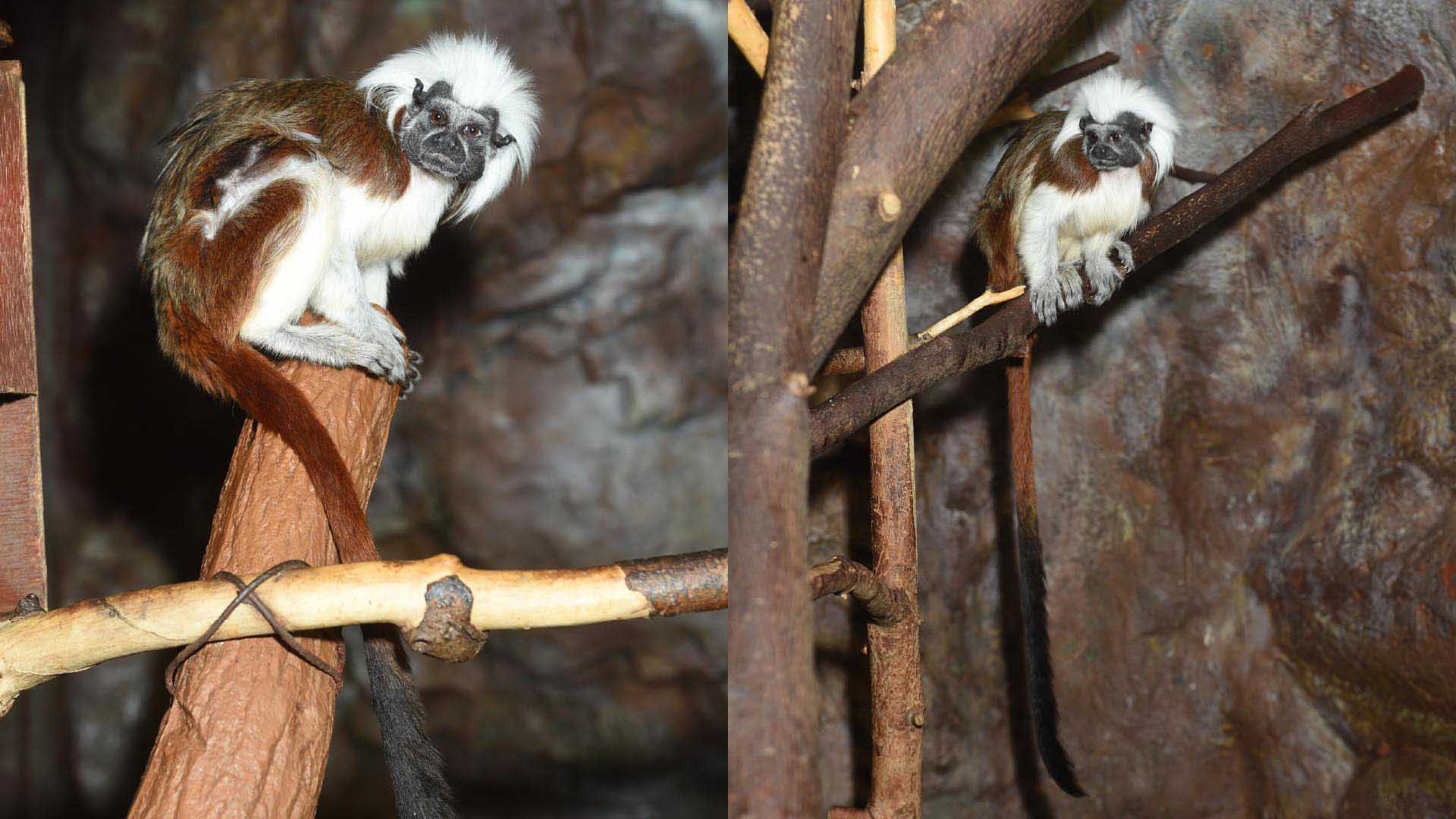
As its name suggests, it has a cotton-like crown on its head. This monkey lives in a limited area of tropical rainforest in northwestern Colombia, in families consisting of a male, female, and their children. They communicate with each other using high-pitched bird-like calls. They usually give birth to two babies at a time. The mother nurses the babies, but the father and siblings also carry the babies on their backs, so the whole family cooperates in raising them.
| classification | Class Mammalia, Order Primates, Family Marmosets |
|---|---|
| English name | Cotton-top Tamarin |
| distribution | Central America: from the southeasternmost part of Costa Rica to northwestern Colombia |
| Residence | Rainforest treetops |
| Size |
Head torso length: 21-26cm
Tail length: 33-40cm Weight: 400-420g |
| food | Trees, vines, fruits of epiphytes, new leaves, leaf buds, nectar, sap, insects, frogs, lizards |
| Red List |
IUCN: Critically Endangered
|