

Zoo Stock Species and the Red List
Zoo Stock Species and the Red List
Zoo Stock

This indicates that the species is included in the Second Zoo Stock Plan, which was formulated by the Tokyo Metropolitan Government in 2018. The plan sets goals for the next 10 years in three areas: "species conservation," "contribution to wildlife conservation," and "environmental education and conservation awareness." 124 animal species are included.
What is the Red List?
Based on scientific research, this is a list of wildlife classified by rank (category) indicating the degree of risk of extinction.
Livng Things Encyclopedia shows the categories (mainland and islands) assessed by the IUCN (International Union for Conservation of Nature) at the global level, the Ministry of the Environment for Japan, and the Tokyo Metropolitan Government for Tokyo.
The higher the category in each table, the higher the risk of extinction, and CR, EN, and VU are the three categories known as "endangered species." In Tokyo, species that are not at the NT (near threatened) level but are relatively rare are considered "species of concern."
|
IUCN categories |
|
|---|---|
|
EX |
extinction |
|
EW |
Extinction in the wild |
|
CR+EN |
— |
|
CR |
Serious crisis |
|
EN |
crisis |
|
VU |
emergency |
|
NT |
Near Threatened |
|
LC・○ |
Low Concern |
|
DD |
Data shortage |
|
LP |
— |
|
Japan (Ministry of the Environment) Category |
|
|---|---|
|
EX |
extinction |
|
EW |
Extinction in the wild |
|
CR+EN |
Endangered species |
|
CR |
Critically Endangered |
|
EN |
Endangered species |
|
VU |
Endangered species |
|
NT |
Near Threatened |
|
LC・○ |
— |
|
DD |
Lack of information |
|
LP |
Endangered |
|
Tokyo Category |
|
|---|---|
|
EX |
extinction |
|
EW |
Extinction in the wild |
|
CR+EN |
Endangered species |
|
CR |
Critically Endangered |
|
EN |
Endangered species |
|
VU |
Endangered species |
|
NT |
Near Threatened |
|
LC・○ |
Unranked |
|
DD |
Lack of information |
|
LP |
Endangered |
Creatures at Ueno Zoo
Creatures at Ueno Zoo
Burmese Python
Burmese Python
Python bivittatus
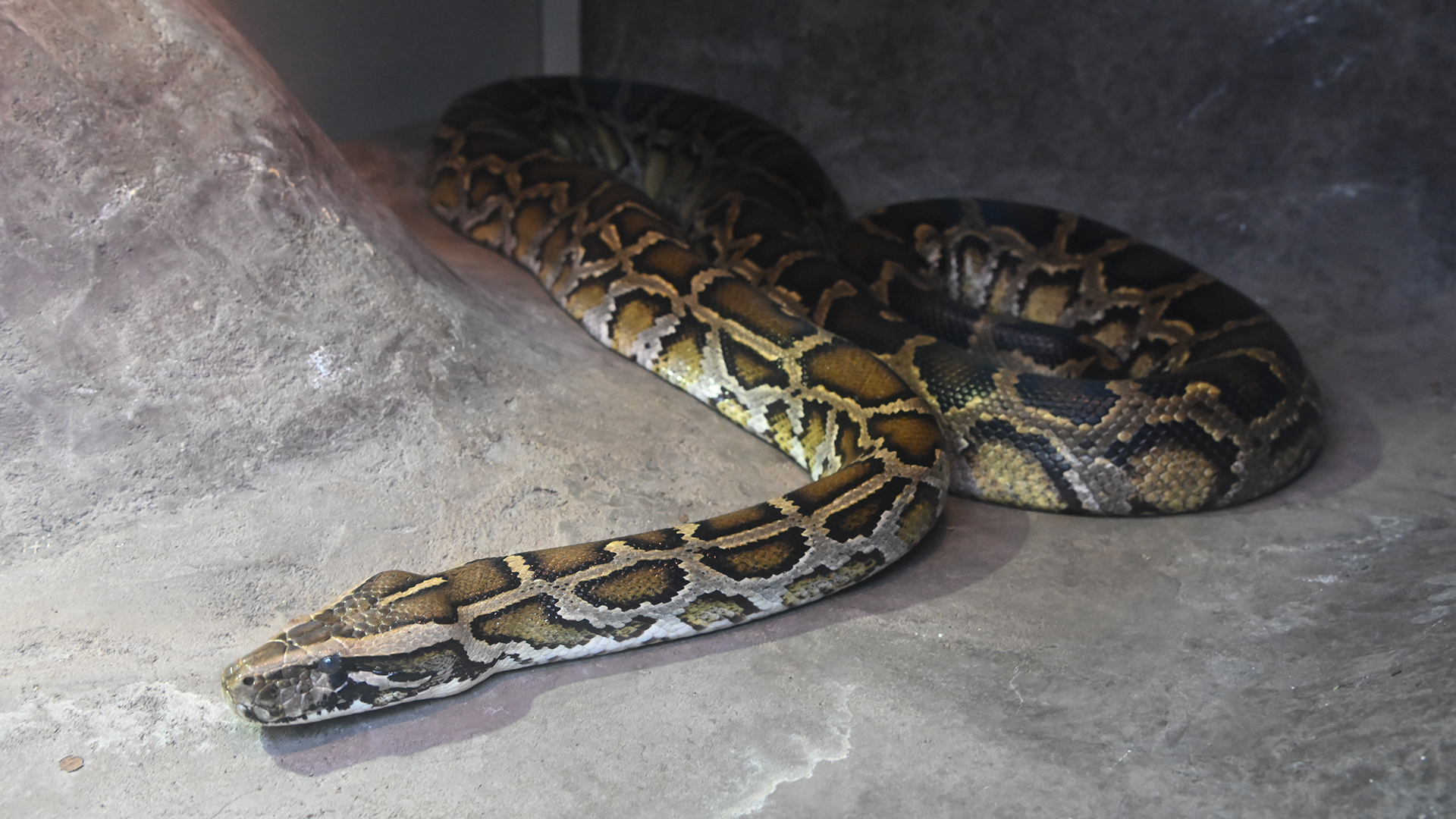
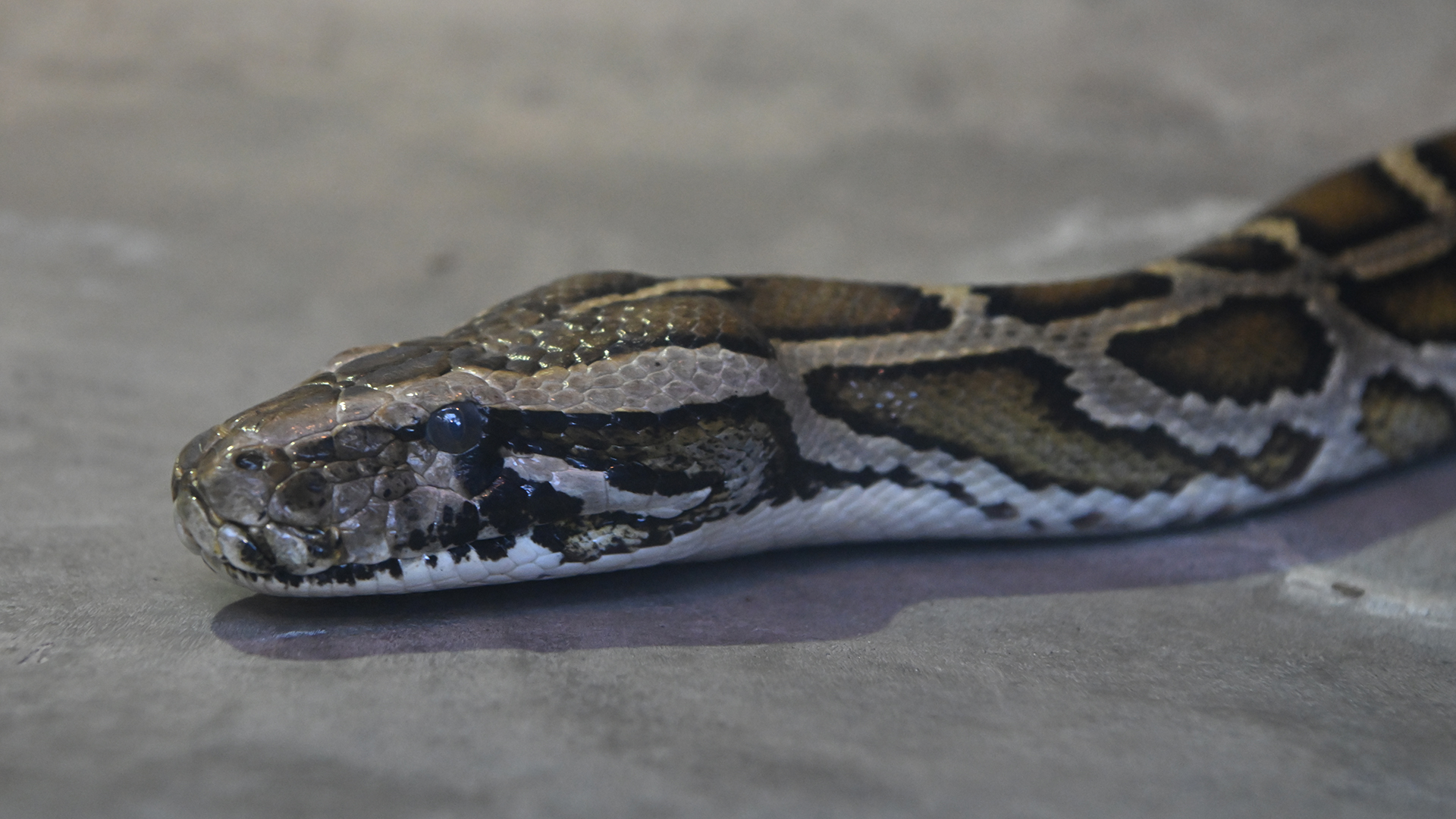
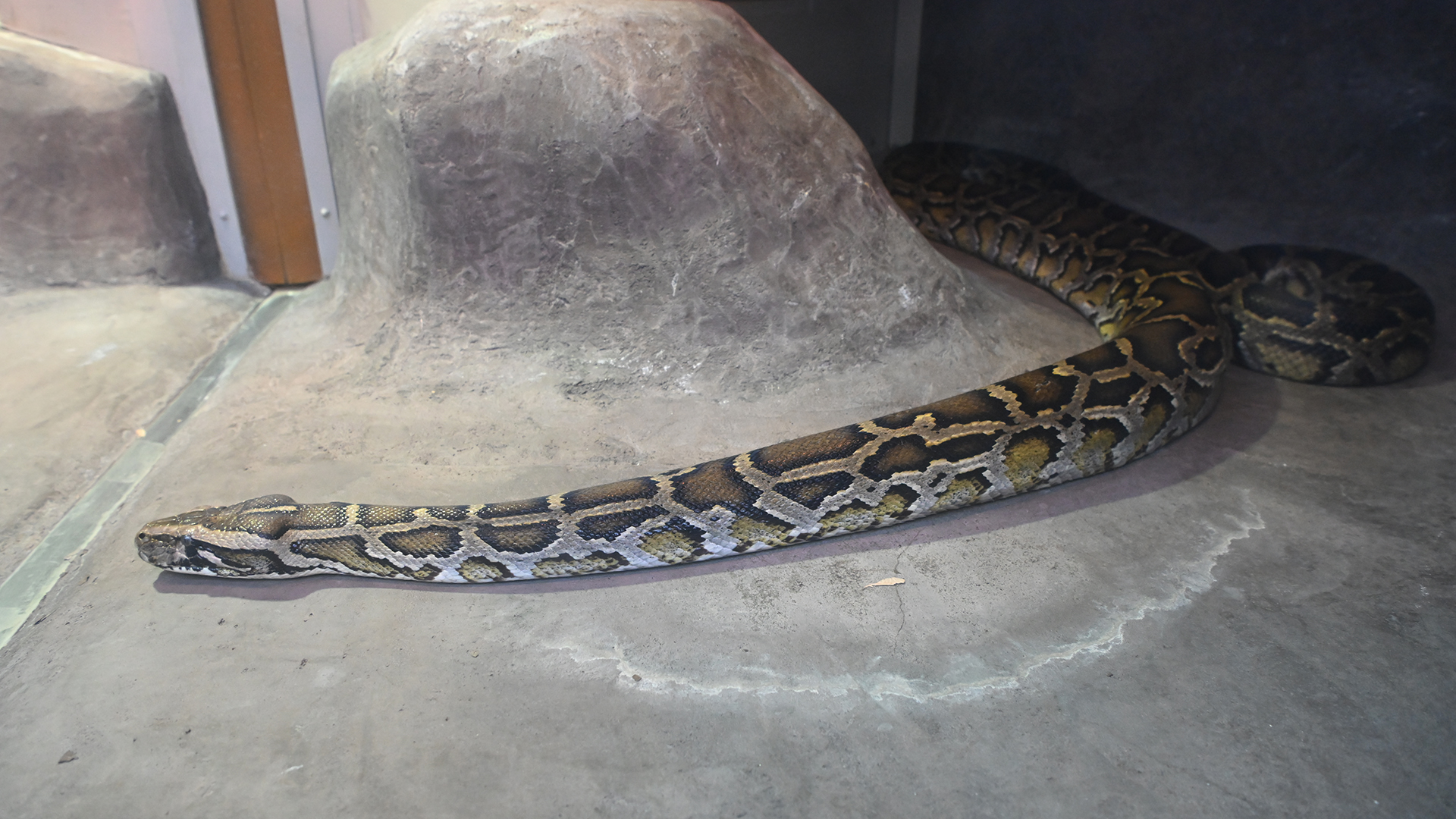
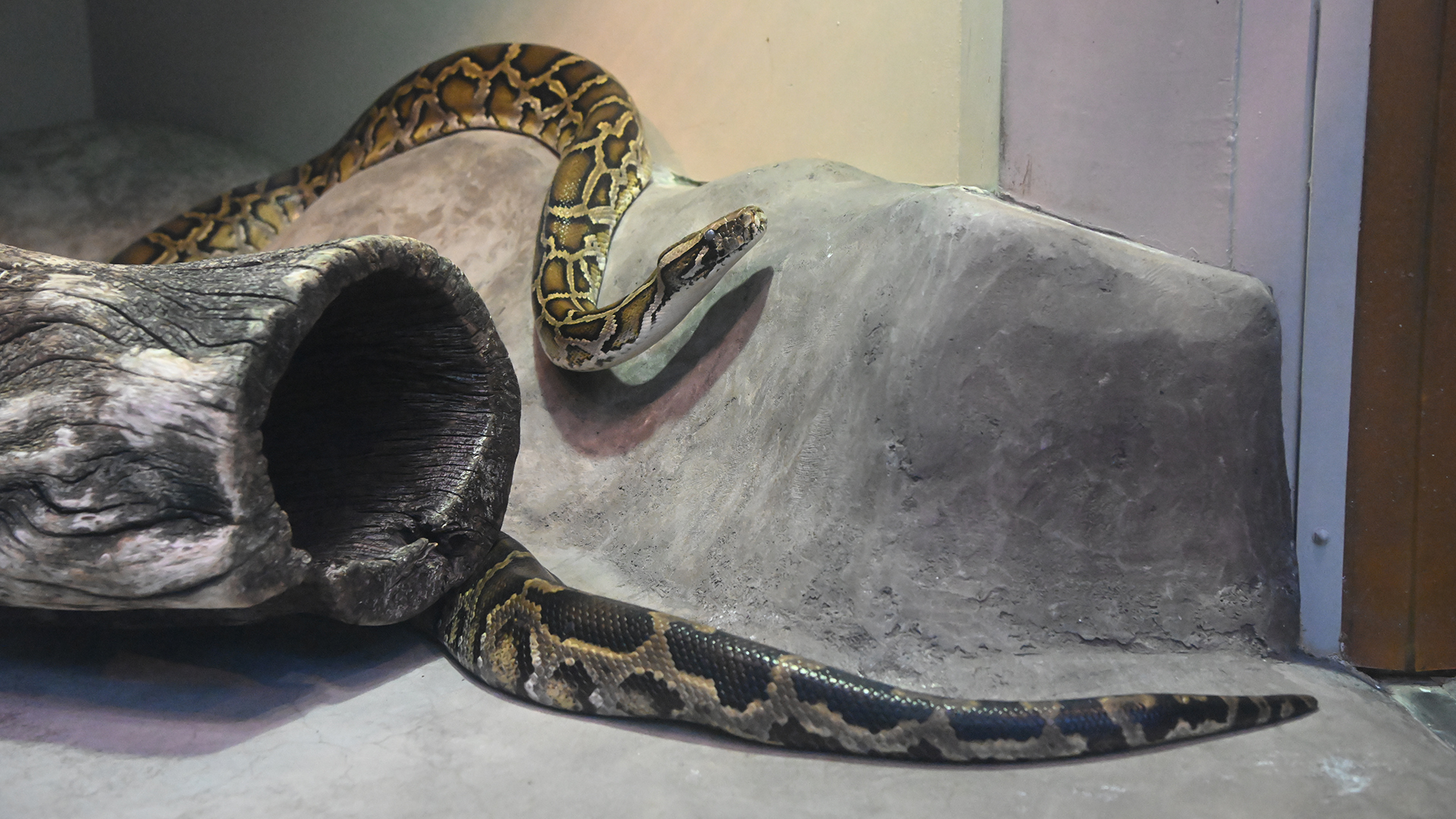
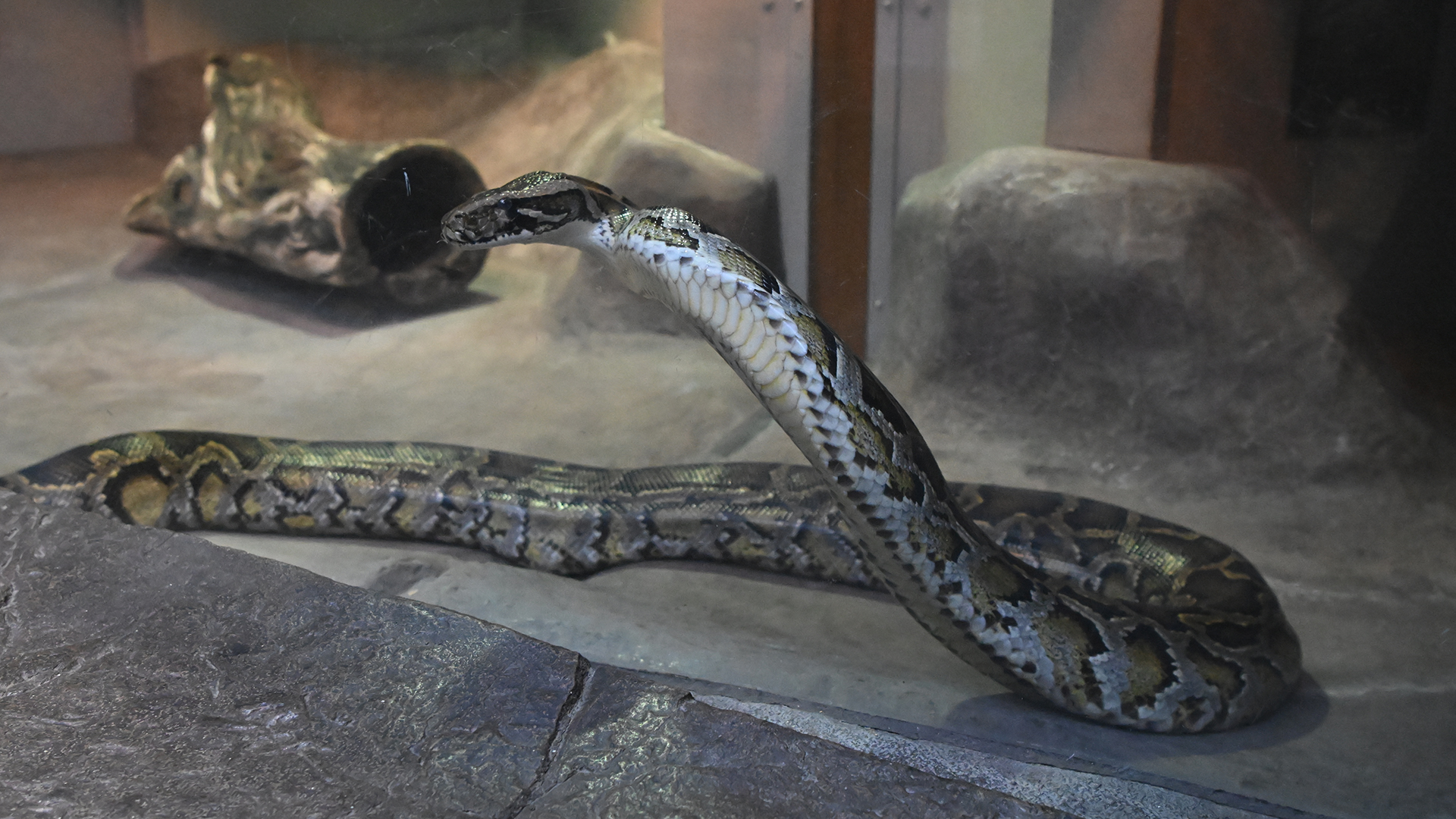
It is one of the largest snakes in the world, and can sometimes swallow baby deer whole. When hunting, it bites its prey and then quickly wraps its body around it, suffocating it. When it is small, it can climb trees, but as an adult it lives mainly on the ground. It is an oviparous snake, and the mother will coil herself around the eggs in the nest, warming them using muscle vibrations and frictional heat, and protecting them until they hatch.
| classification | Reptilia, Squamata, Serpentes, Pythonidae |
|---|---|
| English name | Burmese Python |
| distribution | Southeast Asia (Myanmar, Thailand, Laos, Cambodia, Vietnam, South China) |
| Residence | Wet environments such as forests, grasslands, swamps, and areas around rivers and ponds |
| Size |
Total length: 3-5m (maximum 7m)
Weight: 30-60 kg (large individuals can weigh over 90 kg) |
| food | Birds, mammals (Domestic Pig, deer, rodents, etc.), reptiles |
| Red List |
IUCN: VU (Very)
|