

Zoo Stock Species and the Red List
Zoo Stock Species and the Red List
Zoo Stock

This indicates that the species is included in the Second Zoo Stock Plan, which was formulated by the Tokyo Metropolitan Government in 2018. The plan sets goals for the next 10 years in three areas: "species conservation," "contribution to wildlife conservation," and "environmental education and conservation awareness." 124 animal species are included.
What is the Red List?
Based on scientific research, this is a list of wildlife classified by rank (category) indicating the degree of risk of extinction.
Livng Things Encyclopedia shows the categories (mainland and islands) assessed by the IUCN (International Union for Conservation of Nature) at the global level, the Ministry of the Environment for Japan, and the Tokyo Metropolitan Government for Tokyo.
The higher the category in each table, the higher the risk of extinction, and CR, EN, and VU are the three categories known as "endangered species." In Tokyo, species that are not at the NT (near threatened) level but are relatively rare are considered "species of concern."
|
IUCN categories |
|
|---|---|
|
EX |
extinction |
|
EW |
Extinction in the wild |
|
CR+EN |
— |
|
CR |
Serious crisis |
|
EN |
crisis |
|
VU |
emergency |
|
NT |
Near Threatened |
|
LC・○ |
Low Concern |
|
DD |
Data shortage |
|
LP |
— |
|
Japan (Ministry of the Environment) Category |
|
|---|---|
|
EX |
extinction |
|
EW |
Extinction in the wild |
|
CR+EN |
Endangered species |
|
CR |
Critically Endangered |
|
EN |
Endangered species |
|
VU |
Endangered species |
|
NT |
Near Threatened |
|
LC・○ |
— |
|
DD |
Lack of information |
|
LP |
Endangered |
|
Tokyo Category |
|
|---|---|
|
EX |
extinction |
|
EW |
Extinction in the wild |
|
CR+EN |
Endangered species |
|
CR |
Critically Endangered |
|
EN |
Endangered species |
|
VU |
Endangered species |
|
NT |
Near Threatened |
|
LC・○ |
Unranked |
|
DD |
Lack of information |
|
LP |
Endangered |
Creatures at Ueno Zoo
Creatures at Ueno Zoo
Black-tailed Prairie Dog
Black-tailed Prairie Dog
Cynomys ludovicianus
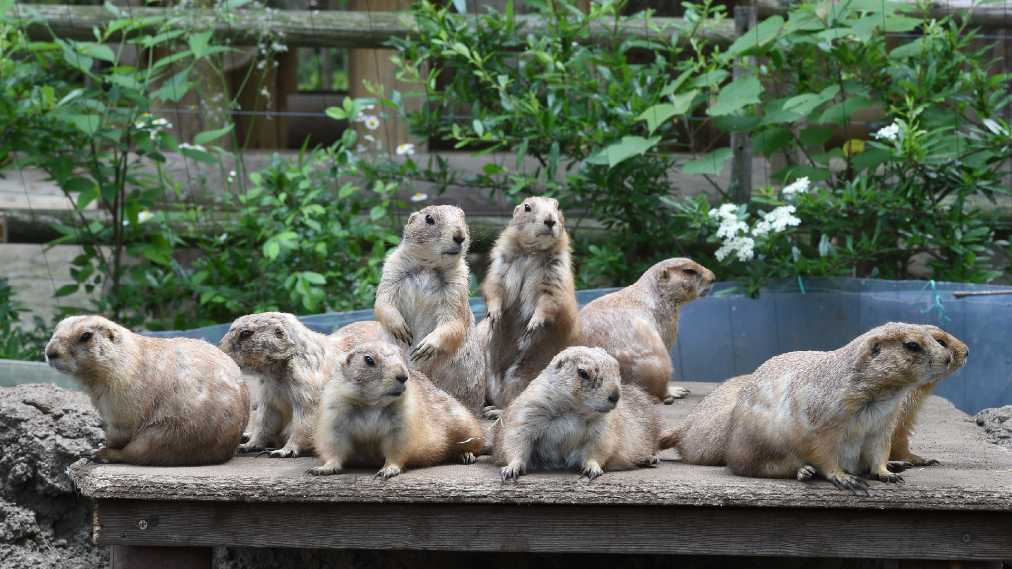
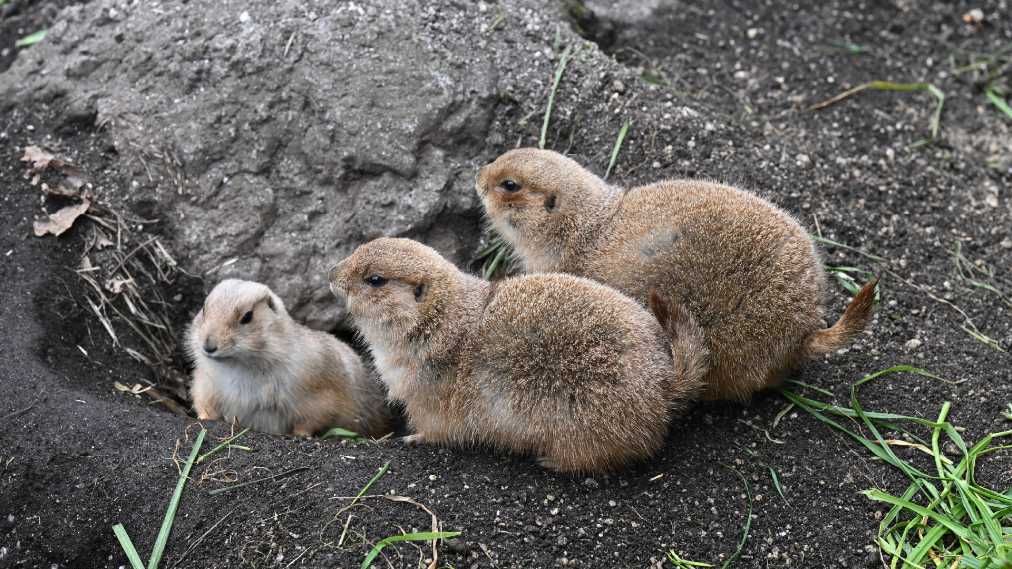
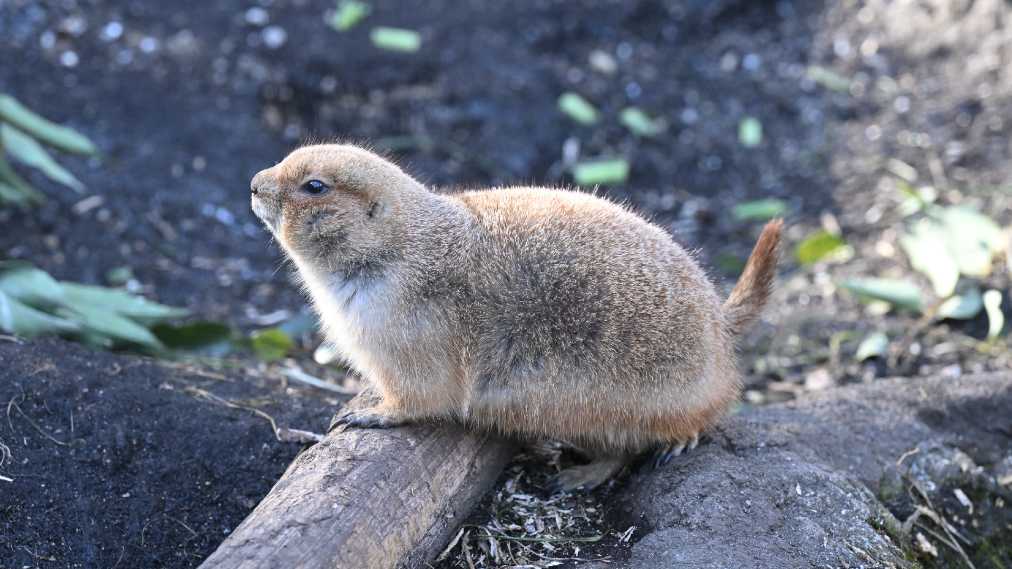
They live in groups called coteries, which consist of one male, several females, and their young. They build complex underground burrows which they use as food storage areas, sleeping quarters, and places to raise their young. The entrances to their burrows are made by piling up earth like volcanoes, protecting the nests from rainwater. They also stand on slightly elevated spots such as the entrances to their burrows to keep watch over their surroundings, and will cry to alert their companions if danger approaches.
| classification | Mammalia, Rodentia, Sciuridae |
|---|---|
| English name | Black-tailed Prairie Dog |
| distribution | North America |
| Residence | Open grassland (Eurasian Moorhen steppe) |
| Size |
Head torso length: 30-38cm
Tail length: 8-10 cm Weight: Males 850-1675g, Females 705-1050g |
| food | Mainly leaves, stems, grass roots, and weeds |
| Red List |
IUCN: LC (Least Concern)
|
A squirrel with short legs, ears, and a tail
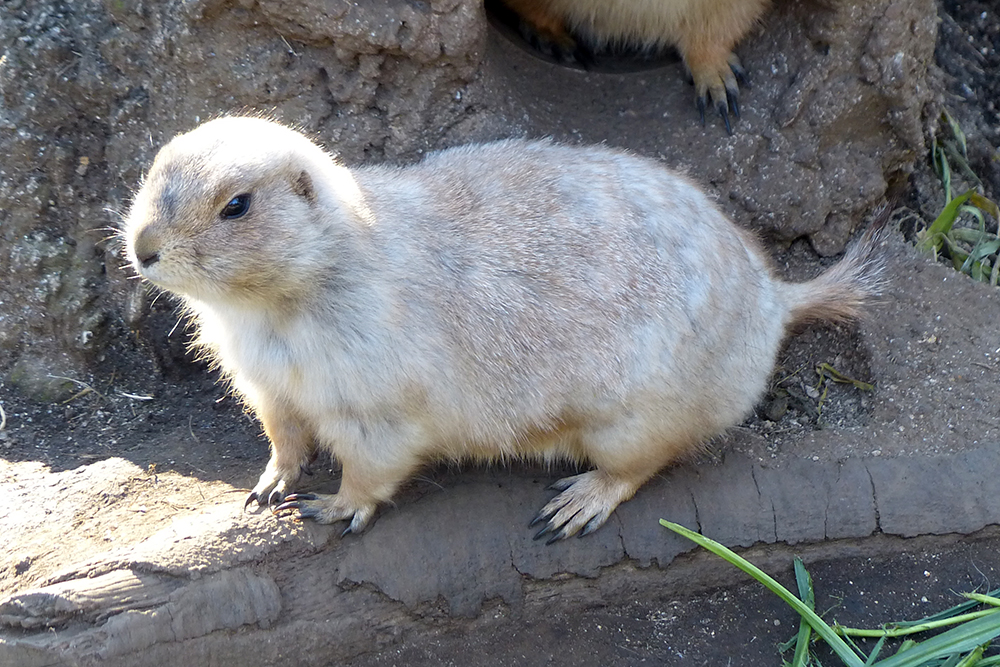
They are a type of squirrel that live on the prairies of North America. Their safe hiding places are in holes they dig in the ground. For this reason, their legs, ears, and tails are short, making them ideal for tunnel living. They can often be seen digging and repairing their burrows.
What are they eating?
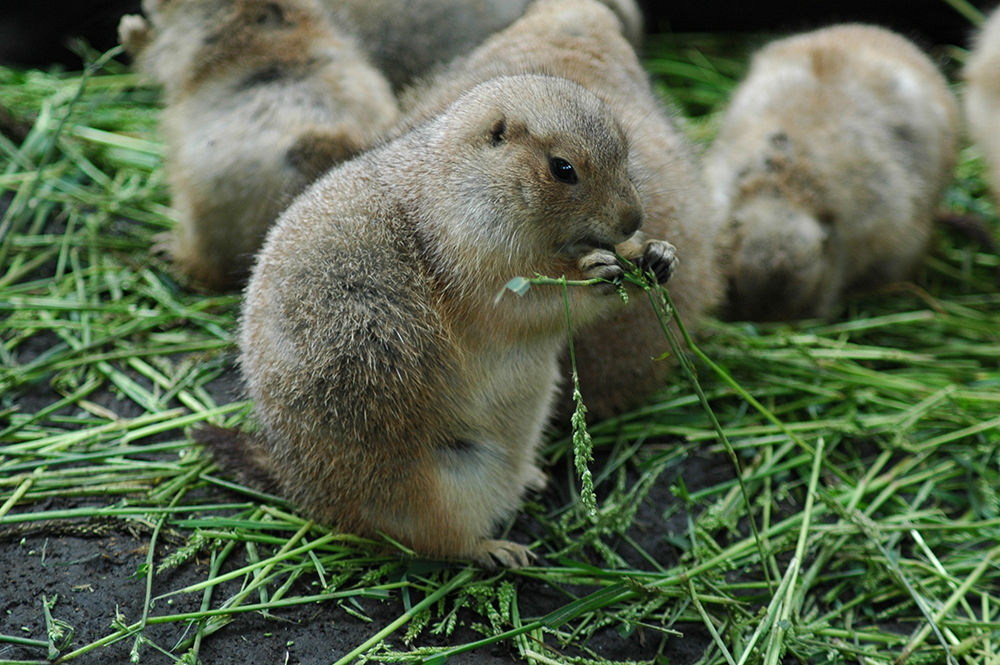
Although they are a type of squirrel, they live in grasslands and so their main diet is grass rather than nuts. They stand on their hind legs and grab grass with their front paws and bring it to their mouths, much like squirrels that eat nuts in the forest.