

Zoo Stock Species and the Red List
Zoo Stock Species and the Red List
Zoo Stock

This indicates that the species is included in the Second Zoo Stock Plan, which was formulated by the Tokyo Metropolitan Government in 2018. The plan sets goals for the next 10 years in three areas: "species conservation," "contribution to wildlife conservation," and "environmental education and conservation awareness." 124 animal species are included.
What is the Red List?
Based on scientific research, this is a list of wildlife classified by rank (category) indicating the degree of risk of extinction.
Livng Things Encyclopedia shows the categories (mainland and islands) assessed by the IUCN (International Union for Conservation of Nature) at the global level, the Ministry of the Environment for Japan, and the Tokyo Metropolitan Government for Tokyo.
The higher the category in each table, the higher the risk of extinction, and CR, EN, and VU are the three categories known as "endangered species." In Tokyo, species that are not at the NT (near threatened) level but are relatively rare are considered "species of concern."
|
IUCN categories |
|
|---|---|
|
EX |
extinction |
|
EW |
Extinction in the wild |
|
CR+EN |
— |
|
CR |
Serious crisis |
|
EN |
crisis |
|
VU |
emergency |
|
NT |
Near Threatened |
|
LC・○ |
Low Concern |
|
DD |
Data shortage |
|
LP |
— |
|
Japan (Ministry of the Environment) Category |
|
|---|---|
|
EX |
extinction |
|
EW |
Extinction in the wild |
|
CR+EN |
Endangered species |
|
CR |
Critically Endangered |
|
EN |
Endangered species |
|
VU |
Endangered species |
|
NT |
Near Threatened |
|
LC・○ |
— |
|
DD |
Lack of information |
|
LP |
Endangered |
|
Tokyo Category |
|
|---|---|
|
EX |
extinction |
|
EW |
Extinction in the wild |
|
CR+EN |
Endangered species |
|
CR |
Critically Endangered |
|
EN |
Endangered species |
|
VU |
Endangered species |
|
NT |
Near Threatened |
|
LC・○ |
Unranked |
|
DD |
Lack of information |
|
LP |
Endangered |
Creatures at Ueno Zoo
Creatures at Ueno Zoo
Black-handed Spider Monkey
Black-handed Spider Monkey
Ateles geoffroyi
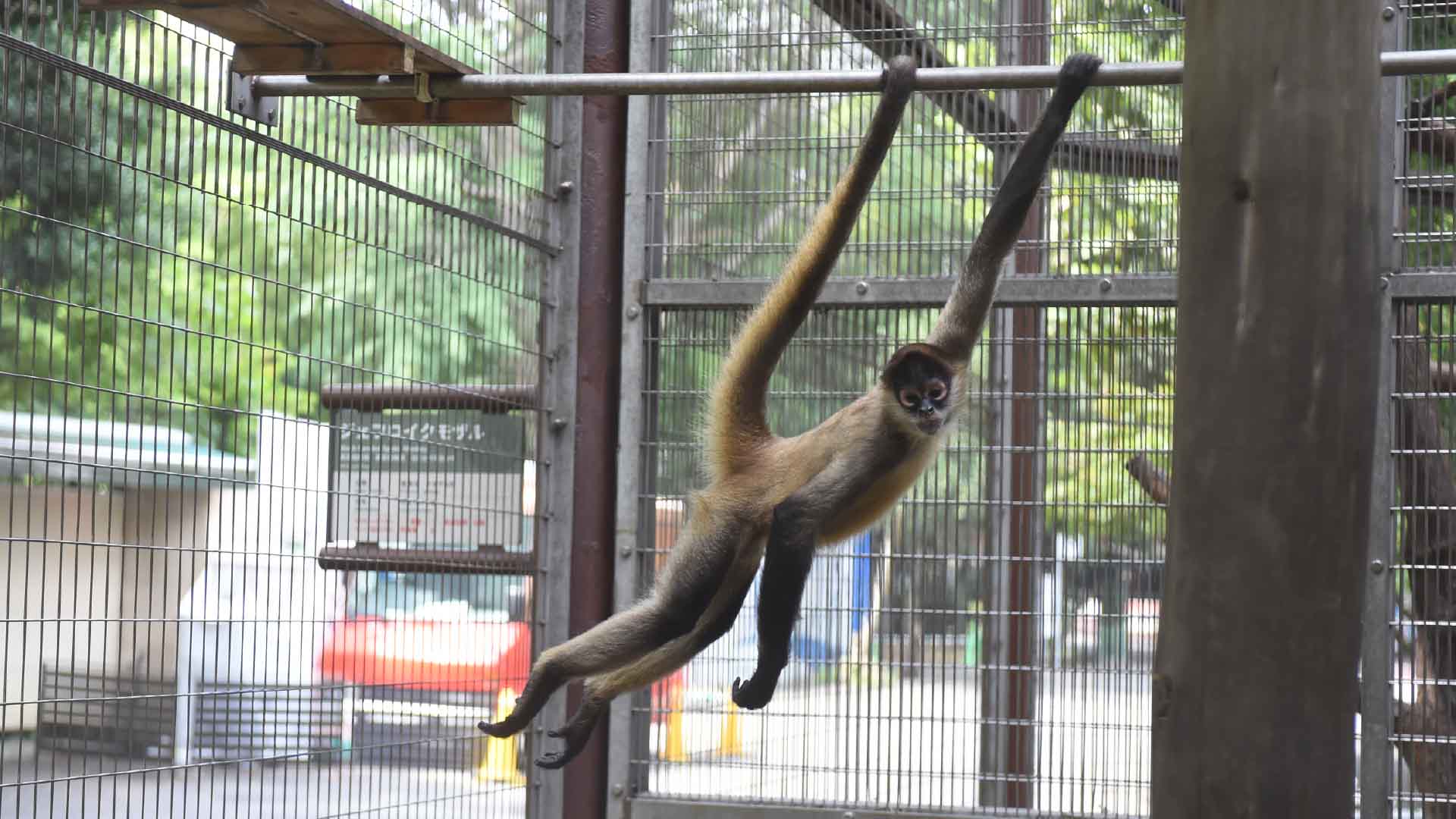
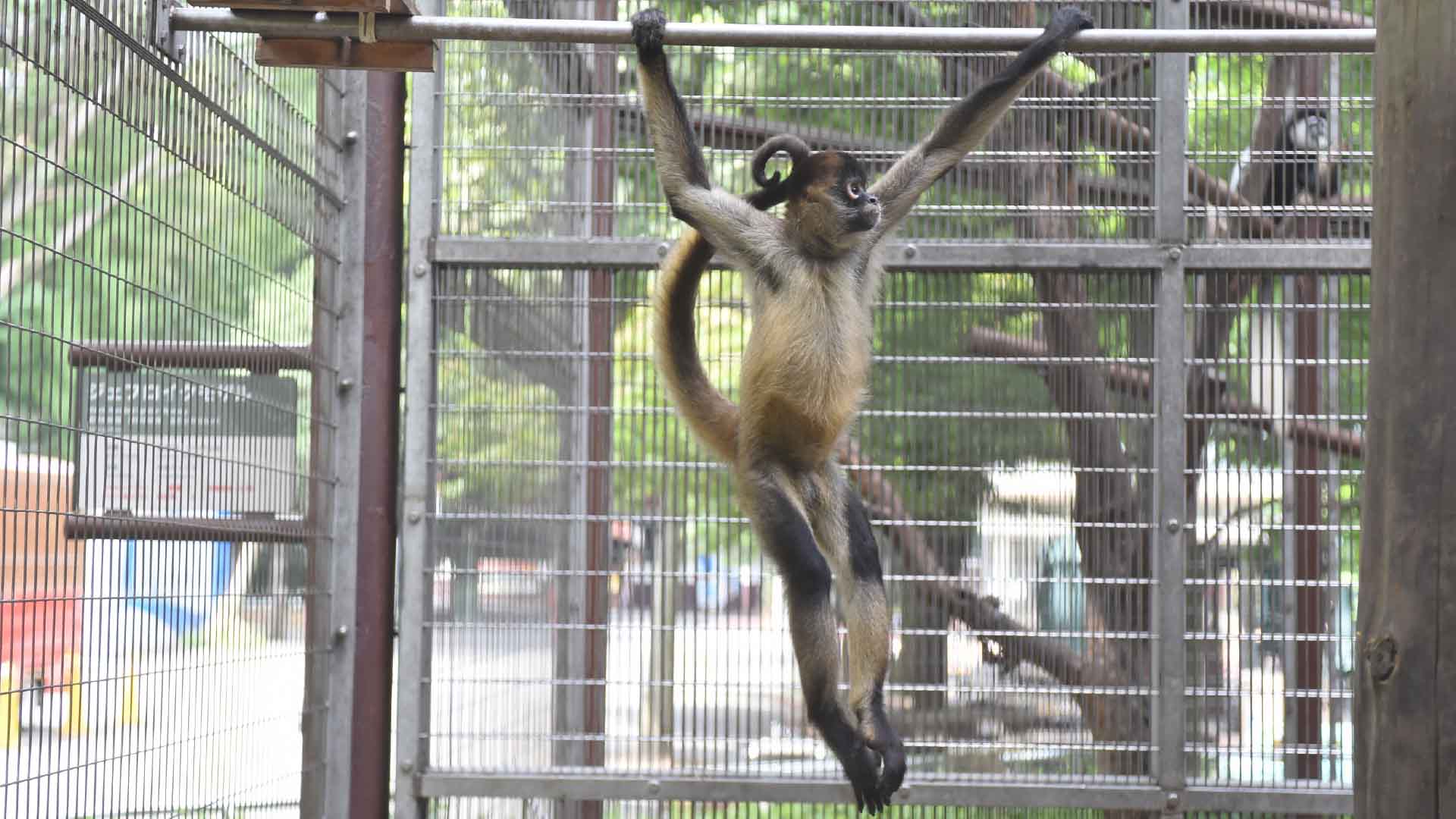
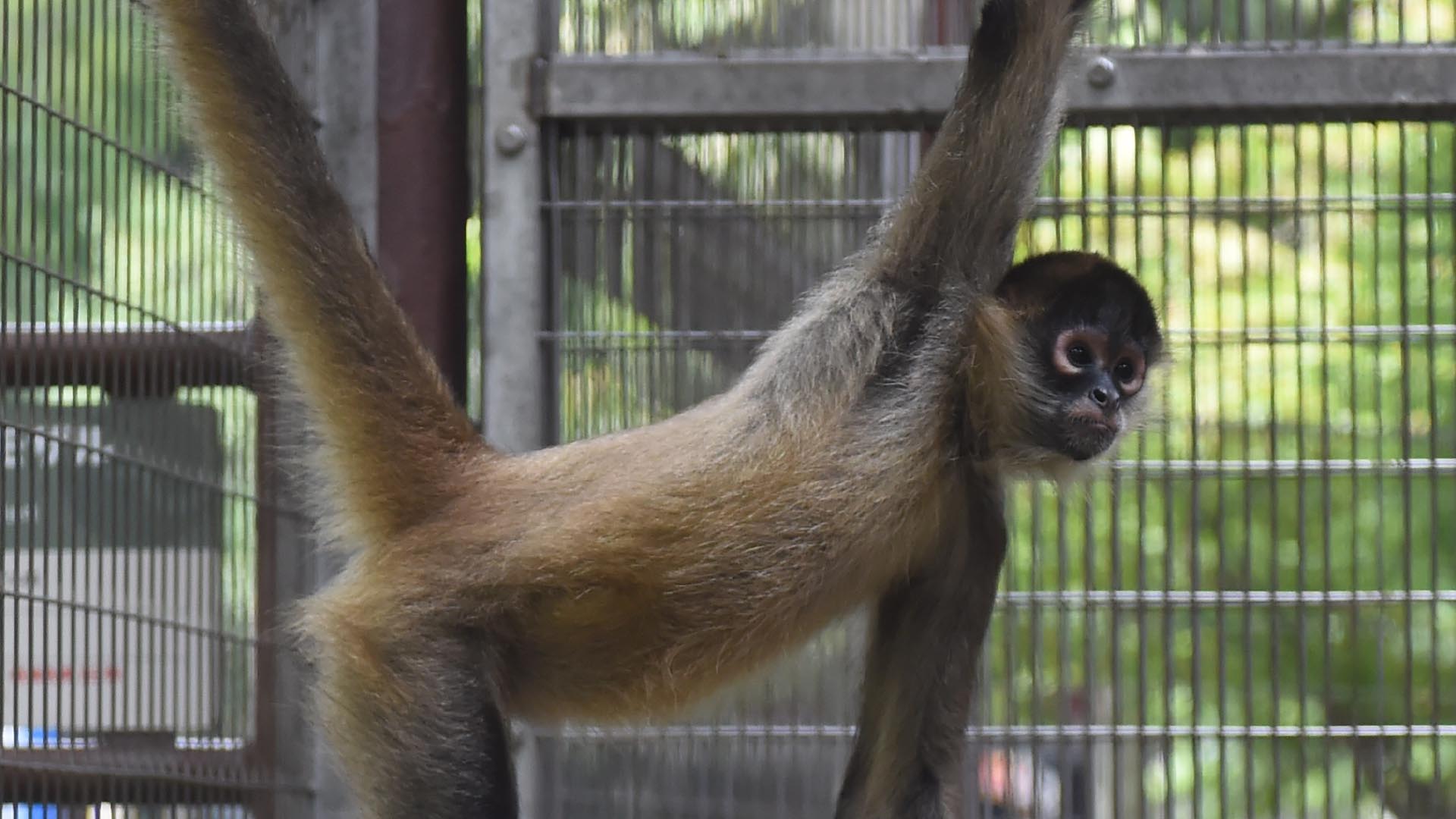
They mainly eat fruit and leaves and live in trees. Their front feet have no thumbs, so they move around in the trees by hanging on branches with their four fingers. There is no hair on the underside of the tip of their tail, so they can wrap this part around themselves to grasp or pick up objects, and they also use their tail to support their body when in the trees.
| classification | Mammalia, Primates, Spider Monkeys |
|---|---|
| English name | Black-handed Spider Monkey |
| distribution | Central America (Southern Mexico to Guatemala, Honduras, Nicaragua, Costa Rica, Panama, etc.) |
| Residence | forest |
| Size |
Head and body length: Males 39-63cm, Females 31-45cm
Weight: Males 7.4-9 kg, females 6-8 kg Tail length: Males 70-86cm, females 64-75cm |
| food | They eat mainly fruit, but also flowers, aerial roots, seeds, buds, eggs, honey, bark, insects, and palm nuts. |
| Red List |
IUCN: EN (crisis)
|
What kind of tail?
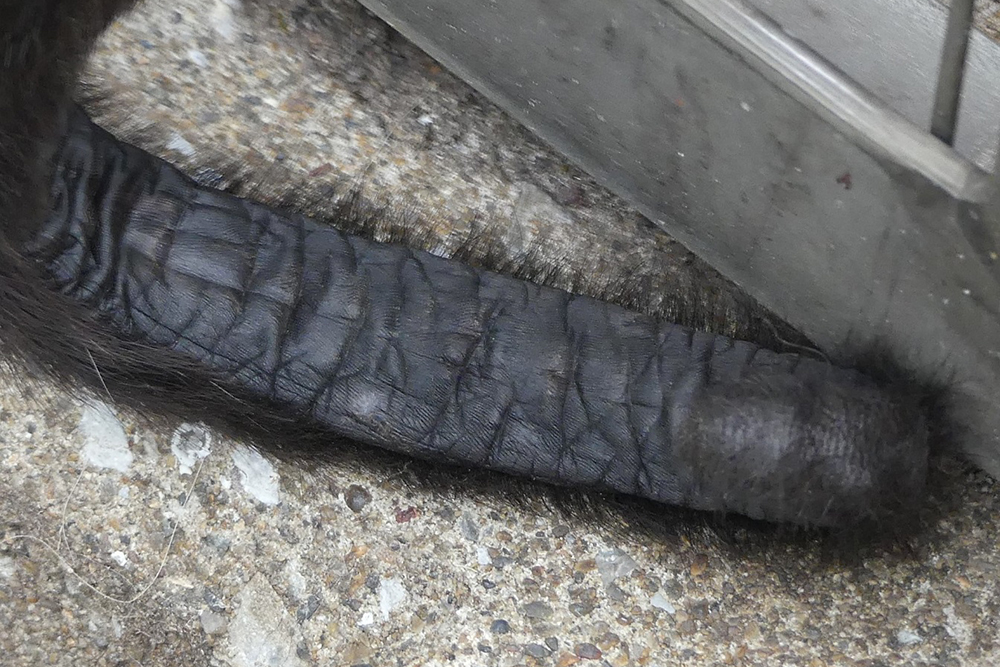
They not only use their four legs, but also their long tails, which they wrap around trees and move around actively at high altitudes. They can also hang by their tails alone. The underside of the tail is hairless, and has wrinkles and tiny grooves like fingerprints, making it less likely to slip.
Is it different from a gibbon?
They have long limbs and are good at hanging, so they are often mistaken for gibbons, but since gibbons do not have tails, they hang using only their front legs.