

Zoo Stock Species and the Red List
Zoo Stock Species and the Red List
Zoo Stock
This indicates that the species is included in the Second Zoo Stock Plan, which was formulated by the Tokyo Metropolitan Government in 2018. The plan sets goals for the next 10 years in three areas: "species conservation," "contribution to wildlife conservation," and "environmental education and conservation awareness." 124 animal species are included.
What is the Red List?
Based on scientific research, this is a list of wildlife classified by rank (category) indicating the degree of risk of extinction.
Livng Things Encyclopedia shows the categories (mainland and islands) assessed by the IUCN (International Union for Conservation of Nature) at the global level, the Ministry of the Environment for Japan, and the Tokyo Metropolitan Government for Tokyo.
The higher the category in each table, the higher the risk of extinction, and CR, EN, and VU are the three categories known as "endangered species." In Tokyo, species that are not at the NT (near threatened) level but are relatively rare are considered "species of concern."
|
IUCN categories |
|
|---|---|
|
EX |
extinction |
|
EW |
Extinction in the wild |
|
CR+EN |
— |
|
CR |
Serious crisis |
|
EN |
crisis |
|
VU |
emergency |
|
NT |
Near Threatened |
|
LC・○ |
Low Concern |
|
DD |
Data shortage |
|
LP |
— |
|
Japan (Ministry of the Environment) Category |
|
|---|---|
|
EX |
extinction |
|
EW |
Extinction in the wild |
|
CR+EN |
Endangered species |
|
CR |
Critically Endangered |
|
EN |
Endangered species |
|
VU |
Endangered species |
|
NT |
Near Threatened |
|
LC・○ |
— |
|
DD |
Lack of information |
|
LP |
Endangered |
|
Tokyo Category |
|
|---|---|
|
EX |
extinction |
|
EW |
Extinction in the wild |
|
CR+EN |
Endangered species |
|
CR |
Critically Endangered |
|
EN |
Endangered species |
|
VU |
Endangered species |
|
NT |
Near Threatened |
|
LC・○ |
Unranked |
|
DD |
Lack of information |
|
LP |
Endangered |
Creatures at Ueno Zoo
Creatures at Ueno Zoo
Black-and-White Ruffed Lemur
Black-and-White Ruffed Lemur
Varecia variegata
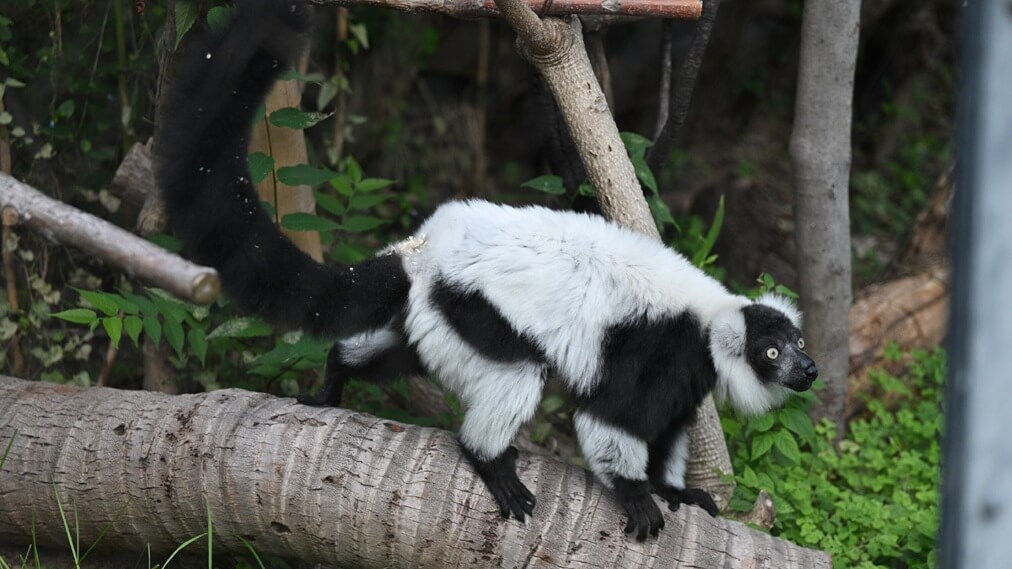
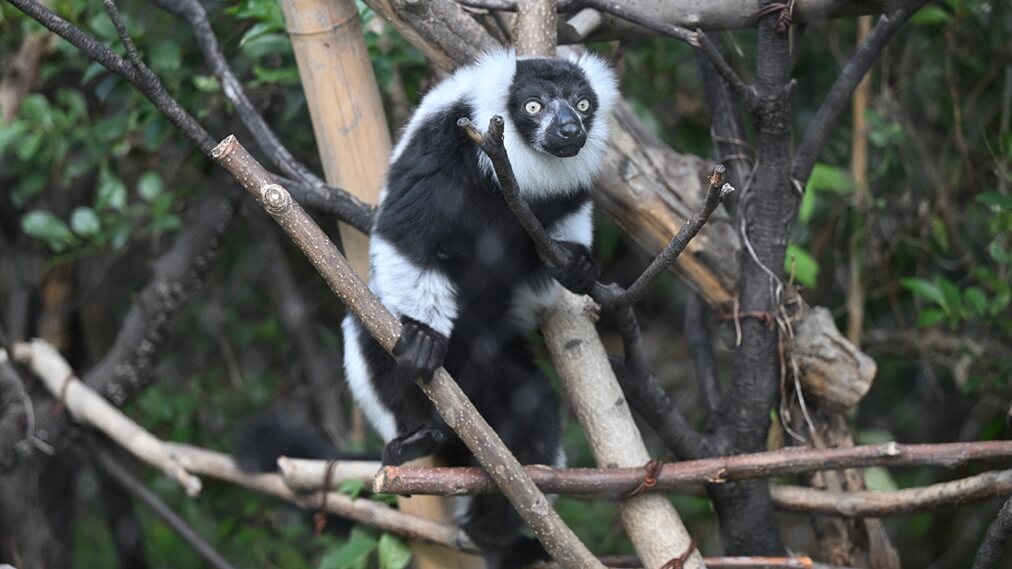
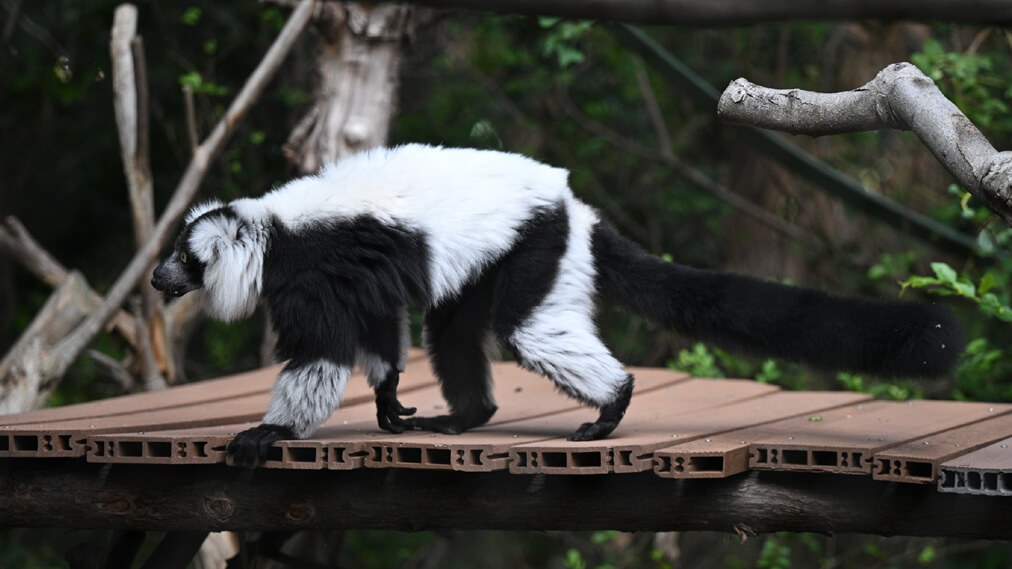
These primitive monkeys live in the eastern part of Madagascar and mainly feed on fruit. They spend most of their time in the trees and communicate with each other using a variety of sounds. They live in groups of around 15 individuals and, unusually for monkeys, build nests to raise their young.
| classification | Mammalia, Primates, Lemuridae |
|---|---|
| English name | Black-and-White Ruffed Lemur |
| distribution | Eastern Madagascar |
| Residence | forest |
| Size |
Head torso length: 50-55cm
Tail length: 60-65cm Weight: Around 3500g |
| food | Fruits, flowers, leaves, insects, etc. |
| Red List |
IUCN: Critically Endangered
|
fox-like face
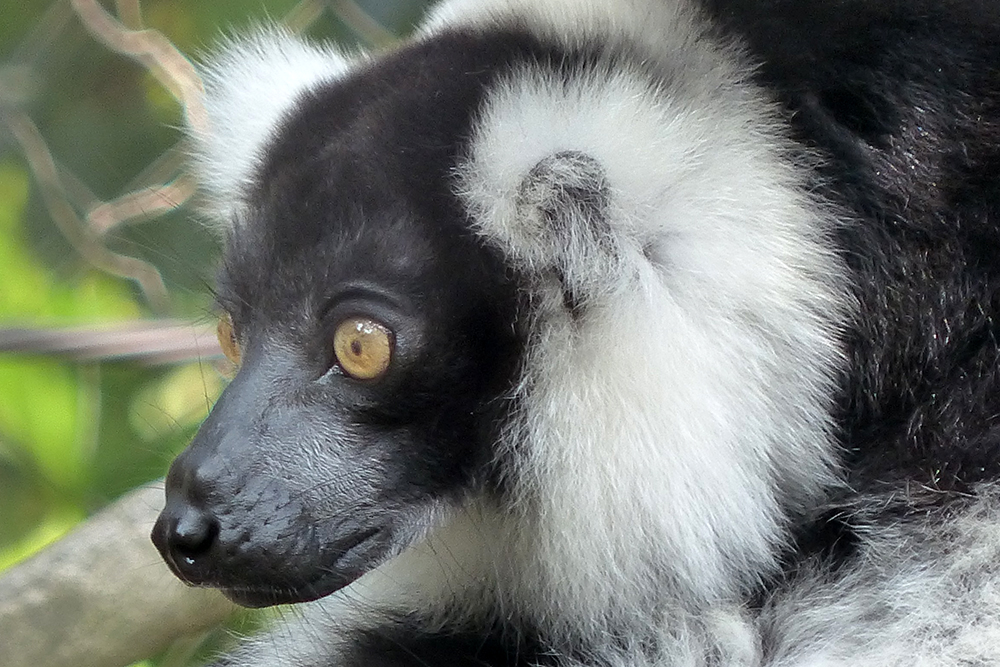
The name means "monkey with a face like a fox, with black and white fur like a collar." With their long, fox-like noses and ears that point upward, they are highly sensitive to smells and sounds. While monkeys generally use their eyes, this group of lemurs uses their noses to smell and identify everything.
What kind of feet?
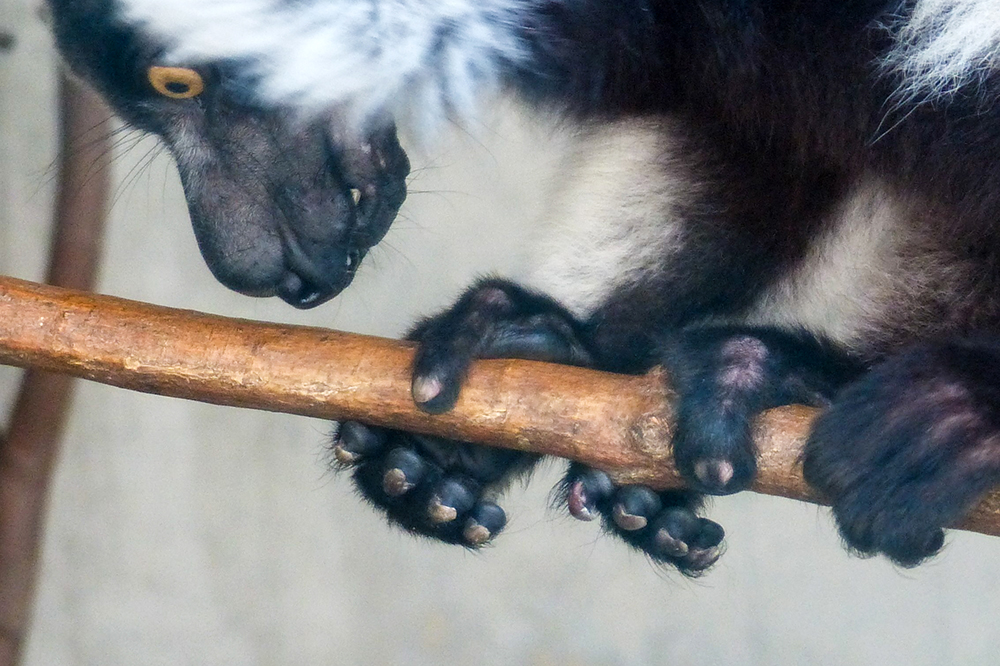
If you look closely at the front paws, you will see that they have five long, distinct fingers, similar to a human hand. However, on the hind paws, the thumb is slightly spaced apart and opposes the other four fingers, allowing them to grasp objects. All monkeys except humans are able to firmly grasp trees with their hind paws.