

Zoo Stock Species and the Red List
Zoo Stock Species and the Red List
Zoo Stock
This indicates that the species is included in the Second Zoo Stock Plan, which was formulated by the Tokyo Metropolitan Government in 2018. The plan sets goals for the next 10 years in three areas: "species conservation," "contribution to wildlife conservation," and "environmental education and conservation awareness." 124 animal species are included.
What is the Red List?
Based on scientific research, this is a list of wildlife classified by rank (category) indicating the degree of risk of extinction.
Livng Things Encyclopedia shows the categories (mainland and islands) assessed by the IUCN (International Union for Conservation of Nature) at the global level, the Ministry of the Environment for Japan, and the Tokyo Metropolitan Government for Tokyo.
The higher the category in each table, the higher the risk of extinction, and CR, EN, and VU are the three categories known as "endangered species." In Tokyo, species that are not at the NT (near threatened) level but are relatively rare are considered "species of concern."
|
IUCN categories |
|
|---|---|
|
EX |
extinction |
|
EW |
Extinction in the wild |
|
CR+EN |
— |
|
CR |
Serious crisis |
|
EN |
crisis |
|
VU |
emergency |
|
NT |
Near Threatened |
|
LC・○ |
Low Concern |
|
DD |
Data shortage |
|
LP |
— |
|
Japan (Ministry of the Environment) Category |
|
|---|---|
|
EX |
extinction |
|
EW |
Extinction in the wild |
|
CR+EN |
Endangered species |
|
CR |
Critically Endangered |
|
EN |
Endangered species |
|
VU |
Endangered species |
|
NT |
Near Threatened |
|
LC・○ |
— |
|
DD |
Lack of information |
|
LP |
Endangered |
|
Tokyo Category |
|
|---|---|
|
EX |
extinction |
|
EW |
Extinction in the wild |
|
CR+EN |
Endangered species |
|
CR |
Critically Endangered |
|
EN |
Endangered species |
|
VU |
Endangered species |
|
NT |
Near Threatened |
|
LC・○ |
Unranked |
|
DD |
Lack of information |
|
LP |
Endangered |
Creatures at Ueno Zoo
Creatures at Ueno Zoo
American Flamingo
American Flamingo
Phoenicopterus ruber
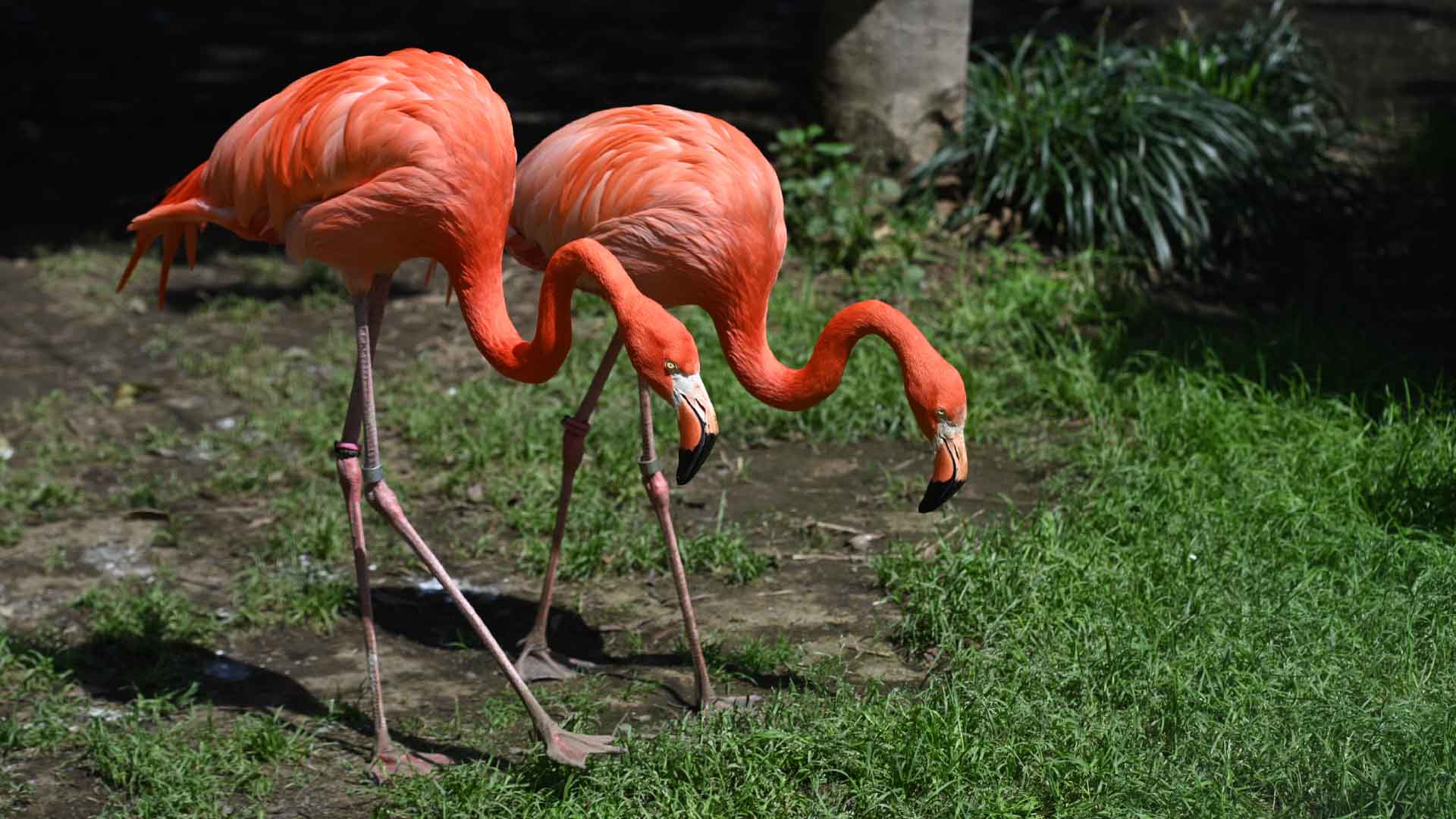
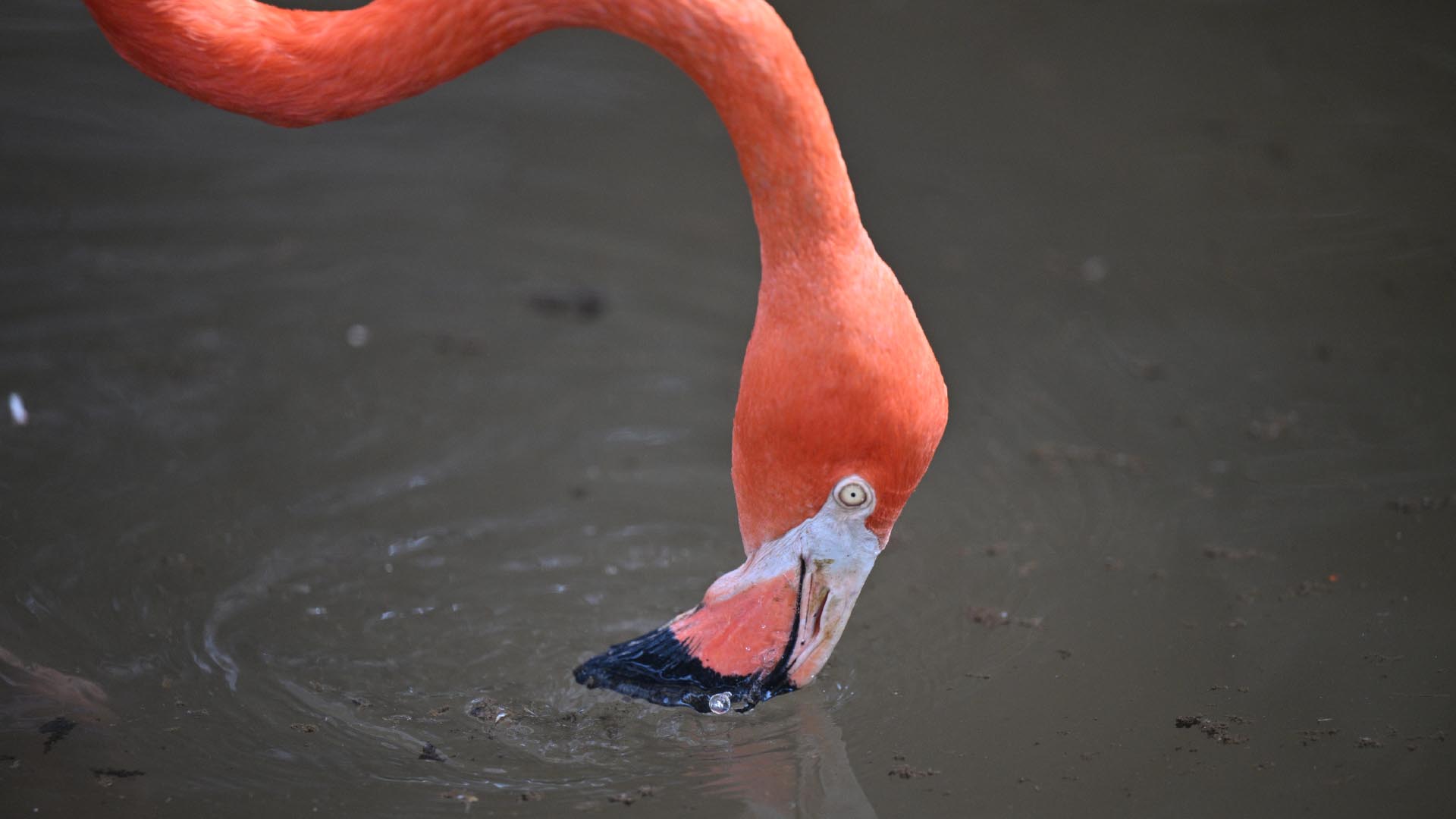
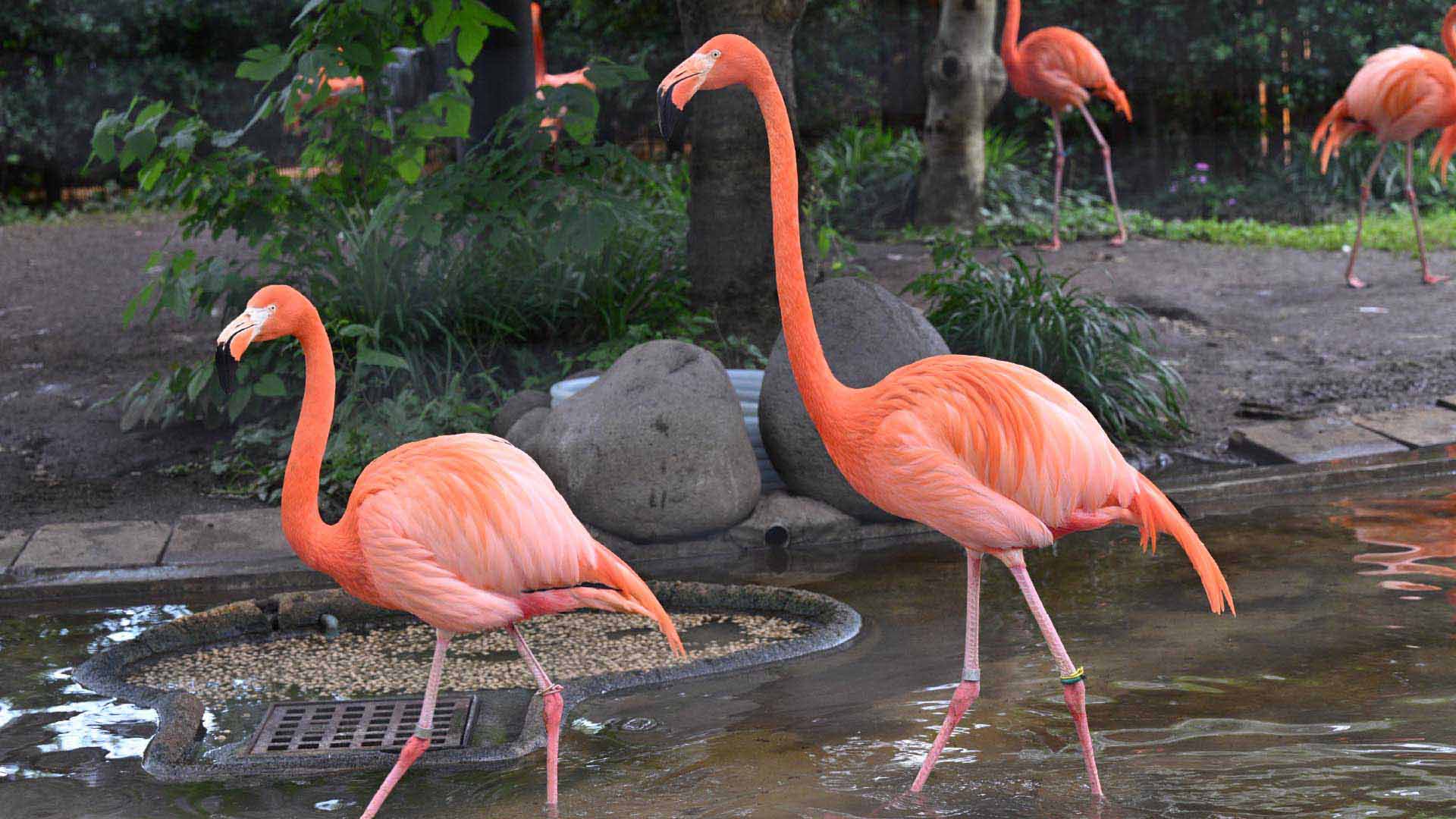
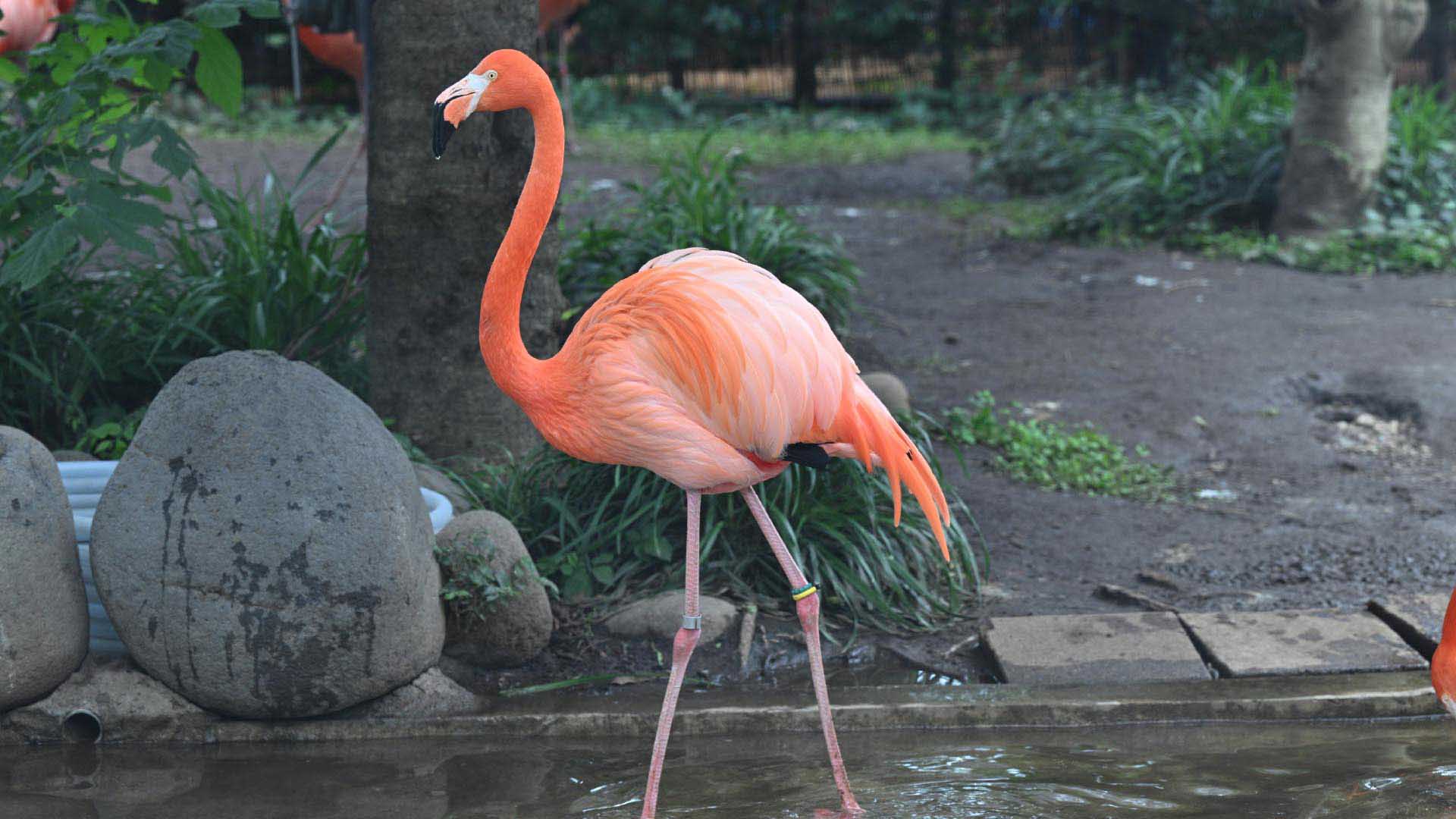
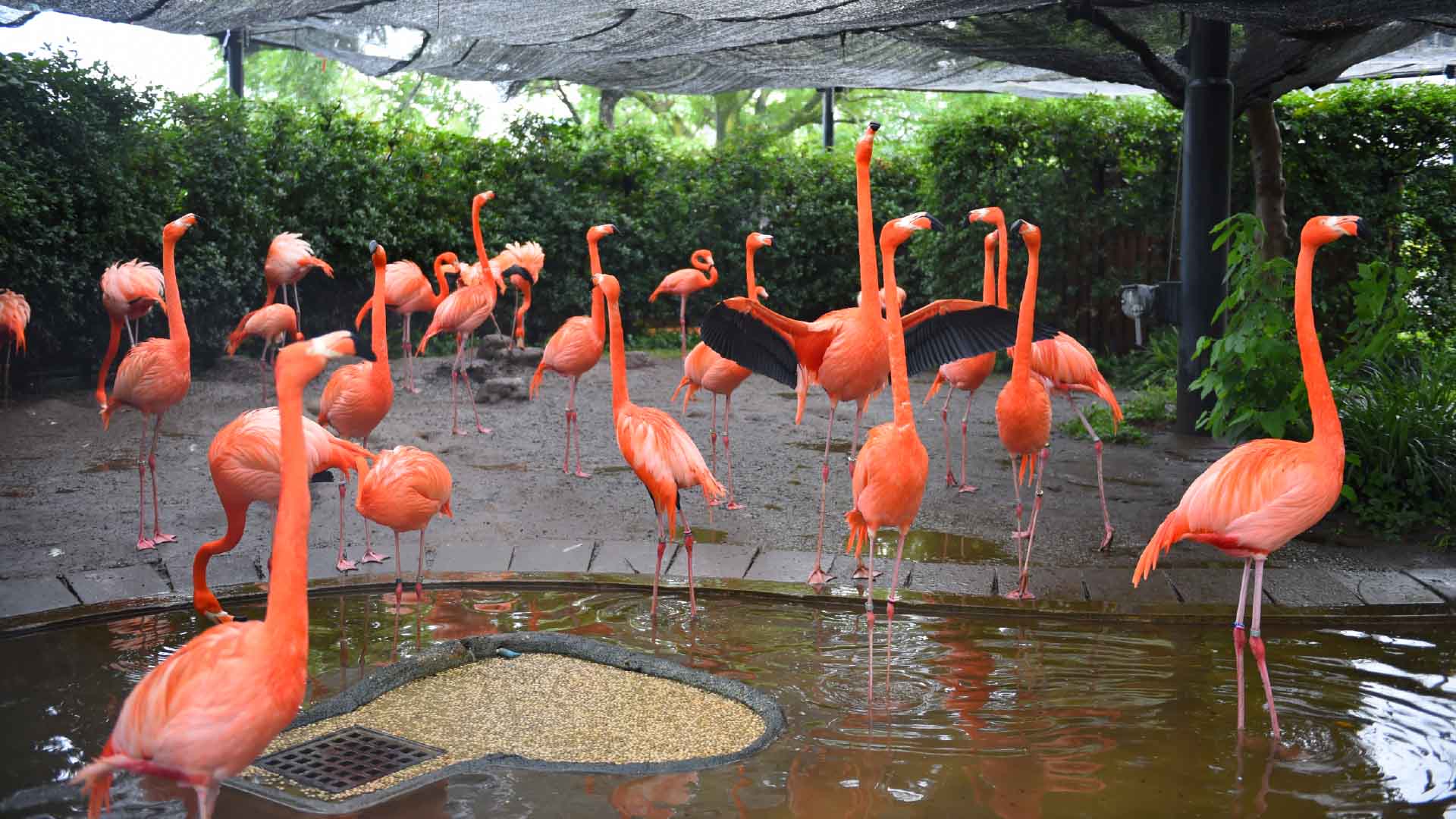
They are the largest of all flamingos. They stir up the mud in the water by stomping their feet, and when small creatures rise to the surface, they put them into their mouths along with the water, filtering them out with a comb-like filter on the edge of their beak. During the breeding season, they build nests by piling up mud and lay a single white egg. Once hatched, the chicks grow by drinking the red liquid (flamingo milk) that their parents secrete from the back of their throats.
| classification | Aves, Order Phalaenopsis, Family Phalaenopsis |
|---|---|
| English name | American Flamingo |
| distribution | Central America to the Caribbean coast of northern South Africa, Galapagos Islands |
| Residence | Saltwater lake |
| Size |
Total length: 120-145cm
Weight: 2100-4100g Wingspan: 140-146cm, females are about 20% smaller than males |
| food | Small crustaceans, algae, aquatic plankton, marsh grasses and seeds, soil, etc. |
| Red List |
IUCN: LC (Least Concern)
|
What color?
The feathers on its neck and body are reddish in color, and become especially dark from winter to spring. When it spreads its wings, black feathers are revealed. This vivid red and black color helps it to attract attention from its peers.
Let's see how to eat it!
When they eat food in the water, do you see water coming out the sides of their beak? The edge of their beak has jagged edges like the teeth of a comb, which help them filter out small pieces of food from the water.