

Zoo Stock Species and the Red List
Zoo Stock Species and the Red List
Zoo Stock
This indicates that the species is included in the Second Zoo Stock Plan, which was formulated by the Tokyo Metropolitan Government in 2018. The plan sets goals for the next 10 years in three areas: "species conservation," "contribution to wildlife conservation," and "environmental education and conservation awareness." 124 animal species are included.
What is the Red List?
Based on scientific research, this is a list of wildlife classified by rank (category) indicating the degree of risk of extinction.
Livng Things Encyclopedia shows the categories (mainland and islands) assessed by the IUCN (International Union for Conservation of Nature) at the global level, the Ministry of the Environment for Japan, and the Tokyo Metropolitan Government for Tokyo.
The higher the category in each table, the higher the risk of extinction, and CR, EN, and VU are the three categories known as "endangered species." In Tokyo, species that are not at the NT (near threatened) level but are relatively rare are considered "species of concern."
|
IUCN categories |
|
|---|---|
|
EX |
extinction |
|
EW |
Extinction in the wild |
|
CR+EN |
— |
|
CR |
Serious crisis |
|
EN |
crisis |
|
VU |
emergency |
|
NT |
Near Threatened |
|
LC・○ |
Low Concern |
|
DD |
Data shortage |
|
LP |
— |
|
Japan (Ministry of the Environment) Category |
|
|---|---|
|
EX |
extinction |
|
EW |
Extinction in the wild |
|
CR+EN |
Endangered species |
|
CR |
Critically Endangered |
|
EN |
Endangered species |
|
VU |
Endangered species |
|
NT |
Near Threatened |
|
LC・○ |
— |
|
DD |
Lack of information |
|
LP |
Endangered |
|
Tokyo Category |
|
|---|---|
|
EX |
extinction |
|
EW |
Extinction in the wild |
|
CR+EN |
Endangered species |
|
CR |
Critically Endangered |
|
EN |
Endangered species |
|
VU |
Endangered species |
|
NT |
Near Threatened |
|
LC・○ |
Unranked |
|
DD |
Lack of information |
|
LP |
Endangered |
Creatures at Ueno Zoo
Creatures at Ueno Zoo
African Penguin
African Penguin
Spheniscus demersus
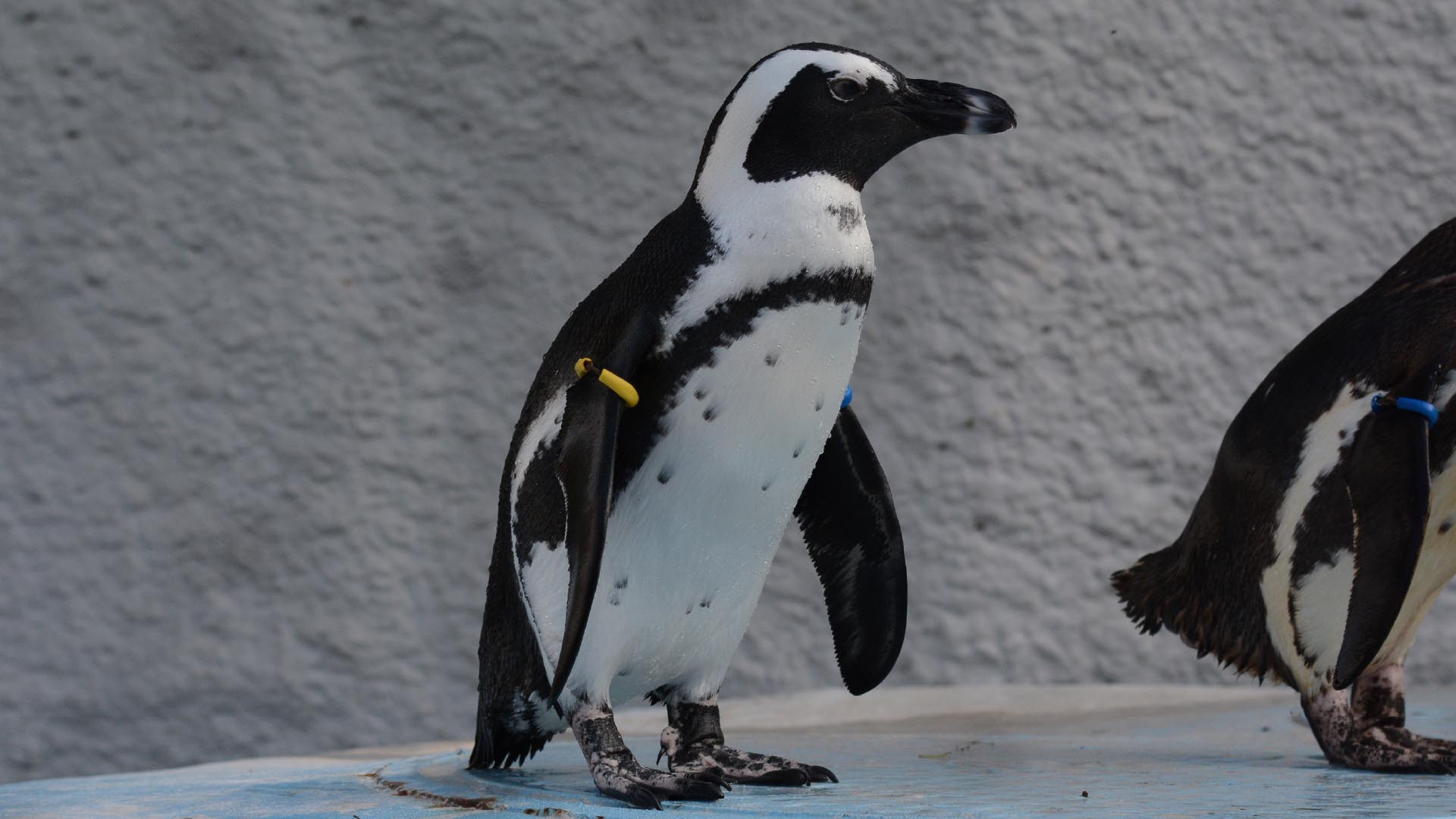
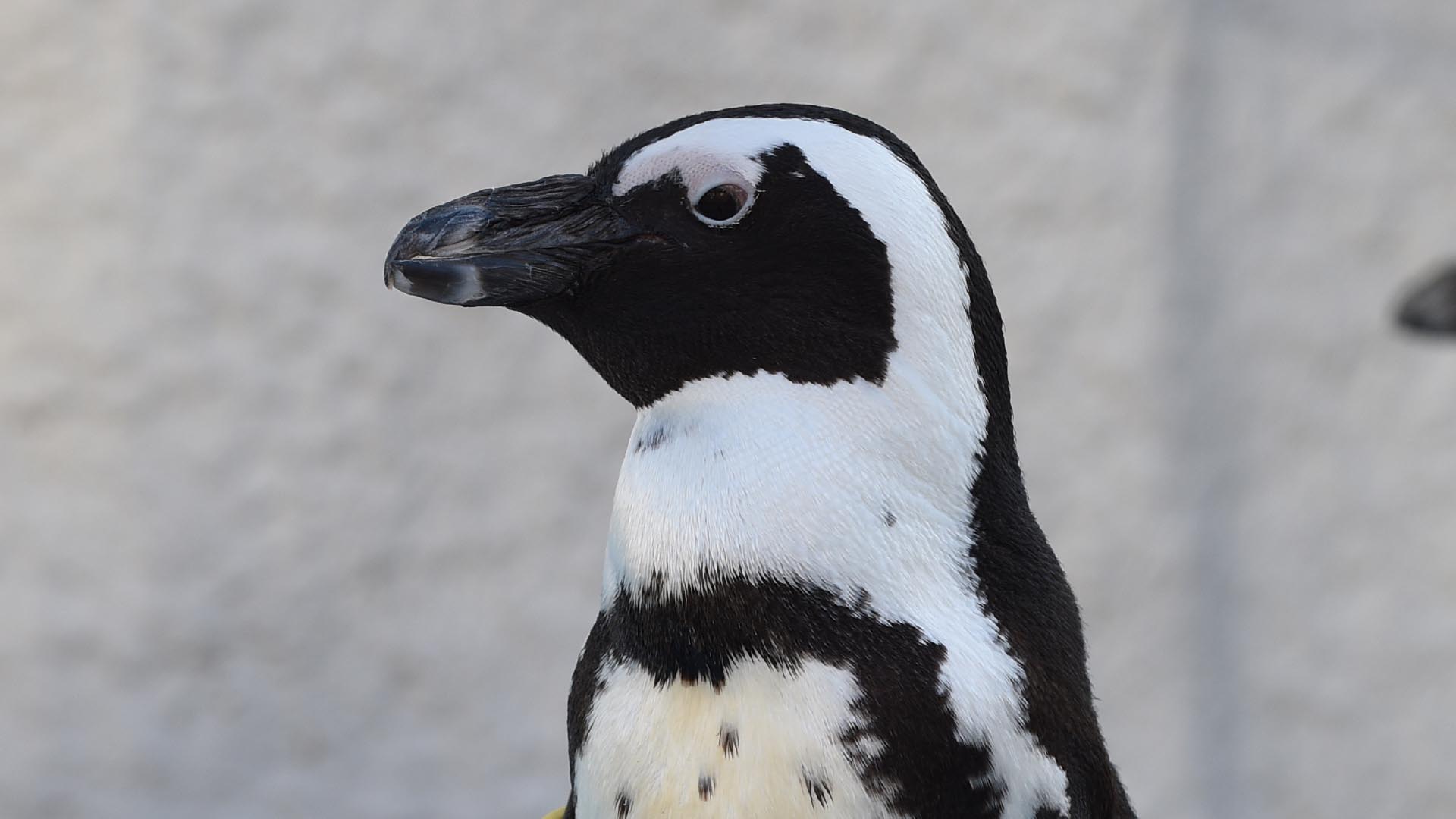
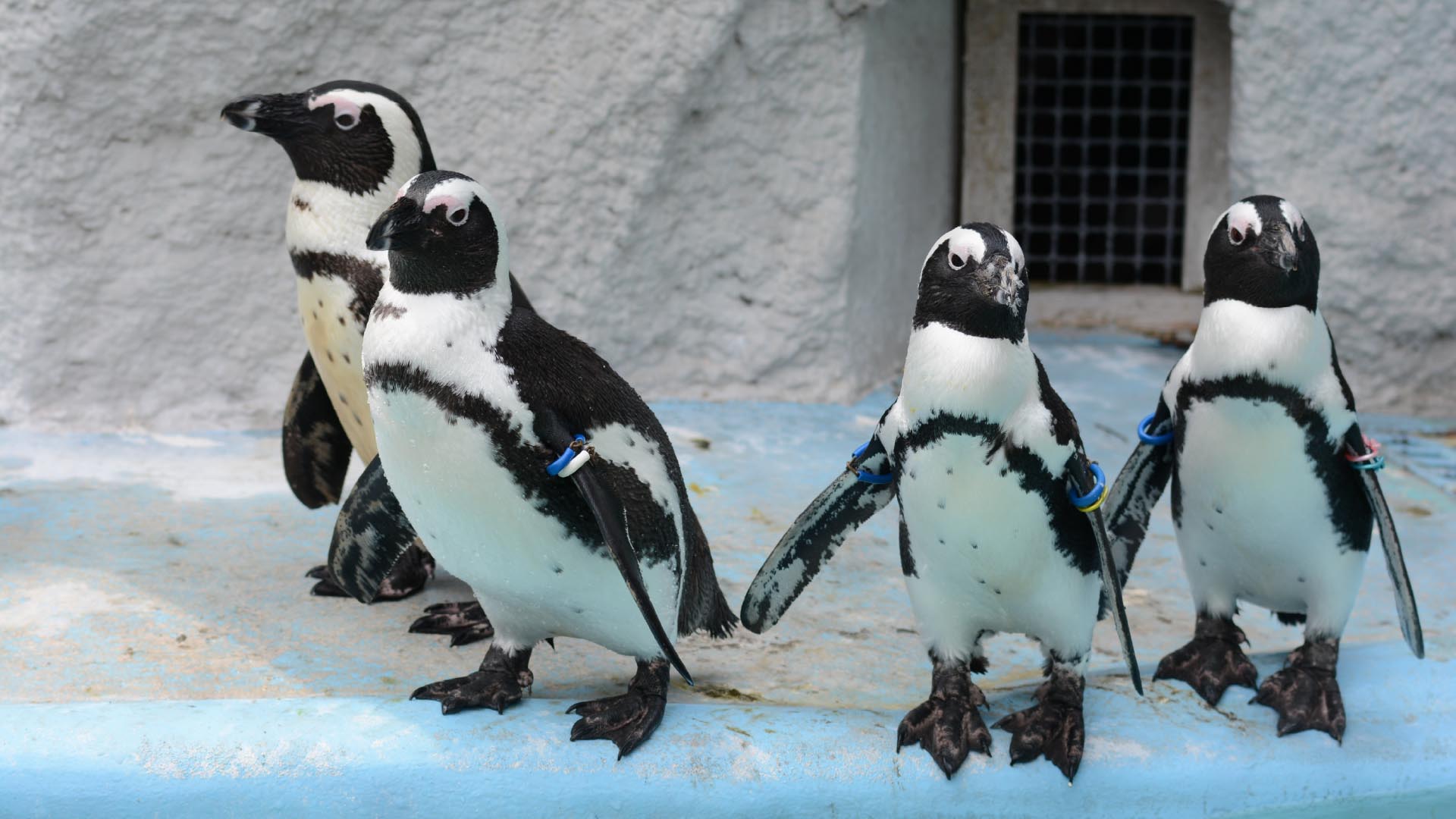
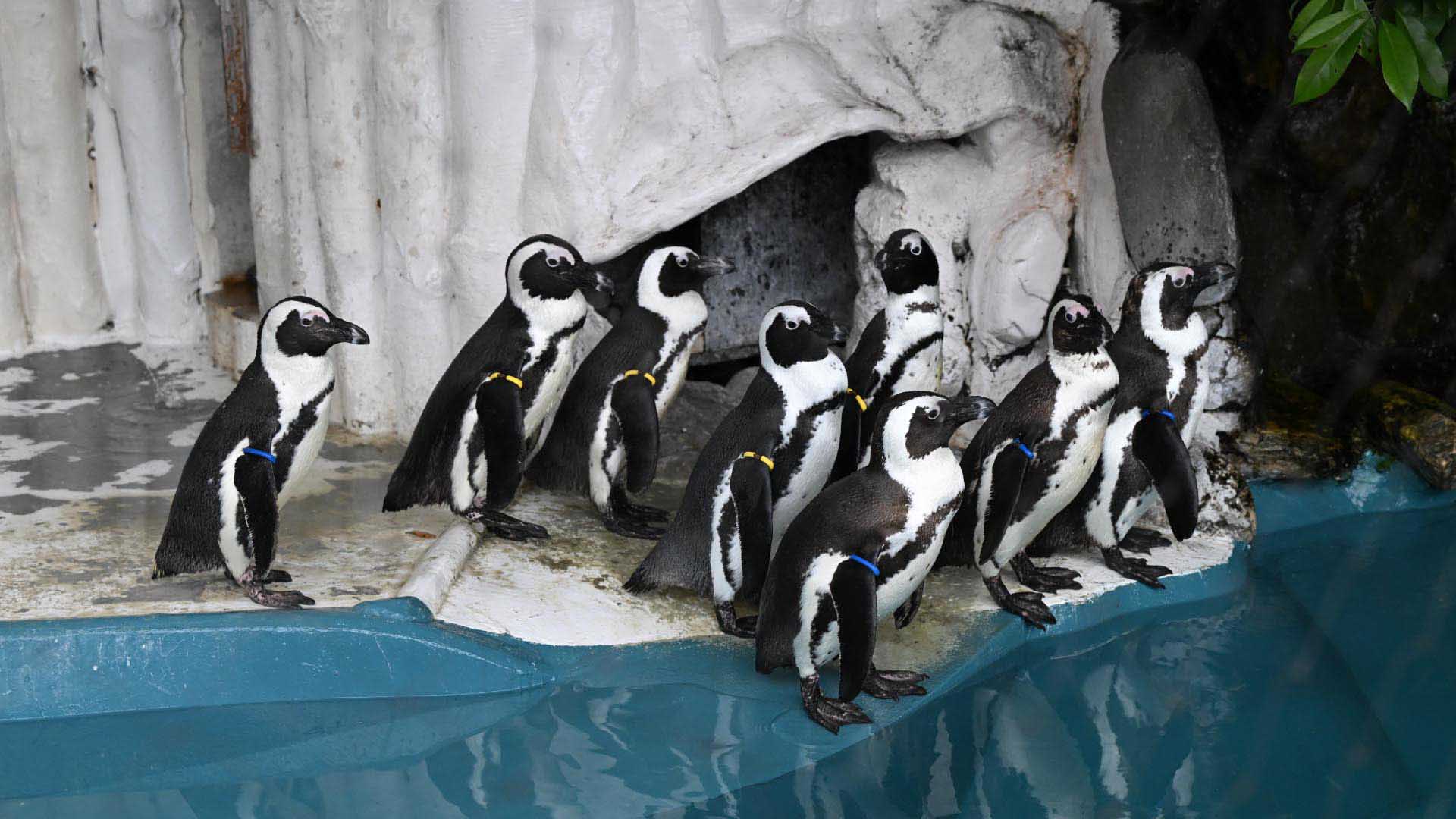
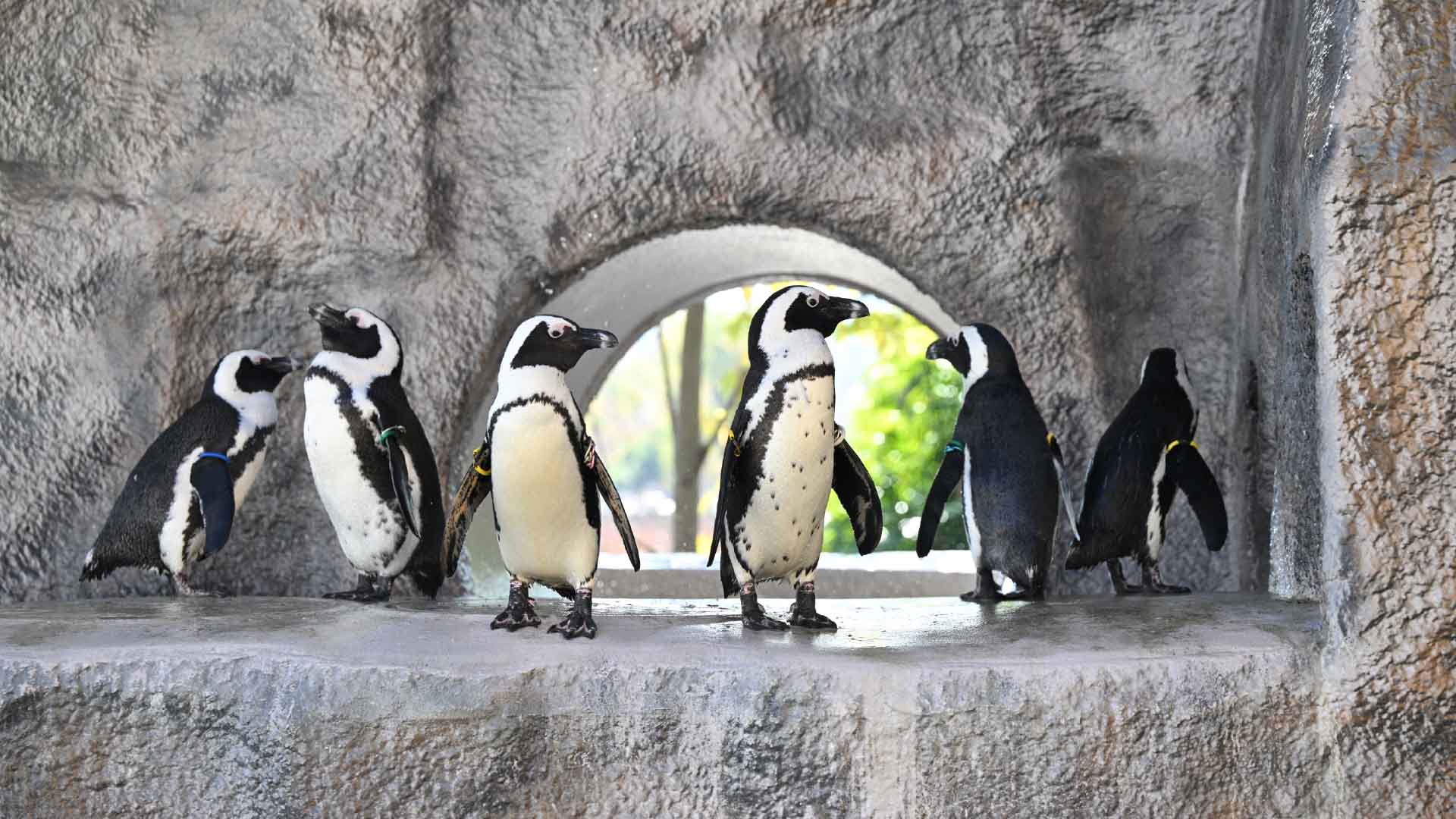
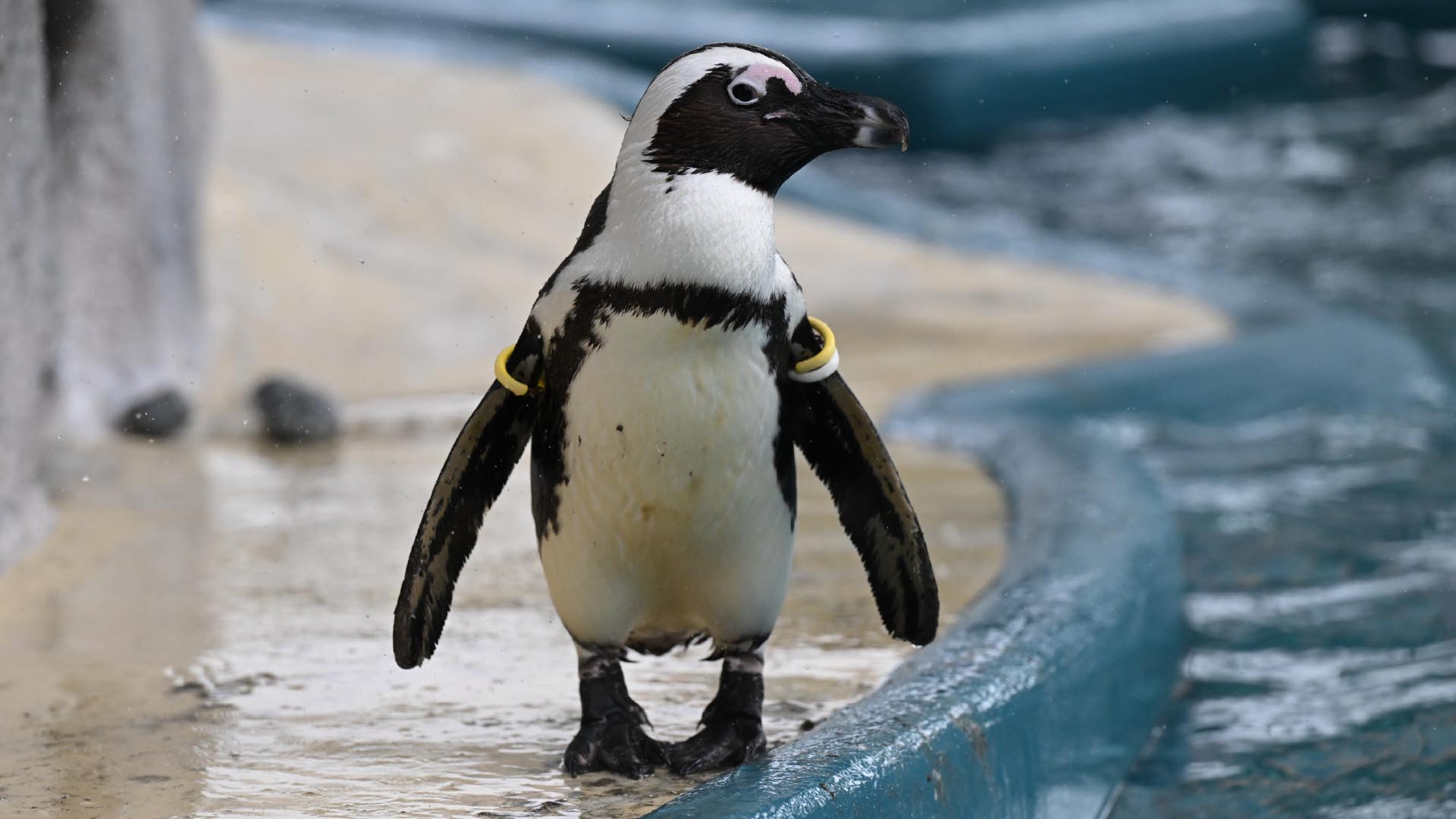
Of the 18 extant species of penguins, the African Penguin is the only one found on the African continent. It is characterized by a large amount of white on its face and a thin black band on its chest. It usually fishes alone or in small groups, but when there are large schools of fish, it will sometimes fish in groups with other seabirds.
| classification | Aves, Sphenisciformes, Penguinidae |
|---|---|
| English name | African Penguin |
| distribution | Atlantic coast of southern Africa |
| Residence | Cold coastal waters, coasts |
| Size |
Total length: 60-70cm
Weight: 2-4 kg |
| food | Pelagic, schooling fish, cephalopods (squid and octopus) and crustaceans |
| Red List |
IUCN: Critically Endangered
|
Wings poking through the water
Their wings are hard and small, making it easy for them to paddle. When they are floating on the water's surface, their wings remain below the surface and they move in small movements to propel themselves forward. When they are submerged, they move their wings in large movements, allowing them to gain speed.
What color are the eyes?
All adult penguins have black and white bodies, but many species have decorative colors like pink, yellow, or orange somewhere on their faces. African Penguin have pink above their eyes.
Conservation status
Their numbers have been declining due to factors such as climate change, a decrease in the number of fish they feed on due to the impact of fishing, and marine pollution caused by oil spills, and they have been designated as critically endangered (CR) on the International Union for Conservation of Nature (IUCN) Red List, which compiles information on the degree of risk of extinction.