

The little-known side of the green iguana
November 13, 2026
Green iguanas are large lizards that live in the tropical rainforests of Central and northern South America, and can grow up to 2 meters in length. They primarily live in trees, but are also adept at swimming, using their long, thick tails. While juveniles are omnivorous and eat arthropods such as insects, they become completely herbivorous as they mature. At Ueno Zoo, they mainly eat a variety of vegetables such as komatsuna (Japanese mustard spinach), boiled carrots, and boiled potatoes.
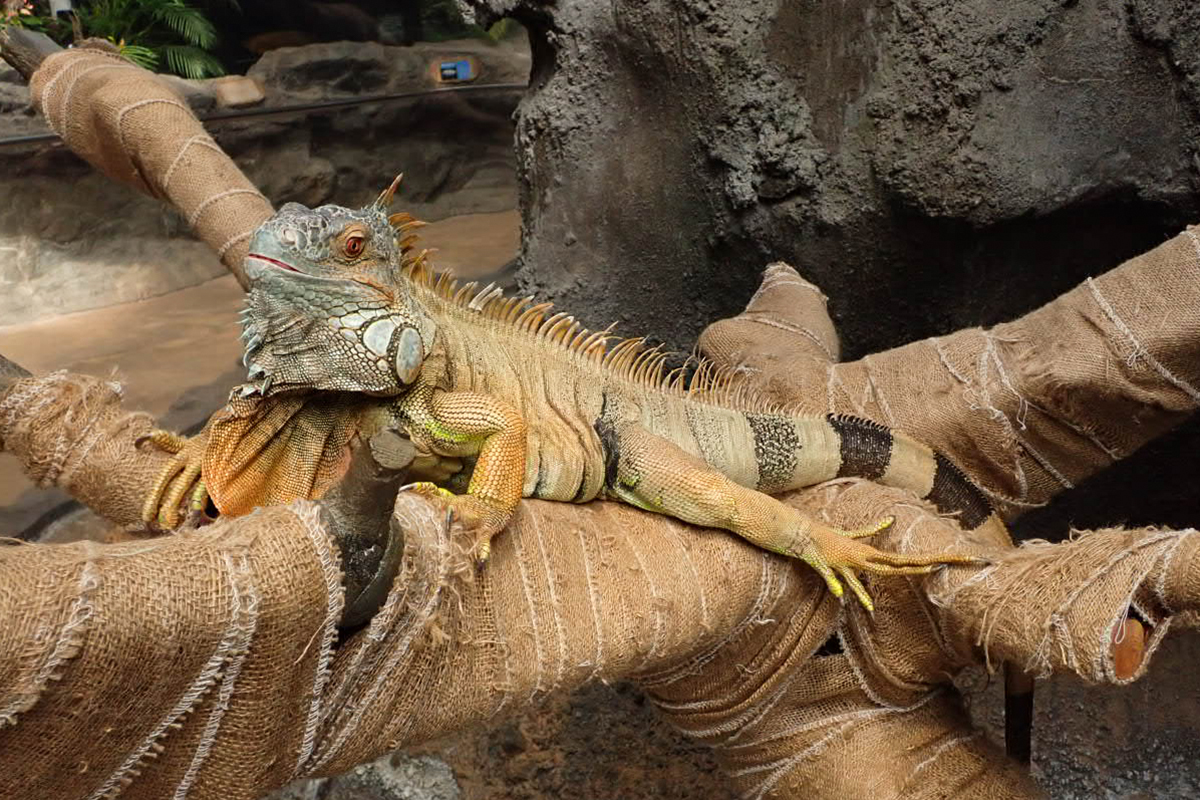
A distinctive feature of the green iguana's morphology is its robust, heavy body structure.
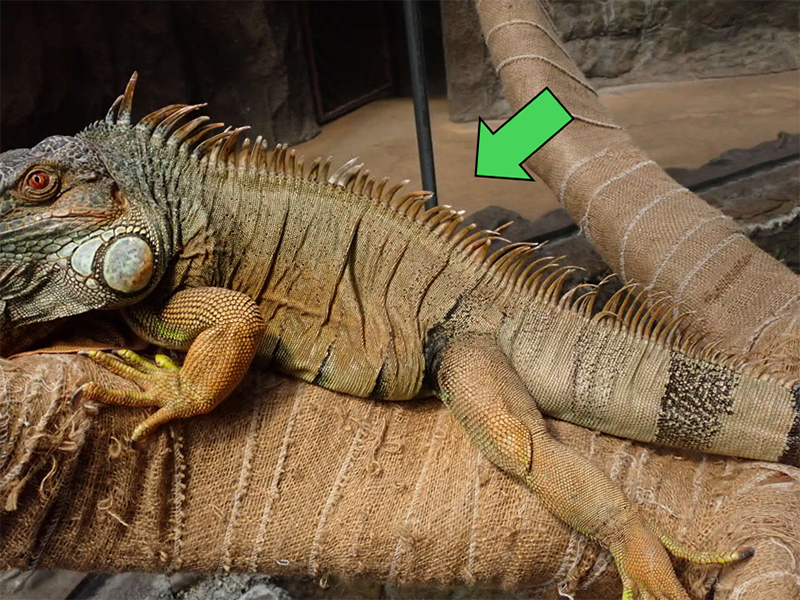
Crest
The first is a series of spiny scales called a "crest," which run from the head to the back and down to the tail. These are said to serve to make the body appear larger when threatening.
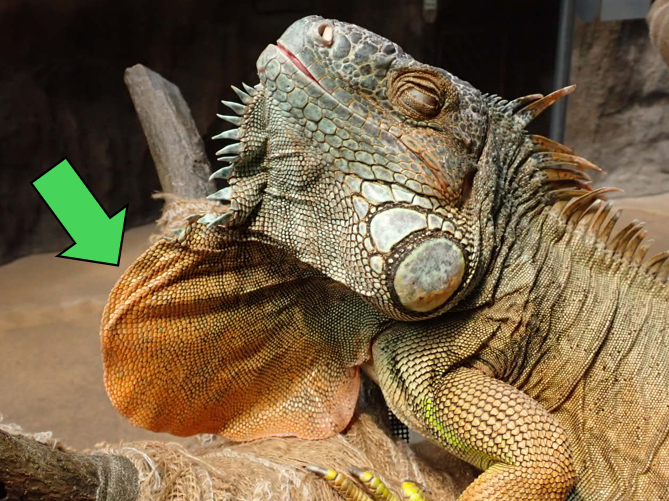
Durap
The second feature is a large, fan-shaped fold of tissue below the throat called the "dulap." This is used for regulating body temperature and for communication with other animals.
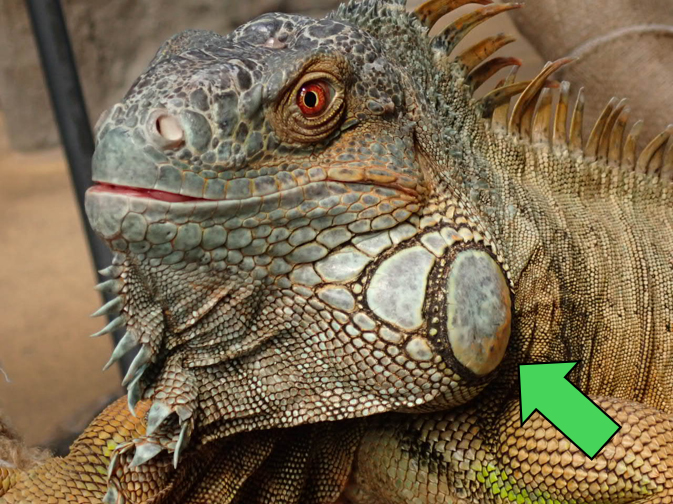
Subtimpanic Shield
The third feature is a pair of large, round scales on the cheeks, known as "subtimpanic shields," which are particularly striking. There are various theories about their function, such as making them appear like large eyes to intimidate opponents, but their exact role remains a mystery.
Given its imposing appearance, you might think it's a very aggressive creature. However, its actual lifestyle is surprisingly gentle; it prefers to stay still in trees and on rocks for much of the day. Even when animal keeper approach to work, it doesn't attack, only glancing at them briefly.
Green iguanas usually stay still in trees, but sometimes they will bob their heads up and down. This behavior is called "bobbing," and it is a way for them to attract other members of their group, often seen during mating season. The sight of them spreading their large dewlap and rhythmically shaking their heads is both cool and somewhat endearing.
Furthermore, there's an aspect that suggests they have high cognitive abilities. The other day, I went into the enclosure wearing a khaki work jacket, which I don't usually wear, to take the green iguana to the animal hospital for an examination. As soon as the green iguana saw me, its pupils dilated, and it went into a state of alert (spreading its dewlap and raising its crest) while staring intently at me.
It's likely that, based on past experiences, it remembers "people wearing khaki work jackets = people who come to catch it." Also, it doesn't react to khaki clothing worn by visitors, but it does react to "the khaki work jacket worn by the usual animal keeper." This suggests that it may be identifying specific people (animal keeper) not only by color but also by associating it with past experiences.
If you're lucky, you might see the green iguanas bobbing their heads or moving around on the ground while you're observing them. Be sure to come and see them at Vivarium.
[Ueno Zoo Reptile House Keeper]