

For frog observation, be sure to visit Ueno Zoo.
November 9, 2026
Have you ever seen a frog?
Yes, it's the frog that we call a tadpole when we're kids (if you've never seen one, you should definitely come to the zoo).
Ueno Zoo also exhibits various types of frogs. Introducing each exhibited species would be endless, so this time I will introduce two observation points that are common to all frogs.
The first point to observe is their "long hind legs." Most frogs use these hind legs to hop and move around.
Let's take a closer look at the toes.
For example, species like the Japanese tree frog and Forest Green Tree Frog, which have round suction cups on their fingertips, live on trees and grass. These suction cups are very useful for climbing to high places.
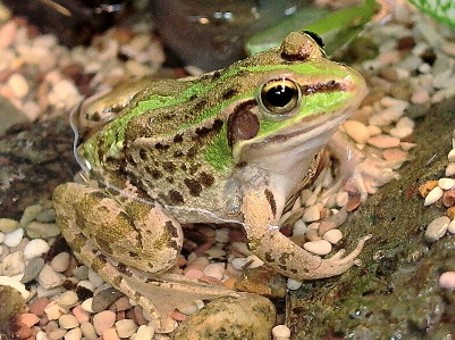
Frog species with well-developed webbing between their toes, such as Tokyo Daruma Pond Frog and Wrinkled Frog, primarily inhabit waterside areas like ponds and rice paddies, and are skilled swimmers.
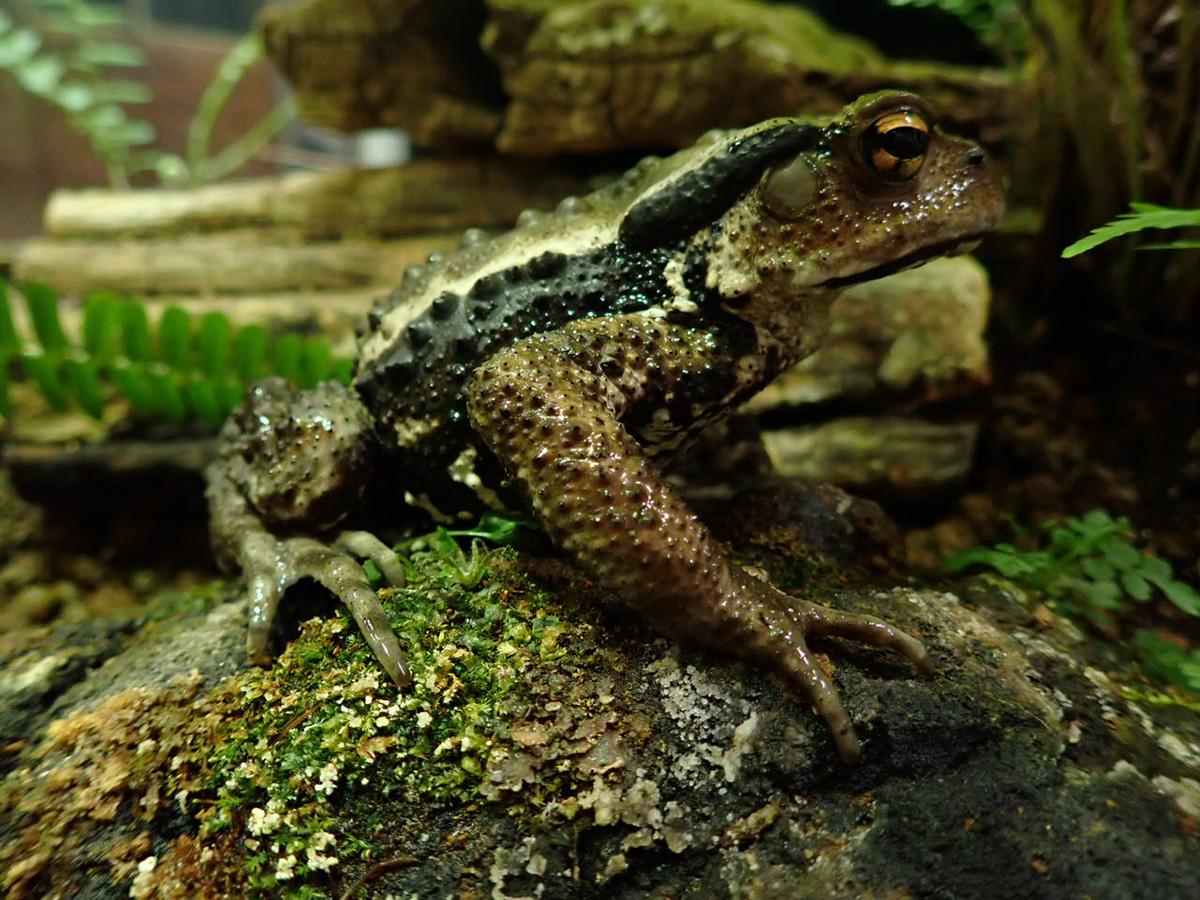
On the other hand, toads with less developed webbed feet primarily inhabit drier land areas such as forests and gardens. Differences in foot shape provide significant clues to the environment in which a species lives.
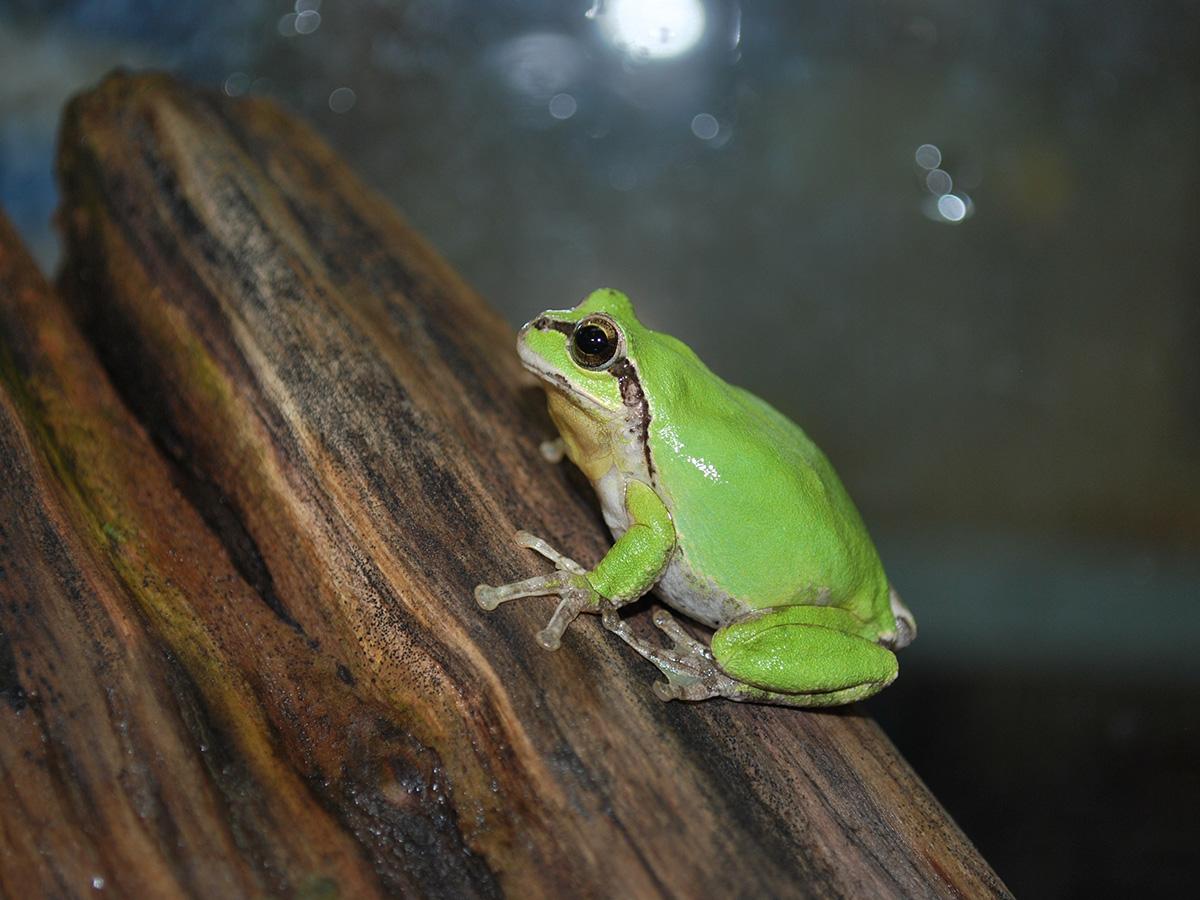
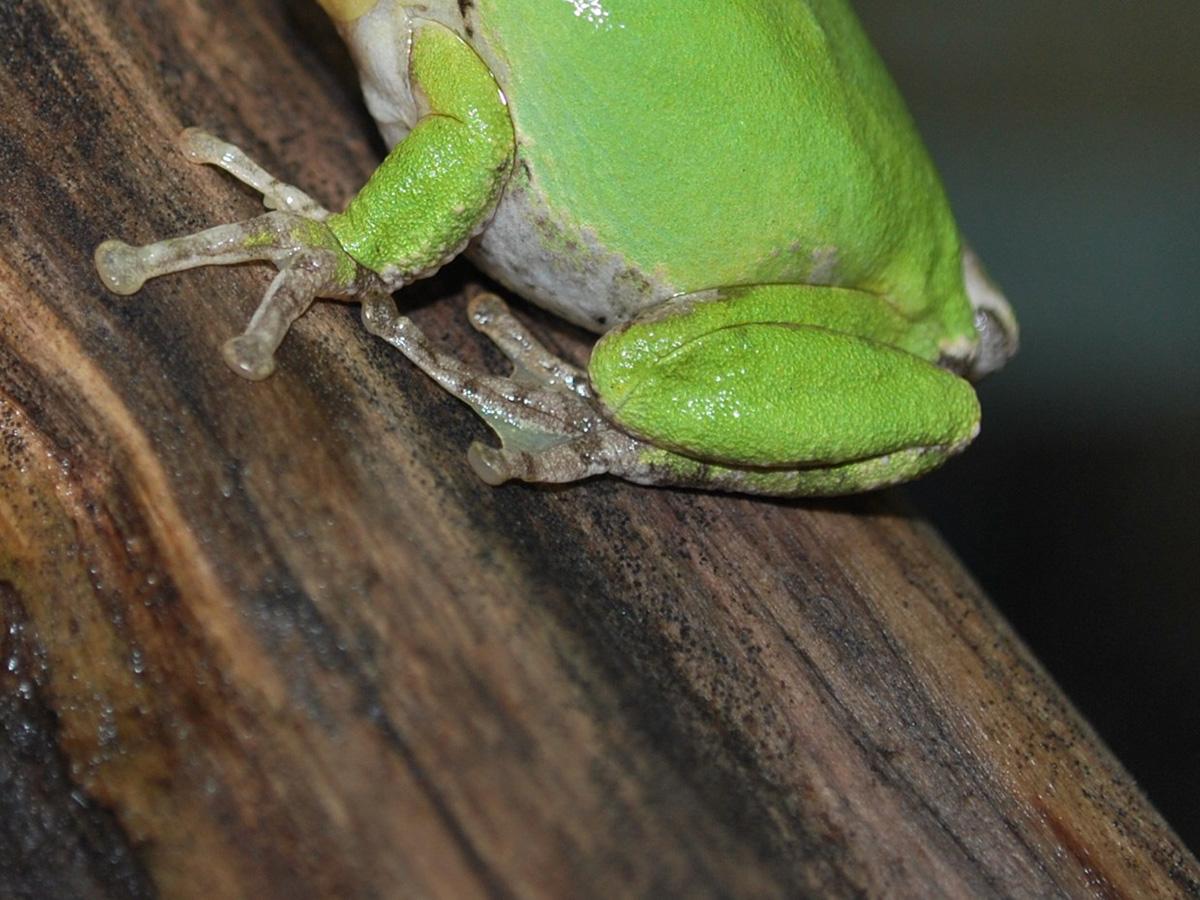
Pay attention to the suction cups on the toes.
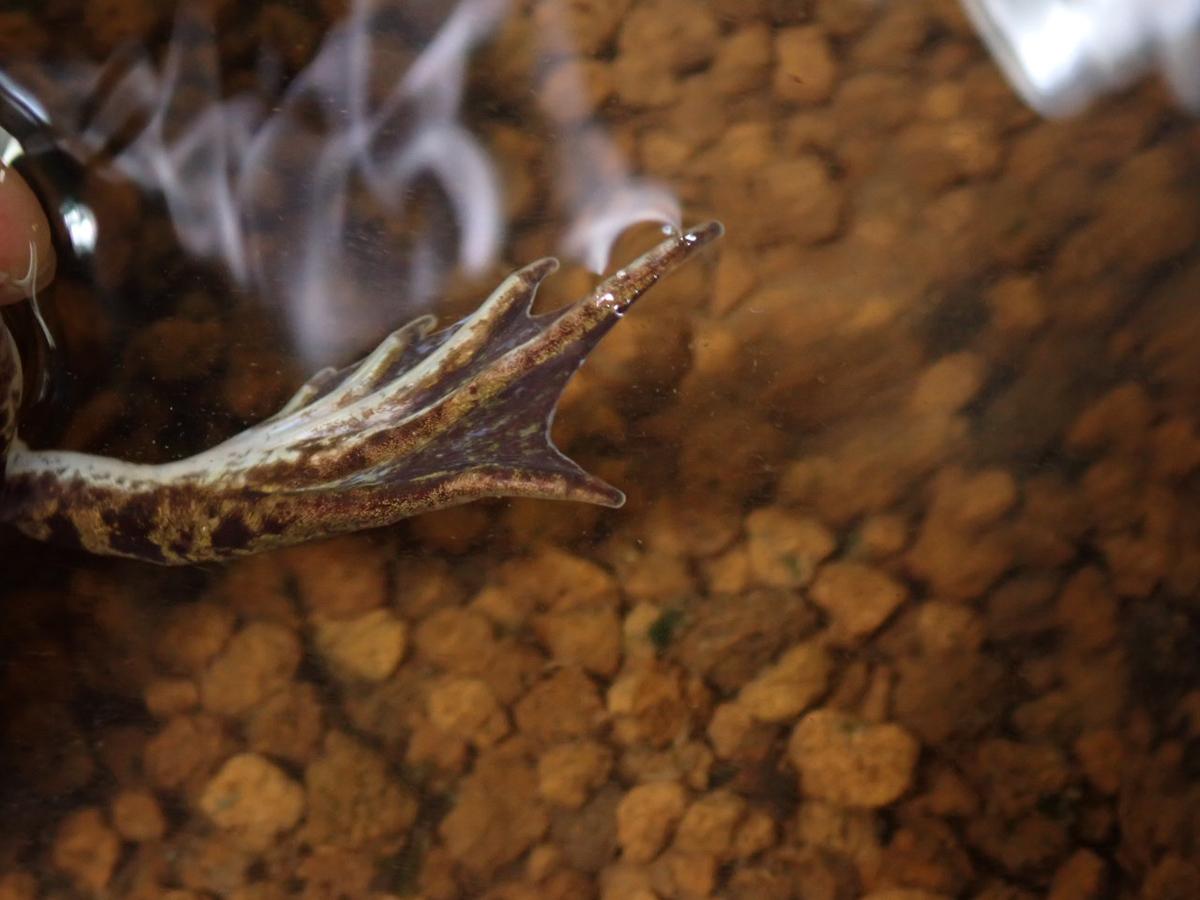
The webbing between the fingers is well-developed.
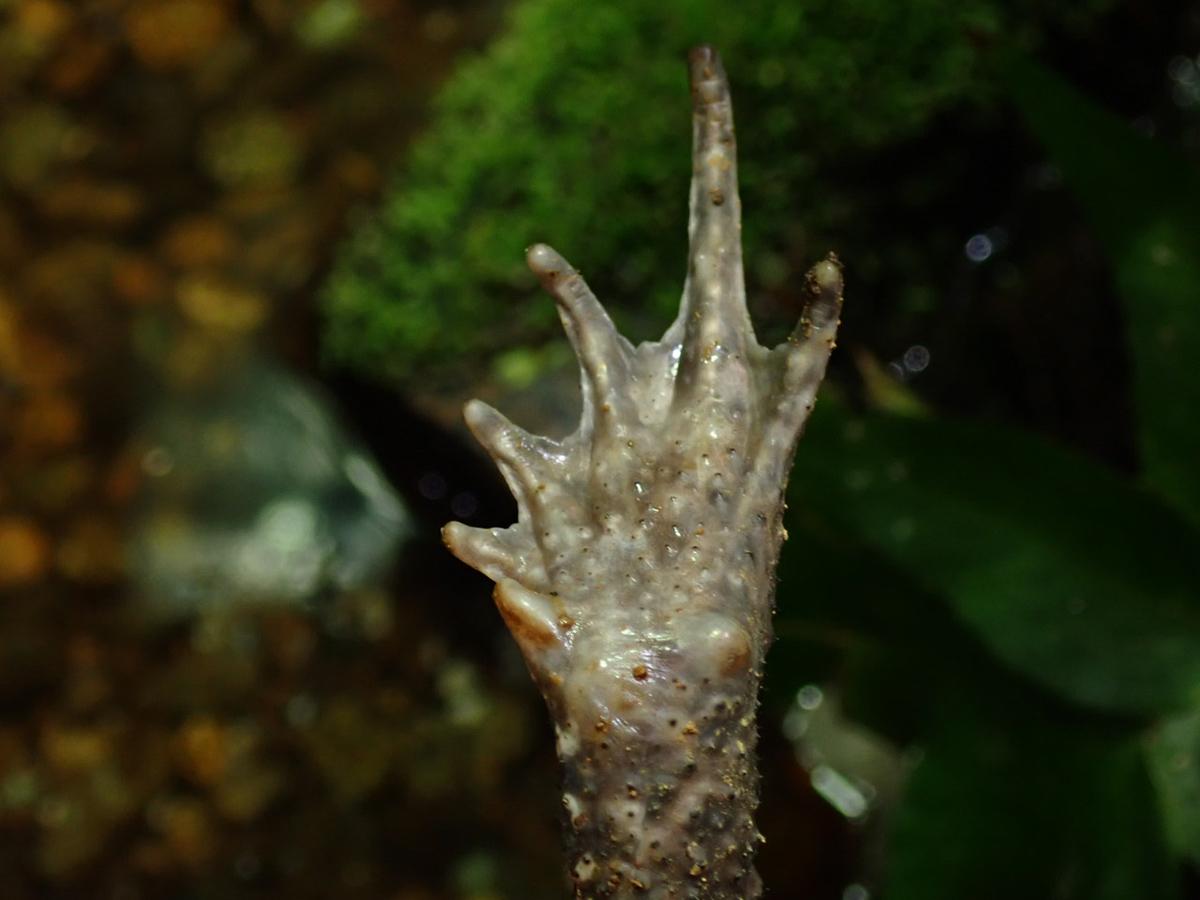
The webbing between my toes is not very well developed.
The second point to observe is behind the eyes. Frogs mainly croak loudly at night in rice paddies and ponds, making a "ribbit ribbit" sound. This croaking is used by males to attract females and to assert their territory against other individuals. Since the calls differ depending on the species, frogs can distinguish between each other's species.
By the way, you need ears to identify animals by their calls. So, where are a frog's ear holes located?
Actually, frogs don't have ear holes. They have a round pattern behind their eyes, which is their eardrum. Frogs have exposed eardrums. Frogs are thought to be the first group of land vertebrates to develop ears.
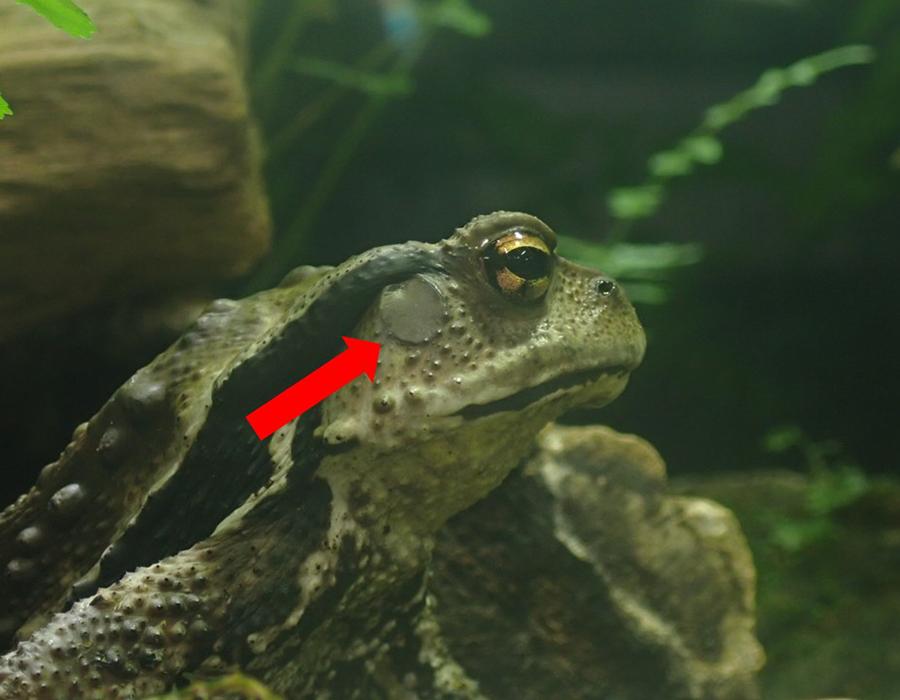
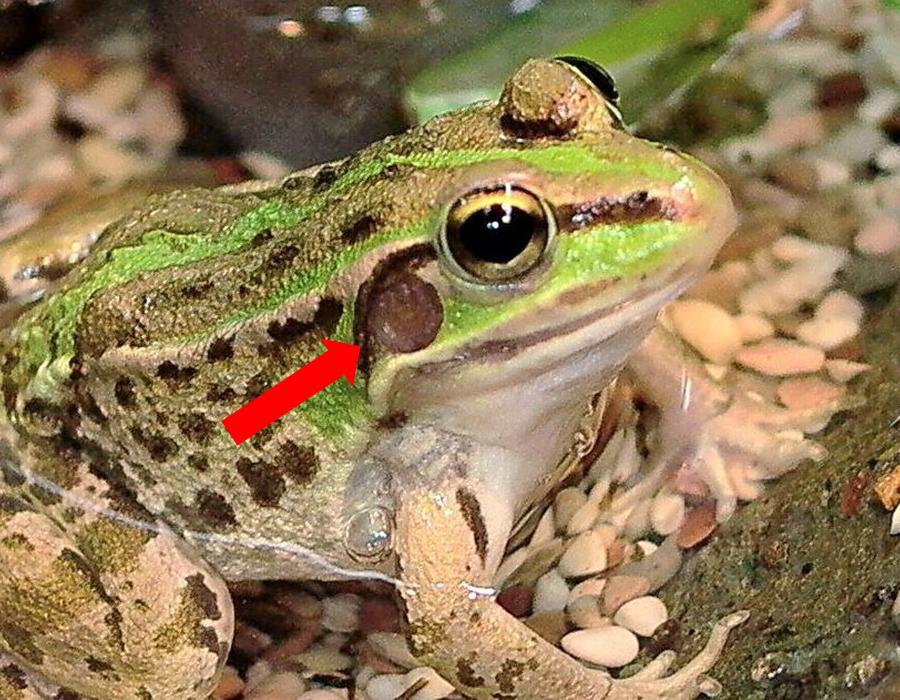
So, what kind of animal is a frog, exactly?
Frogs belong to the amphibian group. Amphibians are a group that includes not only frogs, but also newts and salamanders. The word "amphibian" might give the impression that they can live in both water and on land, but in reality, it means that they cannot survive without both water and land.
Taking frogs as an example, tadpoles live in water immediately after hatching from eggs, but as they grow and develop limbs, they live on land. However, many frogs have thin skin, so if their surroundings become dry, the water in their bodies decreases, and they eventually dry up and die. Therefore, even when living on land, they need a humid environment such as near water. They are animals that cannot be separated from water, both as children and as adults.
Frogs are among the animals most susceptible to changes in their habitat. It has long been said that amphibians, including frogs, are declining in populations around the world. The causes are varied and still unclear, but in Japan in particular, habitat loss due to the development of ponds and rice paddies into residential areas is thought to be having a major impact on frogs.
If you happen to see frogs around you, it's proof that nature still remains in that area. Try to find out what kind of frog you saw at the zoo. If you don't see any, we hope that the frog exhibit at the zoo will encourage you to take another look at the nature around you.
[Ueno Zoo Reptile House Keeper]