

Differences in behavior from breeding to raising offspring observed in two female Pygmy Hippopotamus hippos
May 15, 2026
In 2025, two sisters who are pygmy Pygmy Hippopotamus gave birth one after another at Ueno Zoo.
First, on March 14th, the younger sister "Natsume" gave birth to a male offspring, and then on December 25th, the older sister "Momiji" gave birth to a female offspring. Being able to witness two births and the raising of their young in the same year was a valuable experience and provided important data that will be useful in the future.
Although they were sisters born to the same parents, there were many differences in how they lived with males, gave birth, and raised their young. This time, we will introduce these differences.
The male is living with the female.
Pygmy Hippopotamus are usually solitary animals, and females only accept males during the mating season. Therefore, when a male and female meet, a strong tension can sometimes arise between the two.
At zoos, when a female animal goes into heat, the two are first brought together through a fence to carefully observe each other's reactions. If a fight were to break out after they were brought together, separating them would not be easy, and both could be injured. Therefore, the decision of whether or not to open the fence and let them live together requires particular caution.
When we introduced the two females to the male "Motomoto," Natsume's reaction was relatively easy to understand, and there were hardly any situations where we were unsure of what to do. On the other hand, Momiji often presented situations where we were unsure of what to do, and because it was dangerous to proceed without certainty, we sometimes decided against letting them live together.
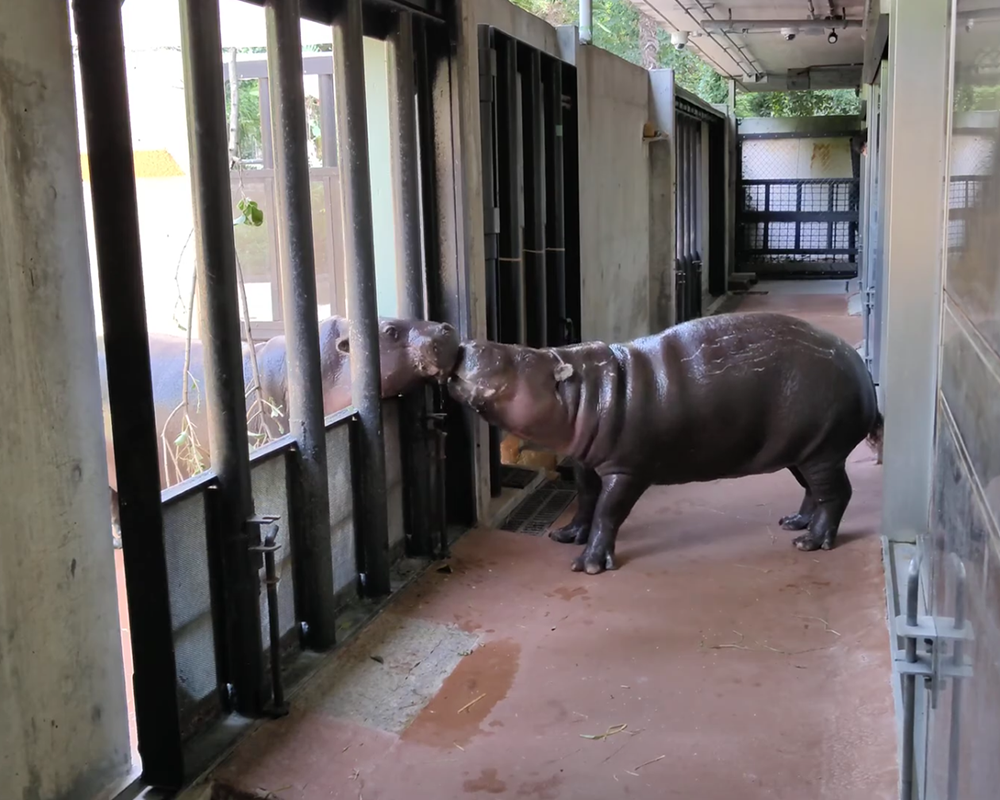
Furthermore, individual differences were evident in the two females' reactions to Motomoto and how they maintained their distance from him while living together.
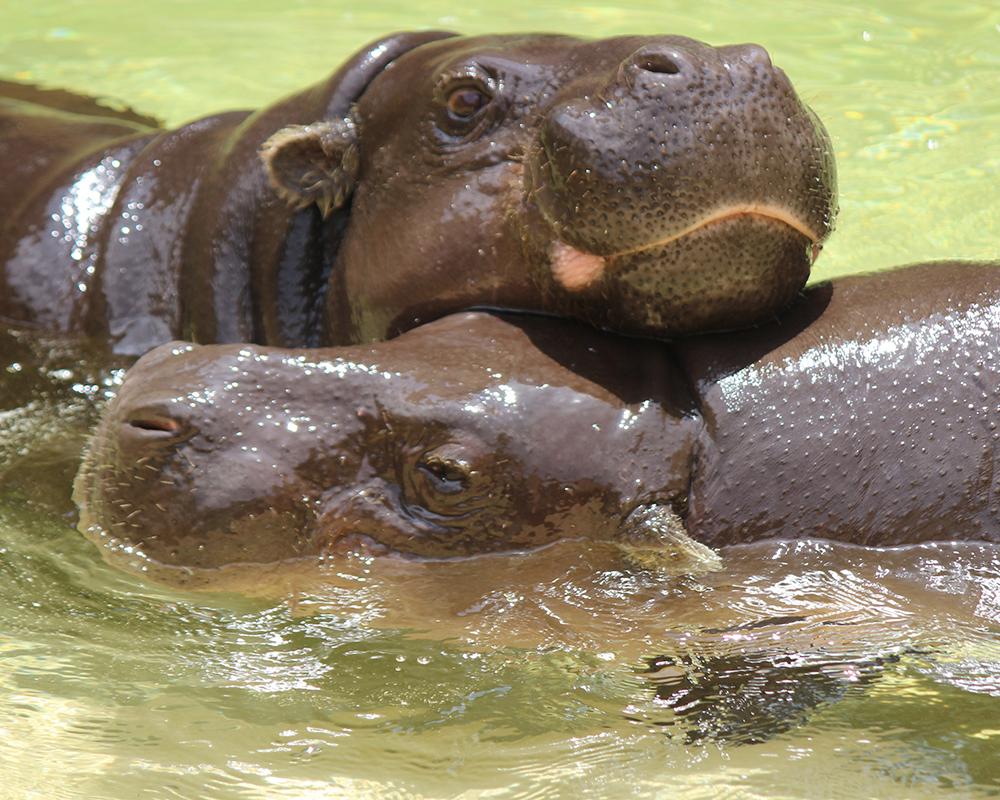
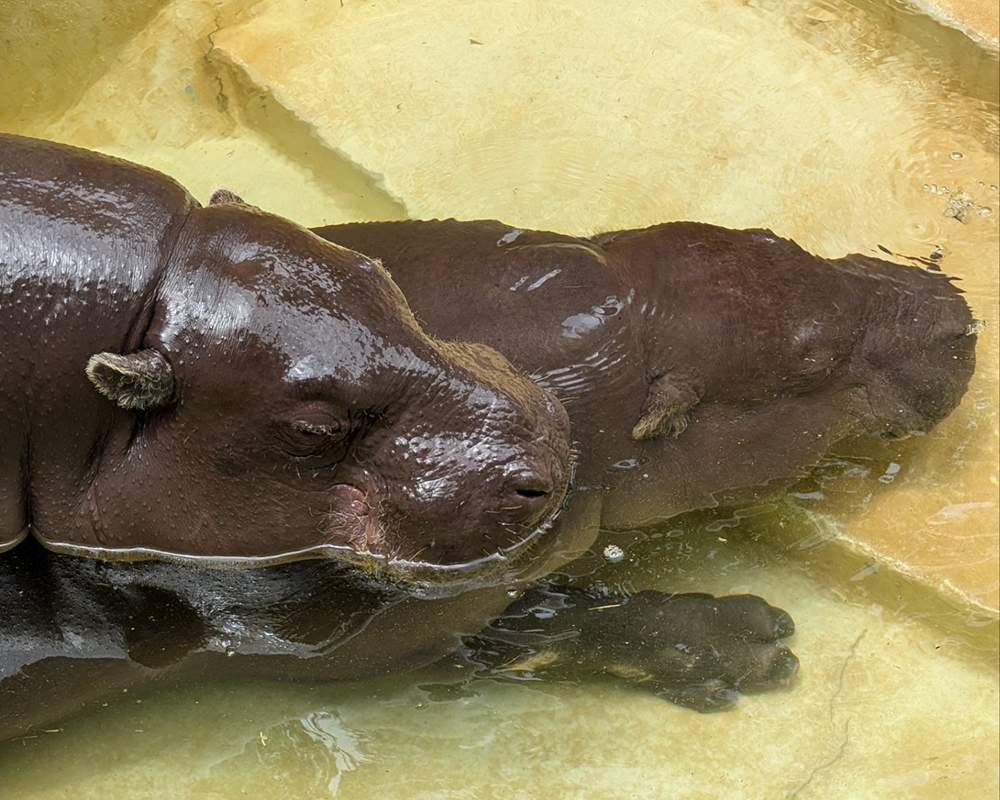
Natsume had a naturally gentle temperament and accepted Motomoto relatively smoothly without being overly defensive. There were hardly any major fights or strong displays of intimidation, and a calm relationship developed between them.
On the other hand, Momiji seemed more assertive and cautious compared to Natsume. Perhaps due to her older age, there were times when Motomoto kept his distance, creating a different kind of tension than with Natsume. There were also instances of intimidation and maneuvering, and it took time for them to build a relationship.
The process of childbirth
The differences between the two females were also clear during childbirth.
As childbirth approaches, several physical changes, such as swelling of the genitals, can be observed as signs. Natsume showed almost no such changes, making it difficult to determine the timing of childbirth from her appearance alone. On the other hand, Momiji showed clear swelling, making her physical changes easily apparent.
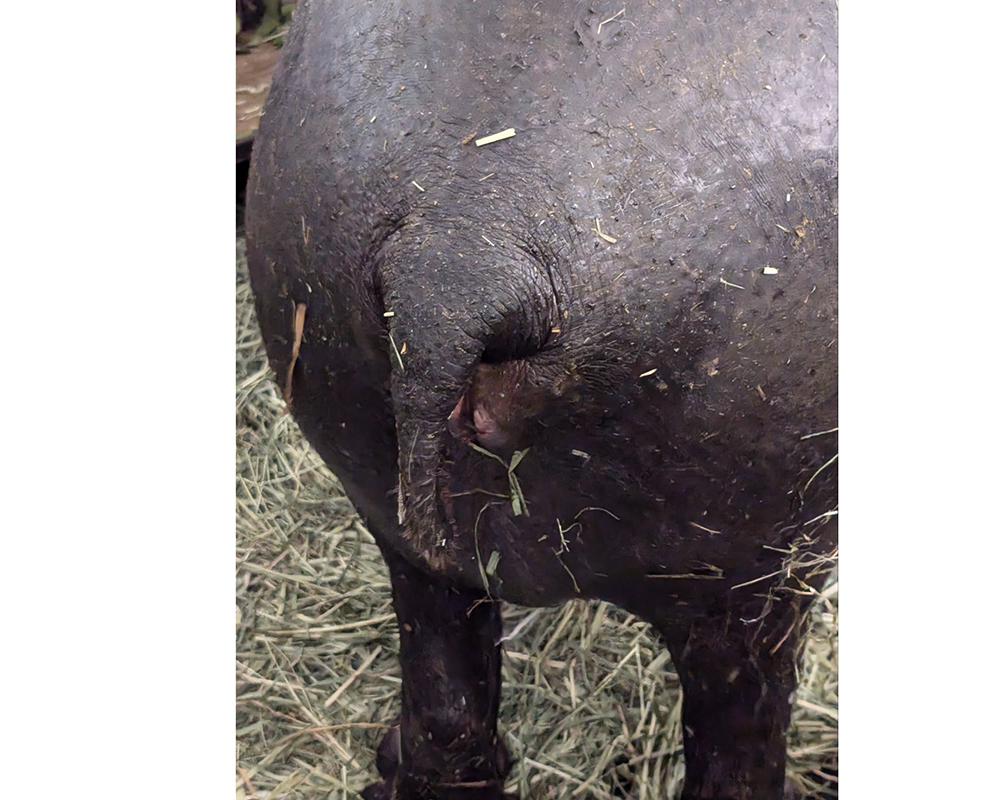
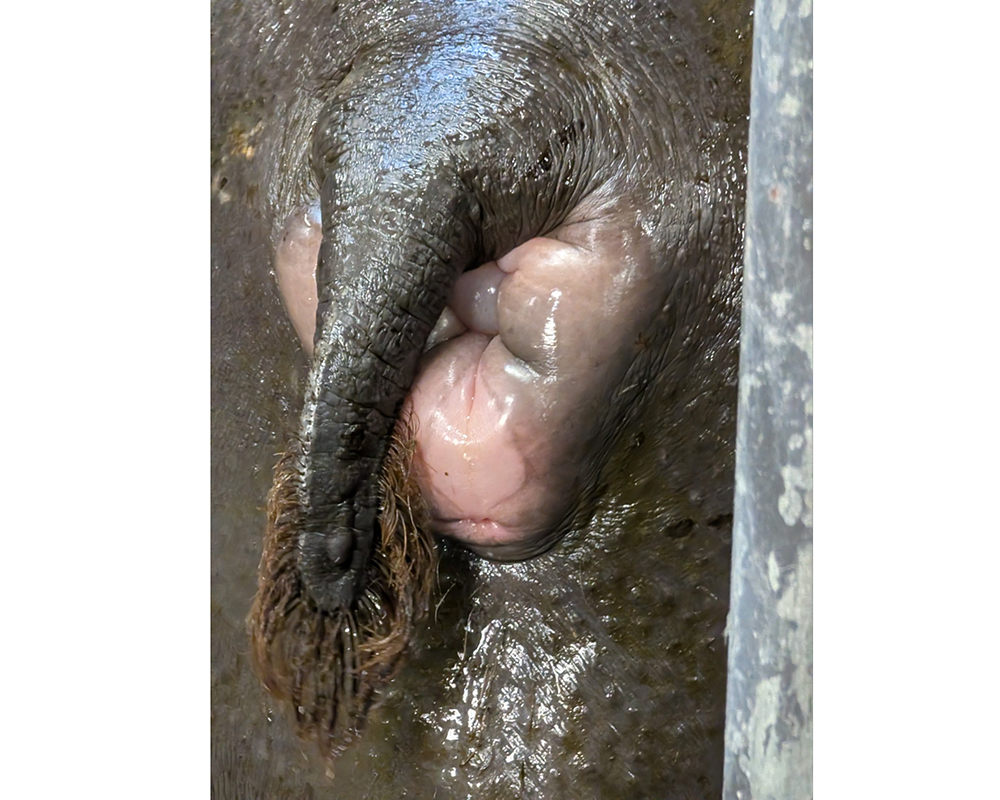
Natsume was pregnant and giving birth for the first time, but she seemed very calm as the time approached.
As the birth approaches, some mare may become aggressive towards those in charge or exhibit nervous behavior. However, Natsume showed almost no such changes and gave birth without being greatly disturbed, even with staff members present around the birthing room.
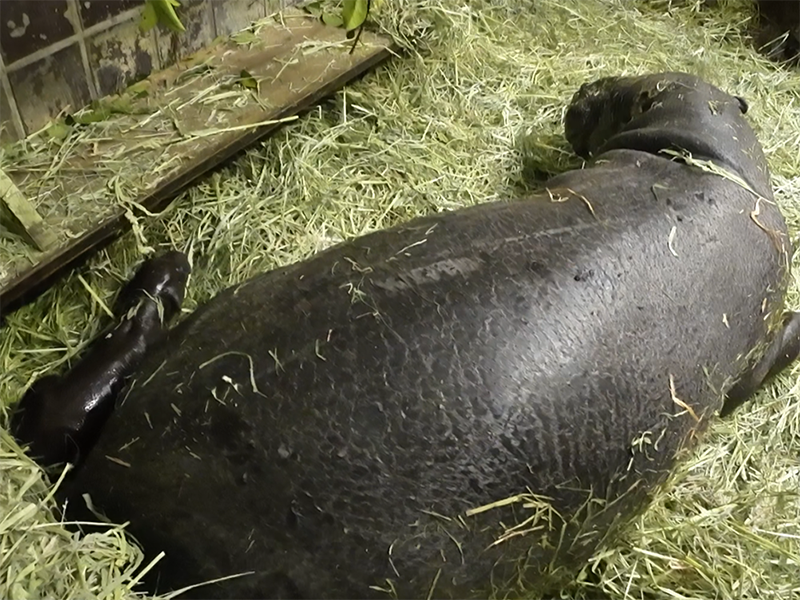
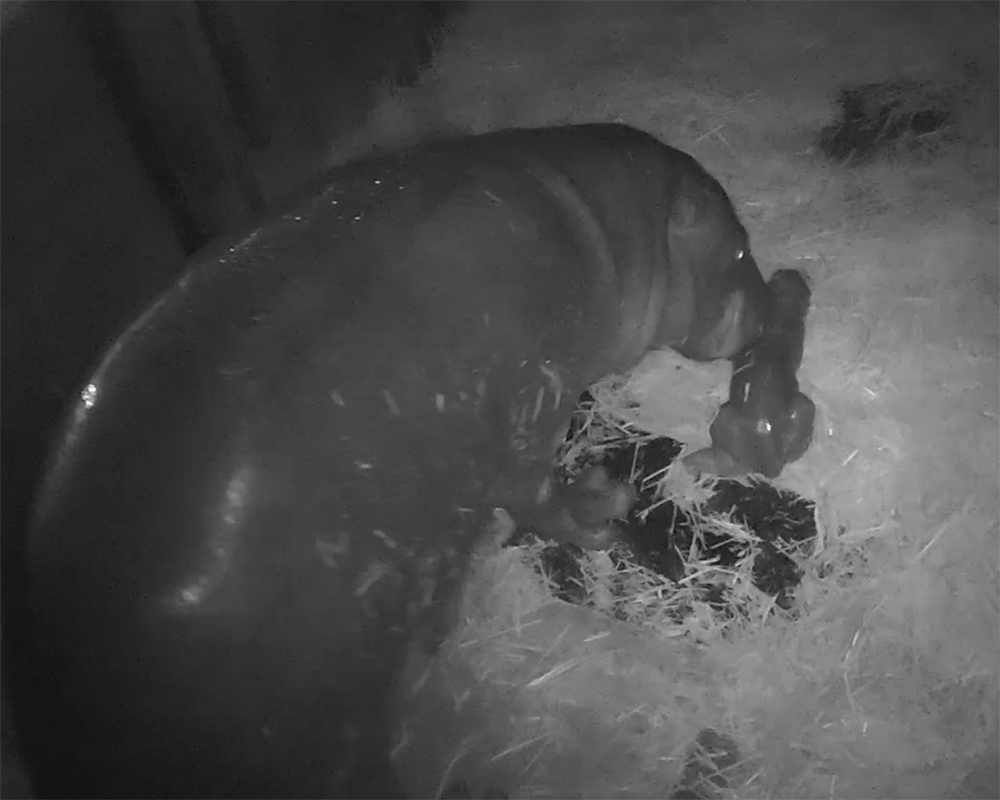
On the other hand, Momiji did not exhibit any aggressive behavior towards the caregivers, but she had become sensitive to surrounding sounds and environmental changes even before giving birth. Therefore, we monitored her using surveillance cameras and created an environment with as few stimuli as possible.
Child-rearing
The differences between the two females became even more apparent during the post-birth and parenting stages.
Immediately after giving birth, Natsume initially seemed a little surprised. There were moments when she acted aggressively towards her offspring, but she quickly calmed down after smelling them. After that, she raised her offspring at her own pace, and she began to spend time away from her offspring relatively early on. In the wild, it is said that the offspring hide in the shade, and the mother visits several times a day to nurse them. Natsume's parenting style may have been closer to this natural way of raising offspring.
On the other hand, Momiji remained remarkably wary even after giving birth. She reacted sensitively to the presence of people and changes in her surroundings, so we continued to observe her primarily through surveillance cameras. She exhibited very strong protective behavior towards her offspring, staying by its side almost constantly. Nursing went smoothly, but because she wouldn't leave the baby's side, monitoring the baby's health, such as weighing it, was not easy.
This time, by documenting the birth and parenting of each of the two sisters, we were able to confirm that there are significant individual differences in behaviors related to reproduction. Their reactions when living with a male, the circumstances of birth, and how they kept their distance from their offspring were completely different. These records will be useful when considering future care and breeding management. We would like to continue to record the behavior of each individual and accumulate the knowledge gained, which will be used to improve the care and breeding of Pygmy Hippopotamus in Japan.
[Ueno Zoo West Garden Animal Care and Exhibition Staff]