

[Oshima Park Zoo] Are sloths really lazy? -- Observing the behavior of two-toed sloths
May 12, 2026
Tokyo Zoological Park Society will take over the management and operation of Oshima Park Zoo as a designated manager for the Tokyo Metropolitan Government starting in April 2026.
On Oshima Island, we aim to create a zoo that utilizes the charm of nature and provides a fun and educational experience.
Tokyo Zoo Net website will also provide the latest information on Oshima Park Zoo.
"Sloths really are lazy, just like their name suggests."
This is a phrase you often hear when working with two-toed sloths.
The two-toed sloth inhabits the tropical rainforests of Central and South America, from Venezuela to Brazil, and lives by hanging from trees using its long claws. It spends most of its time in the trees, but descends to near the ground to defecate only once every few days. It is nocturnal, sleeping for more than half the day, and does not move much when awake. By minimizing its movement, it conserves energy and can survive on small amounts of branches, leaves, and fruit.
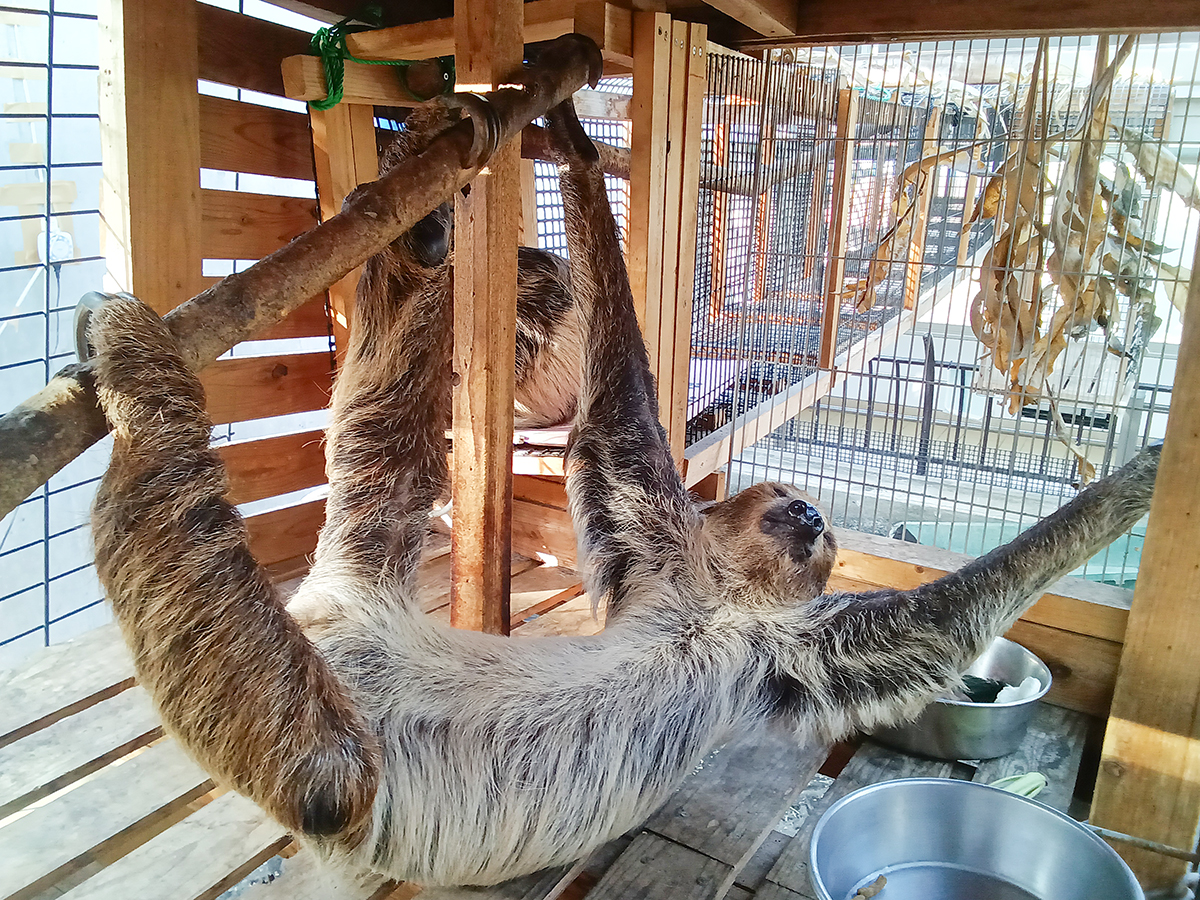
So, what is a typical day like for a two-toed sloth?
At Oshima Park Zoo, we have been working to breed two-toed sloths and have been keeping males and females together since 2024. To monitor mating during the day and at night, we installed 24-hour cameras. In conjunction with this, we have been recording the behavior of the two-toed sloths to understand what a typical day looks like for them.
This is a 24-hour record of the activities of "Chocolat" (female), a two-toed sloth, observed on June 22nd.
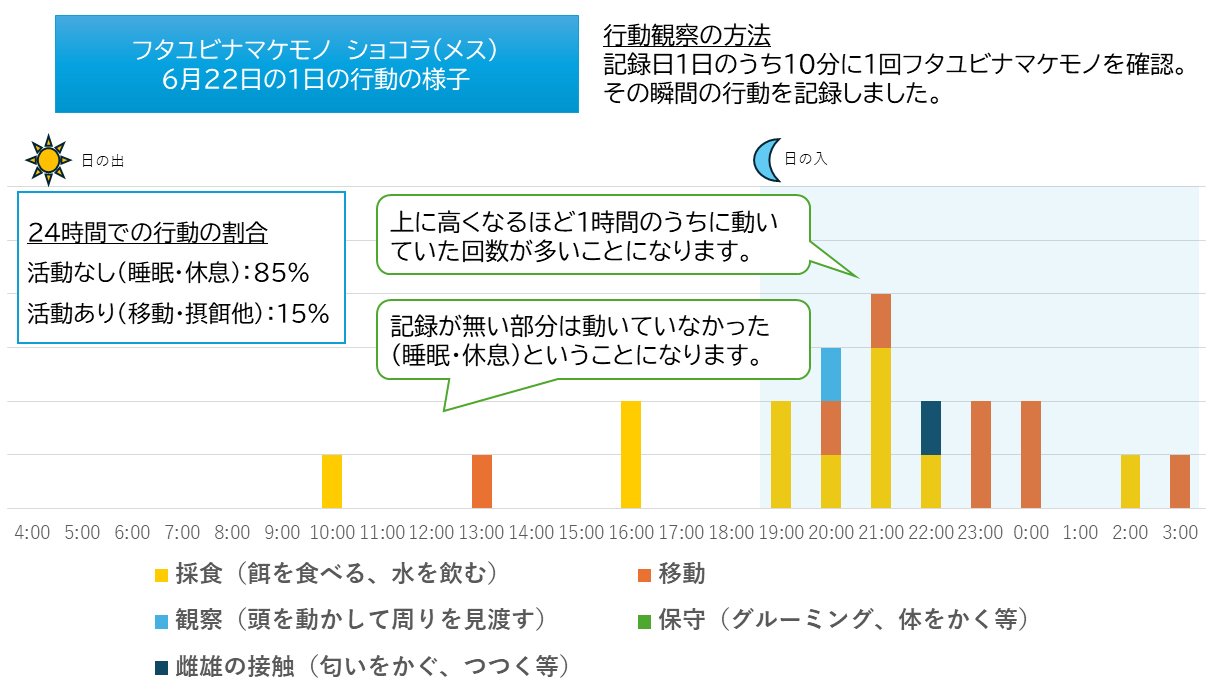
This means that 85% of the day is spent inactive, which gives the impression that "I'm actually sleeping more than I imagined..."
Next is a record of Chocolat's activities on the following day, June 23rd.
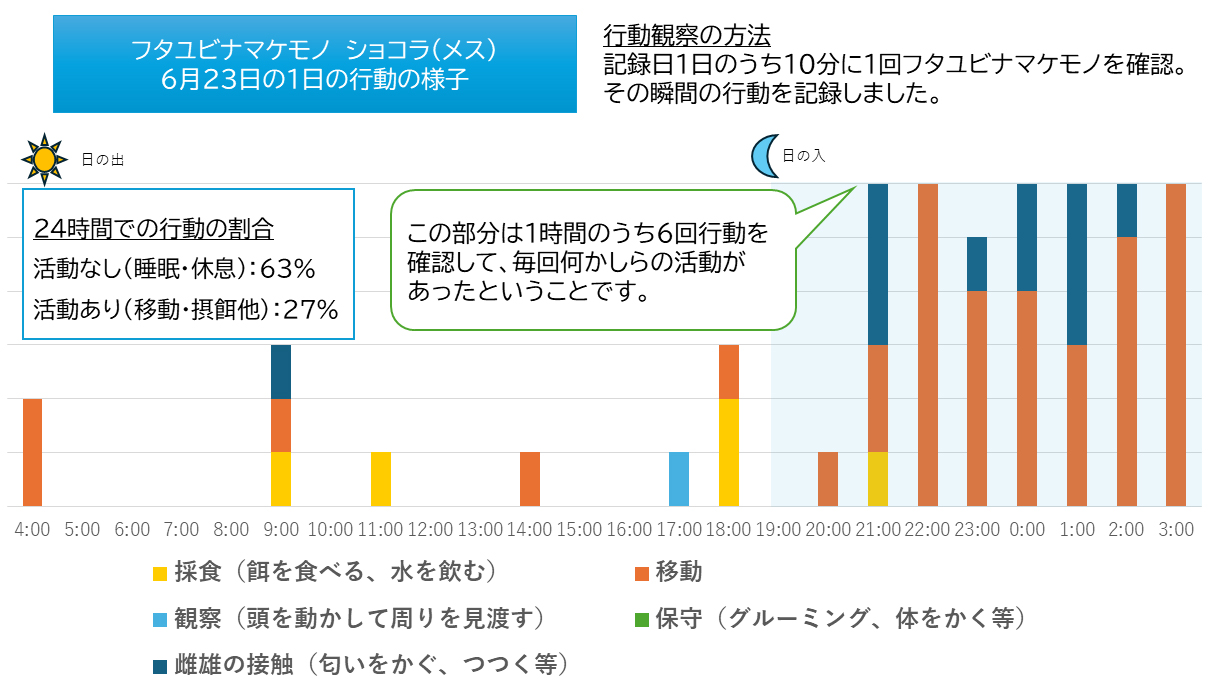
I didn't move for 63% of the day, so I feel like there's a difference from day to day.
Actually, that second day was a defecation day, meaning it was pooping. It generally does it in the same spot in its cage, but on days when it defecates, it tends to be more active at night than on days when it doesn't.
I also get the impression that their activity levels are influenced by other factors such as the season (temperature) and surrounding noise.
By recording their daily activities, I was able to reaffirm that sloths have survived in the wild by living an energy-saving life with minimal movement.
Moving forward, we will continue to use the results of our behavioral observations as a guide to improve the animal welfare of sloths and focus our efforts on breeding them.
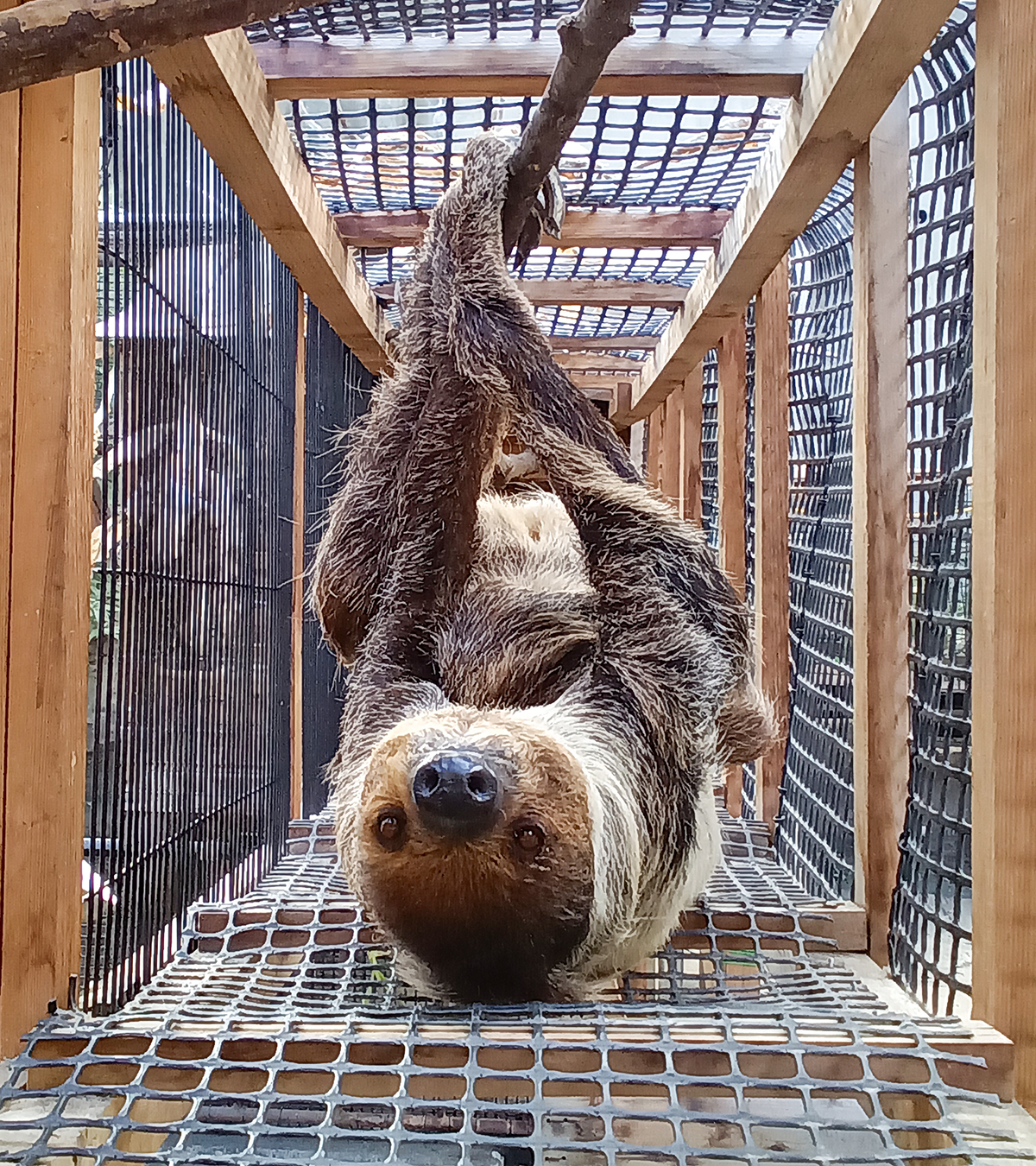
[Former Oshima Park Zoo Care and Exhibition Staff, Mayuka Ishigami]