

We have begun exhibiting the Ogasawara Islands' endemic species, the "Chichijima Land Snail" snail.
April 10, 2026
Ueno Zoo 's Vivarium began exhibiting the Chichijima Land Snail (Mandariina chichijimana) in March 2026.
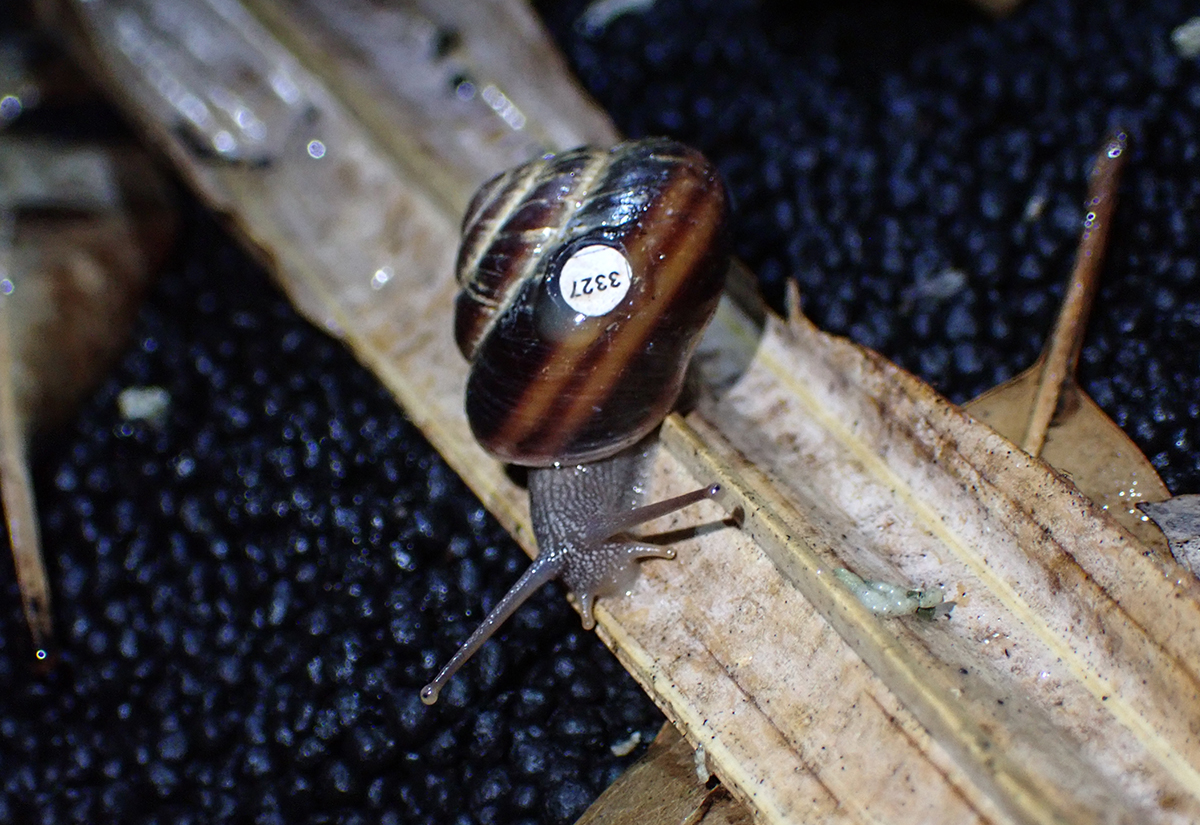
The Chichijima Land Snail is endemic to the Ogasawara Islands, inhabiting only the southern part of Chichijima and Tatsumijima. It is a terrestrial snail that lives on the forest floor of damp forests where fallen leaves of the Ogasawara palm (a type of palm tree endemic to the Ogasawara Islands) are found.
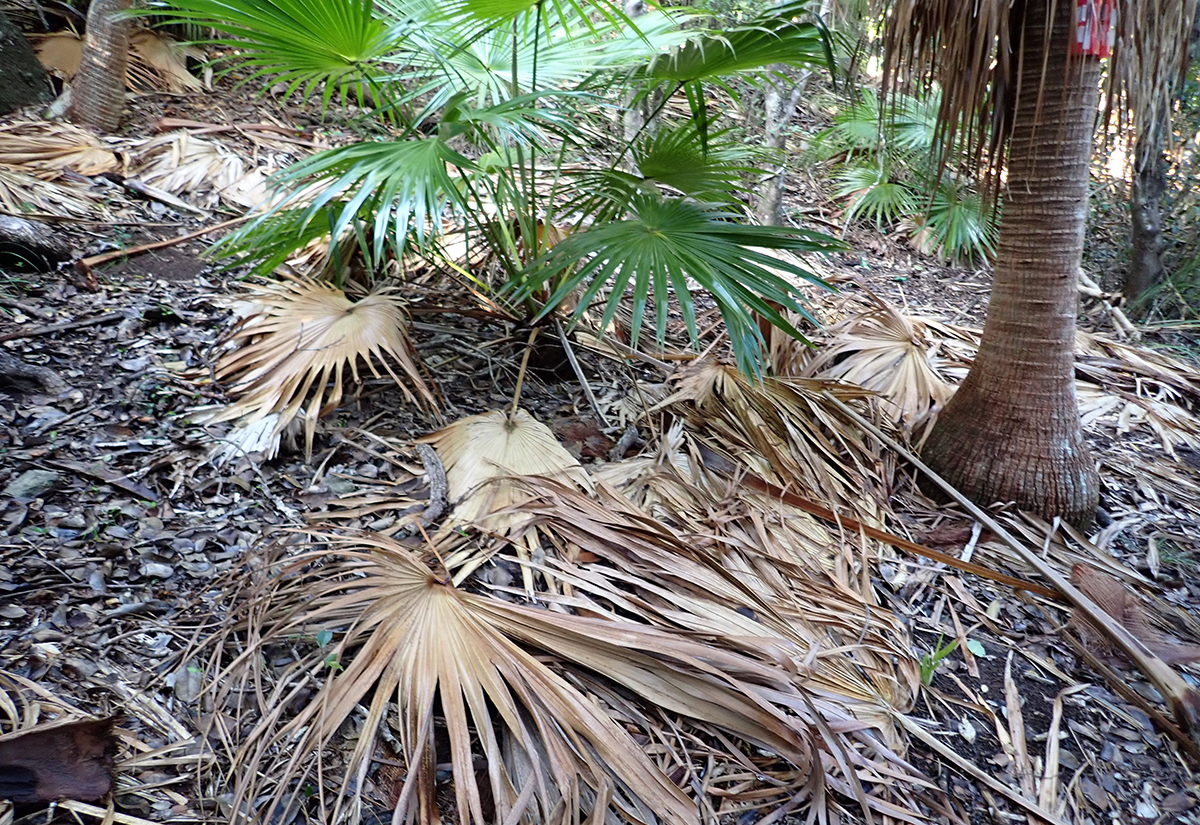
Therefore, the exhibit is dimly lit, as if you were standing among fallen leaves. The shell is about 2.5 cm in size and is characterized by having four colored bands on its shell. Since it prefers a humid environment, we have installed a device that automatically mists the exhibit tank three times a day.
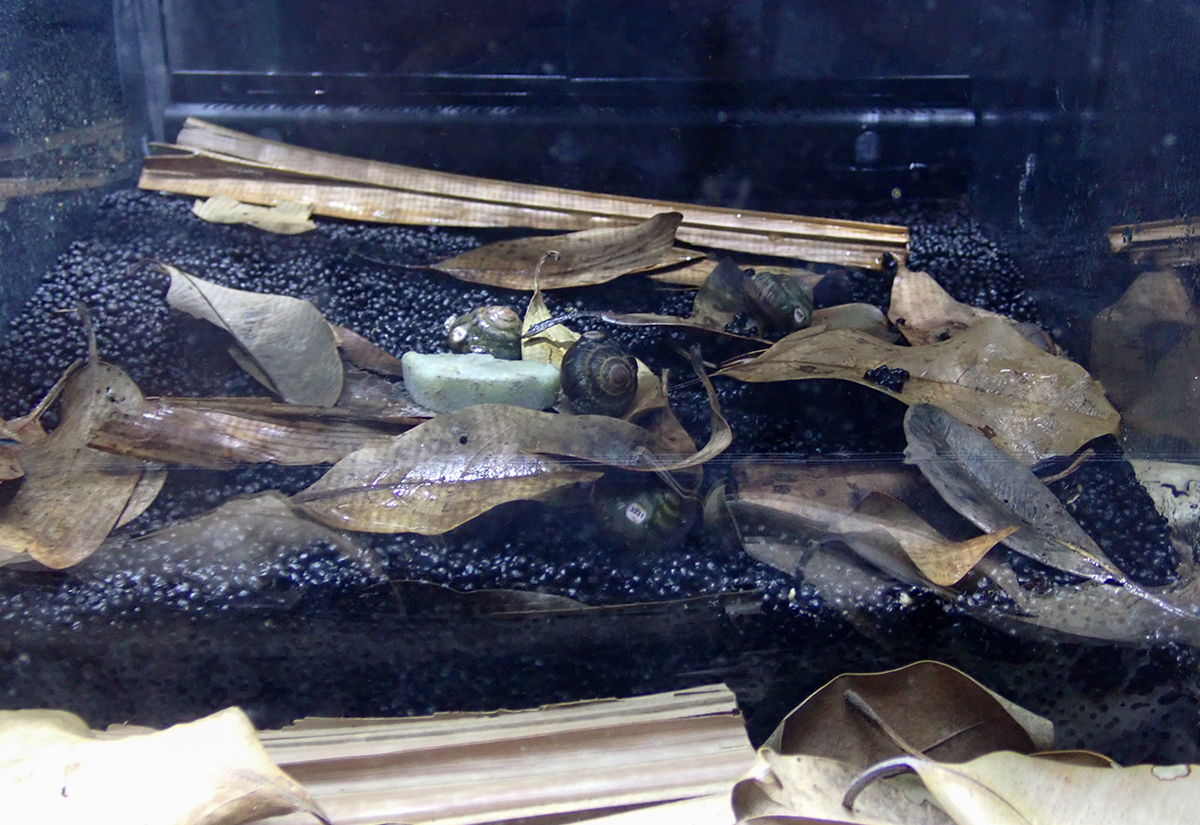
Land Snail, displayed next to it, is a semi-arboreal snail that lives in forests where Ogasawara palms and pandanus trees (plants endemic to the Ogasawara Islands) grow, utilizing the space from the trees to the ground.
Land Snail is also endemic to the Ogasawara Islands, but in fact, more than 100 species of snails have been recorded in the Ogasawara Islands, and 90% of them are endemic.
The Ogasawara Islands were registered as a World Natural Heritage site in 2011, and one of the reasons for their selection was the high diversity and low extinction rate of snails. Even today, precious populations remain, and the island is said to be an "evolutionary laboratory" where one can observe the ongoing process of evolution.
However, these precious snails of the Ogasawara Islands are currently under a major threat. Their numbers are drastically decreasing due to predation by invasive species such as the New Guinea planarian and the black rat. The circumstances of how these organisms invaded the islands are unknown, but unfortunately, it is highly likely that they were transported there hidden in cargo on ships along with human activities.
Therefore, since 2017, Tokyo Metropolitan Zoos and Aquariums (Ueno Zoological Gardens, Tama Zoo, Tokyo Sea Life Park, and Inokashira Park Zoo) have been participating in activities to protect the Ogasawara snail, led by the Ministry of the Environment. For details on these efforts, please refer to the conservation activity guidebook, "Snail Paradise."
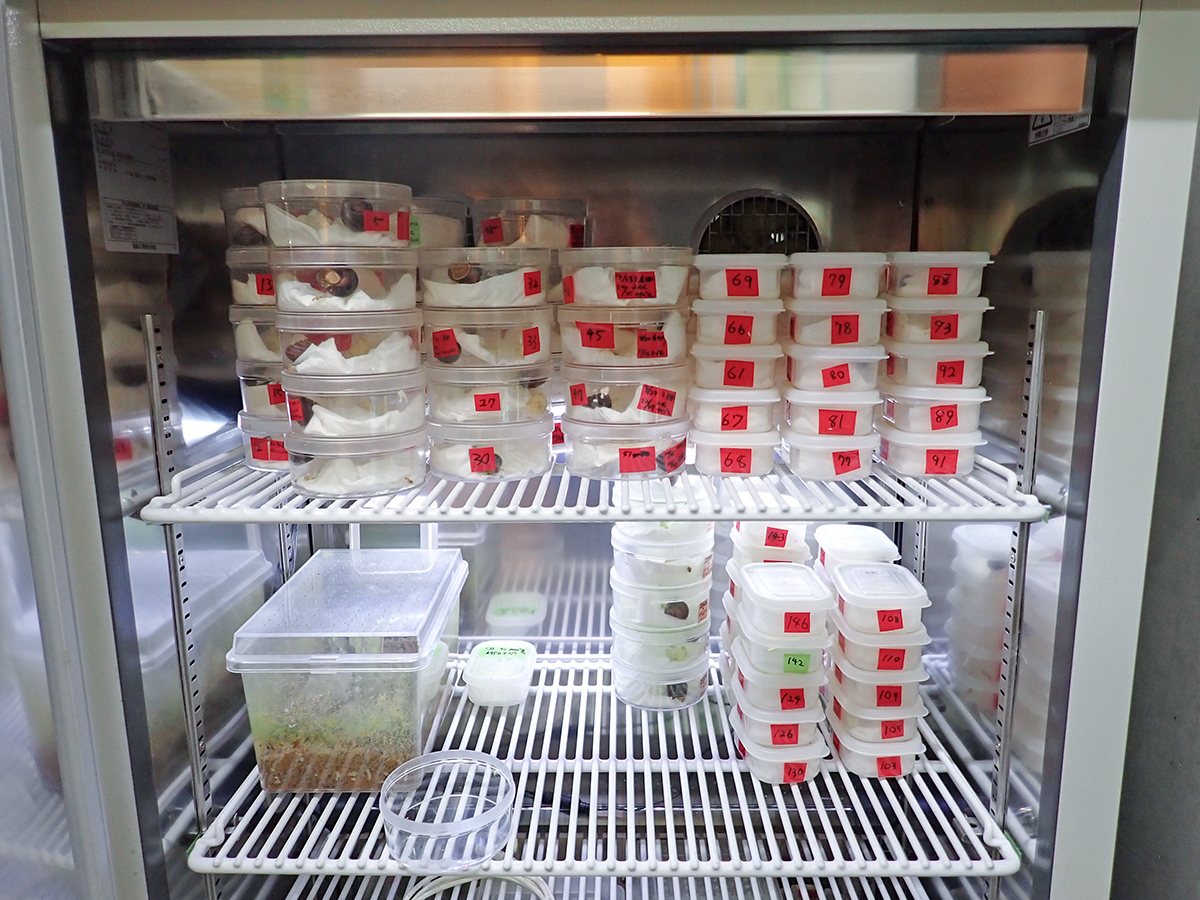
In addition to public awareness campaigns through exhibits, Ueno Zoo also breeds and raises snails as a backup in case the number of snails in the wild or in other captive facilities declines.
Small numbers are attached to the shells of the Chichijima Land Snail on display. This allows us to track the lineage of each individual snail and identify them to maintain genetic diversity during breeding. The Chichijima Land Snail on display have already finished breeding, and the next generation of snails that are born are being carefully raised in a facility behind the exhibit.
Please come and see the snails, which are a symbol of the Ogasawara Islands, where precious natural environments remain.
[Ueno Zoo Animal Care and Exhibition Division, Reptile House Animal Care and Exhibition Section]