

Zoo Stock Species and the Red List
Zoo Stock Species and the Red List
Zoo Stock

This indicates that the species is included in the Second Zoo Stock Plan, which was formulated by the Tokyo Metropolitan Government in 2018. The plan sets goals for the next 10 years in three areas: "species conservation," "contribution to wildlife conservation," and "environmental education and conservation awareness." 124 animal species are included.
What is the Red List?
Based on scientific research, this is a list of wildlife classified by rank (category) indicating the degree of risk of extinction.
Livng Things Encyclopedia shows the categories (mainland and islands) assessed by the IUCN (International Union for Conservation of Nature) at the global level, the Ministry of the Environment for Japan, and the Tokyo Metropolitan Government for Tokyo.
The higher the category in each table, the higher the risk of extinction, and CR, EN, and VU are the three categories known as "endangered species." In Tokyo, species that are not at the NT (near threatened) level but are relatively rare are considered "species of concern."
|
IUCN categories |
|
|---|---|
|
EX |
extinction |
|
EW |
Extinction in the wild |
|
CR+EN |
— |
|
CR |
Serious crisis |
|
EN |
crisis |
|
VU |
emergency |
|
NT |
Near Threatened |
|
LC・○ |
Low Concern |
|
DD |
Data shortage |
|
LP |
— |
|
Japan (Ministry of the Environment) Category |
|
|---|---|
|
EX |
extinction |
|
EW |
Extinction in the wild |
|
CR+EN |
Endangered species |
|
CR |
Critically Endangered |
|
EN |
Endangered species |
|
VU |
Endangered species |
|
NT |
Near Threatened |
|
LC・○ |
— |
|
DD |
Lack of information |
|
LP |
Endangered |
|
Tokyo Category |
|
|---|---|
|
EX |
extinction |
|
EW |
Extinction in the wild |
|
CR+EN |
Endangered species |
|
CR |
Critically Endangered |
|
EN |
Endangered species |
|
VU |
Endangered species |
|
NT |
Near Threatened |
|
LC・○ |
Unranked |
|
DD |
Lack of information |
|
LP |
Endangered |
Creatures at Ueno Zoo
Creatures at Ueno Zoo

Tiger
Subspecies: Sumatran Tiger
Tiger
Subspecies: Sumatran TigerPanthera tigris sumatrae
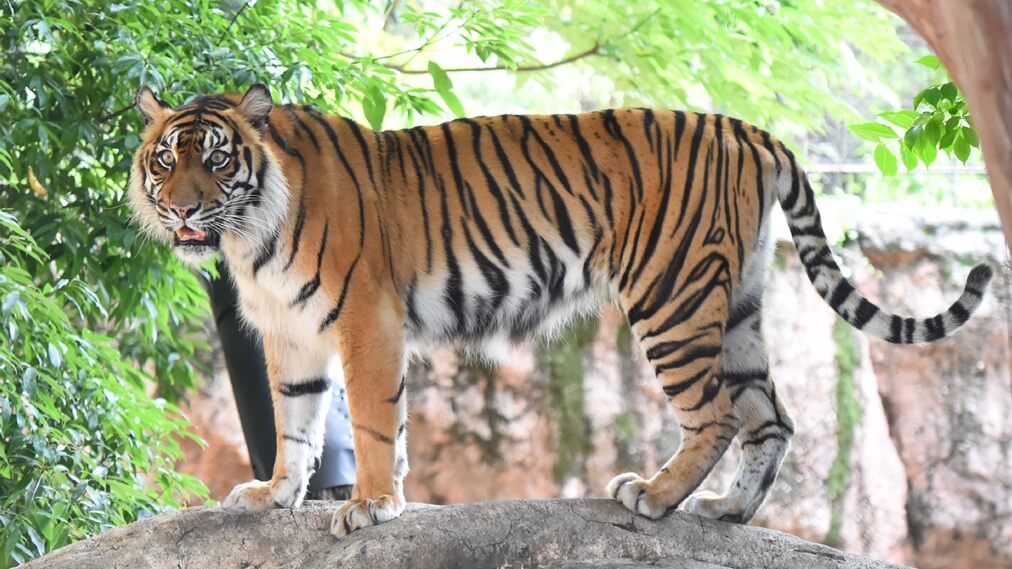
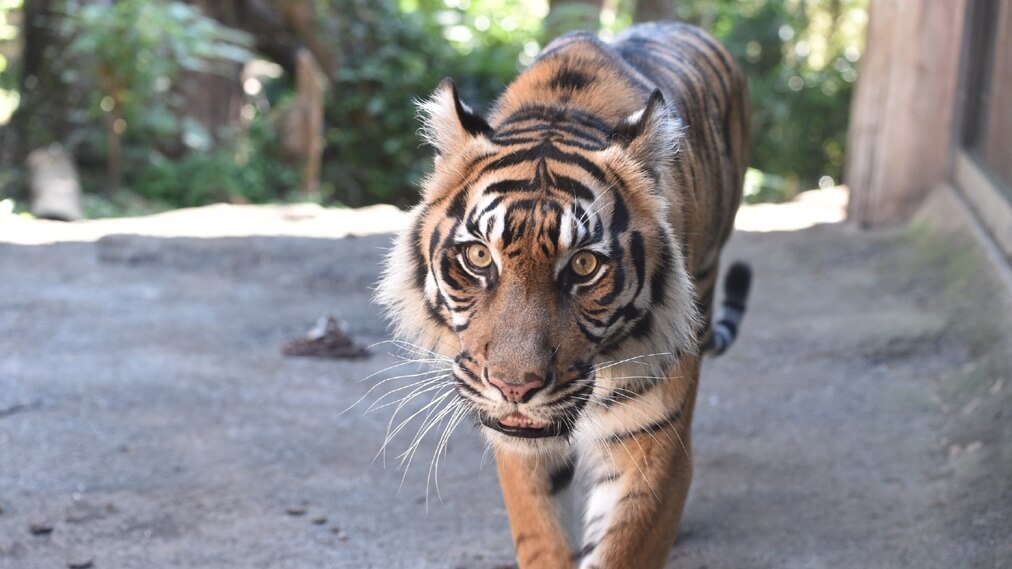
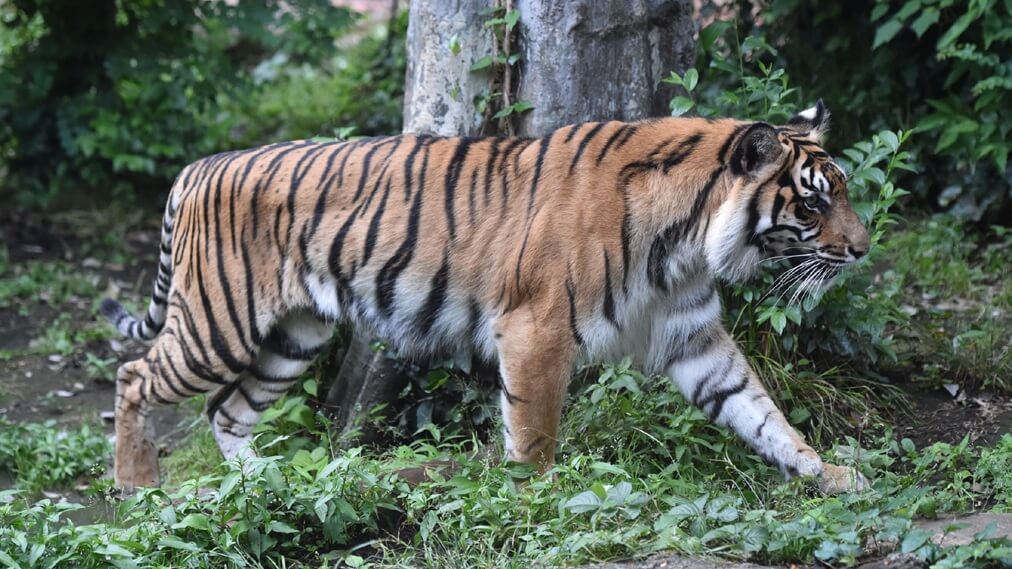
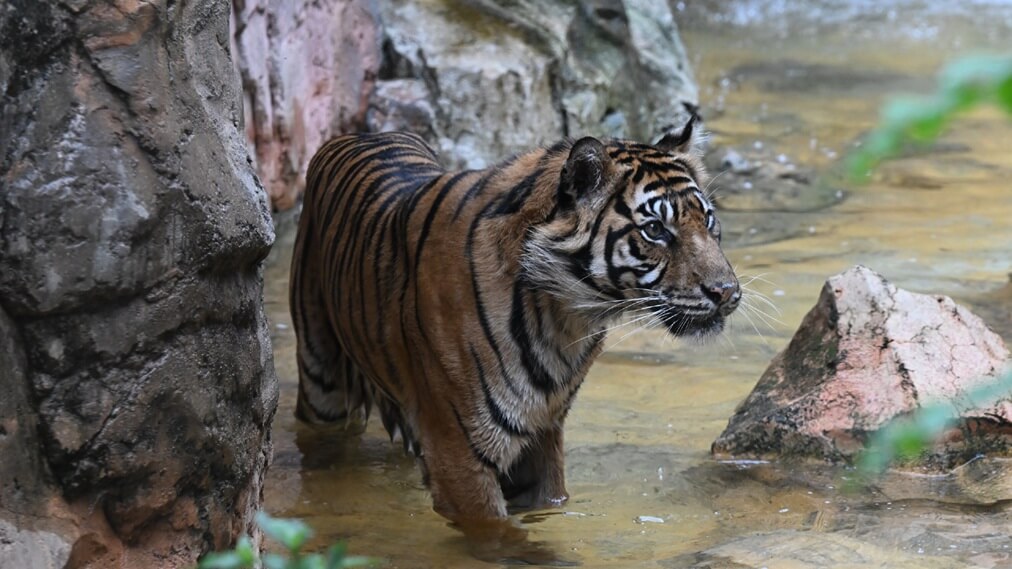
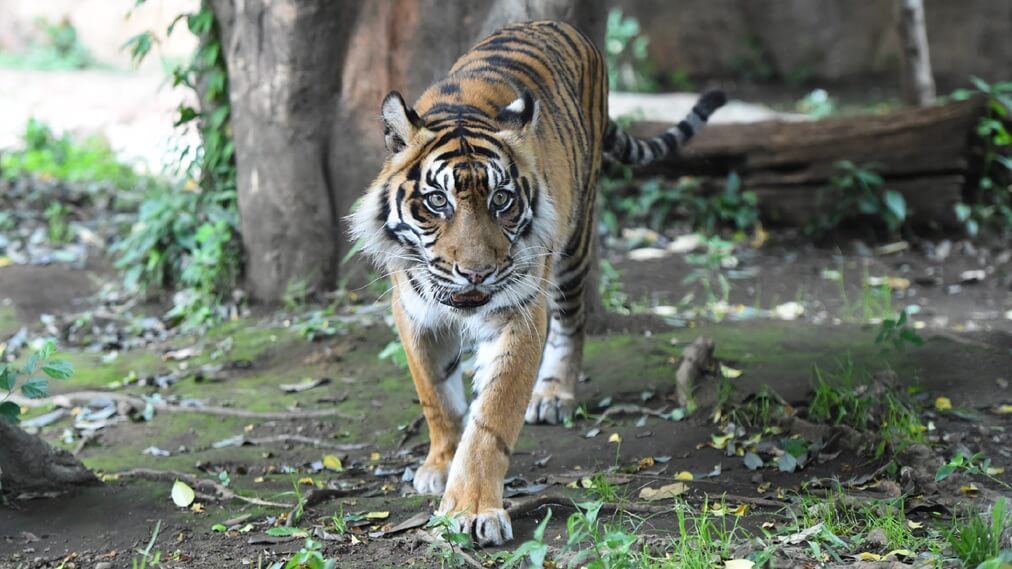
Sumatran Tiger is a subspecies of tiger and the smallest of the extant tiger subspecies. It lives a solitary life and catches prey with its well-developed forelegs and sharp claws. Its striped pattern allows it to blend into the foliage, enabling it to ambush or sneak up on prey unnoticed. In hot seasons, it may seek refuge in rivers or ponds to cool off.
| classification | Mammalia, Carnivora, Felidae |
|---|---|
| English name | Sumatran Tiger |
| distribution | Kawakawa, Indonesia |
| Residence | Forests (dry thorn forests, mangrove swamps, tropical rainforests, seasonal snow forests, etc.) |
| Size |
Head and body length: Males 2.2-2.55m, females 2.15-2.3m
Weight: Males 100-140 kg, females 75-110 kg Skull length: Males 29.5-33.6cm, Females 26.3-29.4cm |
| food | Animal-eating, mainly deer, cattle, Domestic Pig, and Wild Boar boars |
| Red List |
IUCN: EN (crisis)
|
What front legs?
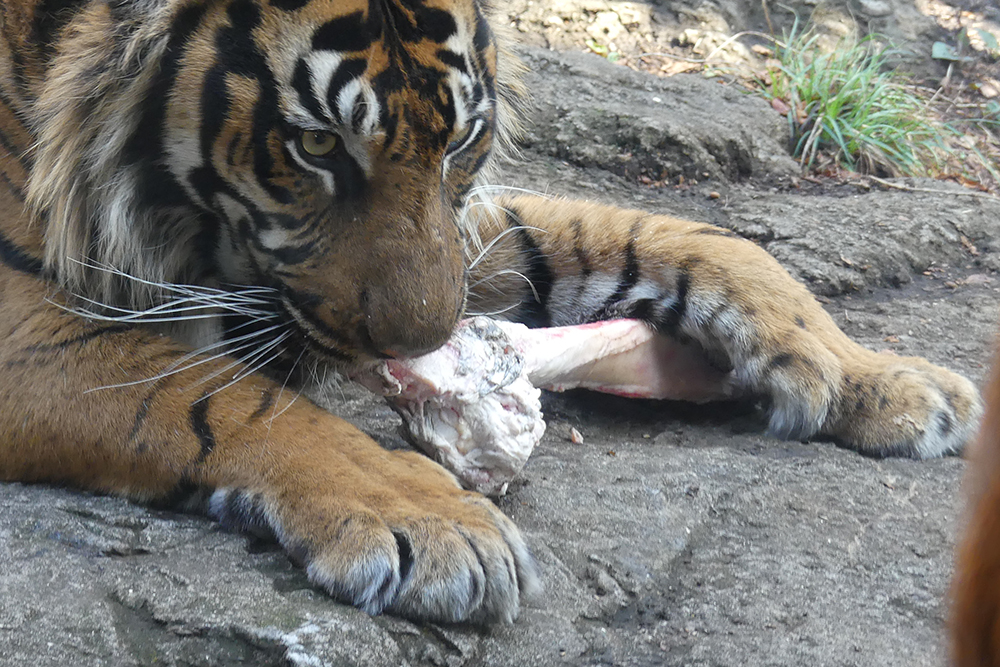
Its front legs are thicker and sturdier than its hind legs, giving it the strength to pull down large prey such as deer and Wild Boar. In addition to the four toes that touch the ground, it also has a thumb slightly above the inside, and each toe has a sharp claw hidden inside.
Lots of long beards
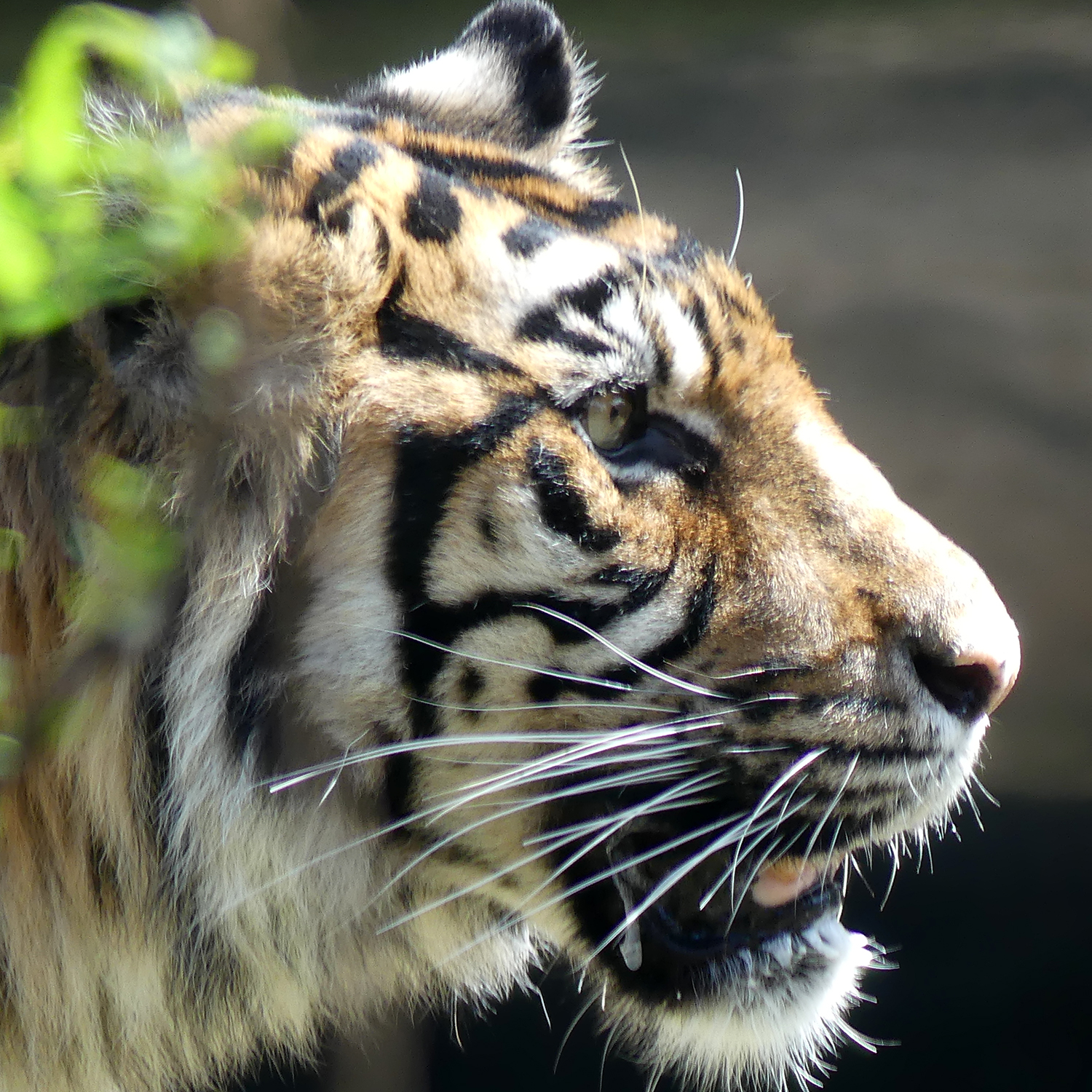
They have lots of long whiskers that extend out from both sides of their face. These whiskers allow them to sense their surroundings and walk without bumping into things, even in the dark forest at night. They also have whiskers growing above their eyes, which helps prevent objects from hitting their head or eyes.