

Zoo Stock Species and the Red List
Zoo Stock Species and the Red List
Zoo Stock

This indicates that the species is included in the Second Zoo Stock Plan, which was formulated by the Tokyo Metropolitan Government in 2018. The plan sets goals for the next 10 years in three areas: "species conservation," "contribution to wildlife conservation," and "environmental education and conservation awareness." 124 animal species are included.
What is the Red List?
Based on scientific research, this is a list of wildlife classified by rank (category) indicating the degree of risk of extinction.
Livng Things Encyclopedia shows the categories (mainland and islands) assessed by the IUCN (International Union for Conservation of Nature) at the global level, the Ministry of the Environment for Japan, and the Tokyo Metropolitan Government for Tokyo.
The higher the category in each table, the higher the risk of extinction, and CR, EN, and VU are the three categories known as "endangered species." In Tokyo, species that are not at the NT (near threatened) level but are relatively rare are considered "species of concern."
|
IUCN categories |
|
|---|---|
|
EX |
extinction |
|
EW |
Extinction in the wild |
|
CR+EN |
— |
|
CR |
Serious crisis |
|
EN |
crisis |
|
VU |
emergency |
|
NT |
Near Threatened |
|
LC・○ |
Low Concern |
|
DD |
Data shortage |
|
LP |
— |
|
Japan (Ministry of the Environment) Category |
|
|---|---|
|
EX |
extinction |
|
EW |
Extinction in the wild |
|
CR+EN |
Endangered species |
|
CR |
Critically Endangered |
|
EN |
Endangered species |
|
VU |
Endangered species |
|
NT |
Near Threatened |
|
LC・○ |
— |
|
DD |
Lack of information |
|
LP |
Endangered |
|
Tokyo Category |
|
|---|---|
|
EX |
extinction |
|
EW |
Extinction in the wild |
|
CR+EN |
Endangered species |
|
CR |
Critically Endangered |
|
EN |
Endangered species |
|
VU |
Endangered species |
|
NT |
Near Threatened |
|
LC・○ |
Unranked |
|
DD |
Lack of information |
|
LP |
Endangered |
Creatures at Ueno Zoo
Creatures at Ueno Zoo
Red Panda
Subspecies: Styan’s Red Panda
Red Panda
Subspecies: Styan’s Red PandaAilurus fulgens refulgens
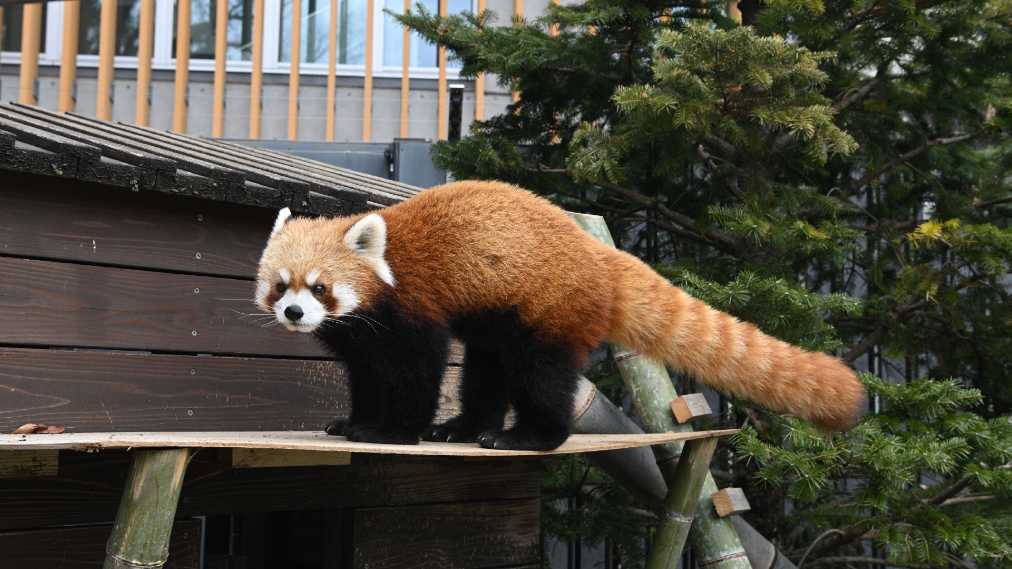
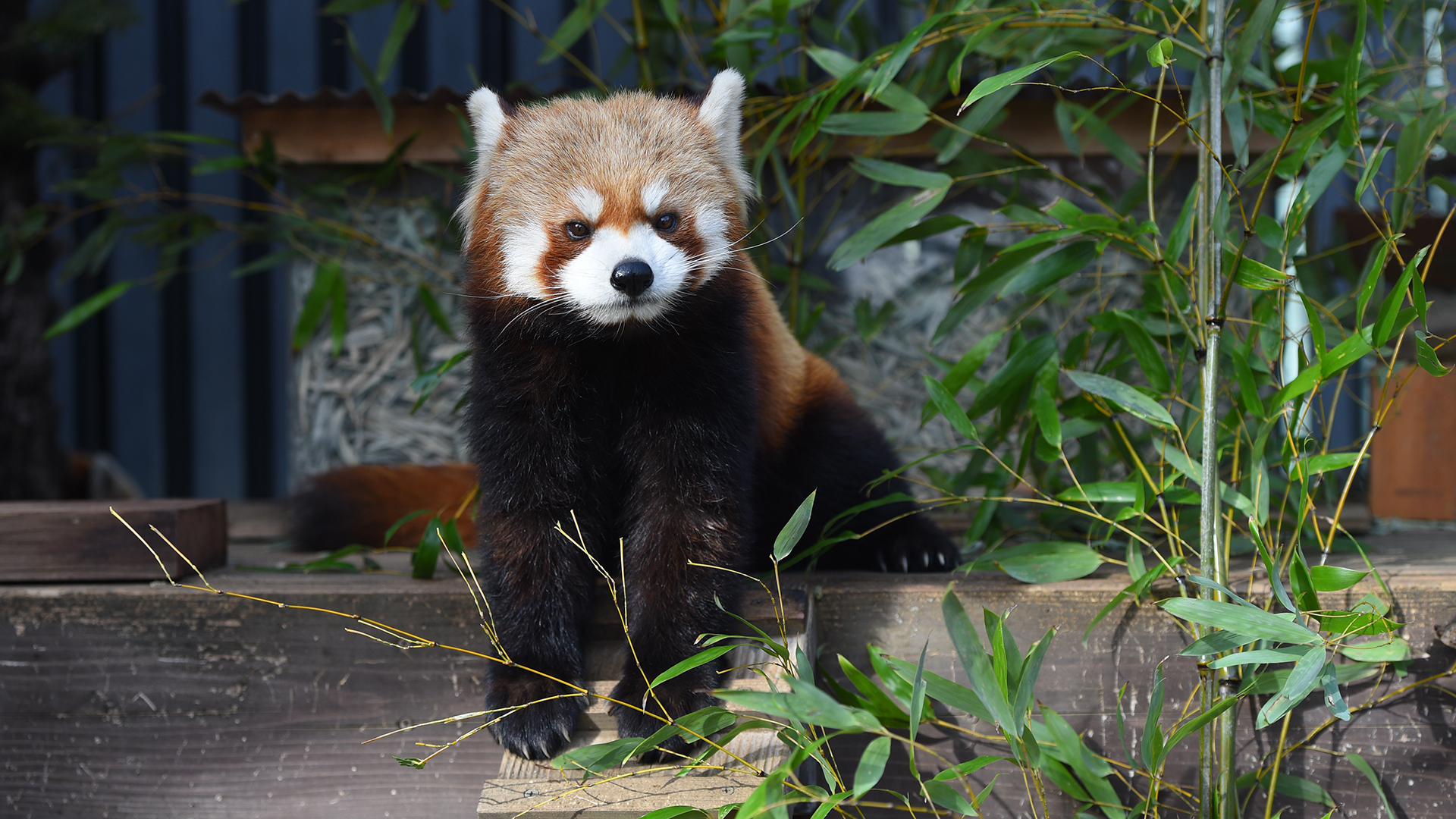
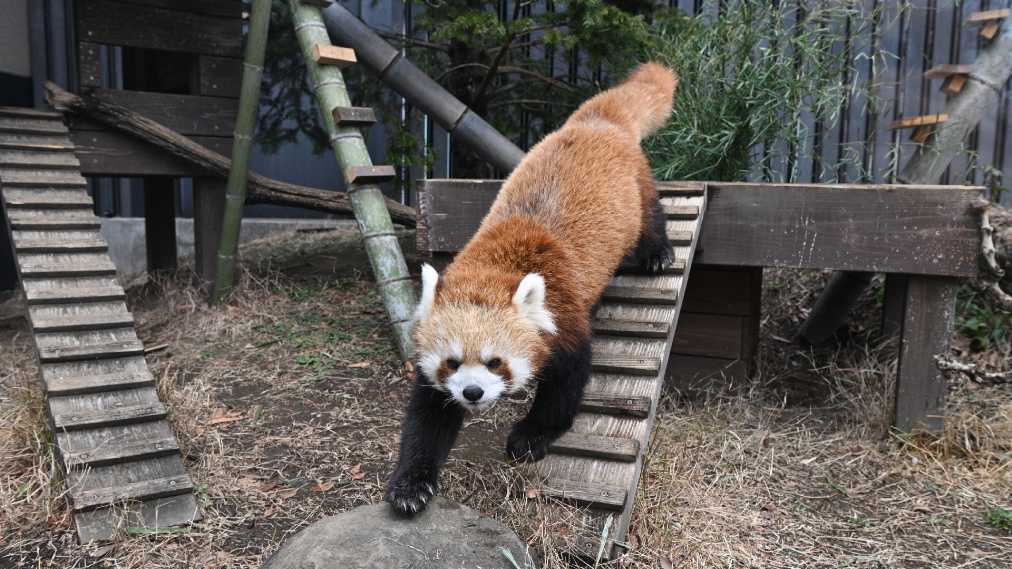
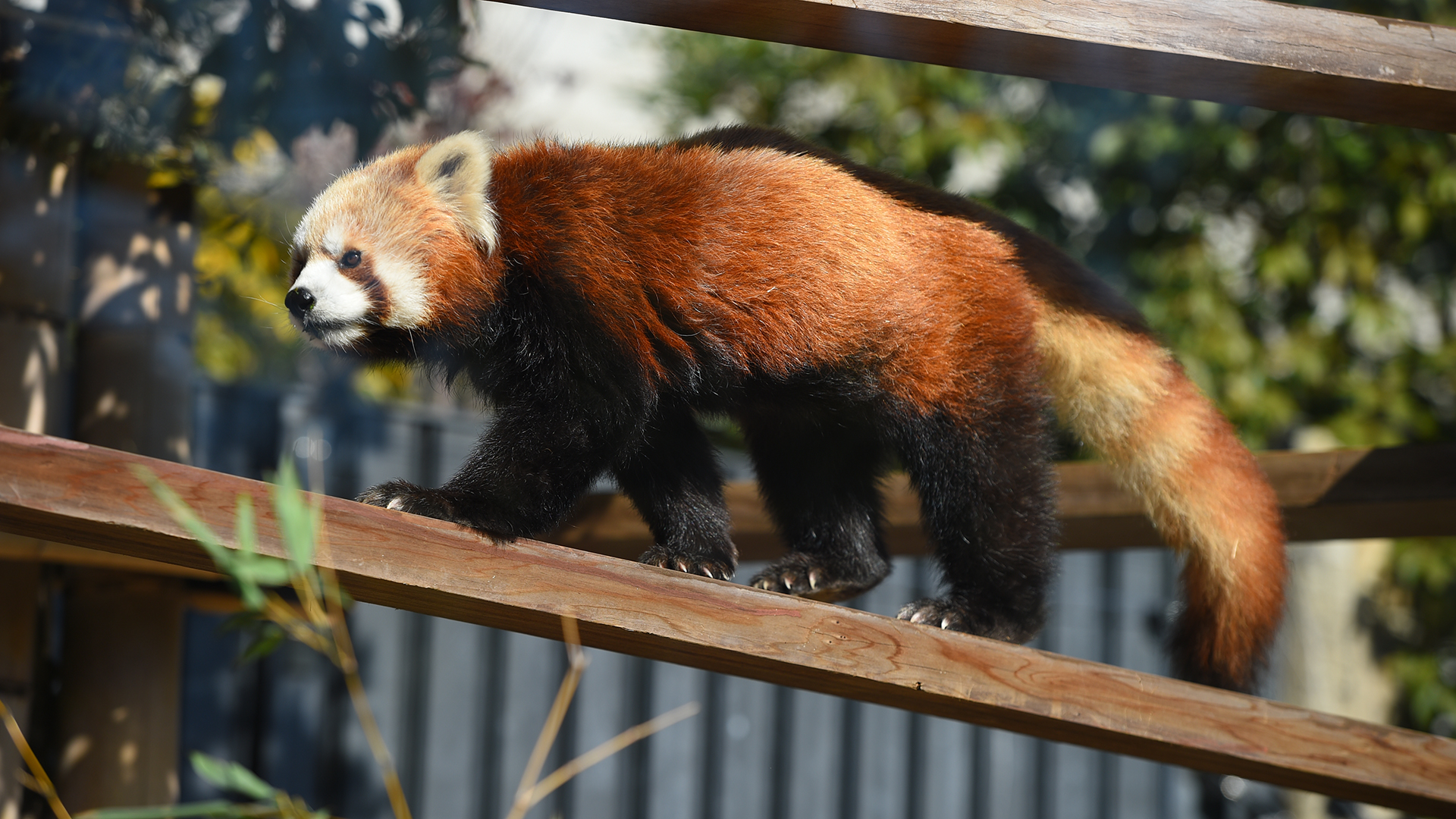
Although the species name includes the word "panda," it is an animal in a completely different category from Giant Panda. It is a subspecies of Red Panda that lives in the high mountain forests from China to the Himalayas, and is found in the eastern area. It lives alone. It is active throughout the day, but is most active in the dim light of the morning and evening.
| classification | Mammalia, Carnivora, Family: Red Panda Panda |
|---|---|
| English name | Styan's Red Panda |
| distribution | Southwest China, Northern Myanmar |
| Residence | forests, mountains |
| Size |
Head torso length: approx. 60cm
Tail length: Approximately 50 cm Weight: 4-7kg |
| food | Bamboo leaves, fruits, bird eggs, insects, etc. |
| Red List |
IUCN: EN (crisis)
|
coat
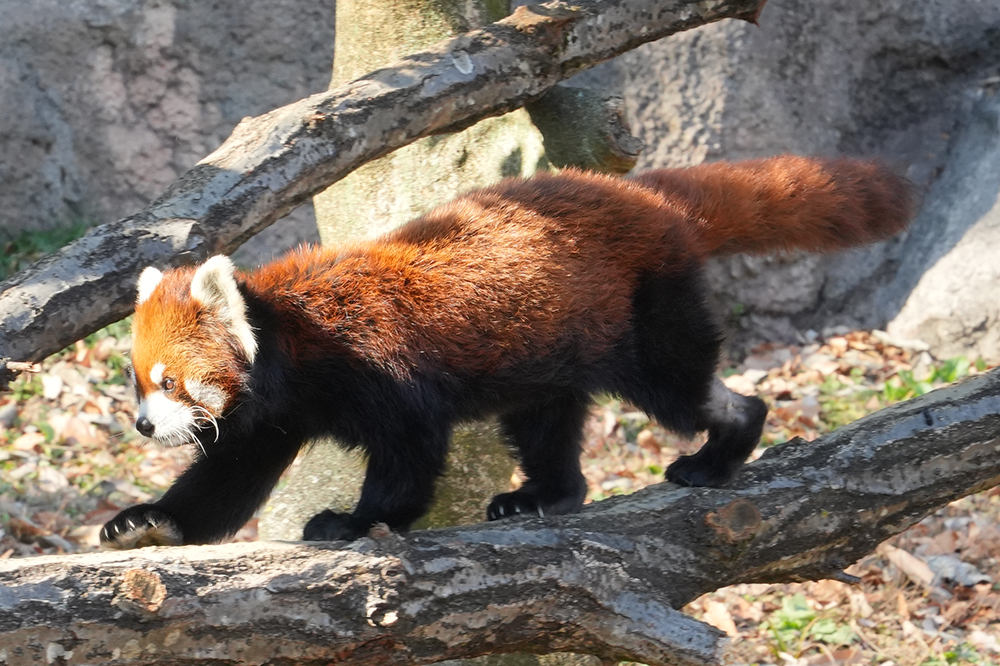
They live in harsh, snowy environments in winter, so their fur can withstand the cold. Their distinctive coloration is a camouflage that allows them to blend in with their environment. The reddish-brown coloring on their backs helps them blend in with the soil and fallen leaves on the ground, and the black coloring on their undersides, including their limbs, helps them Red Panda in with the branches in the backlight when ground predators look up at them in the trees.
"Sixth Finger"
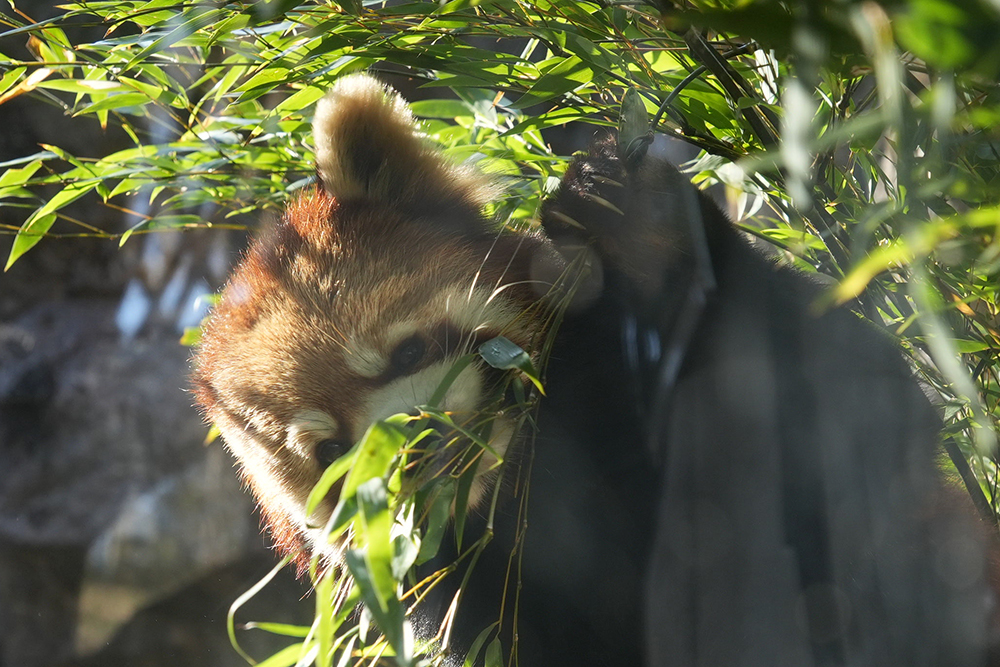
Red Panda have protrusions (sesamoid bones) on their front ankles similar to the human thumb. When they bend their five horizontally arranged fingers, the protrusions on the sesamoid bones come together, allowing them to grasp objects. However, they cannot move these protrusions alone.
breeding
Red Panda are seasonal breeding animals, with winter being their breeding season. During the breeding season, males and females, who usually live alone, communicate with each other by making a squealing sound. They also actively mark their territory.
Childbirth and child-rearing
If mating is successful, the female will build a nest in a tree cavity or a rock crevice, and give birth to one to three babies between May and August. The mother raises the babies, who live in the burrow until they are about three months old.
Danger in the wild
Rapid human population growth in their habitat has led to deforestation, resulting in habitat loss and fragmentation, causing population decline.