

Report on the "Ueno Zoo School" event for junior high school students.
April 13, 2026
On March 1, 2026, Ueno Zoo School held an event for junior high school students titled "Let's Make an Animal Feeder - Verification! Can We Elicit Behavior Closer to Wild-like Animals?". This time, with the theme of "environmental enrichment," the junior high school students designed and made their own feeders to encourage animals to behave in a way similar to that in the wild, and evaluated their effectiveness through behavioral observation.
*Environmental enrichment: A means of maintaining the physical and mental health of animals by eliciting behaviors similar to those in the wild even in captivity, and by creating an environment in which animals can make choices.
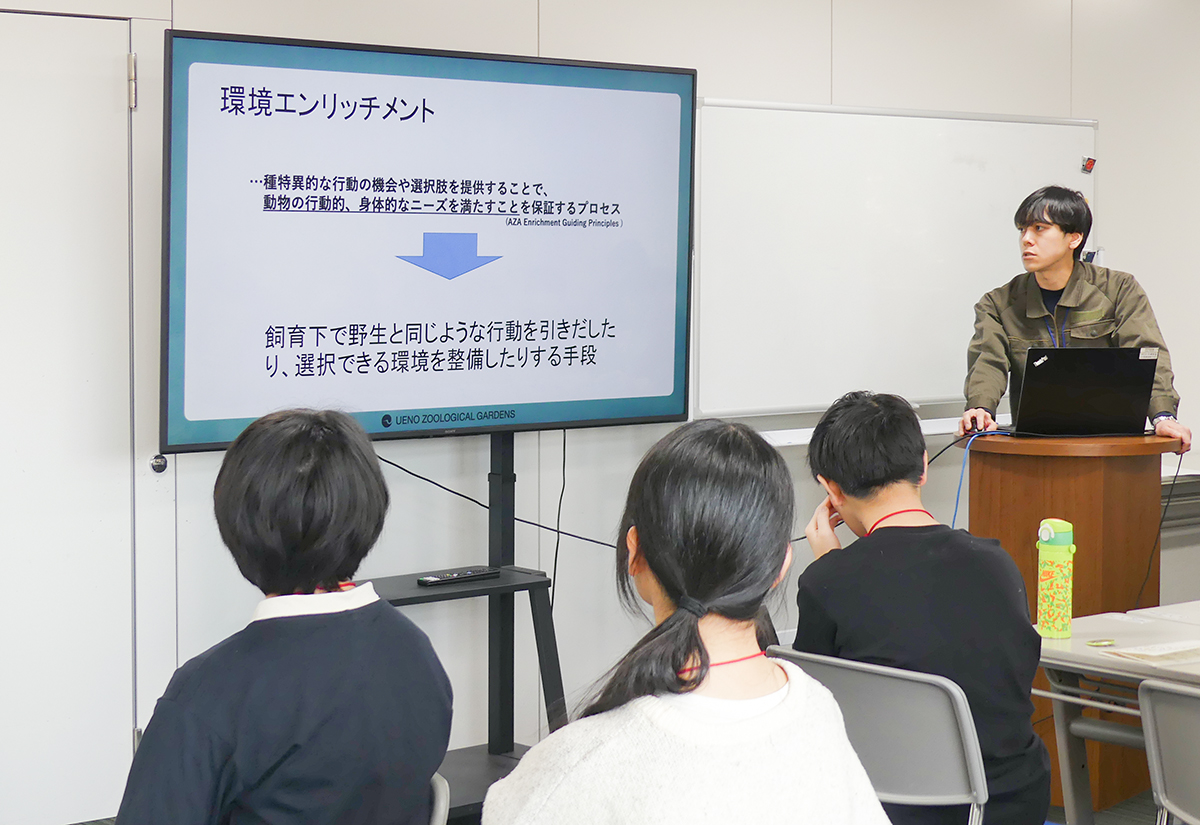
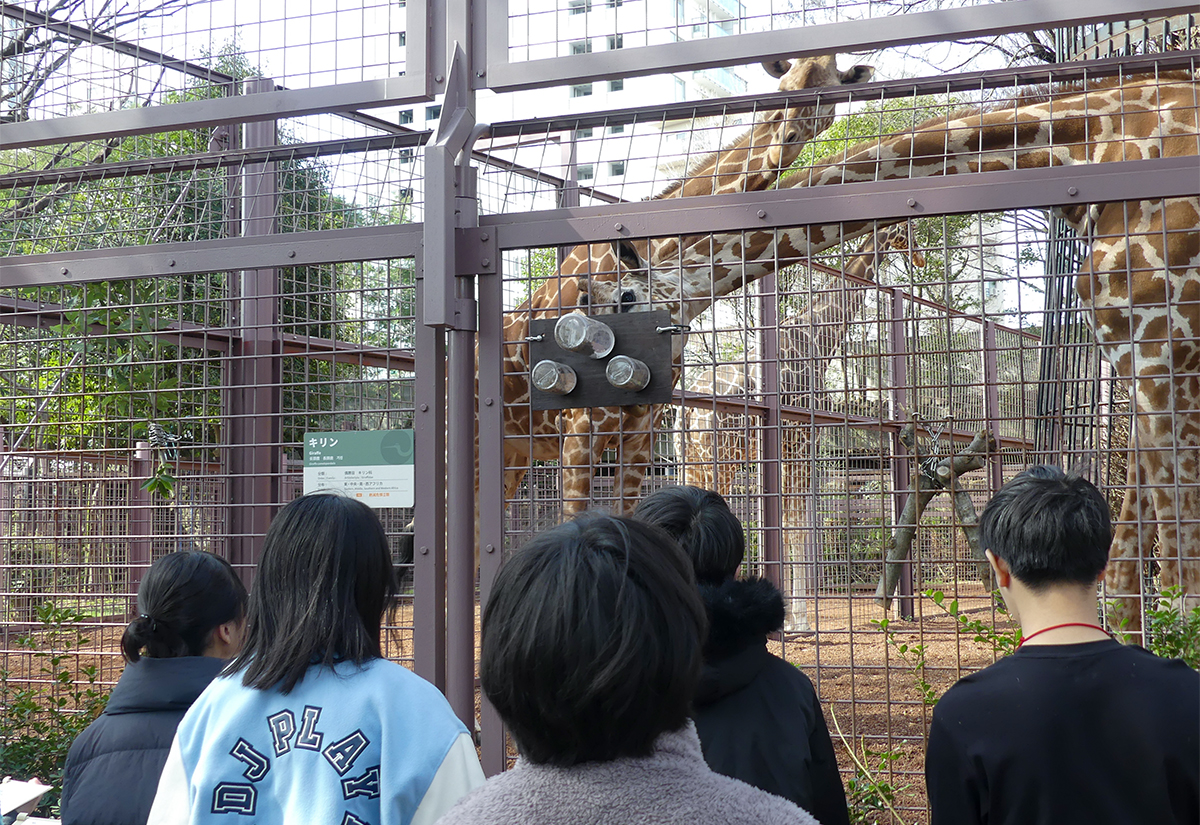
The junior high school students first learned about environmental enrichment and behavioral observation methods in the classroom and at Giraffe exhibit. Then they moved to Small Mammal House where the animals for which they would be making feeders resided, and split into groups to conduct observations. There, they observed the animals eating from ordinary food dishes and recorded their repertoire of behaviors and their proportions using scientific methods.
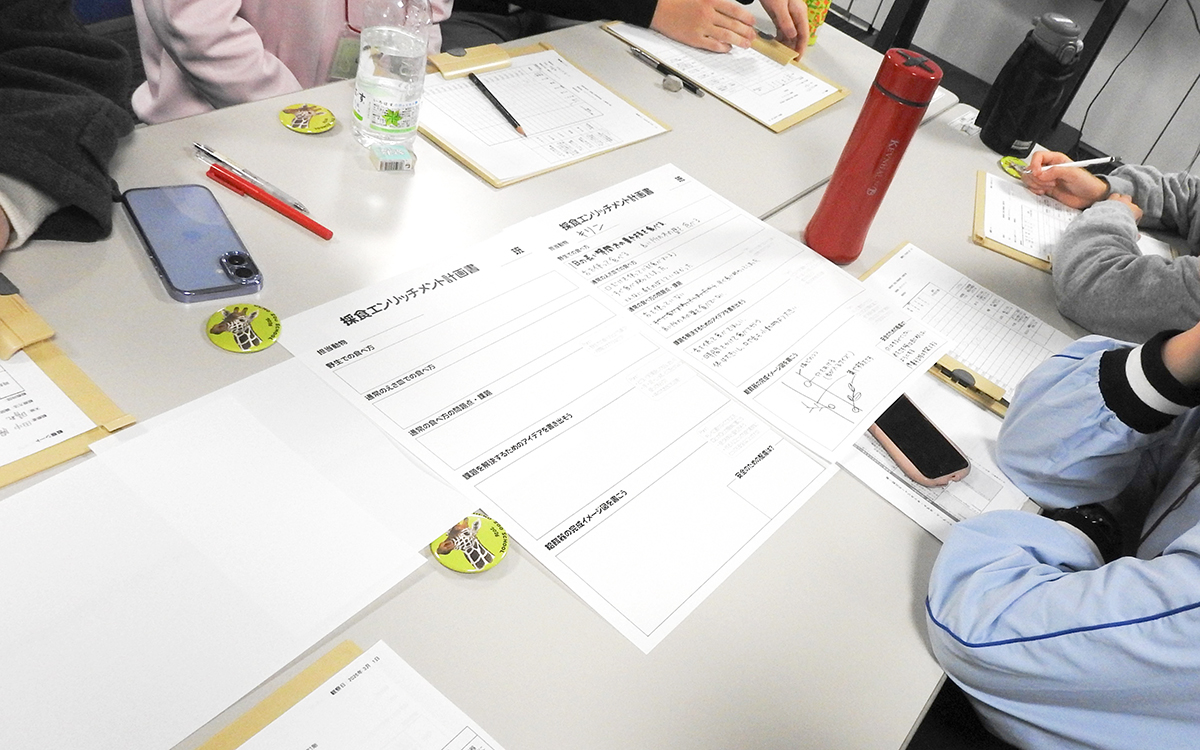
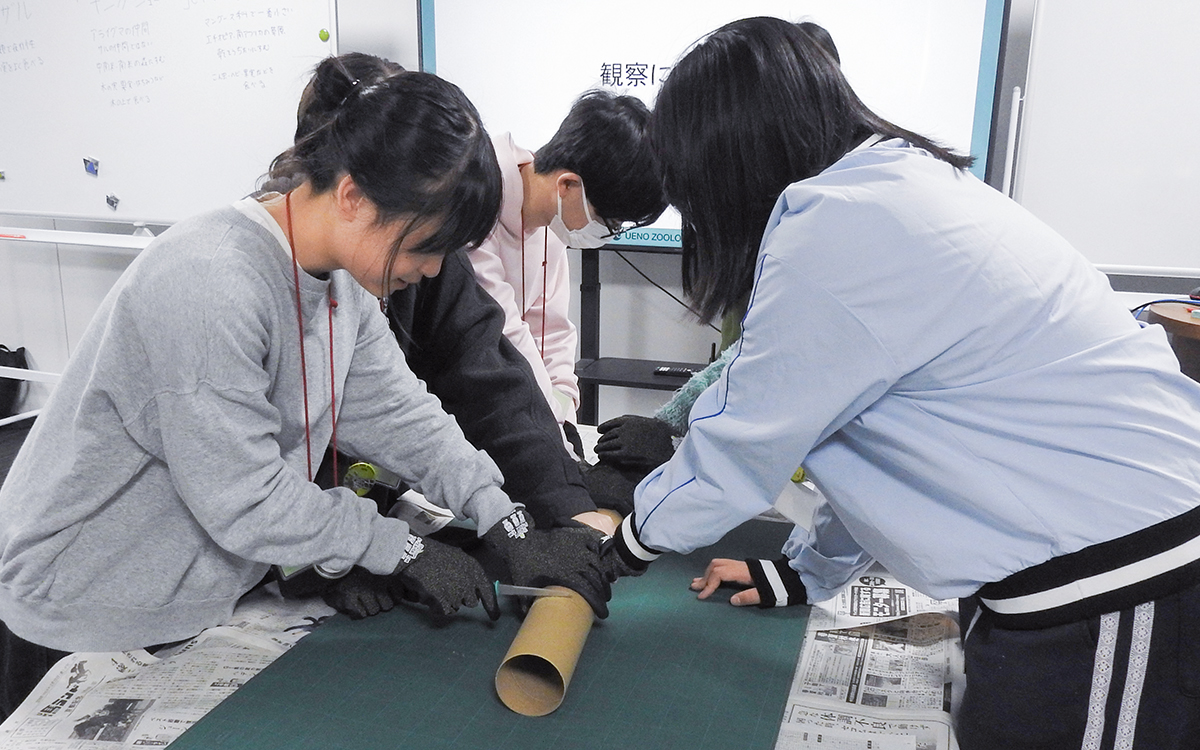
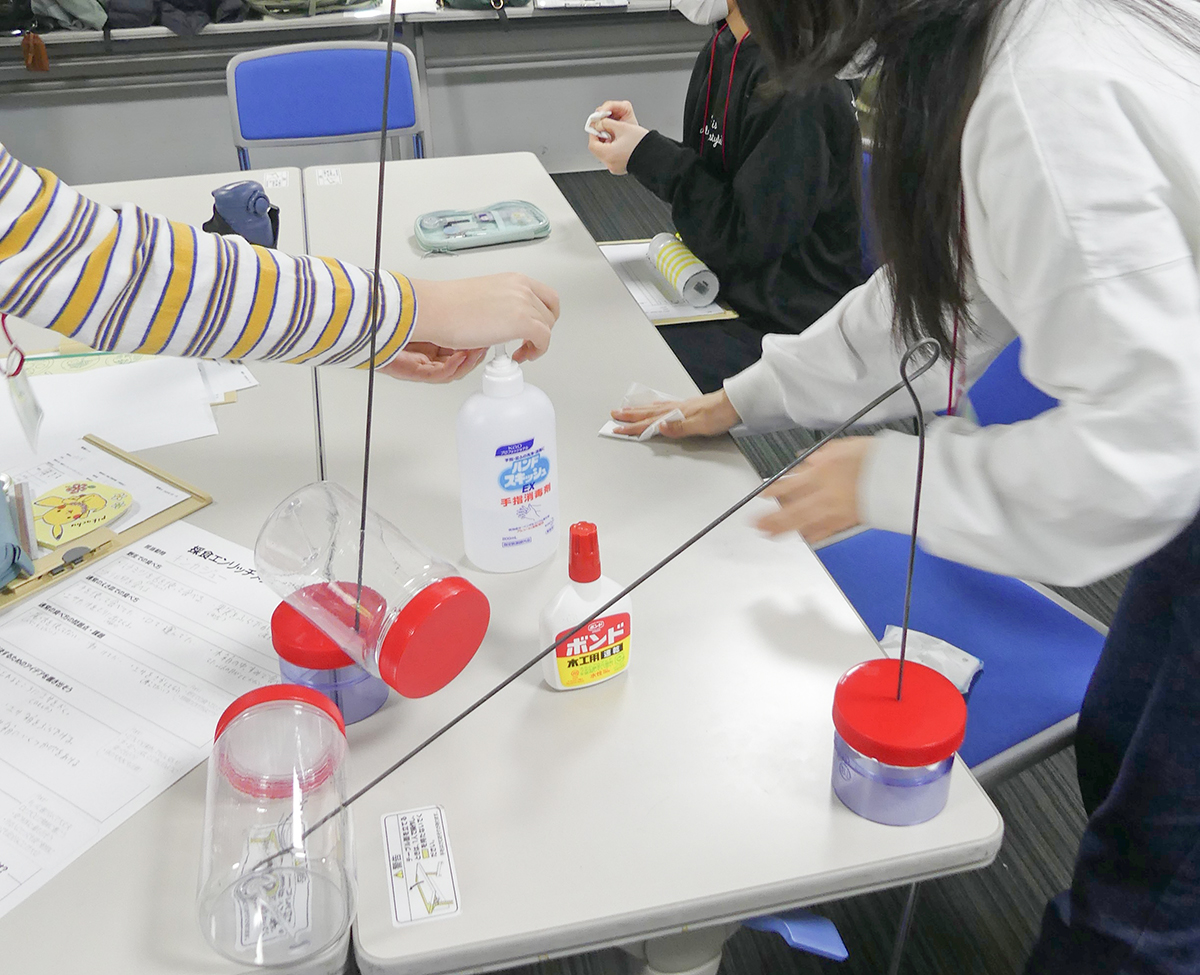
Afterward, we compared the recorded results with our prior research into the animals' lives and feeding habits in the wild to identify problems in the zoo setting. Then, we discussed as a group what behaviors we wanted to elicit in the zoo, created a plan, and began manufacturing the feeders.
The middle school students, using their flexible thinking skills, combined the provided materials to create a feeder that would elicit behaviors similar to those of wild animals.
First up is the night monkey team. Night monkeys are unusual among common monkeys (true monkeys) like Japanese Macaque in that they are nocturnal. In the wild, they skillfully balance themselves on unstable tree branches to pick fruit, so we created a feeder to encourage this behavior.
Because night monkeys can find food by scent even in the dark, we devised a way to conceal the contents of the feeder from their eyes. As a result, they began to touch and sniff the feeder more, and the time they spent eating increased.
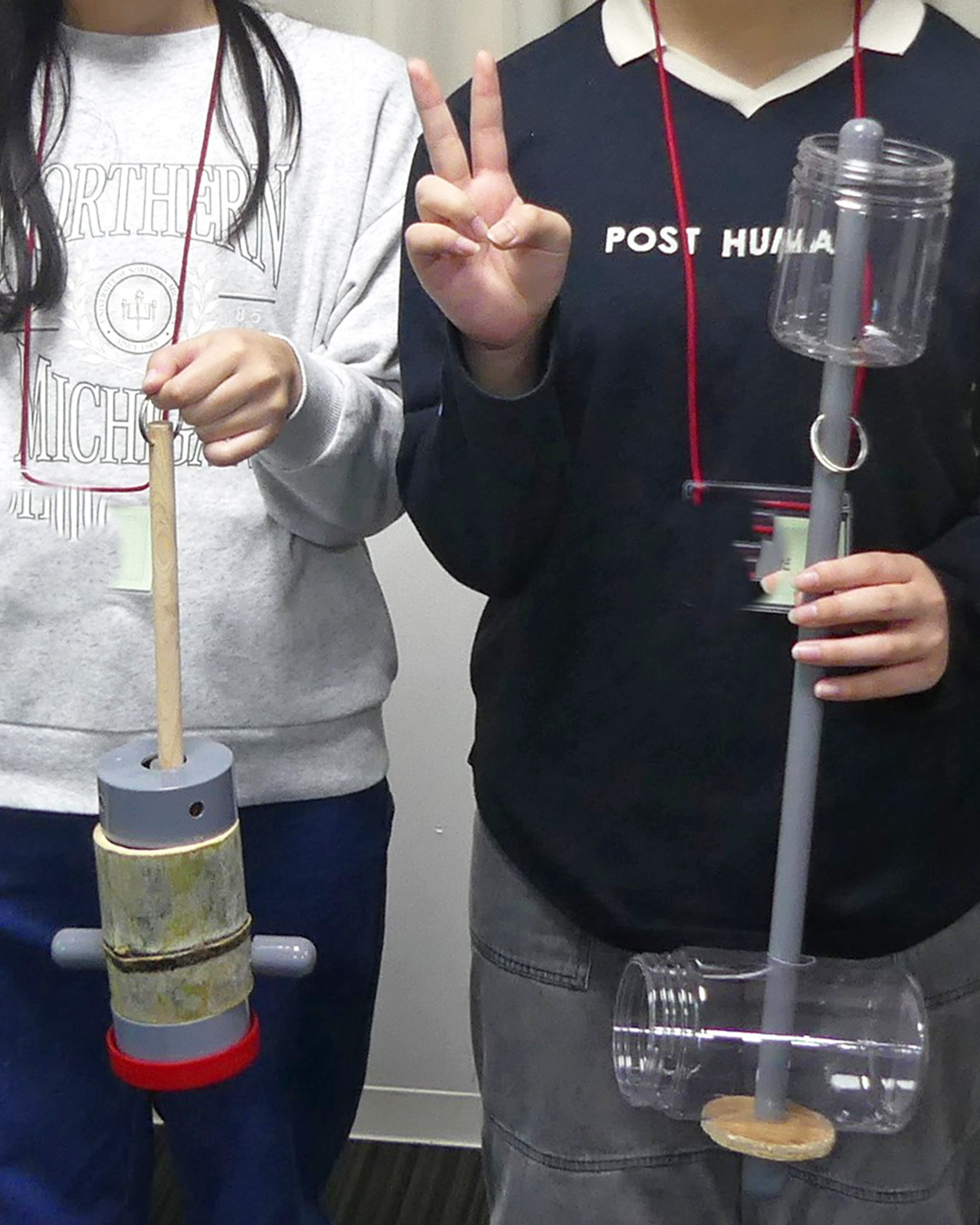
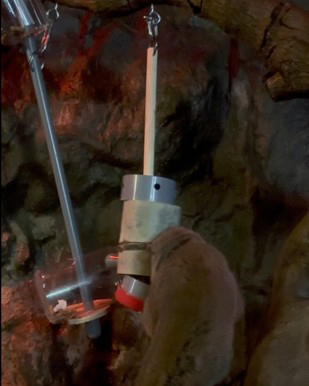
Next up is the kinkajou. Kinkajous are related to raccoons and live in the trees of the tropical rainforests of South America, mainly feeding on fruit.
They can hang from branches using only their hind legs and long tails. To encourage this behavior, we designed it to sway back and forth like a balancing toy.
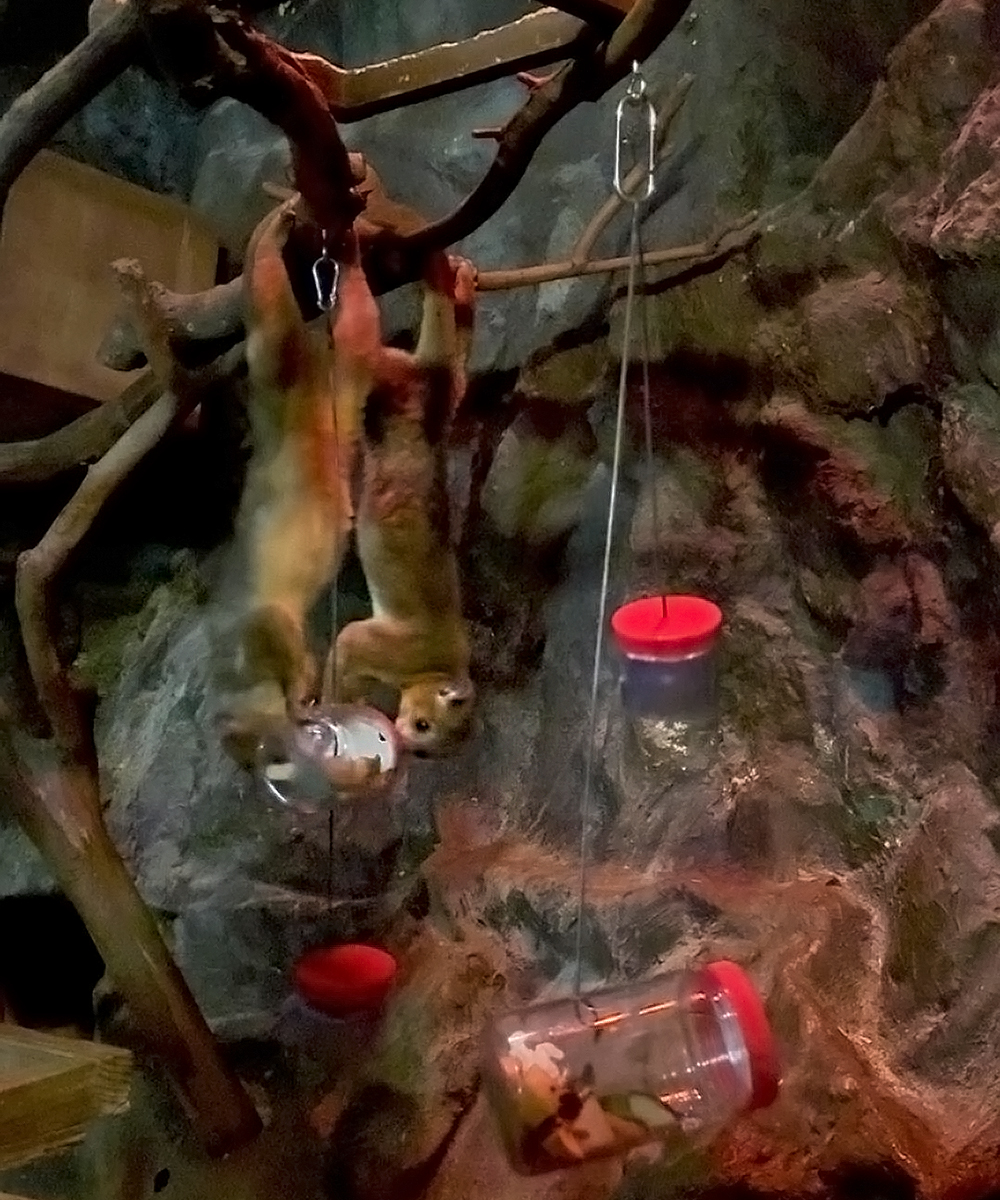
As a result, we not only observed them successfully hanging by their tails, grabbing branches with their hind legs and hanging upside down, and skillfully lifting cups with their front paws, but we also achieved our objectives, such as increasing their frequency of movement.
Finally, there's the pygmy mongoose. In the wild, they travel in groups, using their front paws to dig up insects and other prey from the soil.
This time, the goal was to encourage the behavior of digging in the soil with the front paws. We made feeders of various sizes by cutting holes of different sizes into cardboard tubes and filling them with hay, bedding, and other materials along with food.
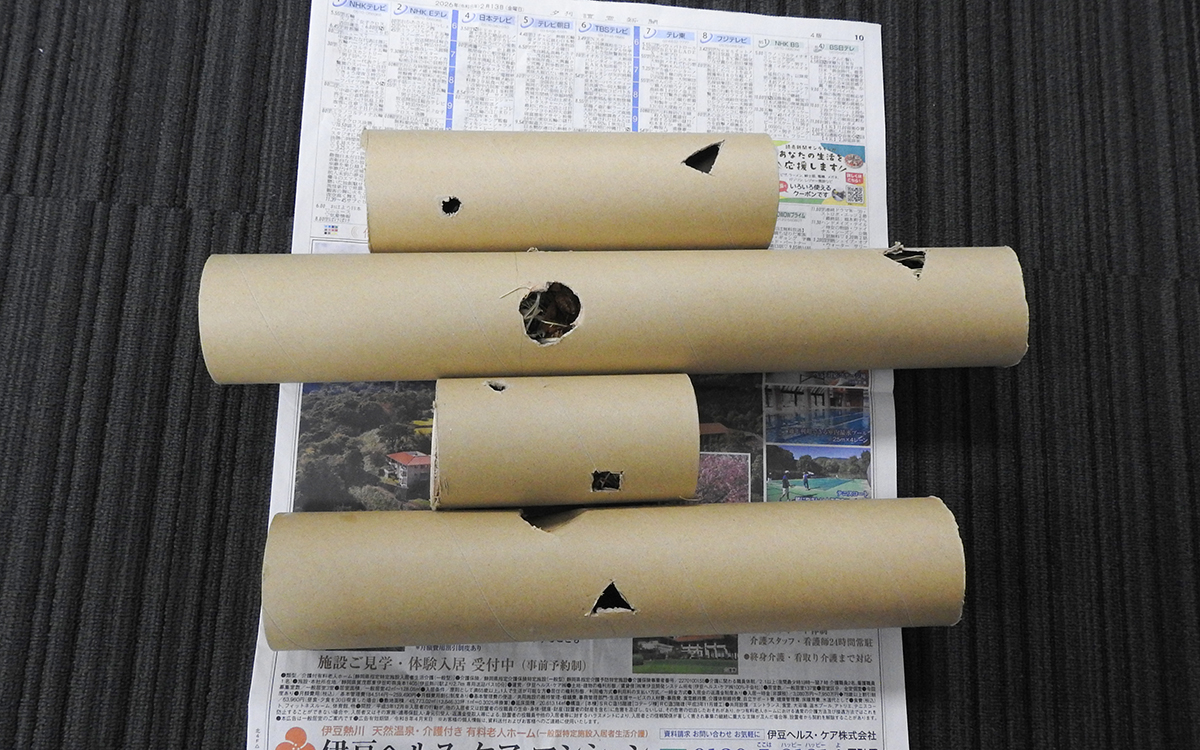
As a result, not only did the behavior of digging out the contents with their front paws increase, but by creating multiple feeders that took time to retrieve the food, competition for food decreased, and all individuals in the group were able to eat equally.
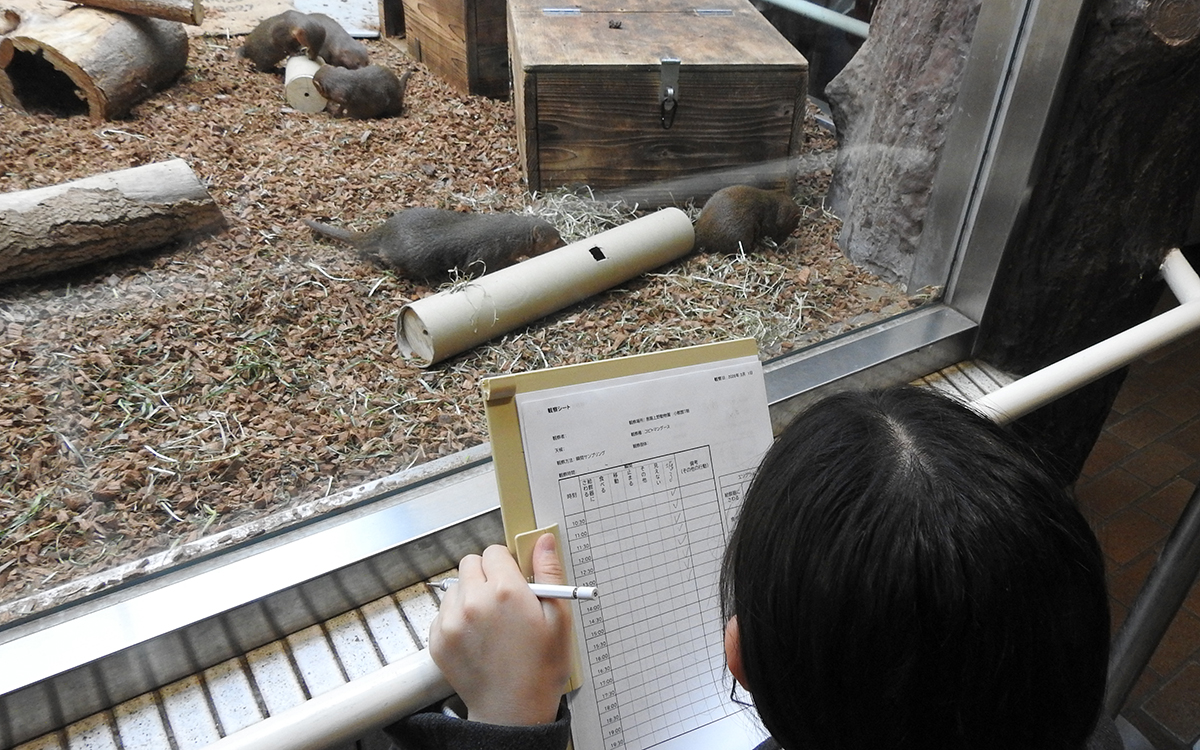
After the observation was over, we returned to the classroom and worked together in groups to summarize our findings. We compared the animals' behavior when using a regular food dish with the feeder we had made, evaluated the effectiveness of the feeder, and presented our results in a poster.
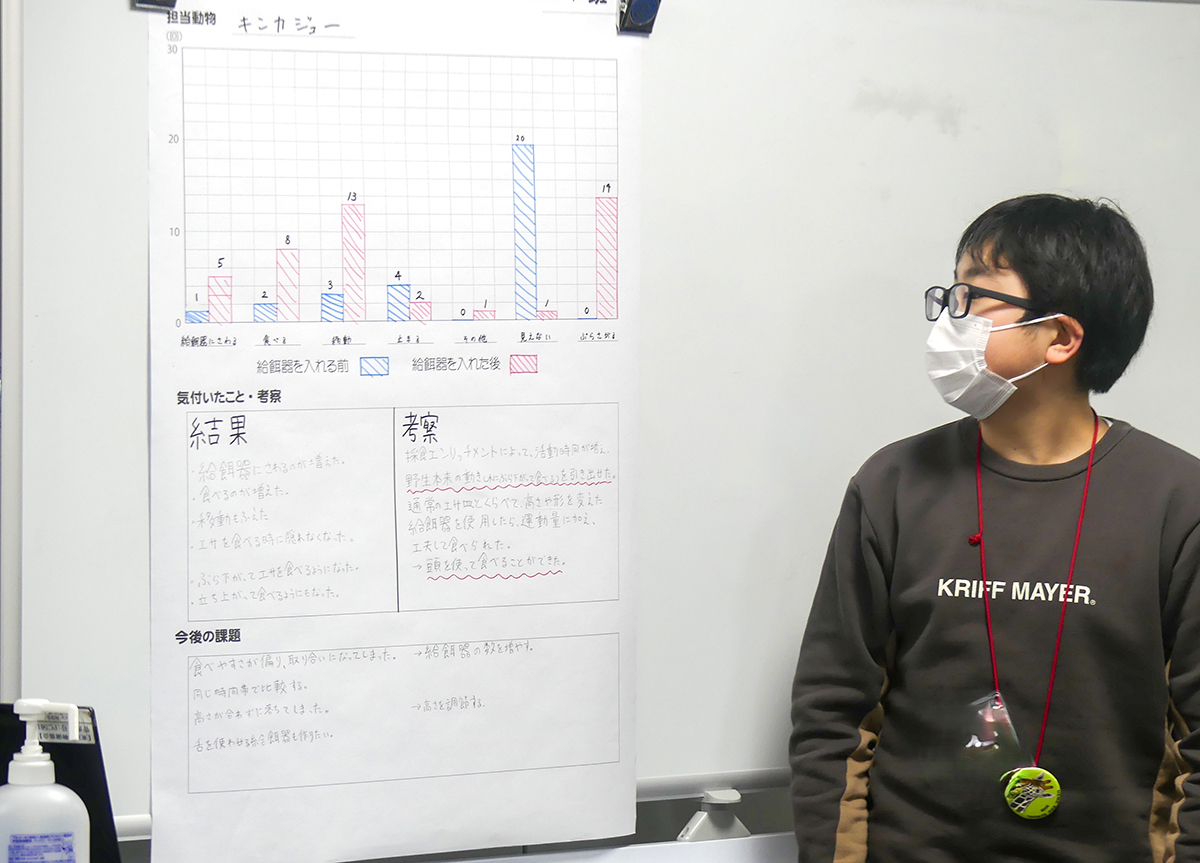
It was a very demanding, all-day schedule, but the participating junior high school students were fascinated by how the feeders they had made themselves would be used on the animals, and they carefully observed them. When the animals actually moved in accordance with the ingenious mechanisms they had created, a sense of accomplishment and fulfillment was evident on their faces, and even in situations where things didn't go as planned, they were seen thinking about areas for improvement based on the insights they gained from their observations.
In the survey, many participants commented, "I was surprised that a single feeder could change an animal's behavior," and "I learned how difficult it is to create something that considers the safety of both people and animals." It seems that they were able to experience the fun of solving problems, the difficulty of devising solutions for animals, and the joy of making new discoveries through observation.
The presentation posters created by the junior high school students will be displayed on the first floor Small Mammal House from April 14th (Tue) to May 31st (Sun), 2026. We hope that everyone reading this article will take a look at these posters the next time they visit the zoo, and also take a look at the various animal care efforts throughout the park.
[Ueno Zoo Education and Outreach Division, Education and Outreach Section]