

Zoo Stock Species and the Red List
Zoo Stock Species and the Red List
Zoo Stock
This indicates that the species is included in the Second Zoo Stock Plan, which was formulated by the Tokyo Metropolitan Government in 2018. The plan sets goals for the next 10 years in three areas: "species conservation," "contribution to wildlife conservation," and "environmental education and conservation awareness." 124 animal species are included.
What is the Red List?
Based on scientific research, this is a list of wildlife classified by rank (category) indicating the degree of risk of extinction.
Livng Things Encyclopedia shows the categories (mainland and islands) assessed by the IUCN (International Union for Conservation of Nature) at the global level, the Ministry of the Environment for Japan, and the Tokyo Metropolitan Government for Tokyo.
The higher the category in each table, the higher the risk of extinction, and CR, EN, and VU are the three categories known as "endangered species." In Tokyo, species that are not at the NT (near threatened) level but are relatively rare are considered "species of concern."
|
IUCN categories |
|
|---|---|
|
EX |
extinction |
|
EW |
Extinction in the wild |
|
CR+EN |
— |
|
CR |
Serious crisis |
|
EN |
crisis |
|
VU |
emergency |
|
NT |
Near Threatened |
|
LC・○ |
Low Concern |
|
DD |
Data shortage |
|
LP |
— |
|
Japan (Ministry of the Environment) Category |
|
|---|---|
|
EX |
extinction |
|
EW |
Extinction in the wild |
|
CR+EN |
Endangered species |
|
CR |
Critically Endangered |
|
EN |
Endangered species |
|
VU |
Endangered species |
|
NT |
Near Threatened |
|
LC・○ |
— |
|
DD |
Lack of information |
|
LP |
Endangered |
|
Tokyo Category |
|
|---|---|
|
EX |
extinction |
|
EW |
Extinction in the wild |
|
CR+EN |
Endangered species |
|
CR |
Critically Endangered |
|
EN |
Endangered species |
|
VU |
Endangered species |
|
NT |
Near Threatened |
|
LC・○ |
Unranked |
|
DD |
Lack of information |
|
LP |
Endangered |
Creatures at Ueno Zoo
Creatures at Ueno Zoo
Giraffe
Giraffa camelopardalis
Giraffe
Giraffa camelopardalis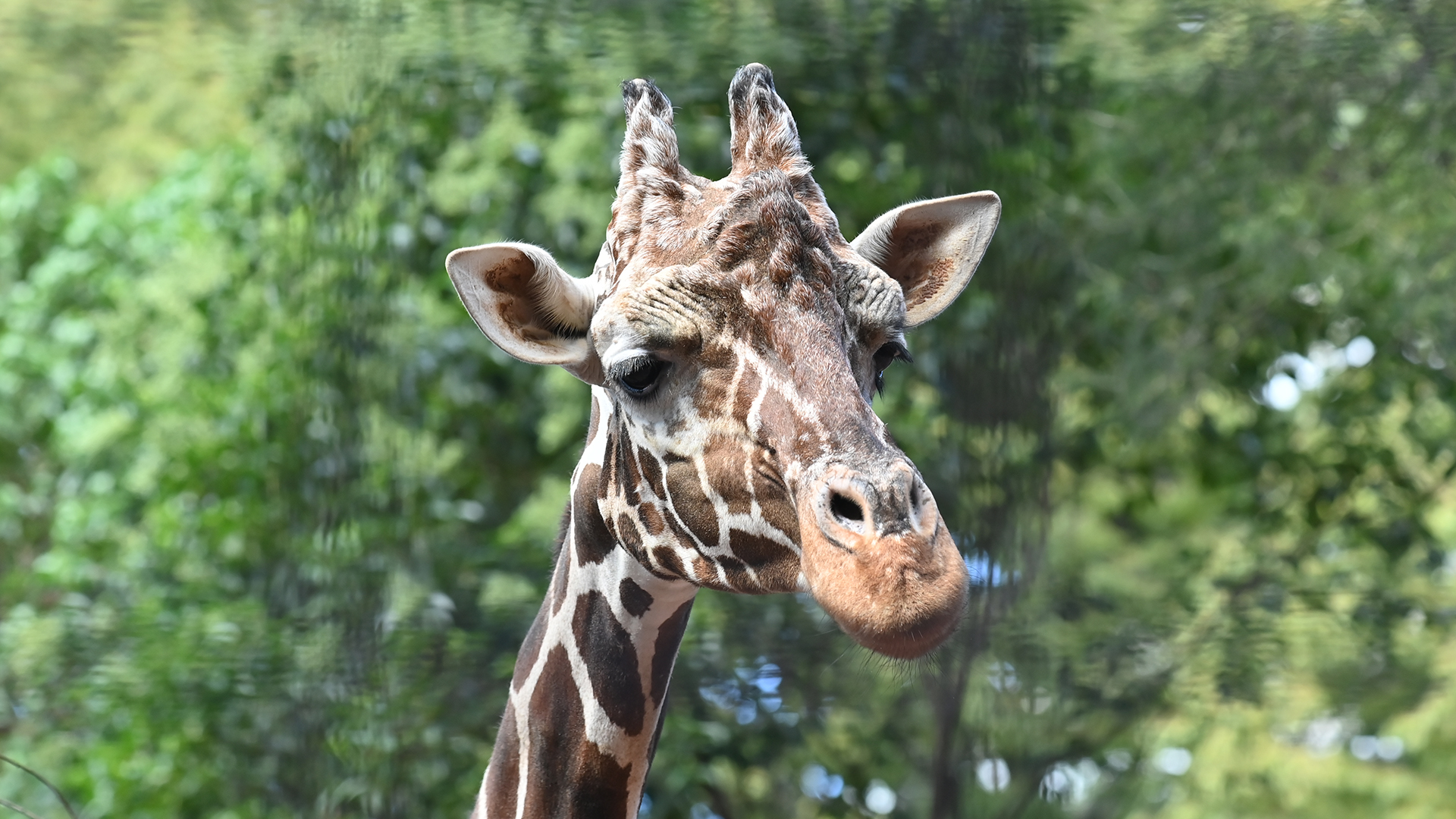
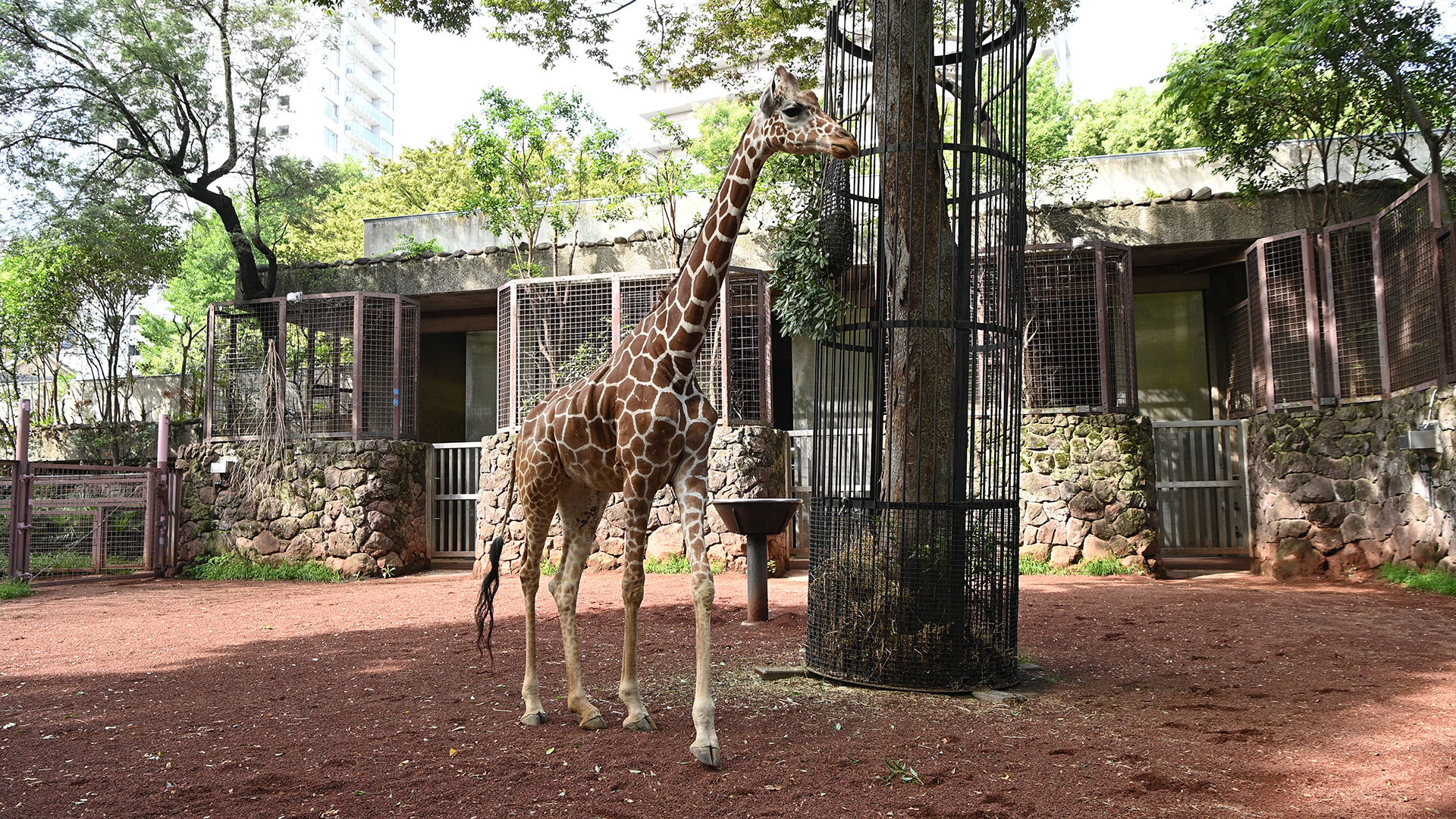
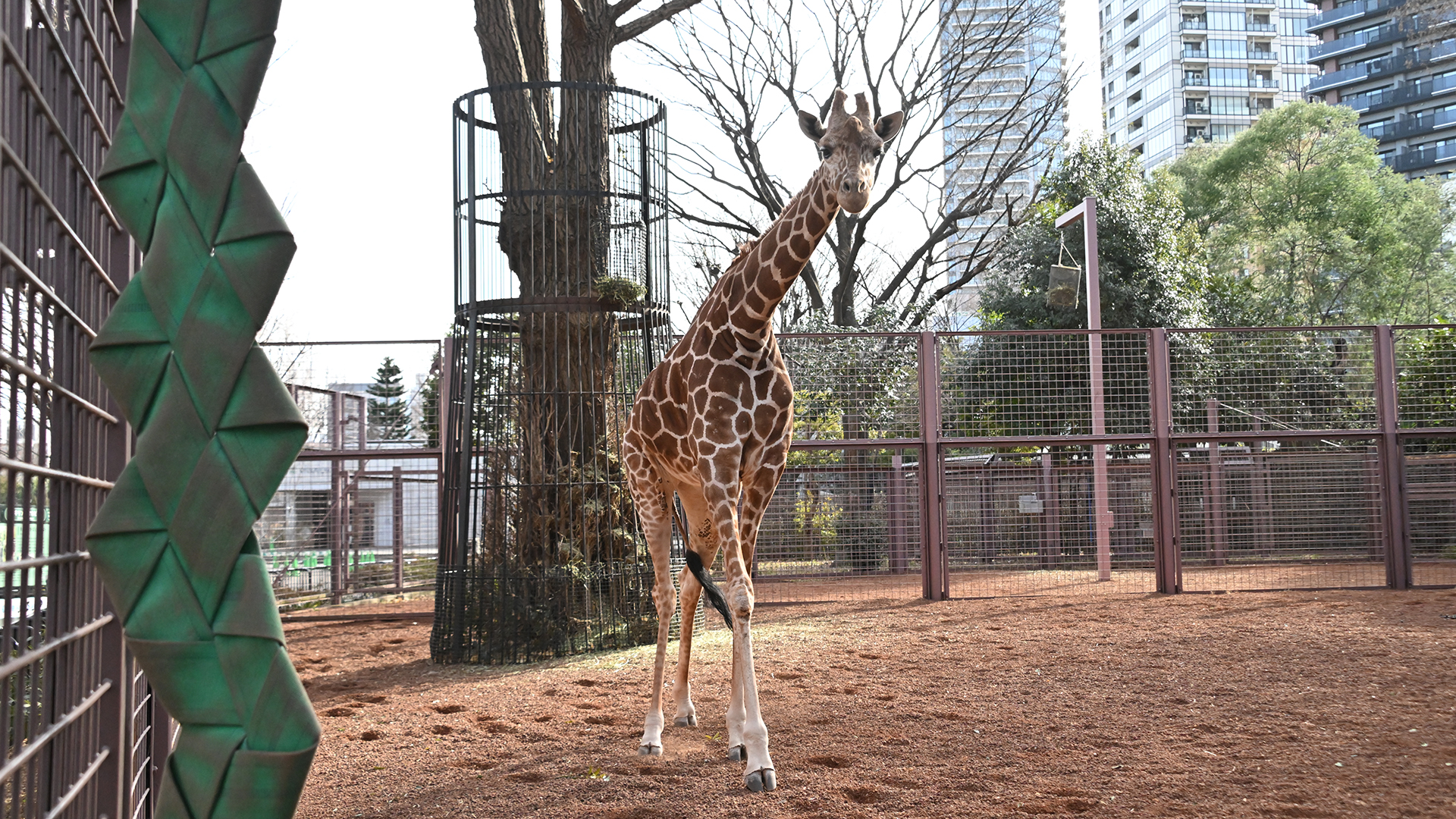
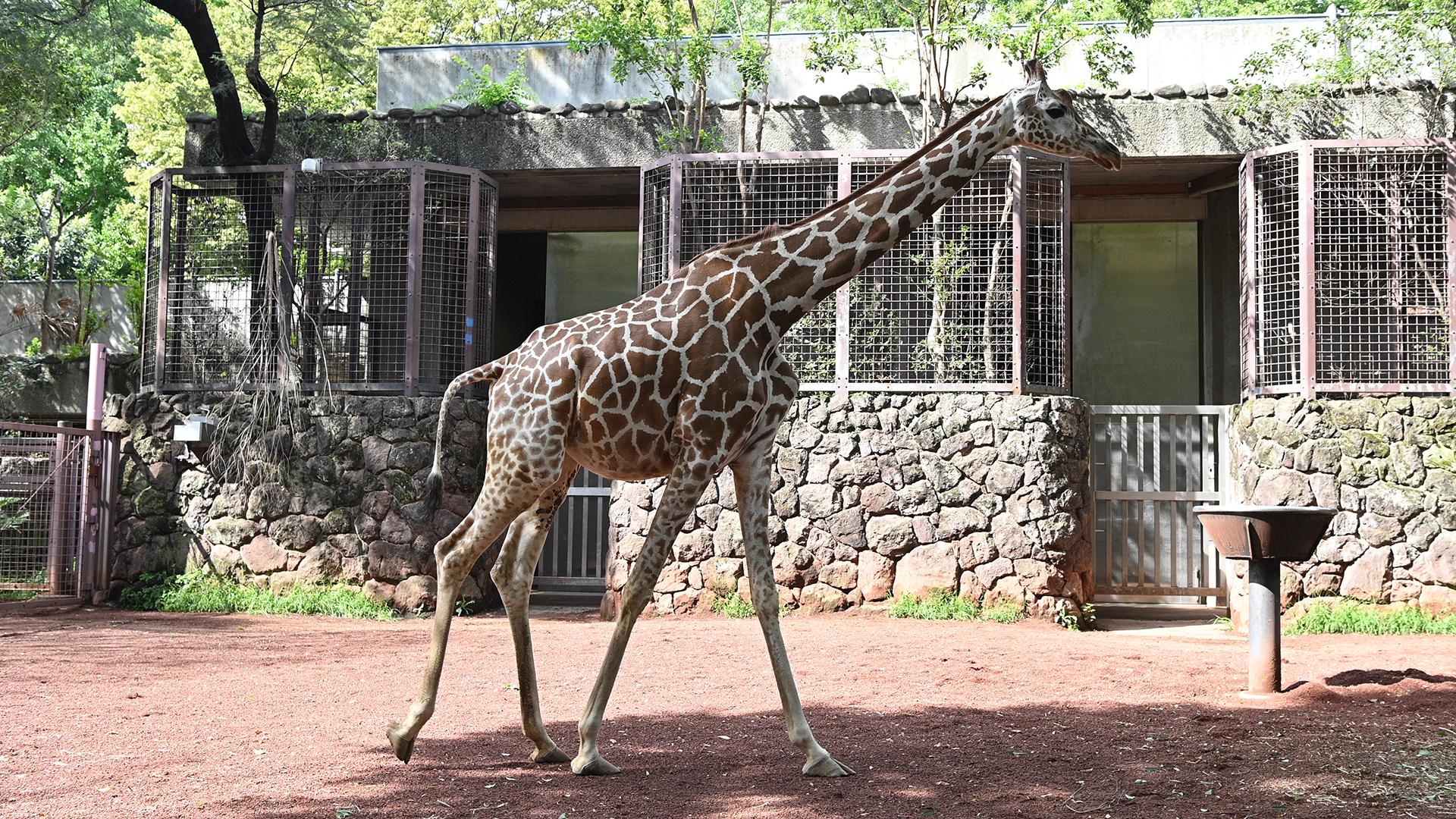
They are the tallest land animals. When they become adults, they can reach a head height of over 4 meters and can eat tall branches and leaves. They live in loose groups with no fixed membership. Newborn babies hide with other babies in a safe place and wait for their mother to finish eating and return.
| classification | Mammalia, Artiodactyla, Giraffe |
|---|---|
| English name | Giraffe |
| distribution | Sub-Saharan Africa |
| Residence | Sparsely wooded grassland |
| Size |
Height: Males 5.3m, females 4.3m
Weight: Male 1,200 kg, female 830 kg |
| food | leaves |
| Red List |
IUCN: VU (Very)
|
Head features
Their eyes are located on protrusions on the sides of their face and point downwards, so they can see behind them and their feet without moving their heads. Their tongues are 45 to 50 cm long and are dark in colour. When eating leaves that are high up or from thorny plants, they stretch out their long tongue to grab the leaves and take them into their mouths. They have three horns in total: two on top of their heads and one bump-like horn on their forehead. They are covered in fur and contain a bone inside.
poop
Considering their body size, they produce small, round poops about 2cm in diameter, with about 200 pellets passing at a time.
relapse
If you see them chewing their cud even though they haven't eaten, they are chewing their cud. If you observe their long neck for about three minutes, you will see food going back and forth between their mouth and stomach.
Pregnancy and childbirth
The gestation period is about 15 months, and they give birth to one, or rarely two, calves at a time.
Danger in the wild
Their population has declined by nearly 30% over the past 35 years, making them one of the most endangered large mammals.