

Zoo Stock Species and the Red List
Zoo Stock Species and the Red List
Zoo Stock

This indicates that the species is included in the Second Zoo Stock Plan, which was formulated by the Tokyo Metropolitan Government in 2018. The plan sets goals for the next 10 years in three areas: "species conservation," "contribution to wildlife conservation," and "environmental education and conservation awareness." 124 animal species are included.
What is the Red List?
Based on scientific research, this is a list of wildlife classified by rank (category) indicating the degree of risk of extinction.
Livng Things Encyclopedia shows the categories (mainland and islands) assessed by the IUCN (International Union for Conservation of Nature) at the global level, the Ministry of the Environment for Japan, and the Tokyo Metropolitan Government for Tokyo.
The higher the category in each table, the higher the risk of extinction, and CR, EN, and VU are the three categories known as "endangered species." In Tokyo, species that are not at the NT (near threatened) level but are relatively rare are considered "species of concern."
|
IUCN categories |
|
|---|---|
|
EX |
extinction |
|
EW |
Extinction in the wild |
|
CR+EN |
— |
|
CR |
Serious crisis |
|
EN |
crisis |
|
VU |
emergency |
|
NT |
Near Threatened |
|
LC・○ |
Low Concern |
|
DD |
Data shortage |
|
LP |
— |
|
Japan (Ministry of the Environment) Category |
|
|---|---|
|
EX |
extinction |
|
EW |
Extinction in the wild |
|
CR+EN |
Endangered species |
|
CR |
Critically Endangered |
|
EN |
Endangered species |
|
VU |
Endangered species |
|
NT |
Near Threatened |
|
LC・○ |
— |
|
DD |
Lack of information |
|
LP |
Endangered |
|
Tokyo Category |
|
|---|---|
|
EX |
extinction |
|
EW |
Extinction in the wild |
|
CR+EN |
Endangered species |
|
CR |
Critically Endangered |
|
EN |
Endangered species |
|
VU |
Endangered species |
|
NT |
Near Threatened |
|
LC・○ |
Unranked |
|
DD |
Lack of information |
|
LP |
Endangered |
Creatures at Ueno Zoo
Creatures at Ueno Zoo

Asian Elephant
Asian Elephant
Elephas maximus
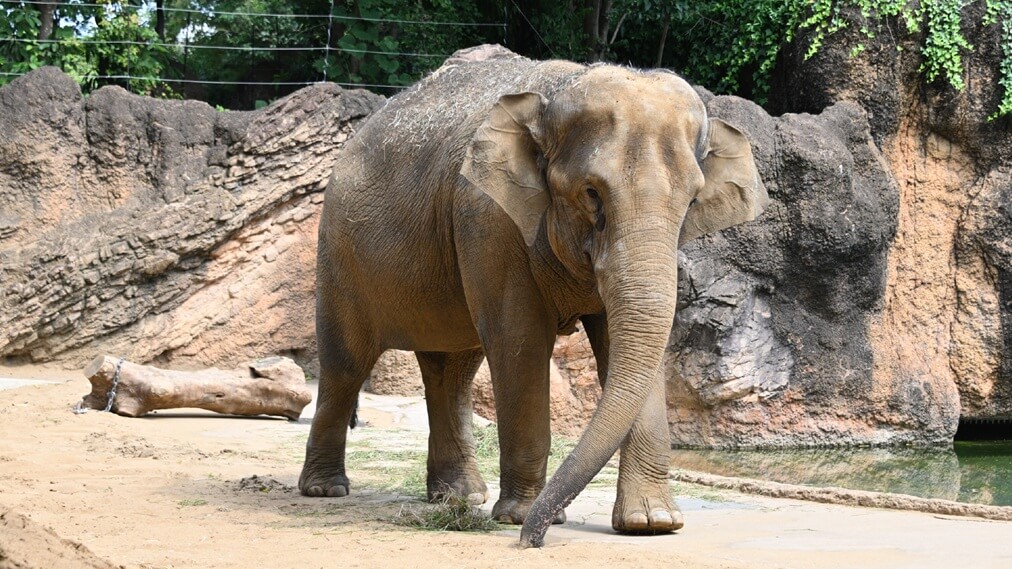
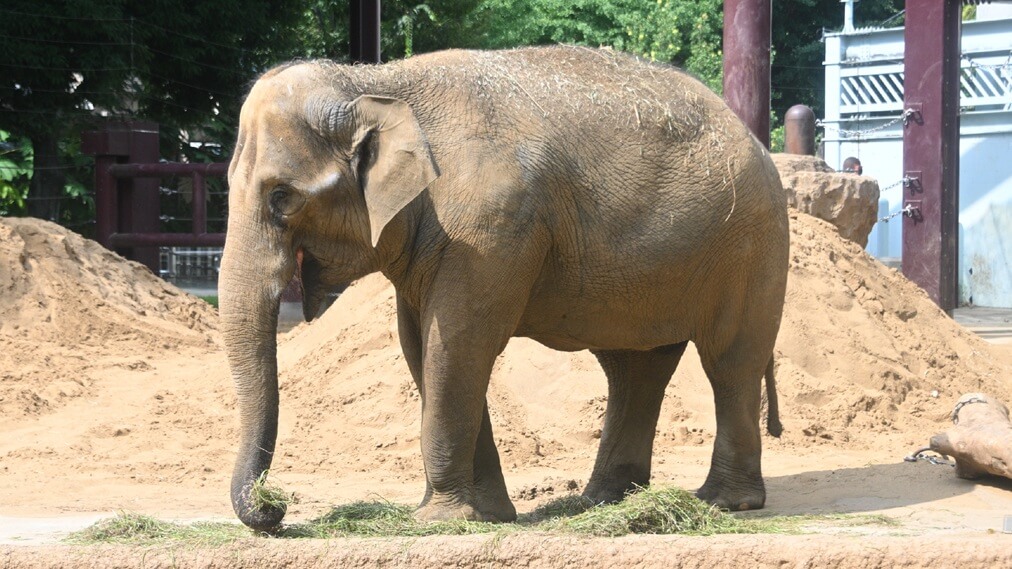
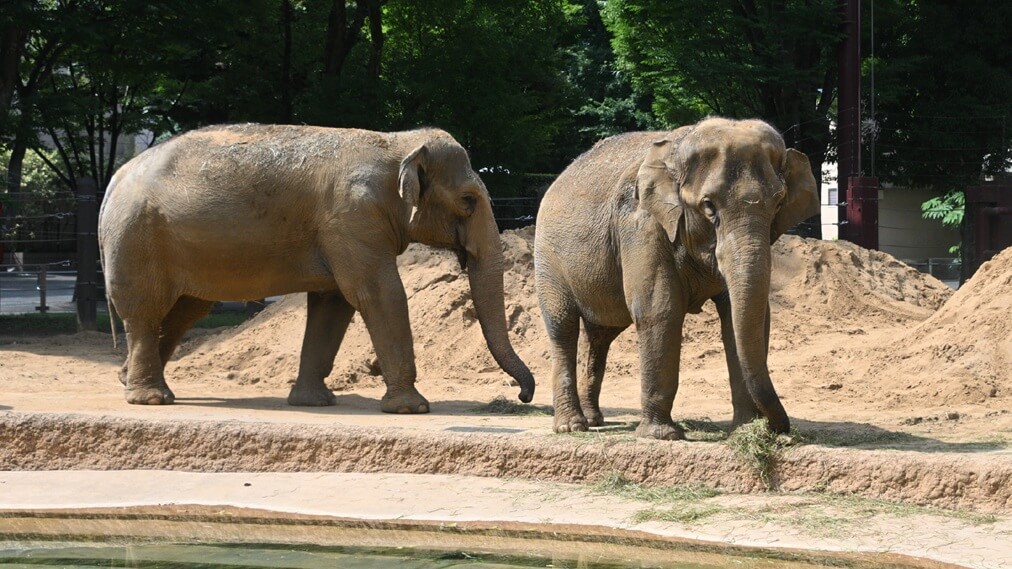
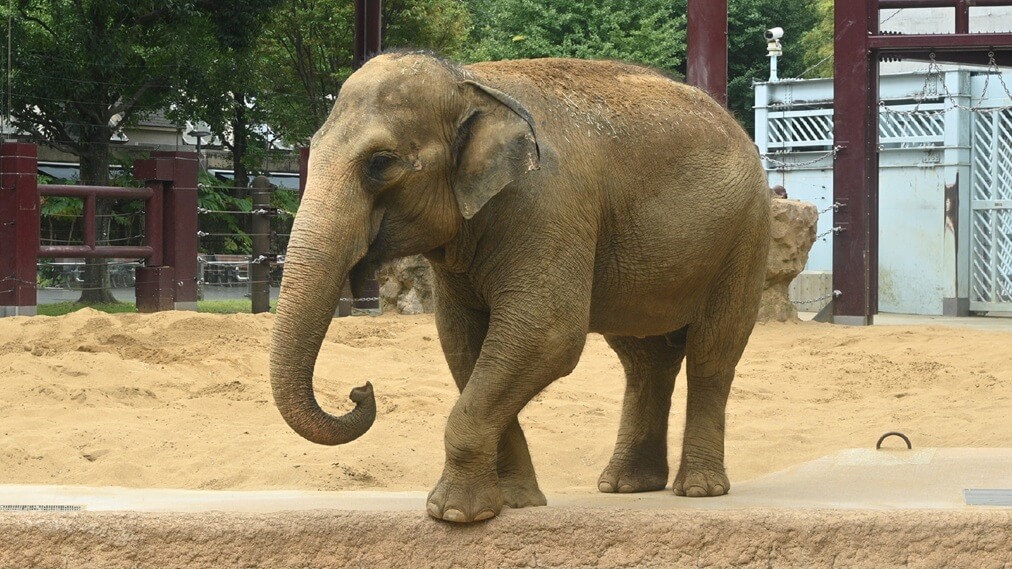
In the wild, elephants live in groups centered around older females, and the baby males eventually leave the group as they grow. Both males and females have tusks, but the females' tusks are short and not easily visible from the outside. In southern Asia, wild elephants have long been domesticated and have been closely associated with human life, being used to carry loads and in festivals.
| classification | Mammalia, Proboscidea, Elephantidae |
|---|---|
| English name | Asian Elephant |
| distribution | South to Southeast Asia |
| Residence | forest |
| Size |
Length from forehead to rump: Males 3.5-4.5m, Females 3.0-4.0cm
Nose length: about 2m Shoulder height: Males 2.5-3.3m (maximum 3.8m), females 2.4m (maximum 2.6m) Weight: Males 2,500-6,000 kg, Females 2,000-4,500 kg |
| food | Coarse foods such as bark, leaves, branches, and grass (trees of the families Palmaceae, Palmaceae, Fabaceae, and Boreales, bark, fruit, roots, grass, vines, etc.) |
| Red List |
IUCN: EN (crisis)
|
Conservation Information
Their numbers are declining due to the expansion of plantations (large-scale farms) for palm oil, the loss of forest habitat due to lumber use, and the poaching of males for their tusks. Ueno Zoo is working to breed elephants and raise awareness about elephants.
Pay attention to the shape of your nose!
The base of the nose is thick, about the same width as an adult's arms wrapped around a circle. The inside is a mass of muscle, giving it the strength to lift a log. On the other hand, there is a triangular protrusion above the tip of the nose, which can be used like a finger to dexterously pick up even small objects. Just below the protrusion are the two nostrils.
Pay attention to the movement of the nose!
They can gather everything from grass on the ground to leaves from trees 4-5 meters high. They use their noses for everything, not just carrying food and water to their mouths, but also grabbing sand and pouring it over their bodies, bathing in water, communicating with others by touching and smelling them, and searching for and identifying invisible places by smell.