

Check out the bumps! The Knobbed Eirene Jellyfish is on display for the first time!
August 28, 2026
Currently, the Kasai Rinkai Aquarium is exhibiting the knobby jellyfish (Elaphe climacophora) in the "Tokyo Sea" area, specifically in the "Planktonic Life" section. This is the first time it's been exhibited at Tokyo Sea Life Park, but it wasn't collected from aquariums; it actually developed within the tank itself!
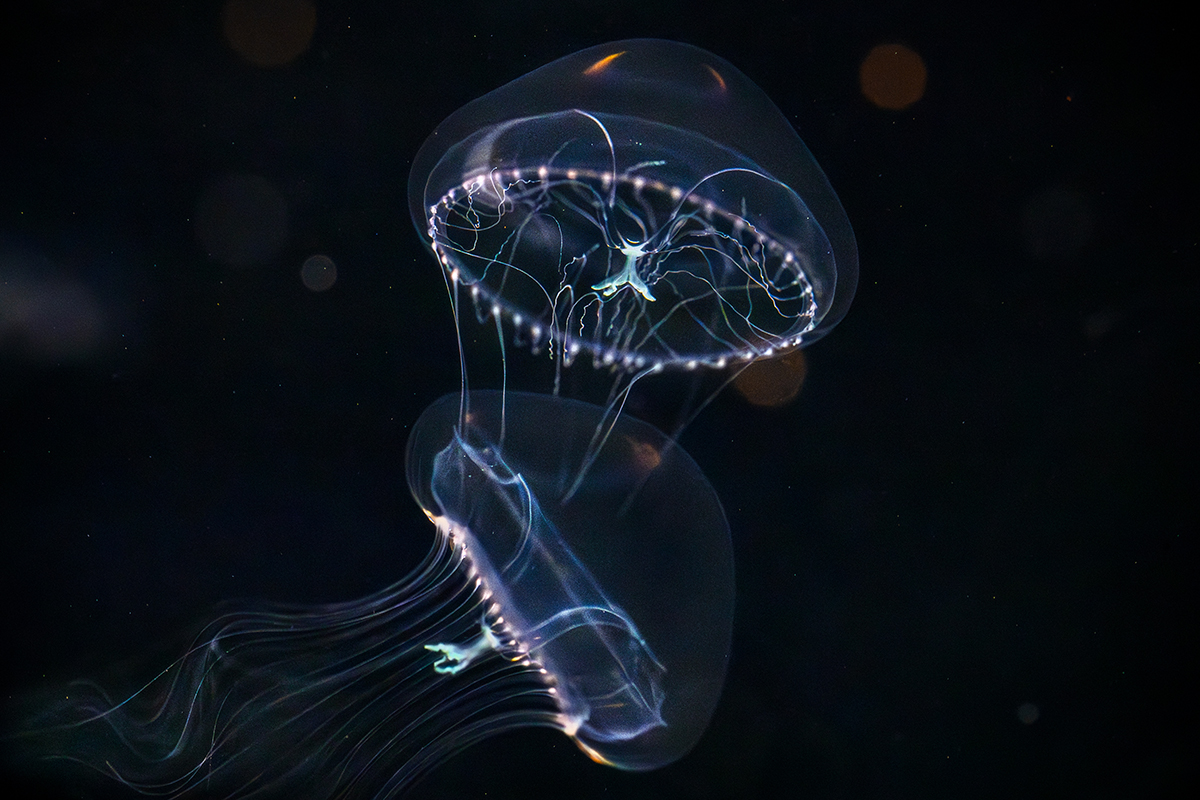
At Tokyo Sea Life Park, a type of cnidarian called hydrozoans sometimes spontaneously appears in the tanks. These hydrozoans are venomous and can weaken the creatures in the tanks. For this reason, they are generally removed, but occasionally jellyfish appear, which I secretly look forward to.
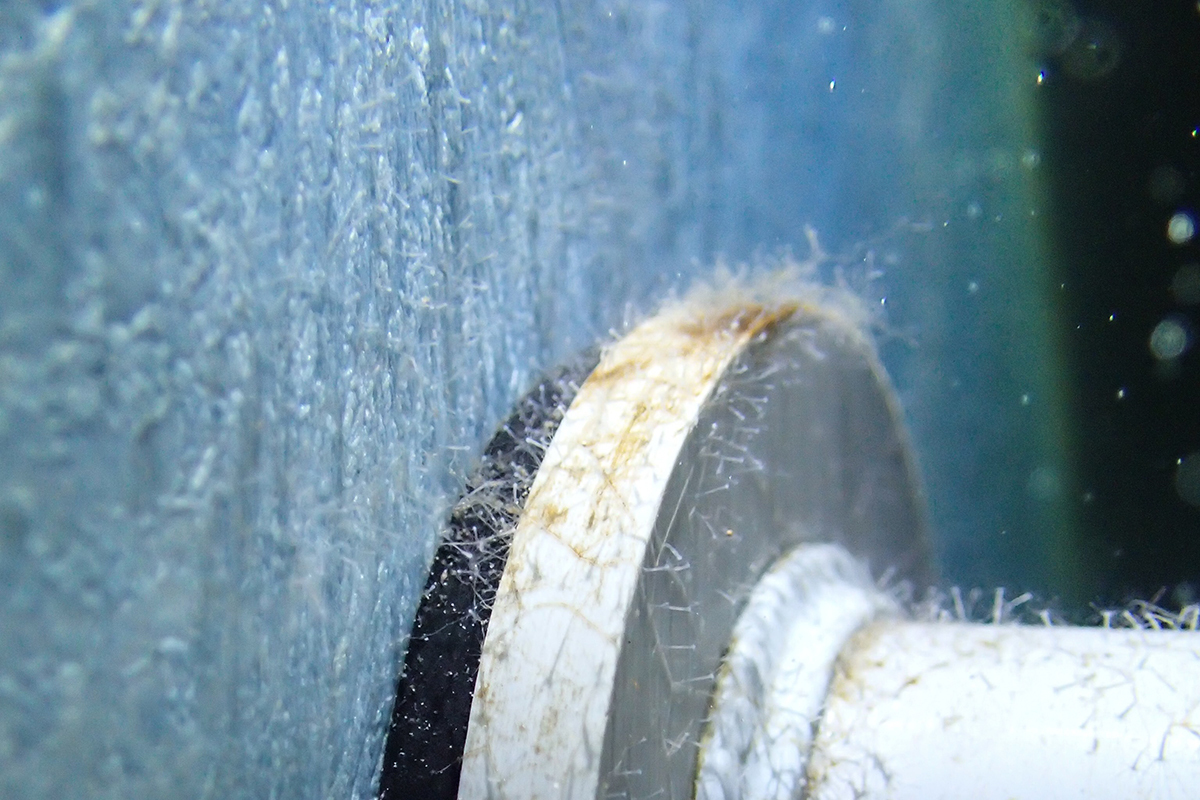
One day, when I looked into the tank where I keep mysid shrimp, I noticed a massive outbreak of jellyfish, each about 1 mm in diameter.
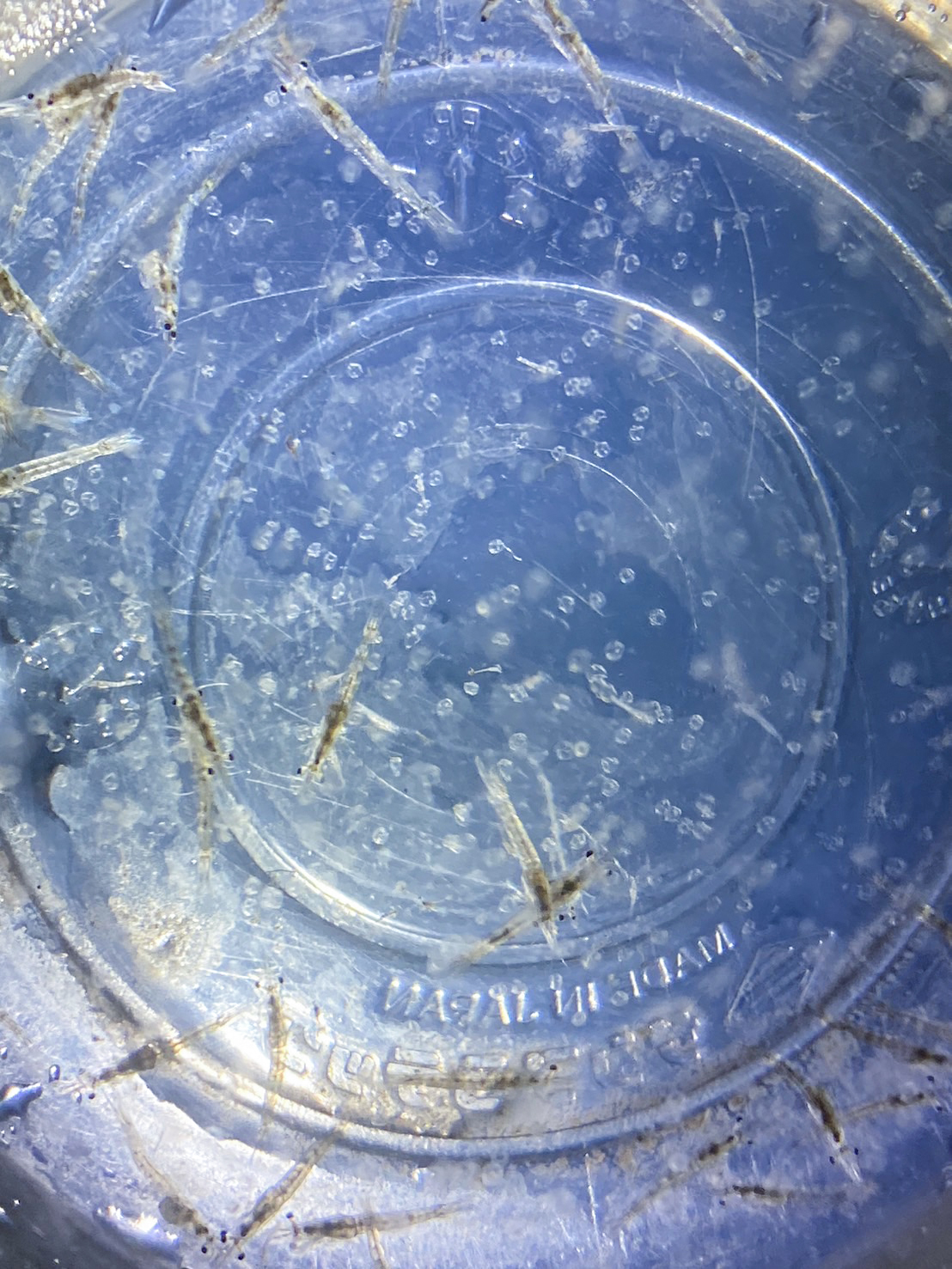
I was surprised because jellyfish had never appeared in this tank before.
Now, there have been several instances of jellyfish spontaneously appearing in aquariums like this in other tanks, but all of those jellyfish were species that never grew to a bell diameter of more than 5 mm, so they were not suitable for display. However, the jellyfish this time had a shape different from any of the species that had appeared so far.
The images below are of jellyfish that naturally appeared in an aquarium, viewed under a microscope.
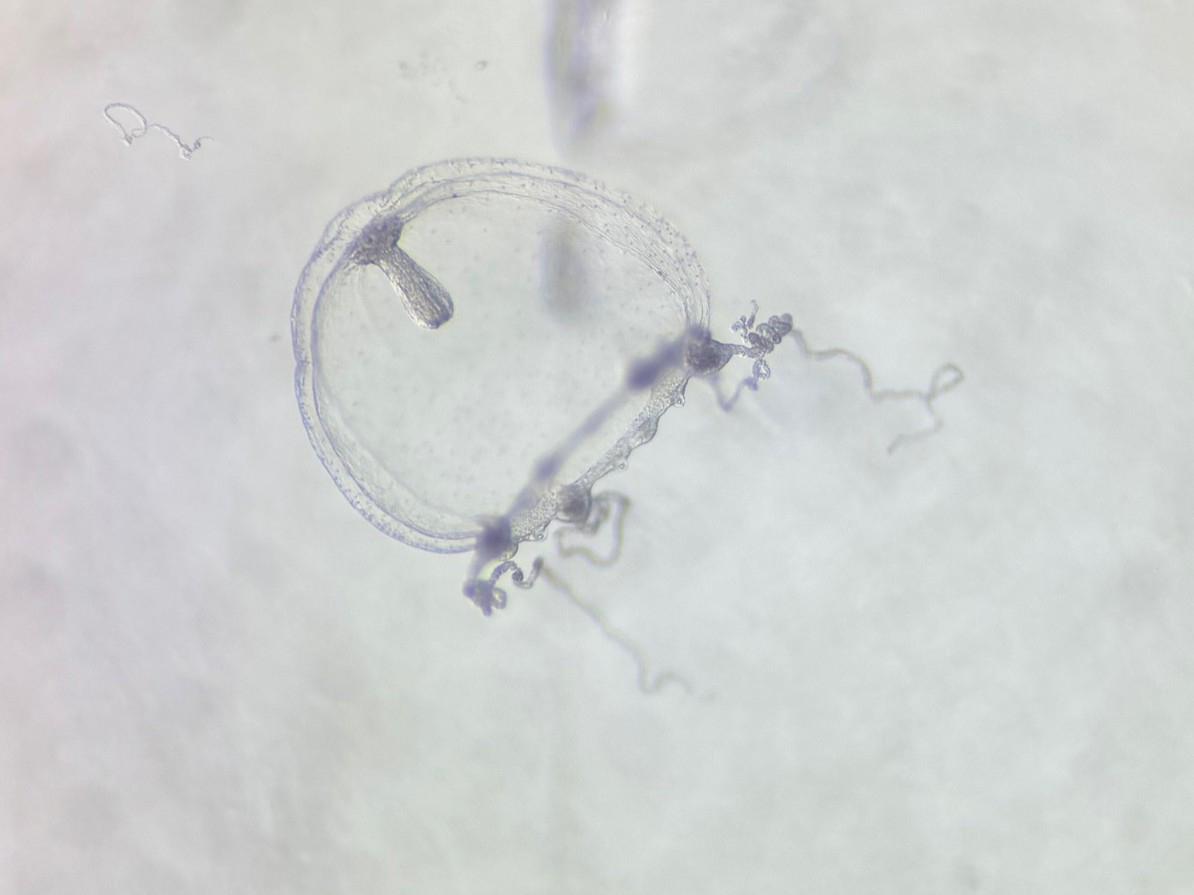
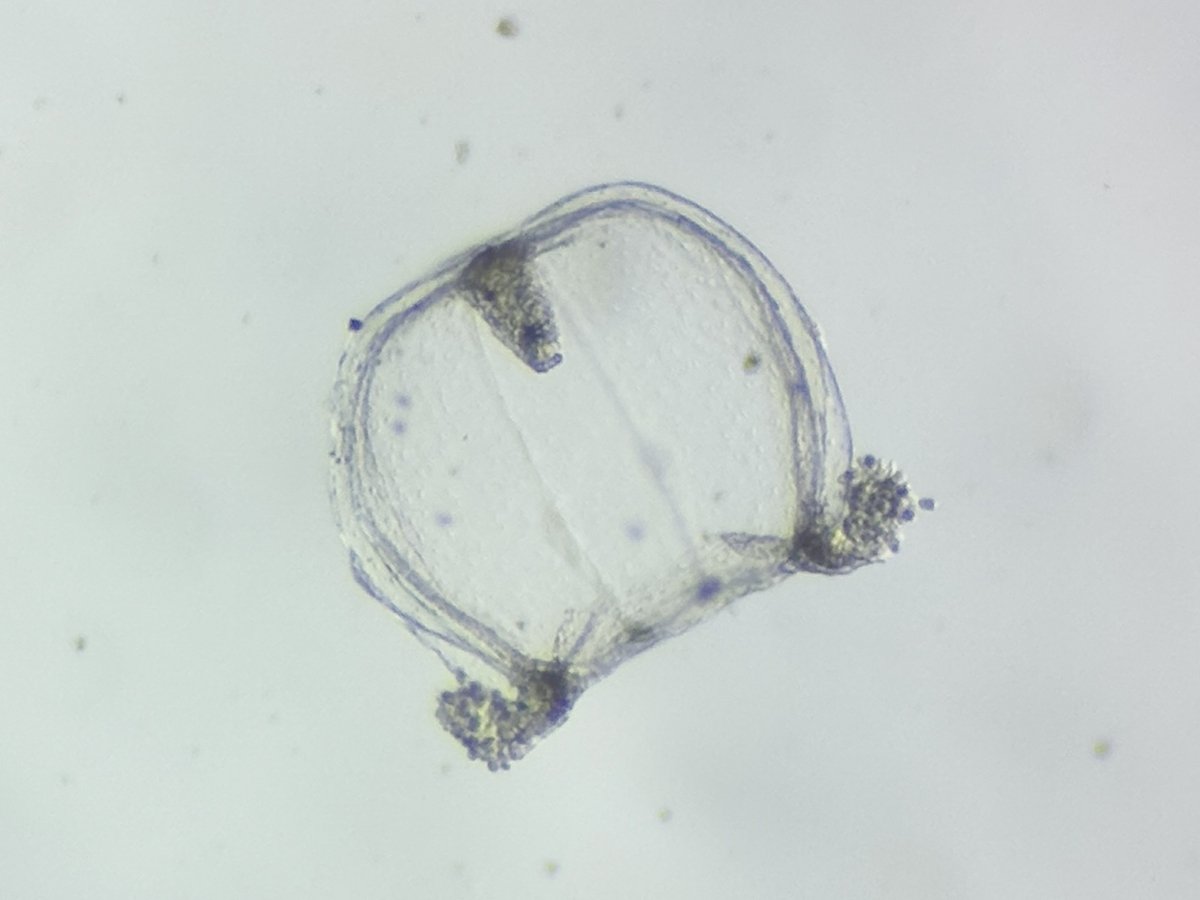
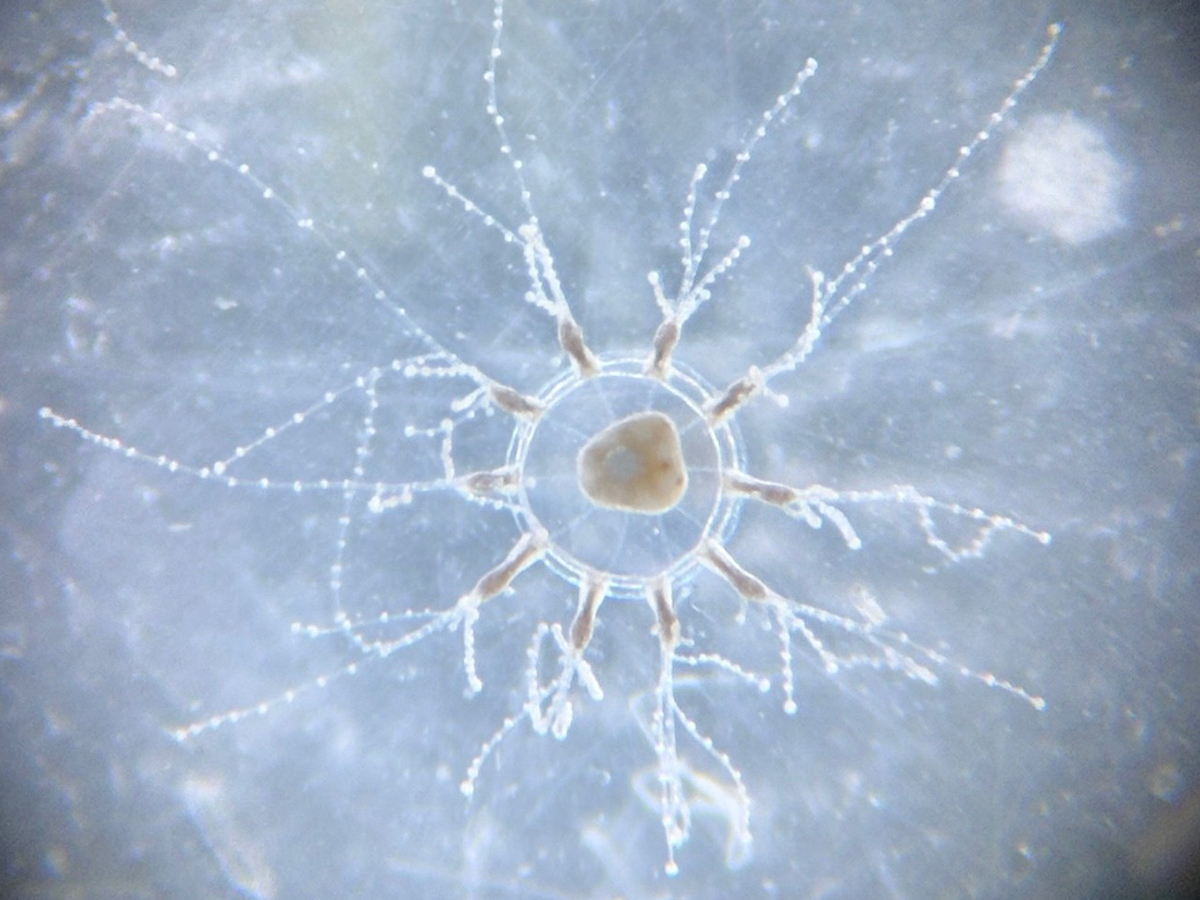
Since it is difficult to identify jellyfish in their immature state, we decided to raise them to determine the species. As the jellyfish was small, with a bell diameter of about 1 mm, we also fed it Artemia, a tiny crustacean used as food for ornamental fish, and rotifers, an even smaller plankton, to help it grow.
Then, as they gradually grew larger, we began to hope that they might be able to be displayed when their bell diameter exceeded 1 cm. And when their bell diameter exceeded 2 cm, some individuals began to develop a bump-like structure around their mouth. This is the "bump" that gives the jellyfish its name, Knobbed Jellyfish. Because of this "bump," we were able to identify them as Knobbed Jellyfish.
The knobby jellyfish is rarely found in the wild and remains a mysterious creature. We don't know why this jellyfish suddenly appeared this time, but considering that it hasn't appeared in any other tanks at the aquarium, we think it may have entered the tank mixed in with some mysid shrimp.
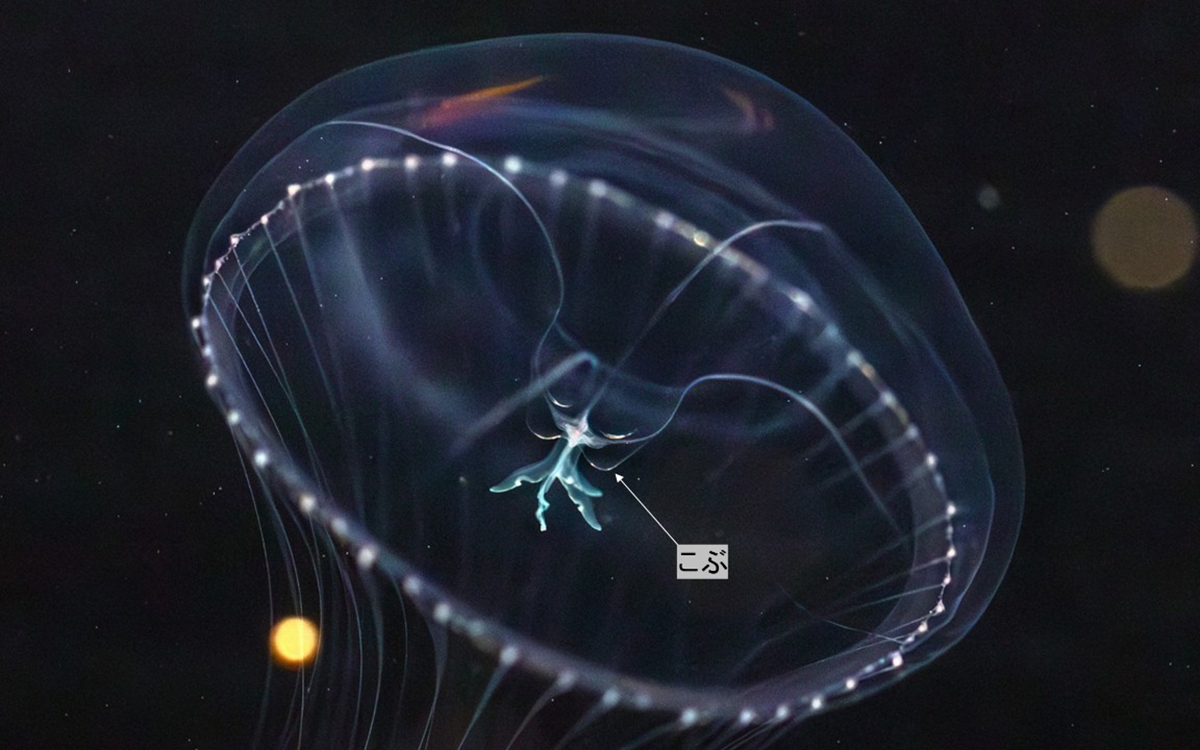
If you look closely, you might be able to see a bump. Please pay attention to the bump!
[Tokyo Sea Life Park]