The "Planktonic Organisms" section of the "Tokyo Sea" area Tokyo Sea Life Park exhibits planktonic organisms such as jellyfish. Planktonic organisms are creatures that do not have the ability to swim against waves or currents on their own, and instead drift through the sea.
Jellyfish are very attractive and popular creatures because of their graceful appearance, but they are difficult to collect because they drift in the ocean currents. Therefore, I try to look carefully whenever I visit fishing ports or "Nishi Nagisa" in front of aquariums during business trips, so as not to miss the rare opportunity to collect jellyfish, but I don't often see healthy ones.
So, sometimes we head out to sea in a boat in search of jellyfish. Sunny, calm days are perfect for jellyfish collecting because it's easier to spot jellyfish floating just below the surface. We look for places where jellyfish might be, observing the currents and the water's surface.
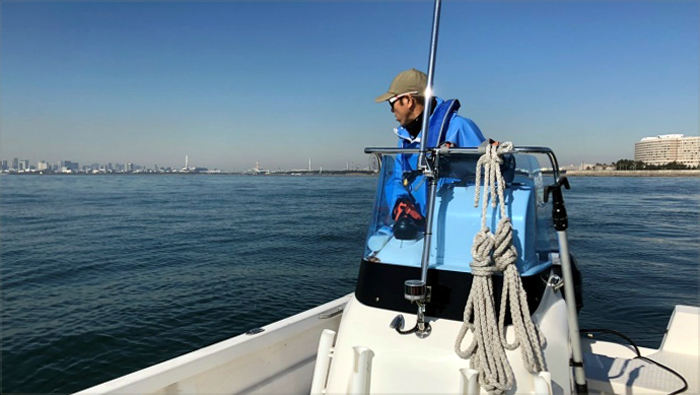
We searched for jellyfish, stopping the boat frequently.I have the impression that jellyfish are more often found in groups than individually. In particular, many jellyfish tend to gather in areas where currents meet, known as "tidal fronts," making them prime spots for jellyfish hunting. On this particular day, I was lucky enough to spot many moon Moon Jellyfish drifting by.
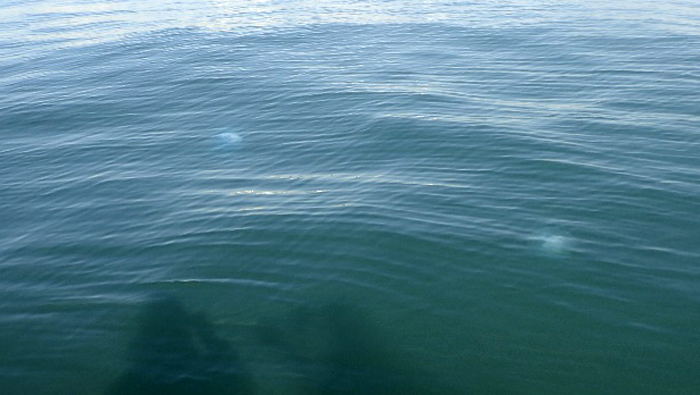
If the sea is calm, you can see jellyfish underwater.It's important to scoop up jellyfish along with the seawater they come into contact with. This prevents damage to their delicate bodies and also prevents air bubbles from getting trapped inside their bells. If air bubbles get trapped inside, the jellyfish cannot expel them on its own, and that part of its body will dissolve.
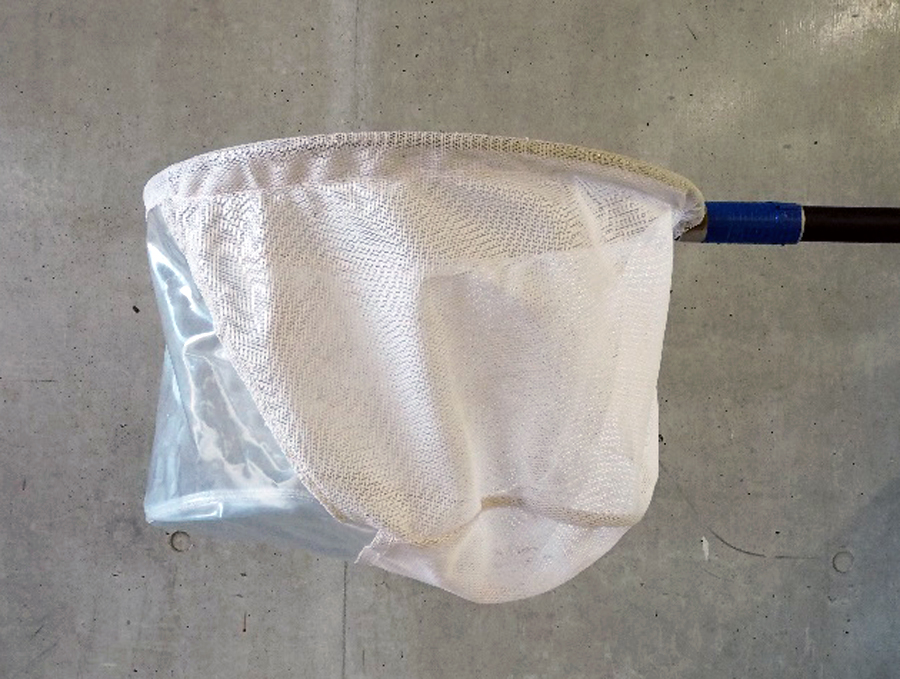
Therefore, when scooping them up, we use buckets or specially made nets. These nets are divided into a plastic section and a mesh section, making them a reliable partner for collecting jellyfish, as they can be easily scooped up along with the water.
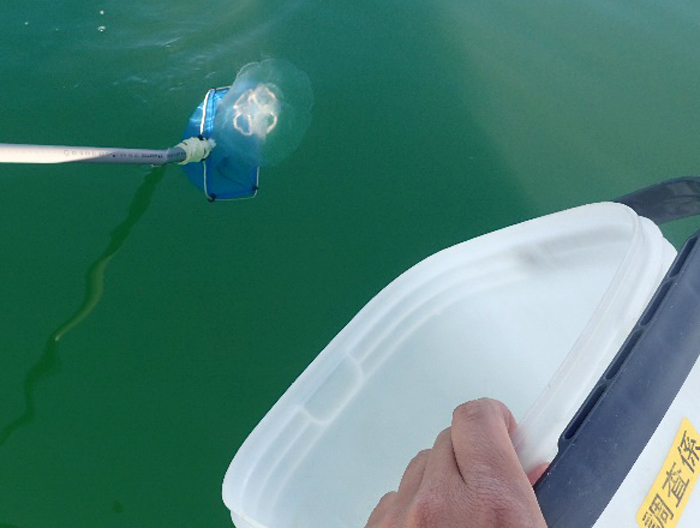 | |  |
Jellyfish are very delicate creatures.
Since it's an object, scoop it up carefully. | A net used for collecting jellyfish. It consists of a plastic part and a net part.
There is a chance that scooping them up with the water will damage the jellyfish.
Reduces the amount of work required. A custom-made product designed by our staff. |
However, even after going out to sea to search, it's not uncommon to go an entire day without finding any jellyfish. Jellyfish floating leisurely in a tank are calming creatures to behold, but on the other hand, their carefree lifestyle in the ocean can often be a challenge for the staff who collect them.
[Yusuke Ogawa, Research Officer, Tokyo Sea Life Park]
(March 13, 2020)