At Tokyo Sea Life Park, in addition to organisms collected by staff from the sea or purchased from suppliers, we also exhibit organisms that we have bred ourselves.
In the "West Coast of Canada" tank in the World Oceans area, we exhibit five species of fish in addition to invertebrates such as Strawberry Anemone and gooseneck barnacles. Four of the five species were bred at our aquarium.
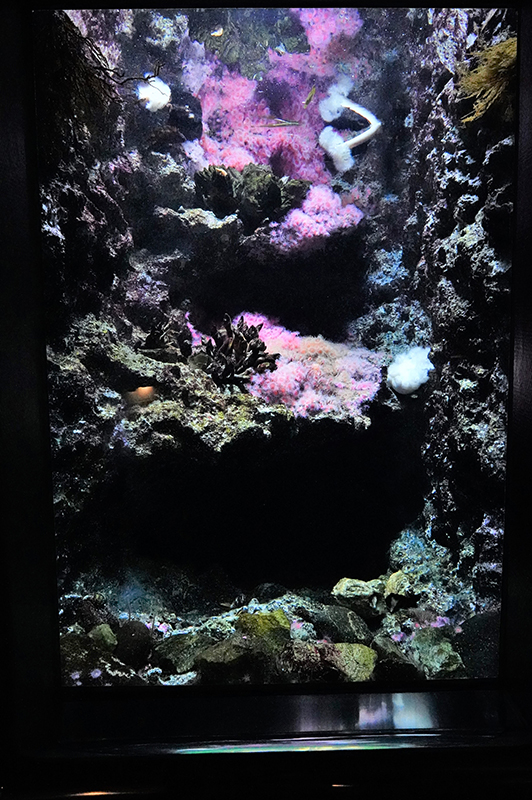
"West Coast of Canada" TankAmong them, the Grant's sculpin was on display, which was collected from the Canadian coast. However, their numbers have been declining in the area, and when staff went collecting specimens four years ago, they could only find one even after diving in the sea more than 10 times. Therefore, in order to breed the Grant's sculpin, we decided to temporarily move all of them to a reserve tank in the back and work on breeding them.
This time, we will mainly introduce how to raise juvenile fish, which is an important part of the breeding process.
First, let's talk about food. In the natural ocean, newly hatched eggs
larvae They grow by feeding on various small plankton, but at our park we use three types of plankton that we can provide relatively consistently.
In order of increasing size, the three are: "sea rotifers," "brine shrimp (Artemia) larvae," and "mysid shrimp." These three species are used interchangeably depending on the size of the larvae's mouths. The Grant's sculpin I mentioned earlier was raised on brine shrimp (Artemia) larvae from immediately after hatching.
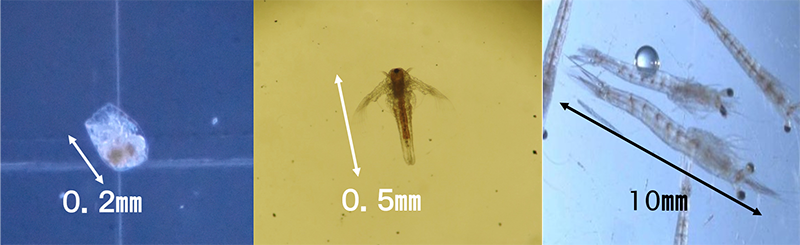
Left: A rotifer (Sodium rotiferum), center: a brine shrimp (Artemia) larva, right: a type of mysid shrimp (Mysidius spp.)Next, let's talk about the rearing containers. We select rearing containers for larvae according to the type of fish we are raising, but this time I will introduce the rearing containers shown in the photo below, which we used to raise Grant's Sculpins.
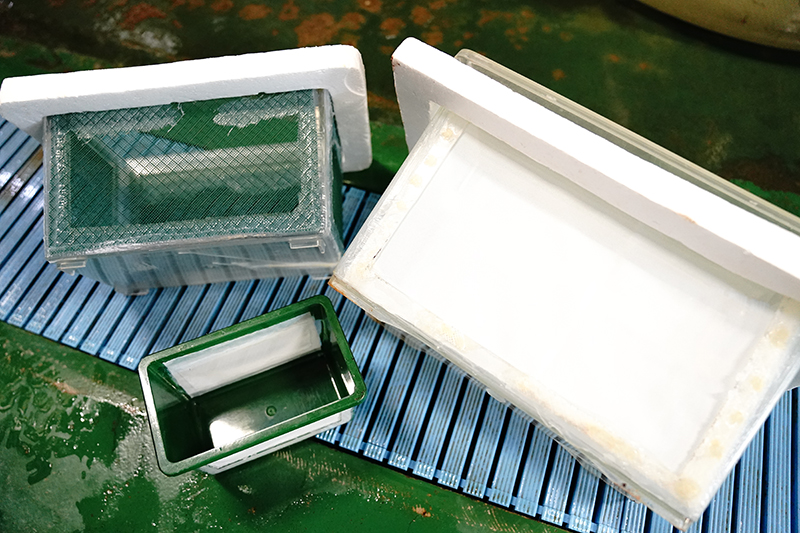 | 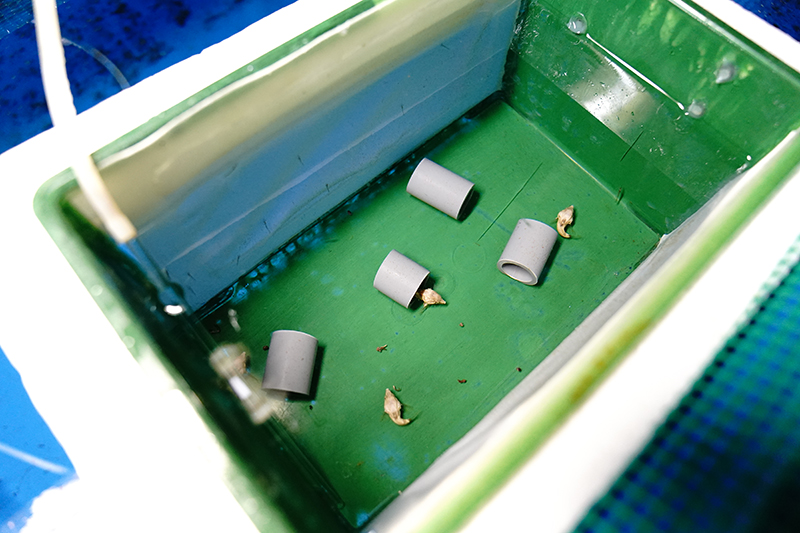 |
| Container for rearing larvae | It appears they are raising a Grant's Sculpin. |
These breeding containers are made by modifying commercially available plastic cases and attaching cloth or netting to the sides. By floating these containers in the aquarium and using an air pump to circulate water from the aquarium or by performing aeration, the same water temperature and quality as the aquarium can be maintained for raising the fish. Furthermore, by using netting with a mesh size that prevents food from escaping, a constant supply of food is created, allowing the fry to eat whenever they want. However, food scraps and feces accumulate, making the containers dirty and prone to disease, so daily cleaning is essential. Incidentally, creating these breeding containers is also the job of the staff. Once the fish have grown large enough, they make their debut in the display tanks.
Information Desk showcases species that have been successfully bred and received the Breeding Award (a system that recognizes the first successful breeding in Japan, now called the First Breeding Certification). Several species that have received the Breeding Award are also on display in the exhibit tanks in each area, so please try to find them.
[Tokyo Sea Life Park]
(February 24, 2023)