

A seashell galore!? -- Unveiling the secrets of the Kumasaka clam
April 10, 2026
When you think of the deep sea, what kinds of creatures come to mind?
A little while ago, in February of this year (2026), Tokyo Sea Life Park held a deep-sea event called "Deep of Wonder - Mysterious Creatures of the Deep Sea."
During the event, we displayed specimens of deep-sea creatures at the counter of Information Desk for everyone to observe. Among them, we would like to introduce shells, which attracted the interest of many visitors, who described them as "interesting" and "mysterious."
At first glance, it may just look like a fallen seashell, but this is actually a type of gastropod called "Kumasakagai."
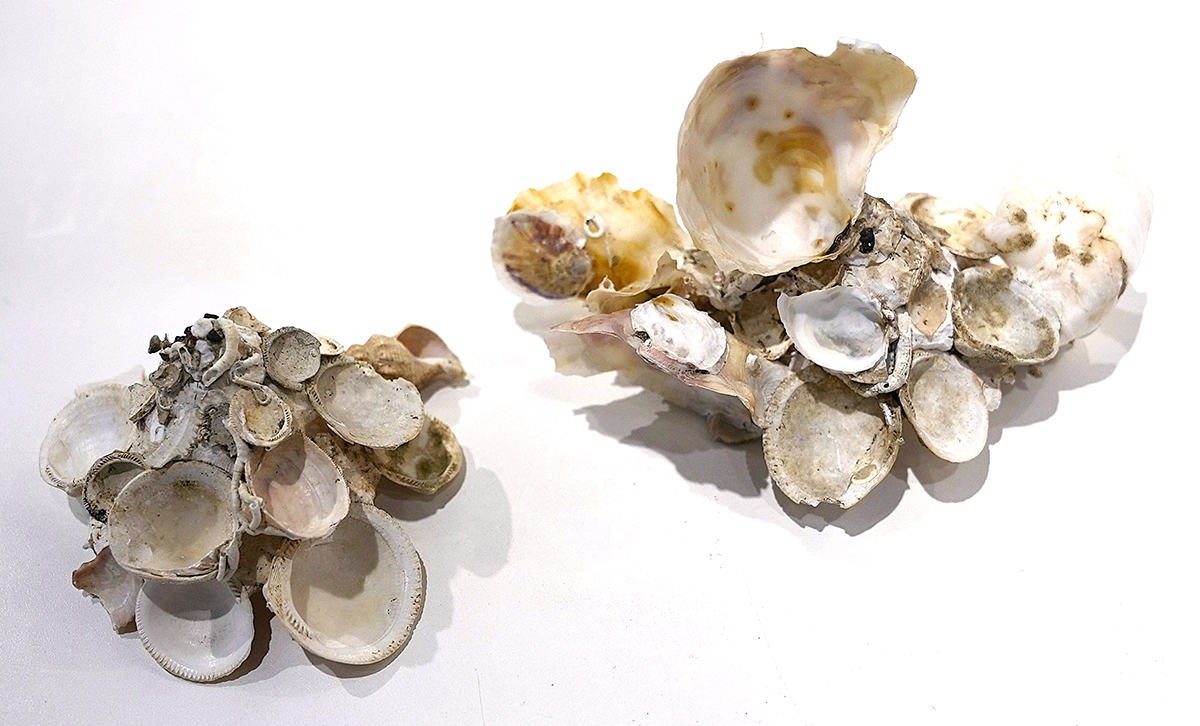
The name "Kumasaka" is said to have been derived from Kumasaka Chōhan, a notorious thief from the Heian period who was said to have worn seven tools, due to his appearance, which was adorned with many seashells and other materials.
The mussel clam uses secretions from its soft body to attach other shells or pebbles to its own shell.
There are several theories as to why the shells are attached in this way: some suggest it's to reinforce the thin shell of the clam, others that it's to conceal itself, and still others that since bivalves attach their shells with the inside facing upwards, it might make them appear dead, thus making them less likely to be targeted by predators. However, the actual reason remains unknown. Upon closer inspection of the specimens, one can see that the way the shells are attached is quite artistic.
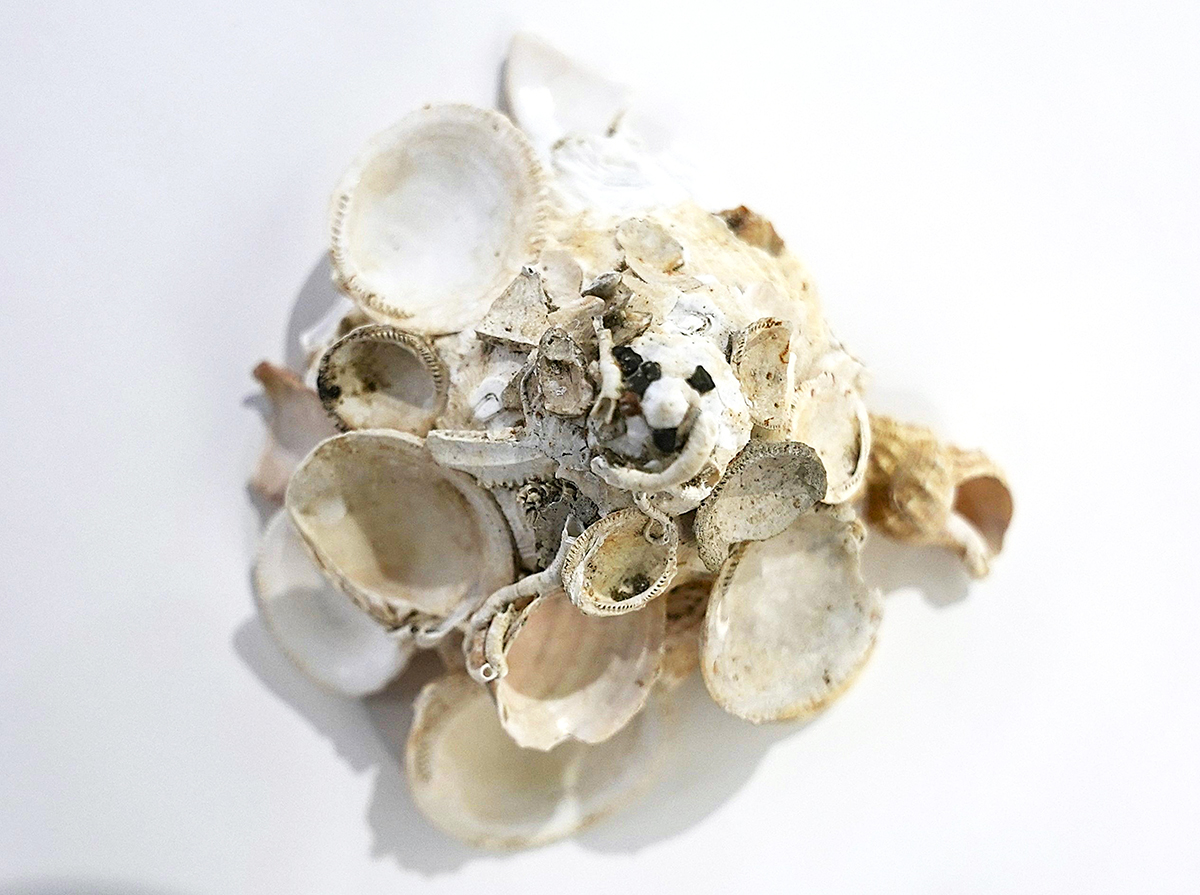
Looking at it from the underside, you can clearly see where the shell of the scallop ends and the rest begins. Also, since it is a type of gastropod, it has an aperture (a hole through which the soft body enters and exits).
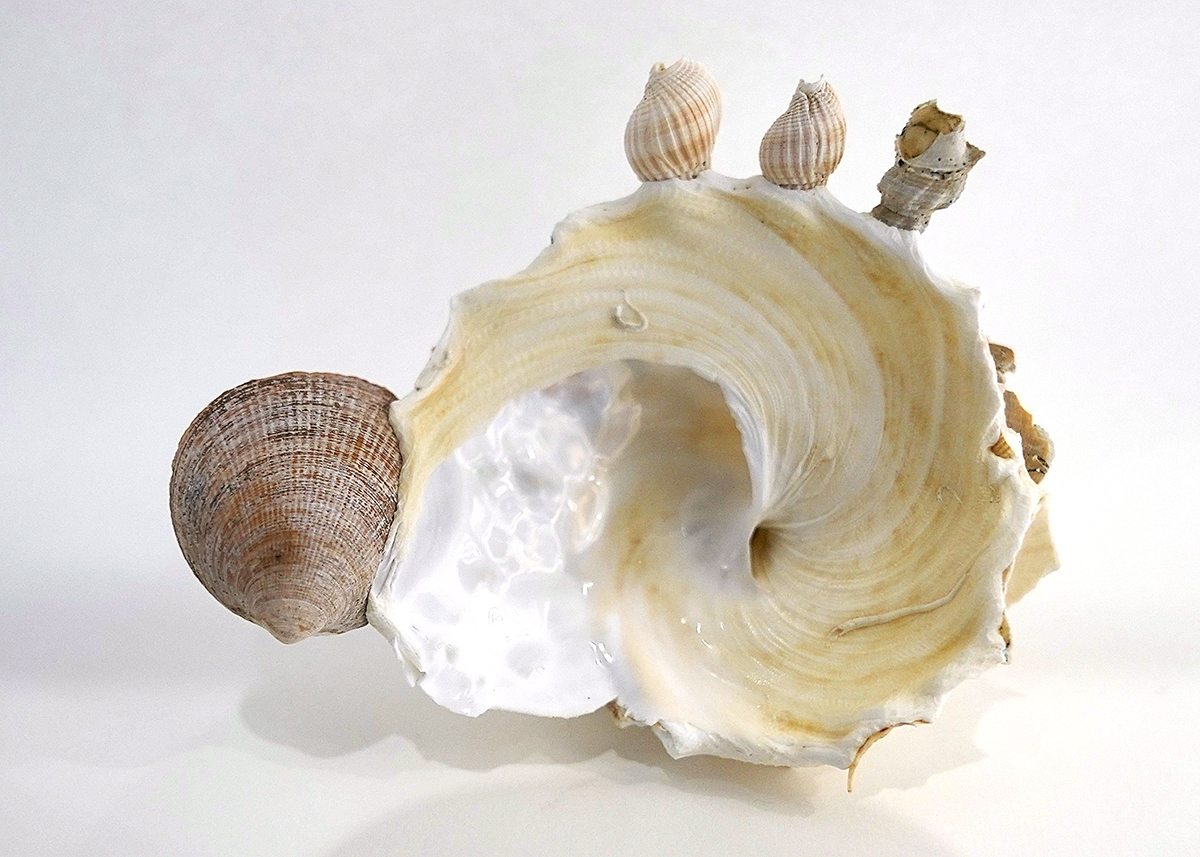
There are specimens in Information Desk at Tokyo Sea Life Park, so please feel free to ask a staff member if you would like to see them.
In the "Deep Sea Creatures 1" tank, live specimens are also on display.
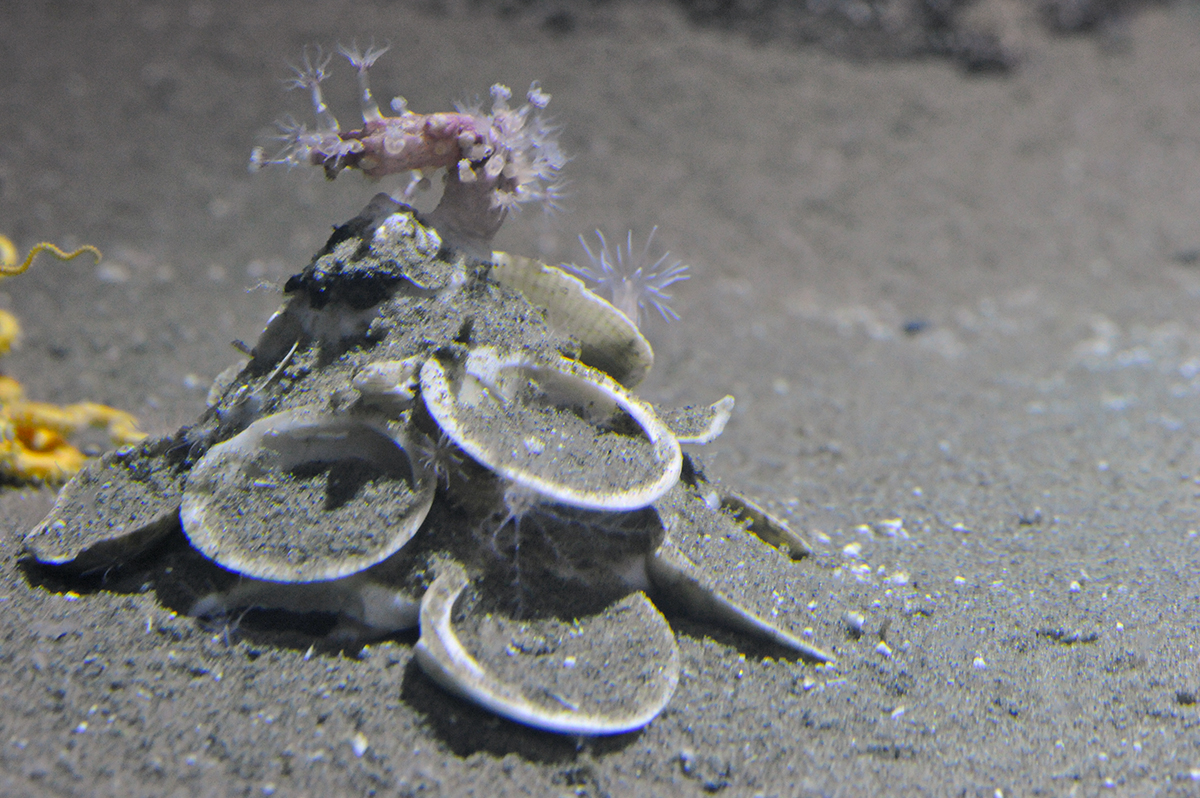
Take a close look at the sand in the aquarium. You should be able to see seashells clinging to it. Be sure to look for the mussel clams in your aquarium!
[Sophie Kato, Education and Outreach Tokyo Sea Life Park]