

Zoo Stock Species and the Red List
Zoo Stock Species and the Red List
Zoo Stock
This indicates that the species is included in the Second Zoo Stock Plan, which was formulated by the Tokyo Metropolitan Government in 2018. The plan sets goals for the next 10 years in three areas: "species conservation," "contribution to wildlife conservation," and "environmental education and conservation awareness." 124 animal species are included.
What is the Red List?
Based on scientific research, this is a list of wildlife classified by rank (category) indicating the degree of risk of extinction.
Livng Things Encyclopedia shows the categories (mainland and islands) assessed by the IUCN (International Union for Conservation of Nature) at the global level, the Ministry of the Environment for Japan, and the Tokyo Metropolitan Government for Tokyo.
The higher the category in each table, the higher the risk of extinction, and CR, EN, and VU are the three categories known as "endangered species." In Tokyo, species that are not at the NT (near threatened) level but are relatively rare are considered "species of concern."
|
IUCN categories |
|
|---|---|
|
EX |
extinction |
|
EW |
Extinction in the wild |
|
CR+EN |
— |
|
CR |
Serious crisis |
|
EN |
crisis |
|
VU |
emergency |
|
NT |
Near Threatened |
|
LC・○ |
Low Concern |
|
DD |
Data shortage |
|
LP |
— |
|
Japan (Ministry of the Environment) Category |
|
|---|---|
|
EX |
extinction |
|
EW |
Extinction in the wild |
|
CR+EN |
Endangered species |
|
CR |
Critically Endangered |
|
EN |
Endangered species |
|
VU |
Endangered species |
|
NT |
Near Threatened |
|
LC・○ |
— |
|
DD |
Lack of information |
|
LP |
Endangered |
|
Tokyo Category |
|
|---|---|
|
EX |
extinction |
|
EW |
Extinction in the wild |
|
CR+EN |
Endangered species |
|
CR |
Critically Endangered |
|
EN |
Endangered species |
|
VU |
Endangered species |
|
NT |
Near Threatened |
|
LC・○ |
Unranked |
|
DD |
Lack of information |
|
LP |
Endangered |
Creatures at Inokashira Park Zoo
Creatures at Inokashira Park Zoo
Bitterling
Bitterling
Acheilognathus typus
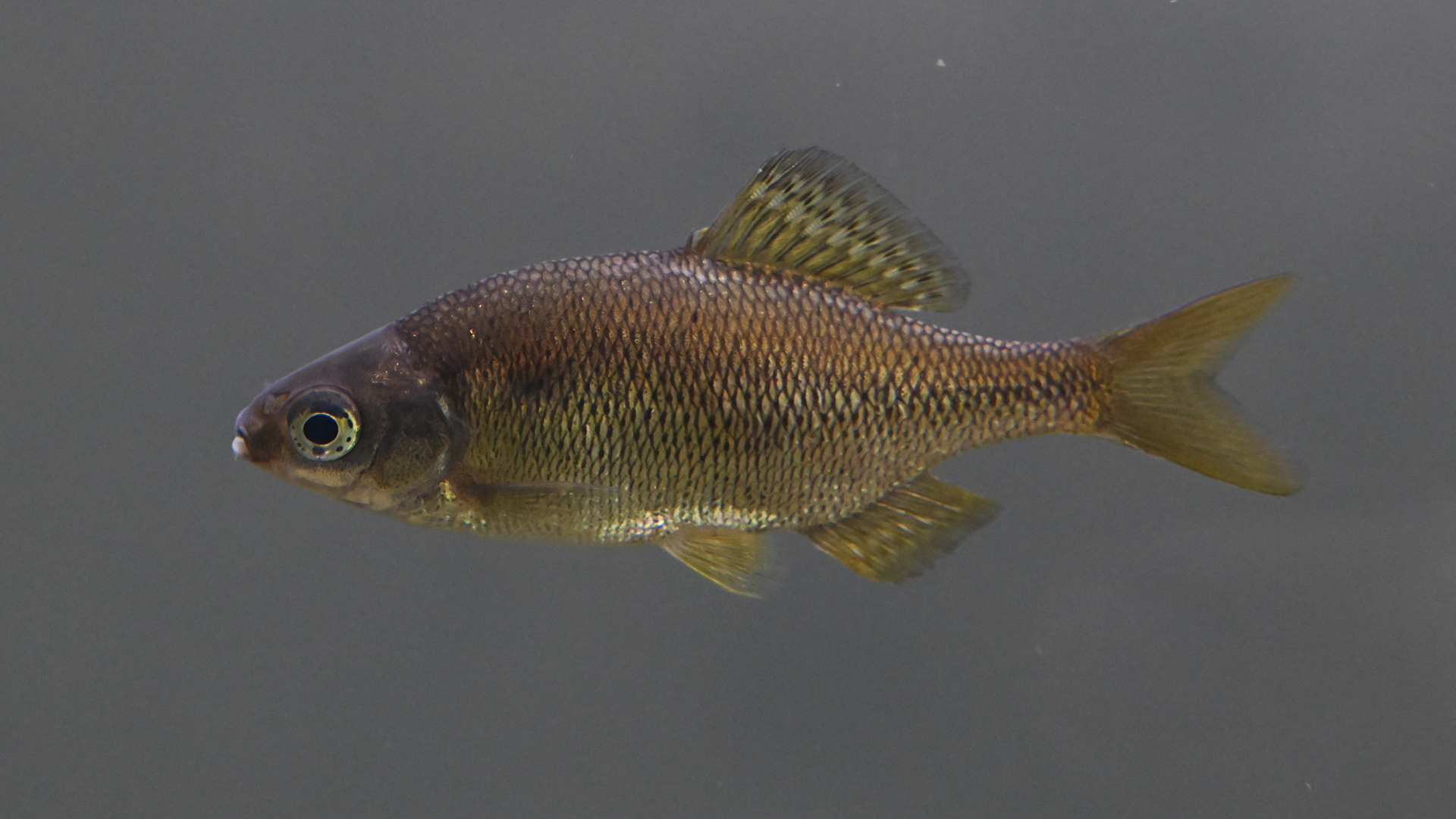
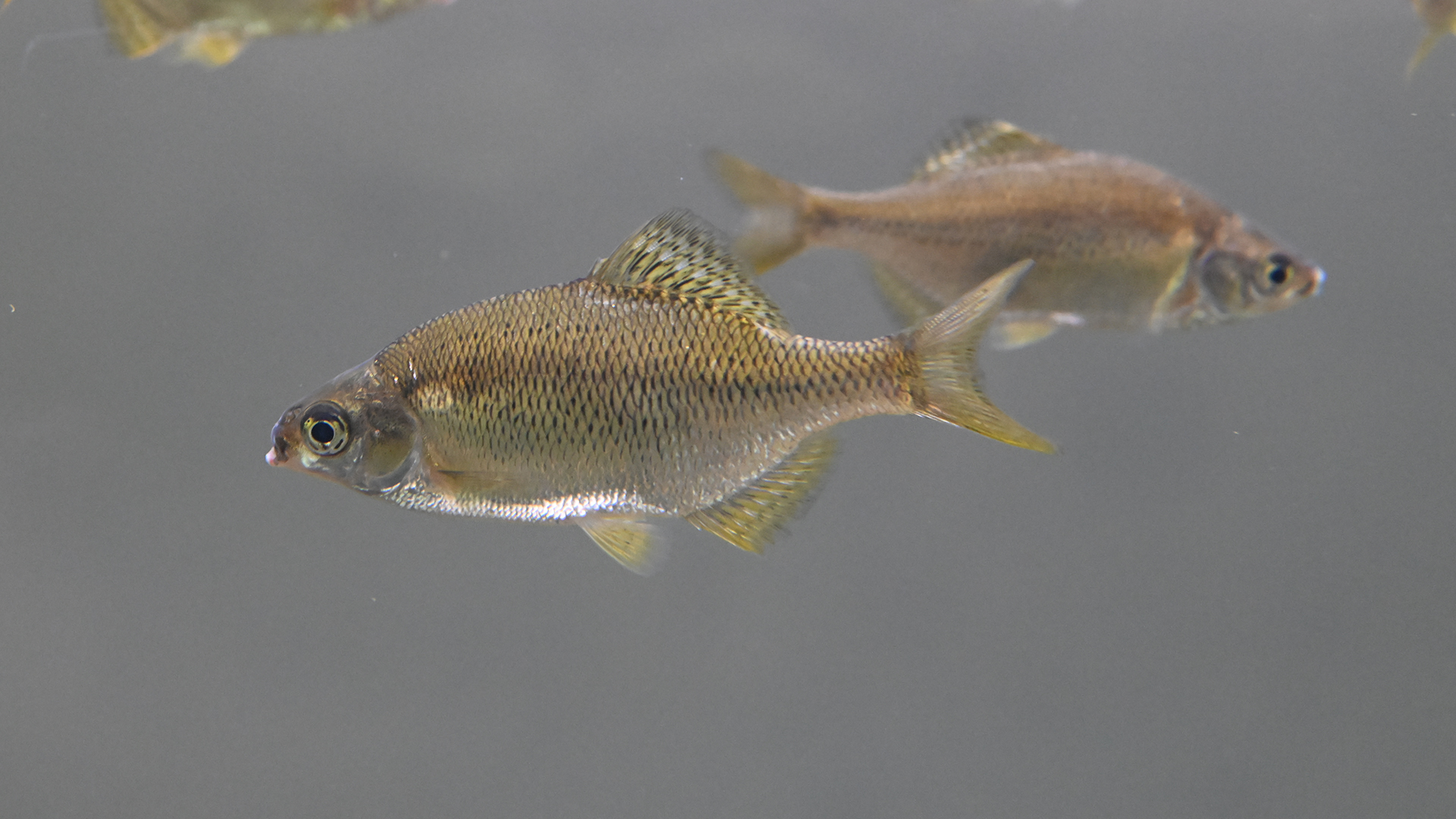
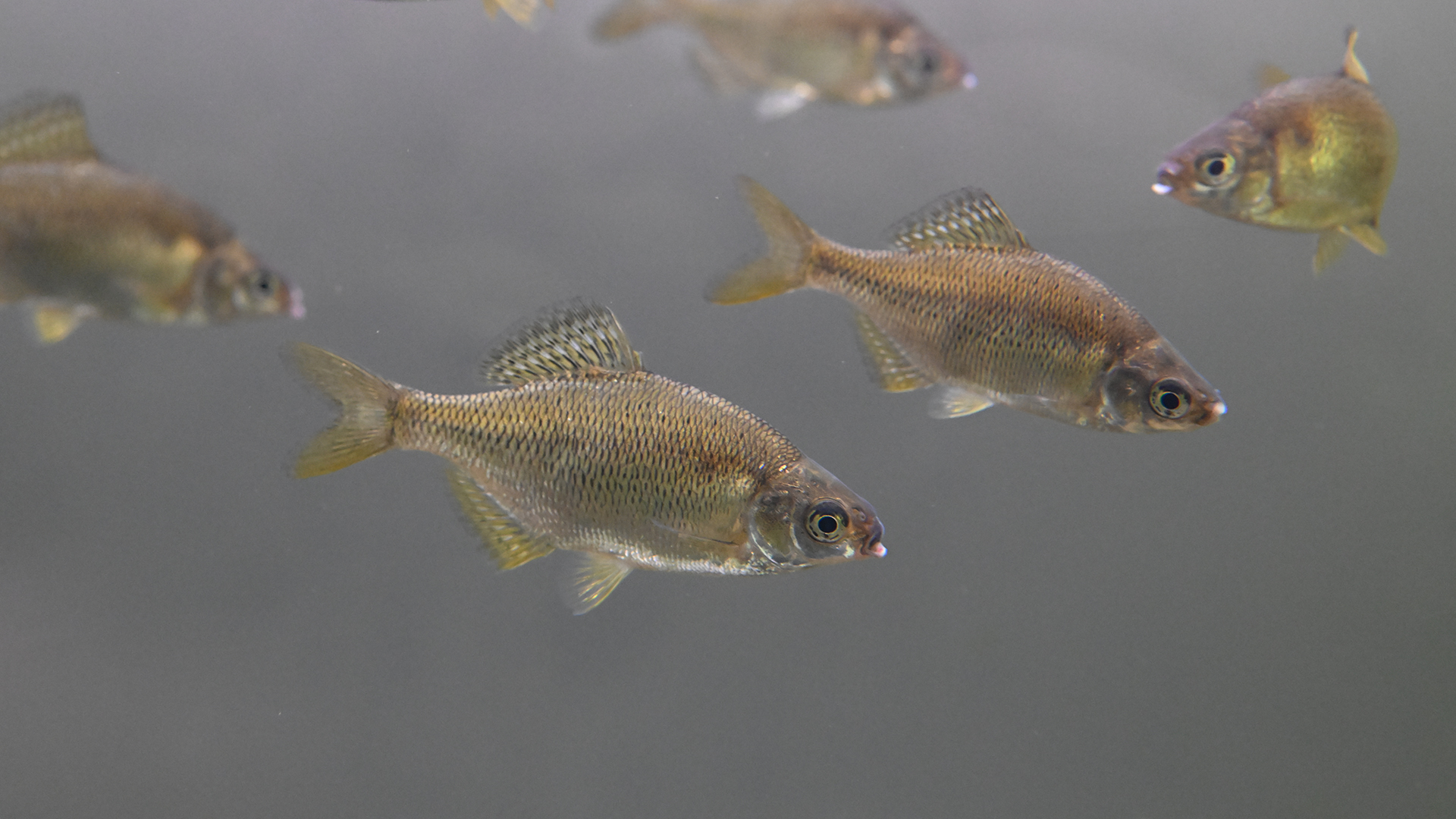
Of all the bitterlings that live only in Japan, this one is said to have the smallest and finest scales. It was named "Bitterling" (peaceful bitterling) because its shiny silver scales resemble coins (zeni). It once lived all over Japan, but was eaten by invasive species such as largemouth bass brought in by humans, causing its numbers to decline. As a result, conservation efforts are being carried out in various regions.
| classification | Actinopterygii, Cypriniformes, Cyprinidae |
|---|---|
| English name | Small Scale Bitterling |
| distribution | Japan |
| Residence | Lakes, swamps, waterways, and other areas with slow currents |
| Size |
Total length: 4-12cm
|
| food | Algae on the bottom of the water |
| Red List |
IUCN: VU (Very)
Japan: CR (Critically Endangered) Tokyo: EX (Extinct) |
Using shellfish to lay eggs
During the breeding season, Bitterling bitterlings will be seen searching for and observing bivalves. Once they have selected a bivalve, they will extend a thin tube called an ovipositor into it and lay their eggs. This is a common spawning method among bitterling species. Eggs laid inside shellfish are less likely to be eaten by fish, and more offspring can survive.