

Bathing regardless of the season?! Nae Capybara
March 29, 2026
Capybara live in forests and grasslands near bodies of water across South America, from eastern Panama to eastern Argentina. These bodies of water serve as places where they can forage for aquatic plants and other food, bathe to cool off, and sometimes even as refuge from predators.
Furthermore, Capybara have the habit of defecating in water. This is said to be a way to hide their scent from predators.
Nae (male, 3 years old), Capybara kept at Inokashira Park Zoo, also uses the large pool in his enclosure as a place to defecate. If you look into the pool in the afternoon, you'll surely find dark green droppings floating around. Even on cold winter days, he always defecates in the pool.
However, Nae doesn't seem to like getting into the cold water either. She only dips her toes in the water to "do her business" and quickly gets out of the pool. "Why bother getting into cold water?" a human might think, but for Capybara, it's probably an important instinct for self-preservation.
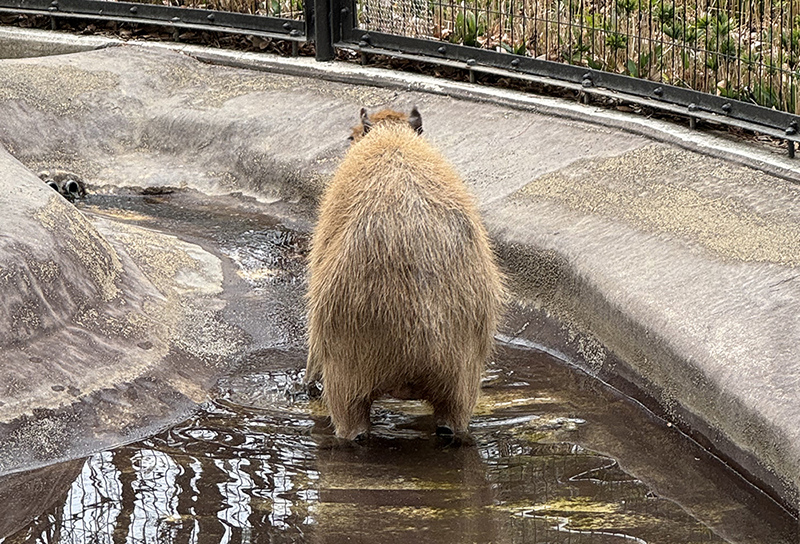
Even in winter, on the occasional warm day, Nae will dive into the pool. Even though it's warm, it's still winter, so seeing Capybara dripping with water might make you think it's cold. You might think that staying wet would make its body cold, but Capybara fur is stiff and coarse like a scrubbing brush, so it hardly absorbs any water.
Furthermore, their fur density is so low that their skin is visible, and when they come out of the water, they shake their bodies vigorously. If they warm themselves in the warm sun or by the heater provided in their shed, they dry in no time.
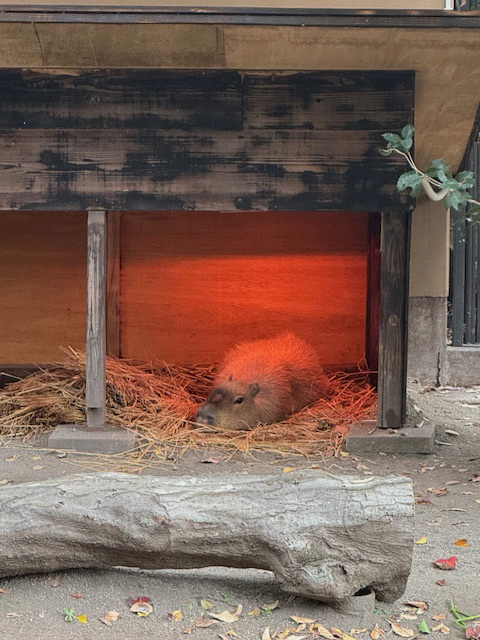
Spring is almost here again. For Capybara, whose habitat is the watersides of warm South America, this warmer season is a welcome one. Please take the time to observe their behavior closely.
[Inokashira Park Zoo]
(March 29, 2026)