At Inokashira Park Zoo,
the exhibit of Capybara had been suspended since November 2023 due to the death of one of the exhibited individuals. Since then, we have often heard visitors saying, "I want to see Capybara."
Capybara belong to the same Domestic Guinea Pig family as the guinea pigs and Patagonian Mara that are kept at the animal park. Even within Domestic Guinea Pig family, their ecology and habitats are diverse, and the animal park aims to create exhibits that make it easy to understand the characteristics of each species by comparing them. Therefore, we have been making arrangements to introduce a new individual. As a result, "Nae" (3 years old, male) will be coming to the park from Nasu Animal Kingdom.
To welcome Nae, we added logs for her to gnaw on and wear down her teeth, repaired the rain-shelter roof, added stairs to the pool because we heard she didn't have many opportunities to go into the deep pool at her previous zoo, and improved the playground to make it a little more comfortable for her. Then, on June 2, 2025,
Nae came to the Cultural Zoo from Nasu Animal Kingdom.
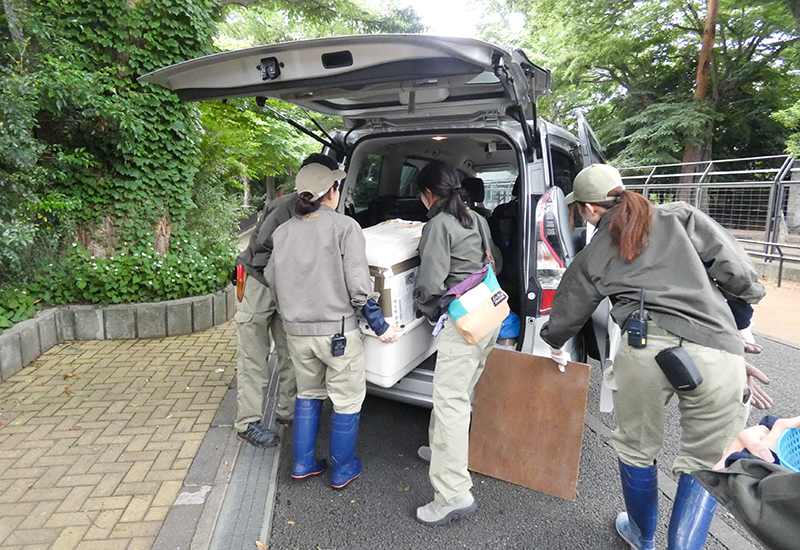
Unload the delivered shipping boxes from the vehicle.Nae seems to have a gentle personality, and she remained very calm throughout the 3.5-hour car ride, not causing any trouble in the transport crate. When I saw Nae come out of the transport crate into her sleeping area, I was struck by how small she was. Capybara are said to weigh between 35 and 60 kg. When we weighed her on the day of arrival, Nae was 35 kg, so she is indeed on the smaller side.
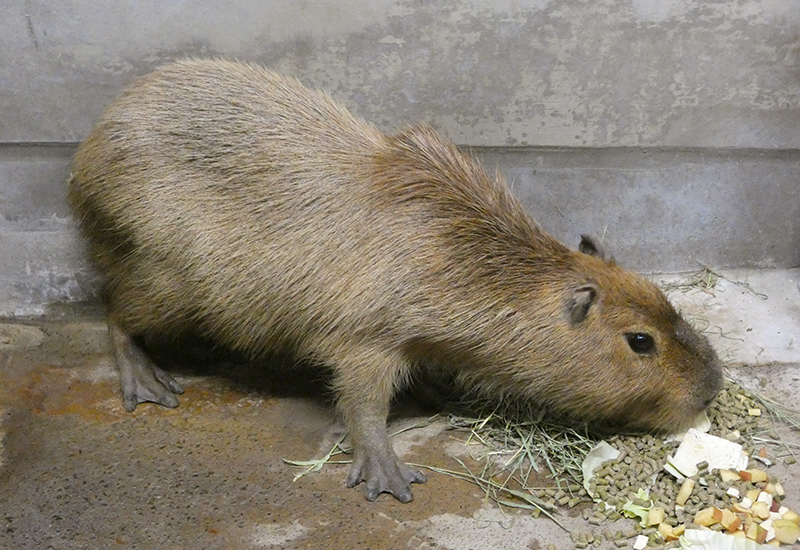
Seedlings immediately after being deliveredNae spent a week in her sleeping quarters for quarantine (health check), and was released into the exercise area for the first time on June 9th, a day the zoo was closed (
see here for photos of her first time in the exercise area). She seemed wary, but first walked around to check out every corner of the exercise area, and then spent the day exploring, submerging herself completely in the pool and rubbing the scent glands on her nose, known as "morillo" and specific to males, against the fence to leave her scent. As Nae's behavior gradually calmed down, she was made available to the public the following day.
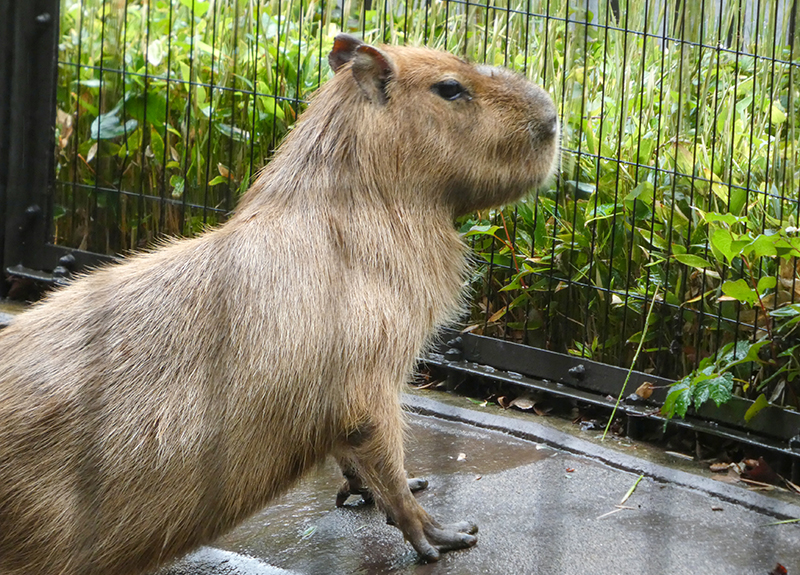
Observe your surroundings.It's been over a month since she arrived at the zoo, and she seems to have gotten completely used to the exercise area. Capybara "mud bathe" to lower their body temperature and protect their skin from parasites, and Nae has been doing the same under the roof. She's also been in the pool, and we've seen her exhibit the typical Capybara behavior of defecating in the water.
Please come to Inokashira Park Zoo to meet Nae Capybara.
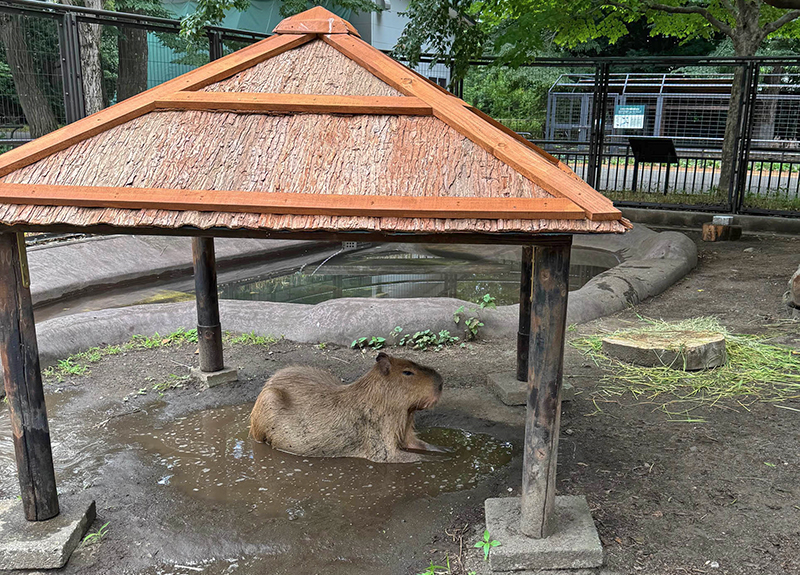
Taking a mud bath under the roof
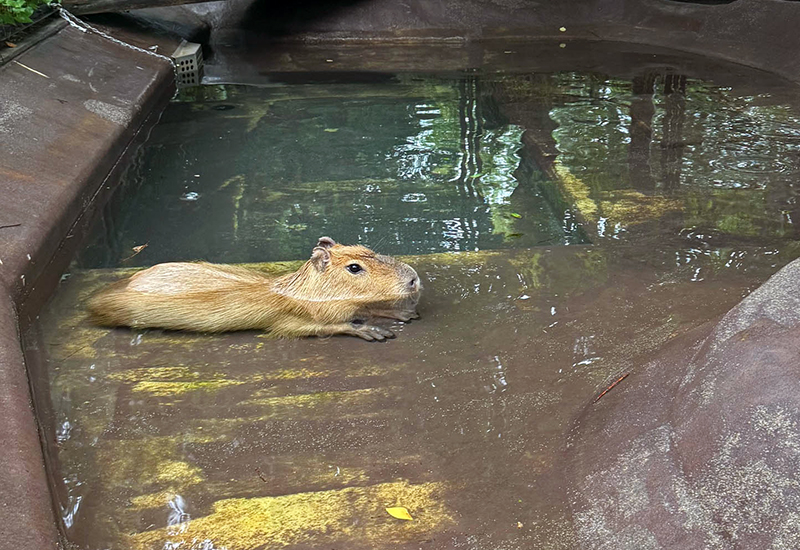
Don't go into the pool.
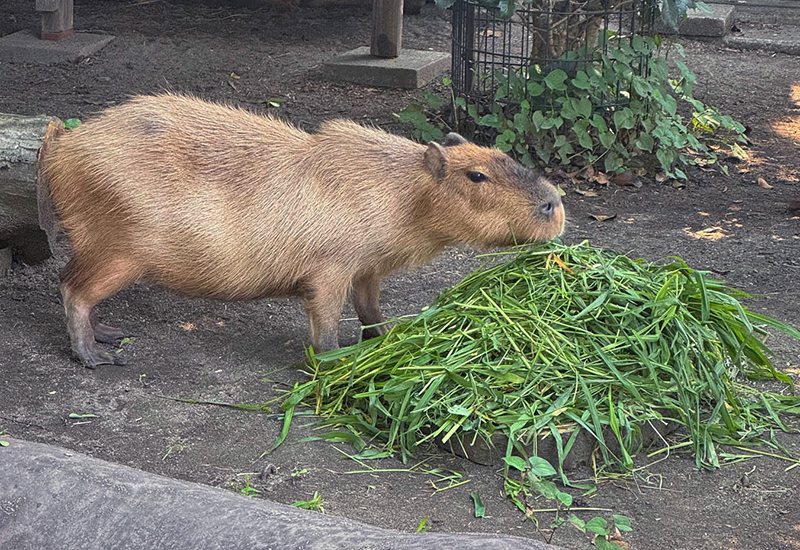
They are also eating plenty of fresh grass.[Inokashira Park Zoo]
(August 3, 2025)