

Zoo Stock Species and the Red List
Zoo Stock Species and the Red List
Zoo Stock
This indicates that the species is included in the Second Zoo Stock Plan, which was formulated by the Tokyo Metropolitan Government in 2018. The plan sets goals for the next 10 years in three areas: "species conservation," "contribution to wildlife conservation," and "environmental education and conservation awareness." 124 animal species are included.
What is the Red List?
Based on scientific research, this is a list of wildlife classified by rank (category) indicating the degree of risk of extinction.
Livng Things Encyclopedia shows the categories (mainland and islands) assessed by the IUCN (International Union for Conservation of Nature) at the global level, the Ministry of the Environment for Japan, and the Tokyo Metropolitan Government for Tokyo.
The higher the category in each table, the higher the risk of extinction, and CR, EN, and VU are the three categories known as "endangered species." In Tokyo, species that are not at the NT (near threatened) level but are relatively rare are considered "species of concern."
|
IUCN categories |
|
|---|---|
|
EX |
extinction |
|
EW |
Extinction in the wild |
|
CR+EN |
— |
|
CR |
Serious crisis |
|
EN |
crisis |
|
VU |
emergency |
|
NT |
Near Threatened |
|
LC・○ |
Low Concern |
|
DD |
Data shortage |
|
LP |
— |
|
Japan (Ministry of the Environment) Category |
|
|---|---|
|
EX |
extinction |
|
EW |
Extinction in the wild |
|
CR+EN |
Endangered species |
|
CR |
Critically Endangered |
|
EN |
Endangered species |
|
VU |
Endangered species |
|
NT |
Near Threatened |
|
LC・○ |
— |
|
DD |
Lack of information |
|
LP |
Endangered |
|
Tokyo Category |
|
|---|---|
|
EX |
extinction |
|
EW |
Extinction in the wild |
|
CR+EN |
Endangered species |
|
CR |
Critically Endangered |
|
EN |
Endangered species |
|
VU |
Endangered species |
|
NT |
Near Threatened |
|
LC・○ |
Unranked |
|
DD |
Lack of information |
|
LP |
Endangered |
Creatures at Tokyo Sea Life Park
Creatures at Tokyo Sea Life Park
Bora
Bora
Mugil cephalus cephalus
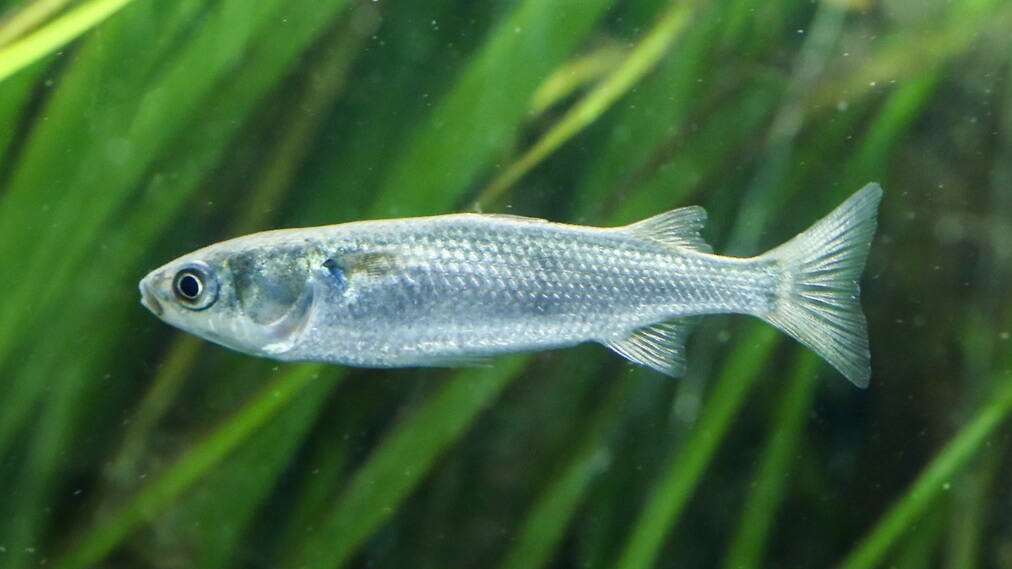
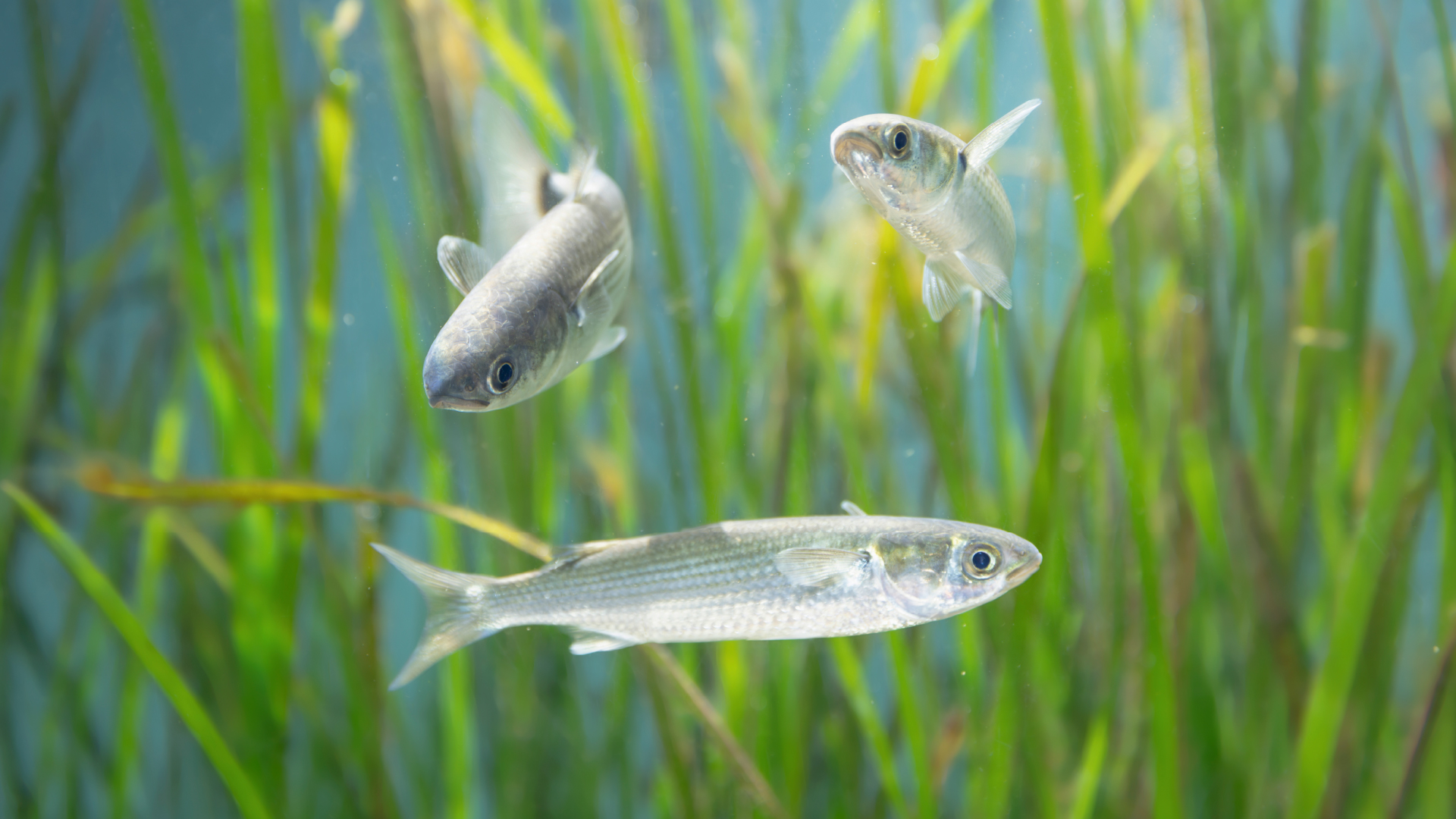
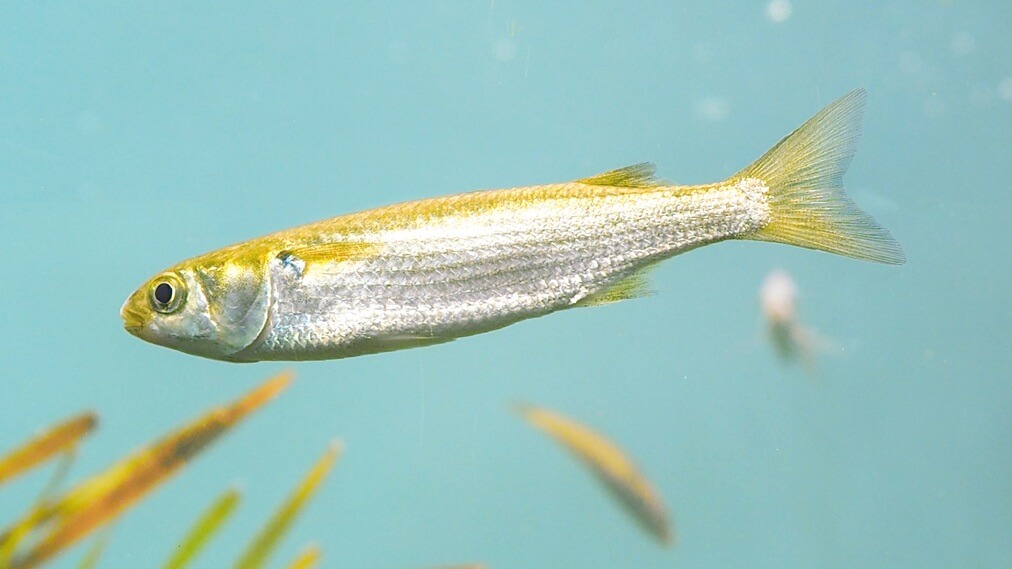
If you see fish leaping out of the water in shallow waters near the shore or in calm bays, they might be mullet. When they are young, they often swim up rivers in schools and are a common fish that can be seen even in urban areas. They grow to a large size of 80 cm in length and migrate offshore during the spawning season from autumn to winter. The roe produced during this period is highly prized as karasumi (cured mullet roe).
| classification | Actinopterygii, Mugiliformes, Mugilidae |
|---|---|
| English name | Flathead Grey Mullet |
| distribution | Temperate and tropical oceans around the world |
| Residence | Near the shore or in the bay |
| Size |
Total length: 80cm
|
| food | Organic matter and algae in the mud |
| Red List |
Unrated
|
Let's watch them eat!
When viewed from the front, a mullet's mouth is shaped like an inverted V. The inside of its lips is lined with tiny teeth, and its upper lip can be extended and retracted. By vigorously shaking its head from side to side and quickly extending and retracting its upper lip, it feeds on fine algae and organic matter found on seaweed, rock surfaces, and in the mud.
The fish whose name changes as it grows
Like yellowtail, the mullet is a "fish of promotion" whose name changes as it grows, progressing from "haku," "oboko," "ina," "bora," to "todo." The phrase "todono tsumari" (meaning "in the end") originated from the fact that the mullet eventually becomes a "todo."
Delicious delicacies
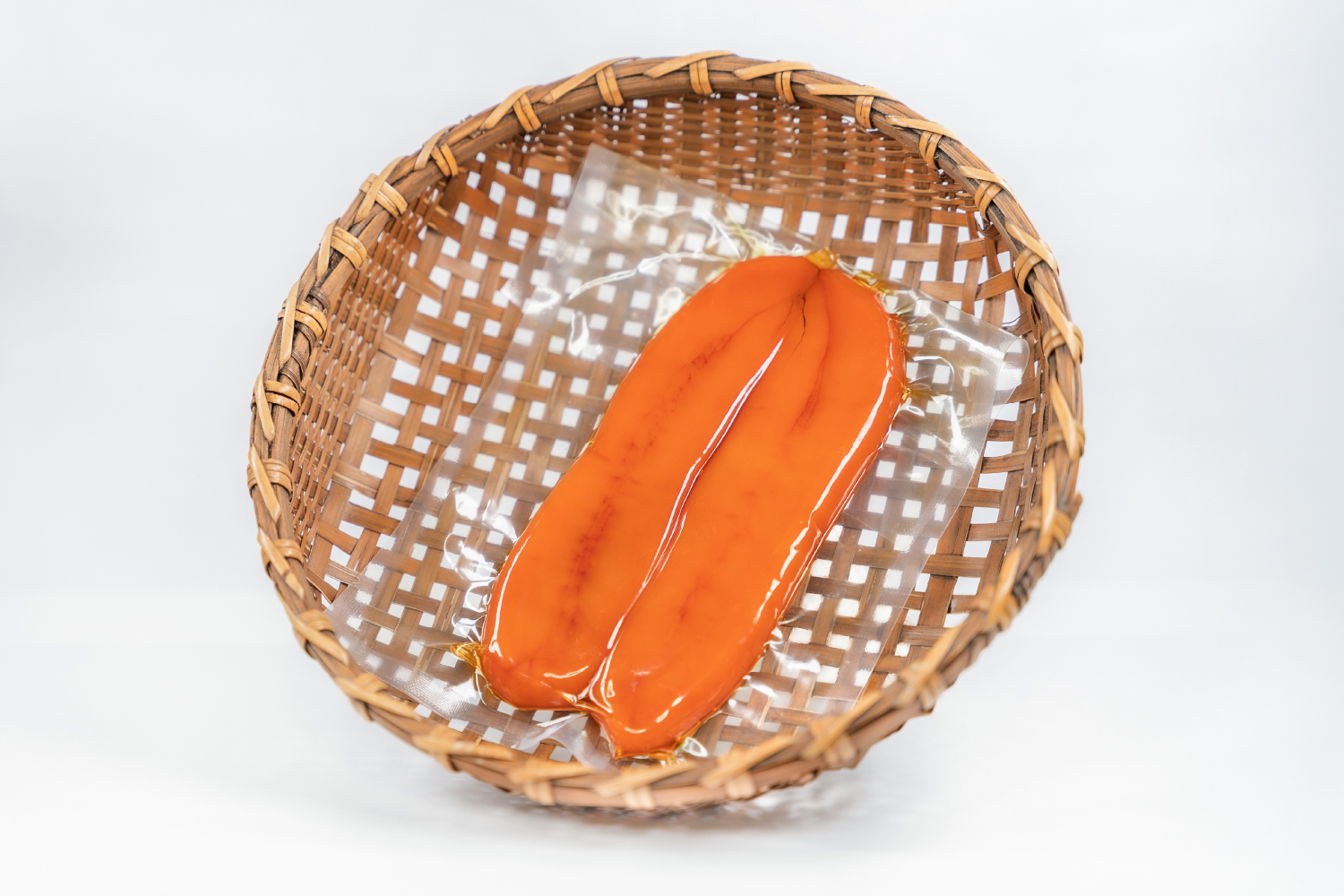
Karasumi, famous as one of Japan's three great delicacies, is made from the roe of the mullet. The roe is salted, then desalted, and finally dried in the sun. In Japan, it is mainly produced in Nagasaki, Kumamoto, and Miyazaki prefectures.