

Growth record of Southern Rockhopper Penguin
October 9, 2026
A Southern Southern Rockhopper Penguin chick that hatched at Tokyo Sea Life Park on May 3rd of this year (2026) is growing up healthy. We will be sharing its growth process from when the chick hatched until the end of September.
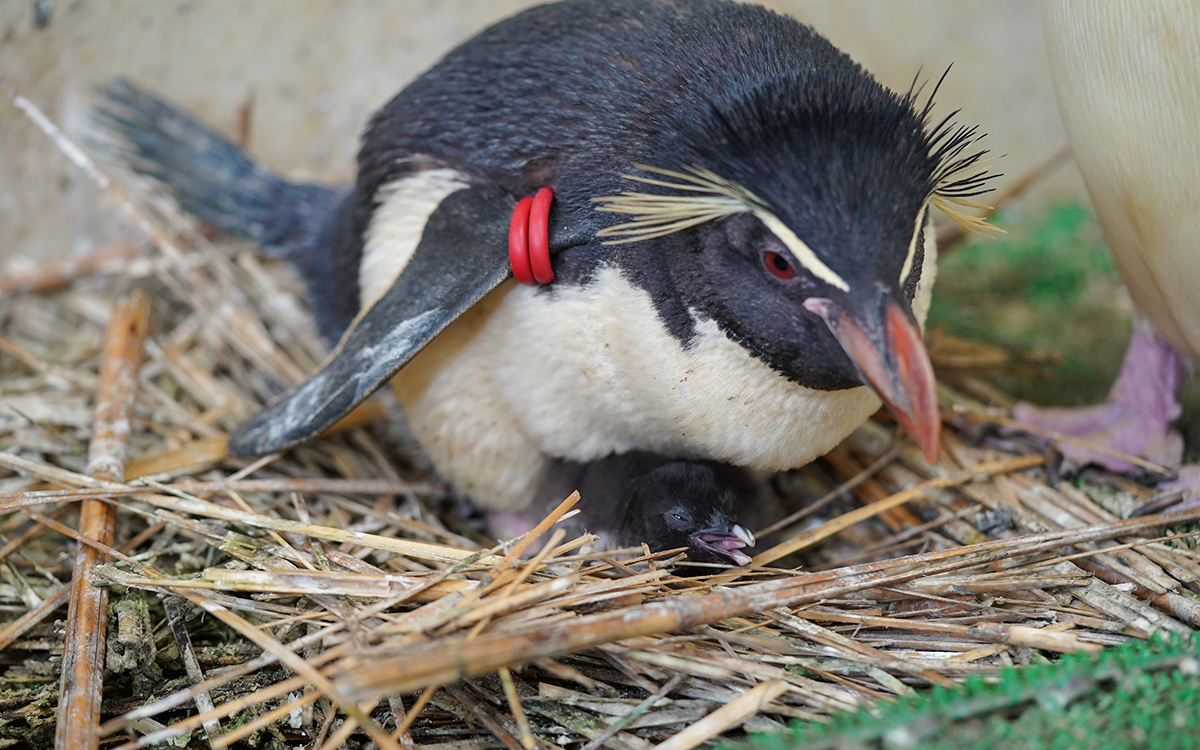
While adult Southern Southern Rockhopper Penguin weigh about 2 kg, newly hatched chicks weigh only 81.8 g. Unlike adult feathers, chicks are covered in soft, downy feathers.
Newly hatched chicks are basically always under their parents' bellies. If you listen carefully near the nest, you can occasionally hear them chirping towards their parents. This is a signal that they are hungry. In response to these chirps, the parents will regurgitate food they have already eaten to soften it, and then feed it directly to the chicks.
Seven days after hatching, the chicks sometimes emerged from under their parents' bellies, and after 30 days, their range of movement expanded even further, and they were seen hopping around far from the nest.
Forty days after hatching, the chicks weigh over 2 kg and are about the same size as adults. Also, their downy feathers gradually fall out and are replaced by the same water-repellent feathers (contour feathers) as adults.
55 days after hatching, the chicks were seen swimming in the pool. Around this time, the parents gradually stopped feeding the chicks in order to encourage them to feed themselves, and as a result, the chicks were sometimes seen chasing after their parents while chirping.

For young penguins after leaving the nest, a crucial step in their life with adult penguins is learning to feed themselves. In the wild, they catch fish in the water, but at our zoo, we feed them by placing fish on a tray. However, at first, they don't recognize the fish on the tray as food and therefore can't eat it. So, they need to practice eating the fish from the tray on their own.
The training begins with animal keeper placing fish into the chicks' mouths. As they become more accustomed to it, they will start eating from animal keeper' hands. Next, the fish are gradually moved closer to a tray, guiding them to eat directly from the tray. Through repeated practice in this manner, they will eventually be able to eat fish placed in the tray on their own. This year's chicks patiently practiced for about 40 days before they were able to eat fish from the tray.
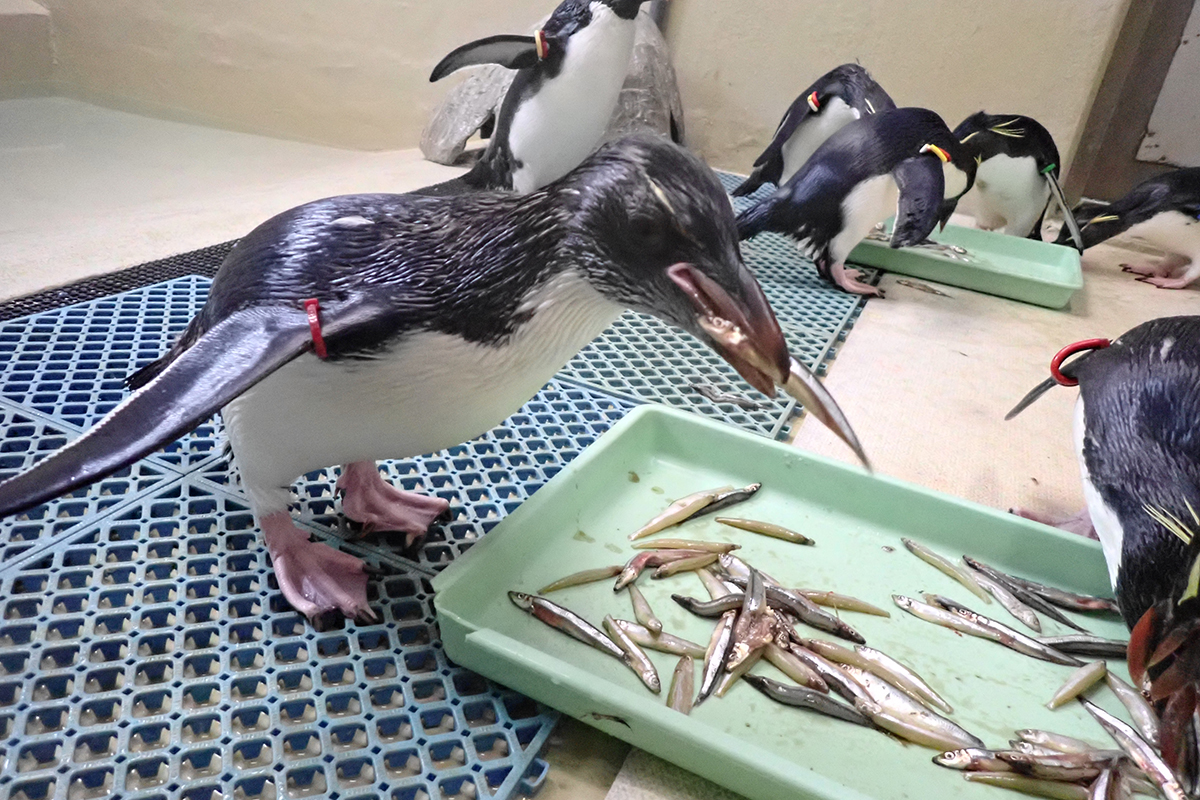
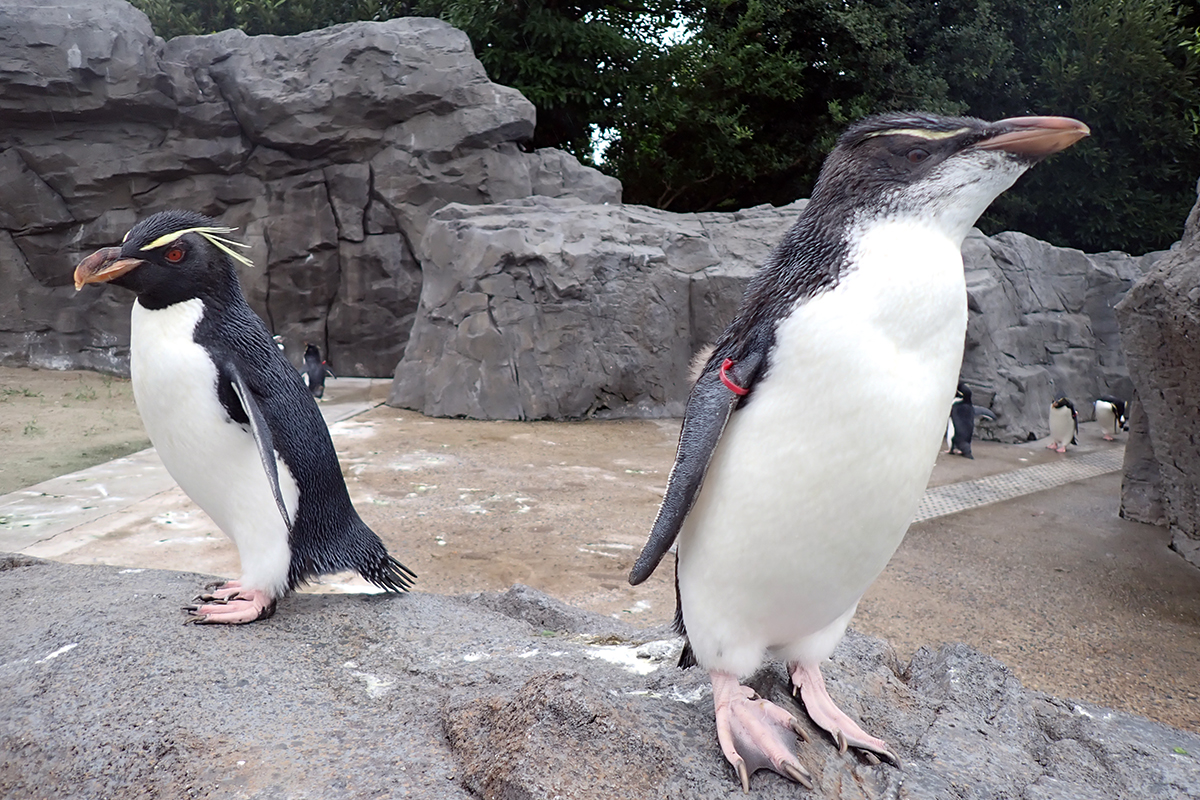
A key feature for identifying young Southern Rockhopper Penguins born this year is that the yellow ornamental feathers above their eyes, a characteristic of Southern Rockhopper Penguin are shorter than those of adults. You can only see the young birds in their juvenile form for about a year, until their new feathers grow in. Be sure to observe the young birds and compare them to the adults.
[Tokyo Sea Life Park]