

Zoo Stock Species and the Red List
Zoo Stock Species and the Red List
Zoo Stock
This indicates that the species is included in the Second Zoo Stock Plan, which was formulated by the Tokyo Metropolitan Government in 2018. The plan sets goals for the next 10 years in three areas: "species conservation," "contribution to wildlife conservation," and "environmental education and conservation awareness." 124 animal species are included.
What is the Red List?
Based on scientific research, this is a list of wildlife classified by rank (category) indicating the degree of risk of extinction.
Livng Things Encyclopedia shows the categories (mainland and islands) assessed by the IUCN (International Union for Conservation of Nature) at the global level, the Ministry of the Environment for Japan, and the Tokyo Metropolitan Government for Tokyo.
The higher the category in each table, the higher the risk of extinction, and CR, EN, and VU are the three categories known as "endangered species." In Tokyo, species that are not at the NT (near threatened) level but are relatively rare are considered "species of concern."
|
IUCN categories |
|
|---|---|
|
EX |
extinction |
|
EW |
Extinction in the wild |
|
CR+EN |
— |
|
CR |
Serious crisis |
|
EN |
crisis |
|
VU |
emergency |
|
NT |
Near Threatened |
|
LC・○ |
Low Concern |
|
DD |
Data shortage |
|
LP |
— |
|
Japan (Ministry of the Environment) Category |
|
|---|---|
|
EX |
extinction |
|
EW |
Extinction in the wild |
|
CR+EN |
Endangered species |
|
CR |
Critically Endangered |
|
EN |
Endangered species |
|
VU |
Endangered species |
|
NT |
Near Threatened |
|
LC・○ |
— |
|
DD |
Lack of information |
|
LP |
Endangered |
|
Tokyo Category |
|
|---|---|
|
EX |
extinction |
|
EW |
Extinction in the wild |
|
CR+EN |
Endangered species |
|
CR |
Critically Endangered |
|
EN |
Endangered species |
|
VU |
Endangered species |
|
NT |
Near Threatened |
|
LC・○ |
Unranked |
|
DD |
Lack of information |
|
LP |
Endangered |
Creatures at Inokashira Park Zoo
Creatures at Inokashira Park Zoo
White-bellied Green-pigeon
White-bellied Green-pigeon
Treron sieboldii sieboldii
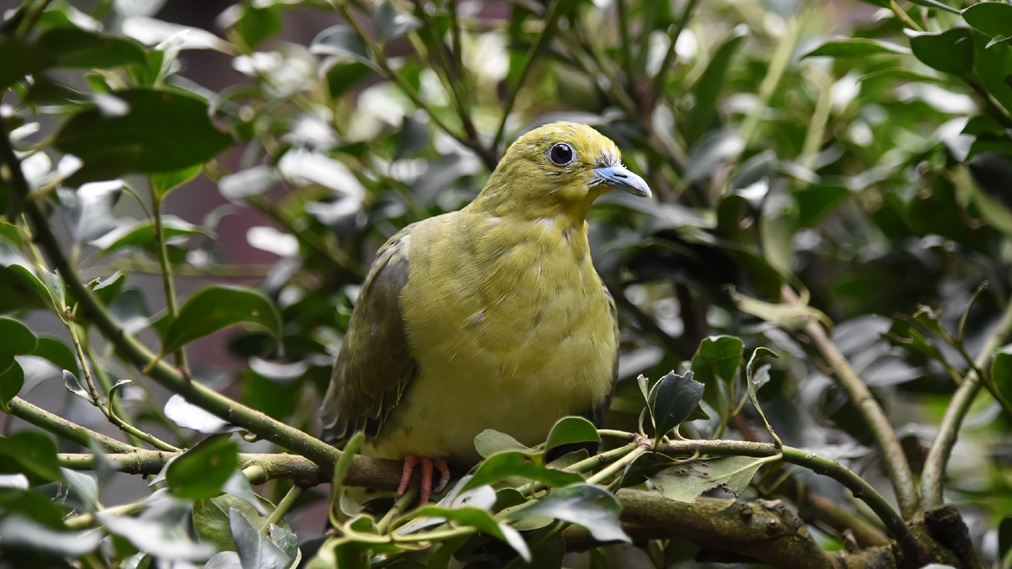
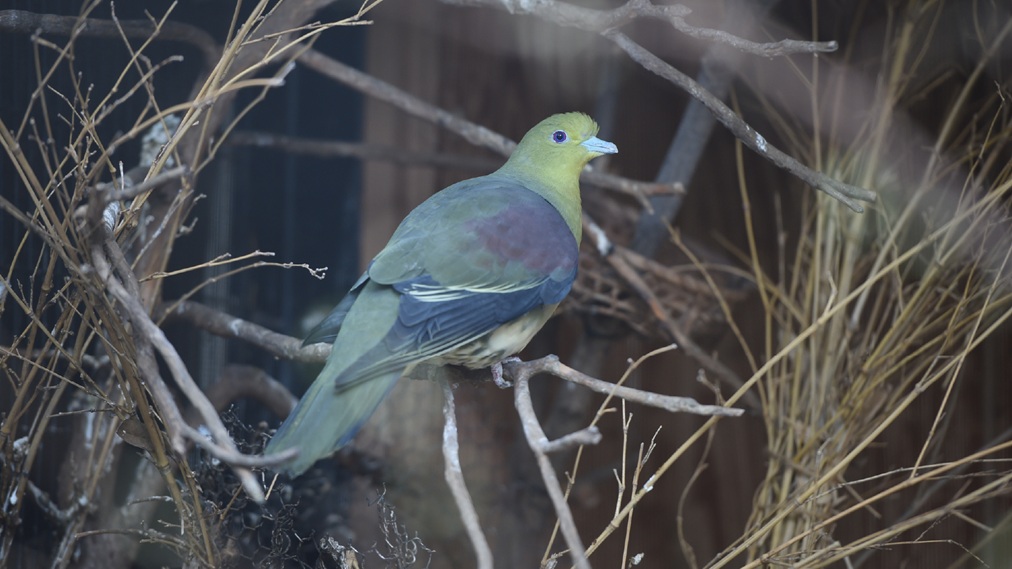
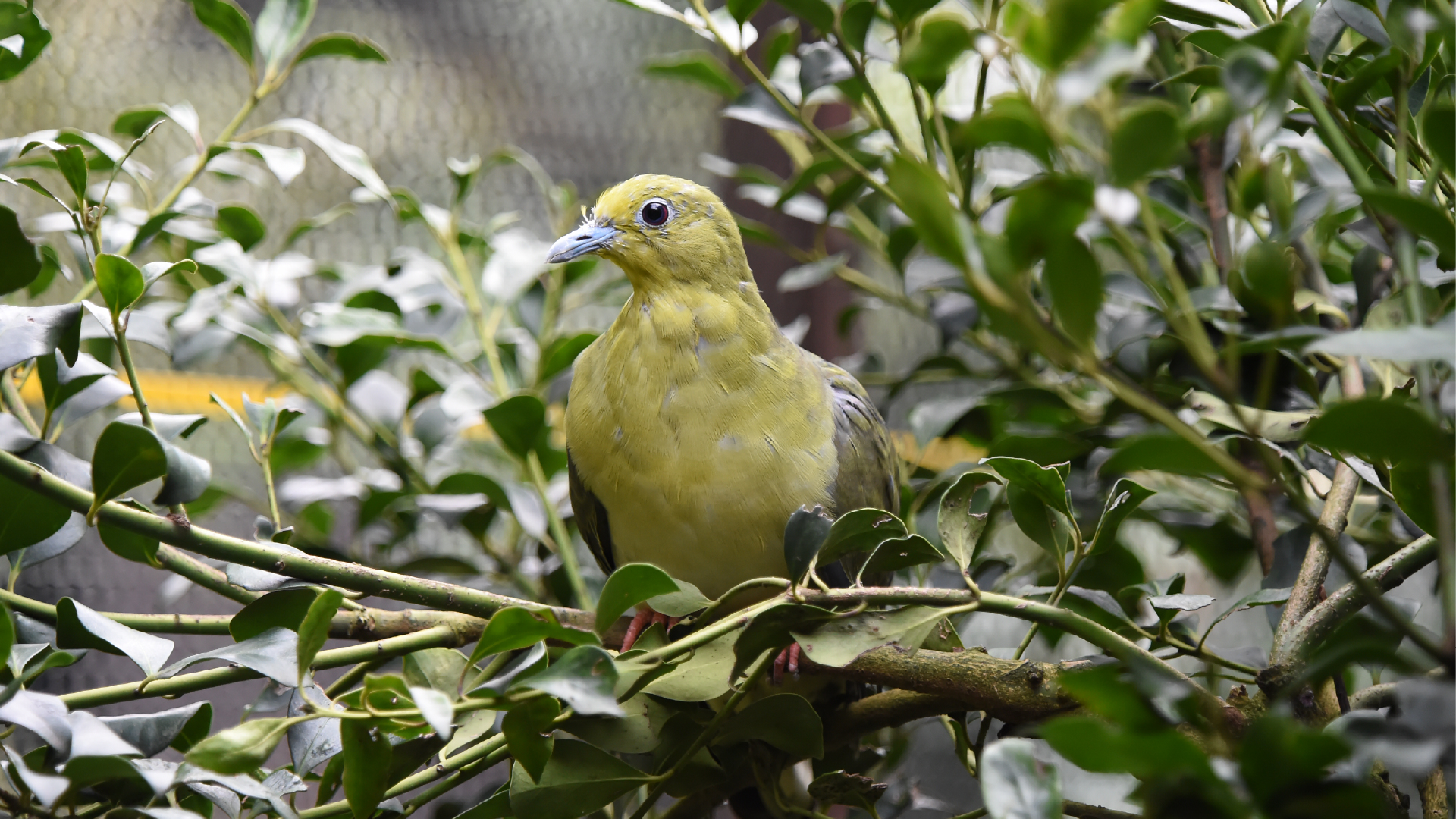
In Japan, among the pigeons that live in the mountain forests from Hokkaido to Kyushu, females are olive-colored all over, while males have reddish-purple wings. They particularly enjoy fruit, but also eat nuts, seeds, and flowers. During the breeding season, which runs from May to September, they build shallow, dish-like nests in trees by interlacing branches, and the male and female work together to raise their young.
| classification | Aves, Columbiformes, Pigeonidae |
|---|---|
| English name | White-bellied Green-pigeon |
| distribution | Japan, East Asia, Southeast Asia |
| Residence | forests and woods |
| Size |
Total length: approx. 33cm
|
| food | Fruits, seeds, flowers, etc. |
| Red List |
IUCN: LC (Least Concern)
Tokyo: NT (near threatened) |
Leaving the forest and heading to the sea in search of minerals
White-bellied Green-pigeon are known to visit coasts in flocks to drink seawater during the summer breeding season. Flying to the coast where they cannot hide puts them at risk of being attacked by predators such as Peregrine Falcon or swept away by waves, but it is thought that this is a way for them to make up for the minerals they lack in the summer when they eat a lot of fruit and seeds.
Eating fruit and growing forests
White-bellied Green-pigeon have a particular preference for fruit, and are known to eat a variety of forest fruits according to the season, such as wild cherry blossoms and brambles in the spring and dogwoods in the summer.Since many of the seeds from the eaten fruit are excreted in their droppings without being crushed, it is thought that White-bellied Green-pigeon play a role in transporting plant seeds to various distant places.