

Zoo Stock Species and the Red List
Zoo Stock Species and the Red List
Zoo Stock
This indicates that the species is included in the Second Zoo Stock Plan, which was formulated by the Tokyo Metropolitan Government in 2018. The plan sets goals for the next 10 years in three areas: "species conservation," "contribution to wildlife conservation," and "environmental education and conservation awareness." 124 animal species are included.
What is the Red List?
Based on scientific research, this is a list of wildlife classified by rank (category) indicating the degree of risk of extinction.
Livng Things Encyclopedia shows the categories (mainland and islands) assessed by the IUCN (International Union for Conservation of Nature) at the global level, the Ministry of the Environment for Japan, and the Tokyo Metropolitan Government for Tokyo.
The higher the category in each table, the higher the risk of extinction, and CR, EN, and VU are the three categories known as "endangered species." In Tokyo, species that are not at the NT (near threatened) level but are relatively rare are considered "species of concern."
|
IUCN categories |
|
|---|---|
|
EX |
extinction |
|
EW |
Extinction in the wild |
|
CR+EN |
— |
|
CR |
Serious crisis |
|
EN |
crisis |
|
VU |
emergency |
|
NT |
Near Threatened |
|
LC・○ |
Low Concern |
|
DD |
Data shortage |
|
LP |
— |
|
Japan (Ministry of the Environment) Category |
|
|---|---|
|
EX |
extinction |
|
EW |
Extinction in the wild |
|
CR+EN |
Endangered species |
|
CR |
Critically Endangered |
|
EN |
Endangered species |
|
VU |
Endangered species |
|
NT |
Near Threatened |
|
LC・○ |
— |
|
DD |
Lack of information |
|
LP |
Endangered |
|
Tokyo Category |
|
|---|---|
|
EX |
extinction |
|
EW |
Extinction in the wild |
|
CR+EN |
Endangered species |
|
CR |
Critically Endangered |
|
EN |
Endangered species |
|
VU |
Endangered species |
|
NT |
Near Threatened |
|
LC・○ |
Unranked |
|
DD |
Lack of information |
|
LP |
Endangered |
Creatures at Inokashira Park Zoo
Creatures at Inokashira Park Zoo
Humboldt Penguin
Humboldt Penguin
Spheniscus humboldti
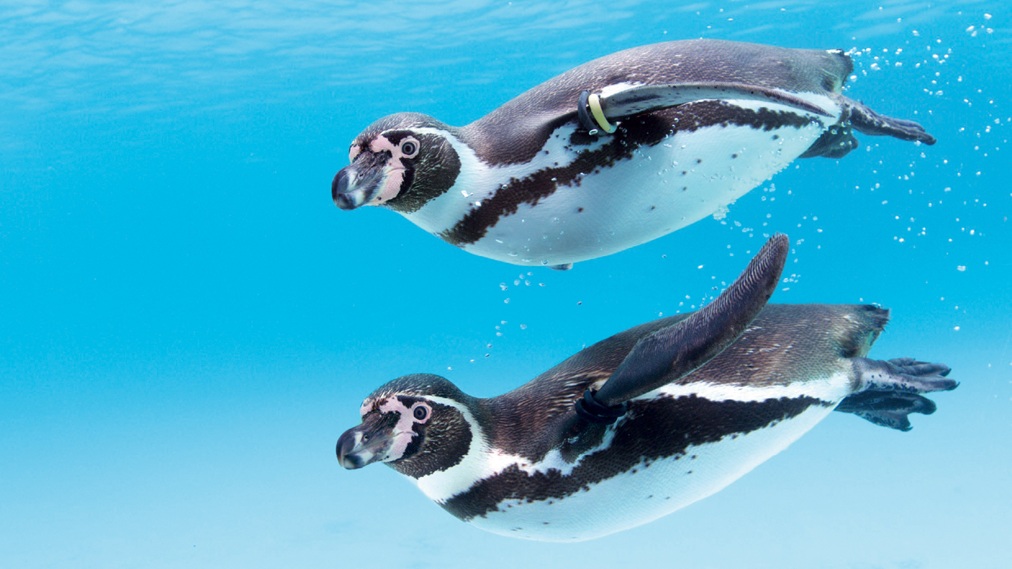
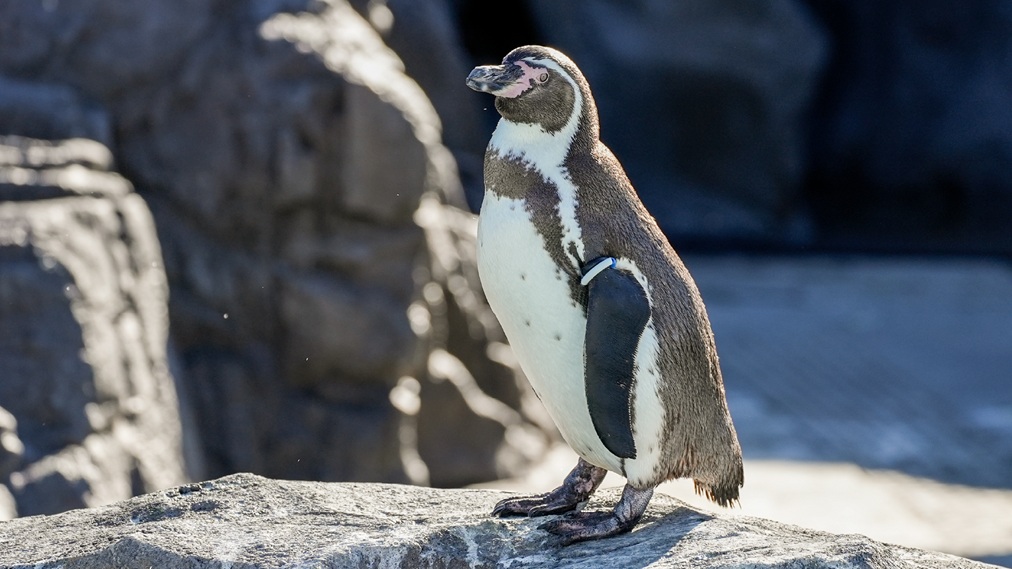
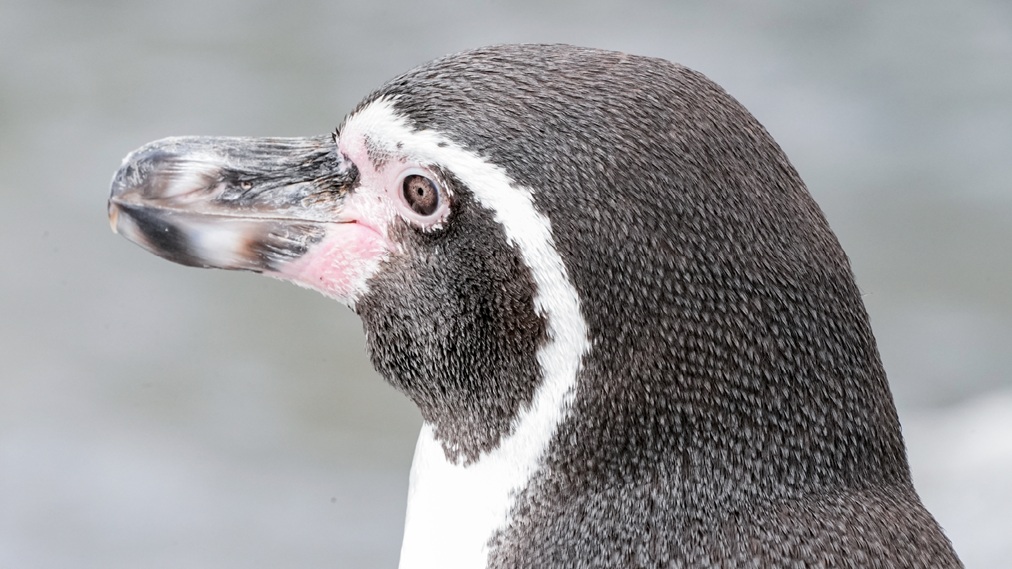
They are distributed along the Humboldt Current, which flows from south to north along the Pacific coast of South America, and live in burrows they dig in the roots of cacti and other plants on dry coastlines. In the wild, they are said to breed throughout the year. Because they are tolerant of heat, many are kept in Japanese zoos, but their wild population has declined and they are protected.
| classification | Aves, Sphenisciformes, Penguinidae |
|---|---|
| English name | Humboldt Penguin |
| distribution | South America's Pacific coasts of Peru and Chile |
| Residence | Nesting near the coast |
| Size |
Length from tip of beak to tip of tail: approx. 68cm
Weight: Approximately 4kg |
| food | They mainly eat fish such as anchovies. |
| Red List |
IUCN: VU (Very)
|
Black and White Reasons
The blackish back and whitish belly coloring of the body is called countershading, and it is thought that this makes it difficult for enemies to find them from above or below. In the case of penguins, there is also a theory that this black and white patterning has the effect of confusing schools of fish, which are their prey.