

Zoo Stock Species and the Red List
Zoo Stock Species and the Red List
Zoo Stock
This indicates that the species is included in the Second Zoo Stock Plan, which was formulated by the Tokyo Metropolitan Government in 2018. The plan sets goals for the next 10 years in three areas: "species conservation," "contribution to wildlife conservation," and "environmental education and conservation awareness." 124 animal species are included.
What is the Red List?
Based on scientific research, this is a list of wildlife classified by rank (category) indicating the degree of risk of extinction.
Livng Things Encyclopedia shows the categories (mainland and islands) assessed by the IUCN (International Union for Conservation of Nature) at the global level, the Ministry of the Environment for Japan, and the Tokyo Metropolitan Government for Tokyo.
The higher the category in each table, the higher the risk of extinction, and CR, EN, and VU are the three categories known as "endangered species." In Tokyo, species that are not at the NT (near threatened) level but are relatively rare are considered "species of concern."
|
IUCN categories |
|
|---|---|
|
EX |
extinction |
|
EW |
Extinction in the wild |
|
CR+EN |
— |
|
CR |
Serious crisis |
|
EN |
crisis |
|
VU |
emergency |
|
NT |
Near Threatened |
|
LC・○ |
Low Concern |
|
DD |
Data shortage |
|
LP |
— |
|
Japan (Ministry of the Environment) Category |
|
|---|---|
|
EX |
extinction |
|
EW |
Extinction in the wild |
|
CR+EN |
Endangered species |
|
CR |
Critically Endangered |
|
EN |
Endangered species |
|
VU |
Endangered species |
|
NT |
Near Threatened |
|
LC・○ |
— |
|
DD |
Lack of information |
|
LP |
Endangered |
|
Tokyo Category |
|
|---|---|
|
EX |
extinction |
|
EW |
Extinction in the wild |
|
CR+EN |
Endangered species |
|
CR |
Critically Endangered |
|
EN |
Endangered species |
|
VU |
Endangered species |
|
NT |
Near Threatened |
|
LC・○ |
Unranked |
|
DD |
Lack of information |
|
LP |
Endangered |
Creatures at Inokashira Park Zoo
Creatures at Inokashira Park Zoo
Amami-oshima Island Spiny Rat
Amami-oshima Island Spiny Rat
Tokudaia osimensis
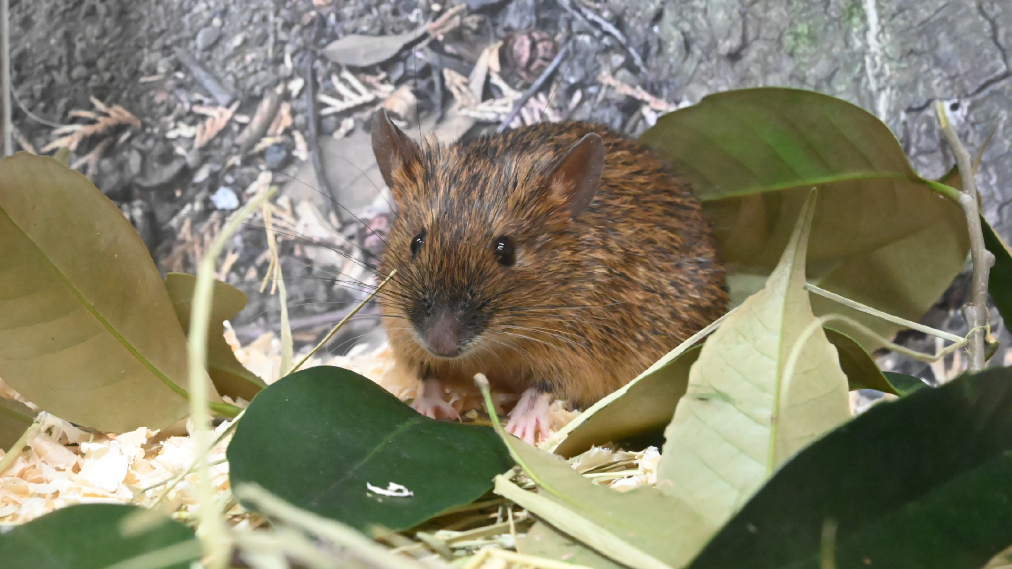
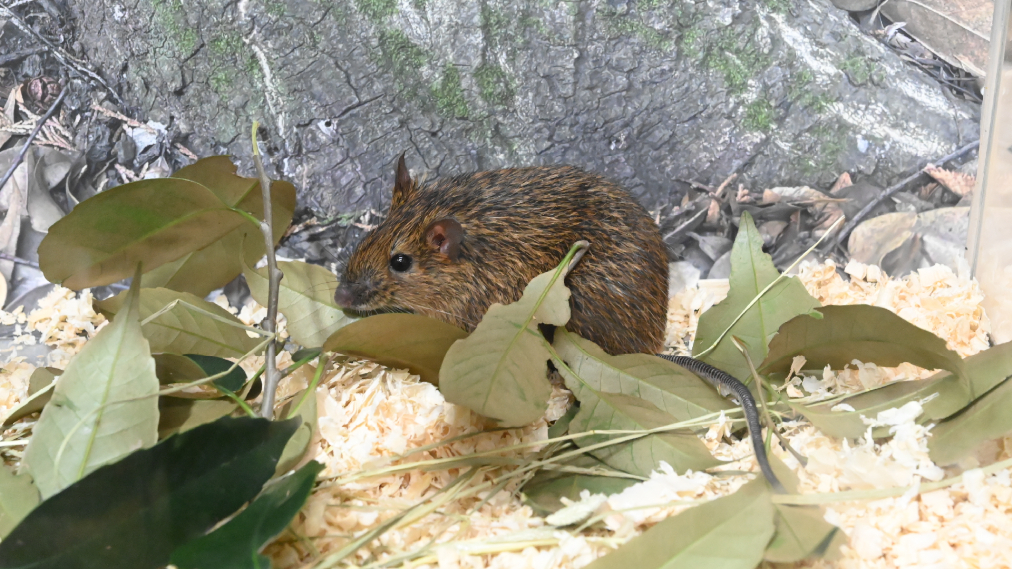
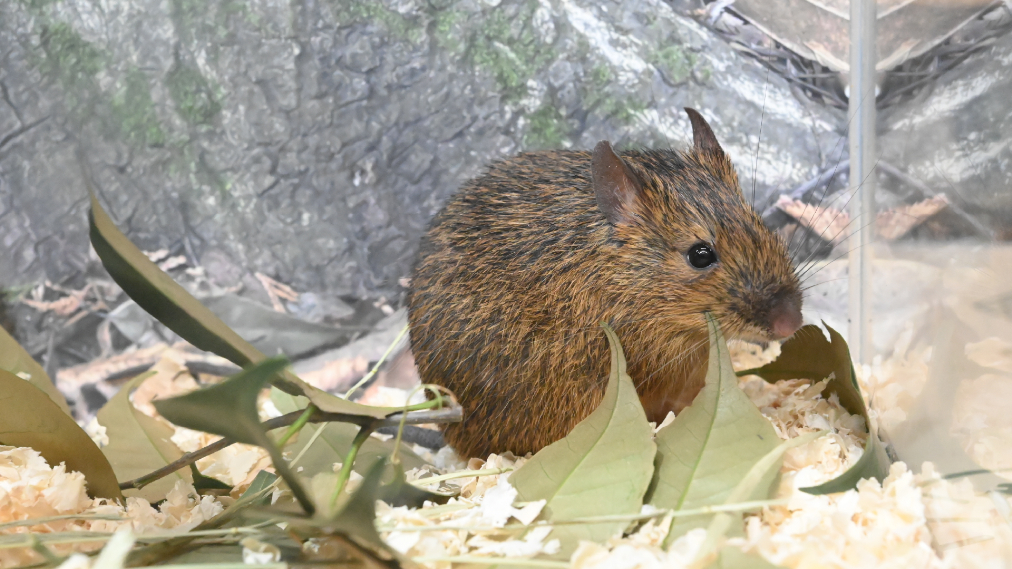
This species of spiny rat is one of only three in the world and is found only on Amami Oshima Island. It has flat, spine-like hairs about 2 cm long growing in various places on its body. During the day, it rests in nests at the base of trees, and at night it moves around, searching for nuts and insects to eat. Its numbers have declined due to the impact of mongooses and feral cats introduced to the island by humans, and conservation efforts are ongoing at zoos throughout Japan.
| classification | Mammalia, Rodentia, Muridae |
|---|---|
| English name | Amami-oshima Island Spiny Rat |
| distribution | Japan (Amami Oshima, Kagoshima Prefecture) |
| Residence | forest |
| Size |
Head torso length: 8-15cm
|
| food | Nuts, insects, etc. |
| Red List |
IUCN: EN (crisis)
Japan: EN (Endangered) |
Good at jumping
While most rodents walk by alternating between their front and back legs, Amami-oshima Island Spiny Rat walks by hopping along with its feet together.When it encounters its natural enemy, the viper, it will jump up about 60cm to dodge its attack.
*Video available