

Zoo Stock Species and the Red List
Zoo Stock Species and the Red List
Zoo Stock
This indicates that the species is included in the Second Zoo Stock Plan, which was formulated by the Tokyo Metropolitan Government in 2018. The plan sets goals for the next 10 years in three areas: "species conservation," "contribution to wildlife conservation," and "environmental education and conservation awareness." 124 animal species are included.
What is the Red List?
Based on scientific research, this is a list of wildlife classified by rank (category) indicating the degree of risk of extinction.
Livng Things Encyclopedia shows the categories (mainland and islands) assessed by the IUCN (International Union for Conservation of Nature) at the global level, the Ministry of the Environment for Japan, and the Tokyo Metropolitan Government for Tokyo.
The higher the category in each table, the higher the risk of extinction, and CR, EN, and VU are the three categories known as "endangered species." In Tokyo, species that are not at the NT (near threatened) level but are relatively rare are considered "species of concern."
|
IUCN categories |
|
|---|---|
|
EX |
extinction |
|
EW |
Extinction in the wild |
|
CR+EN |
— |
|
CR |
Serious crisis |
|
EN |
crisis |
|
VU |
emergency |
|
NT |
Near Threatened |
|
LC・○ |
Low Concern |
|
DD |
Data shortage |
|
LP |
— |
|
Japan (Ministry of the Environment) Category |
|
|---|---|
|
EX |
extinction |
|
EW |
Extinction in the wild |
|
CR+EN |
Endangered species |
|
CR |
Critically Endangered |
|
EN |
Endangered species |
|
VU |
Endangered species |
|
NT |
Near Threatened |
|
LC・○ |
— |
|
DD |
Lack of information |
|
LP |
Endangered |
|
Tokyo Category |
|
|---|---|
|
EX |
extinction |
|
EW |
Extinction in the wild |
|
CR+EN |
Endangered species |
|
CR |
Critically Endangered |
|
EN |
Endangered species |
|
VU |
Endangered species |
|
NT |
Near Threatened |
|
LC・○ |
Unranked |
|
DD |
Lack of information |
|
LP |
Endangered |
Creatures at Inokashira Park Zoo
Creatures at Inokashira Park Zoo
Japanese Tree Frog
Japanese Tree Frog
Dryophytes leopardus
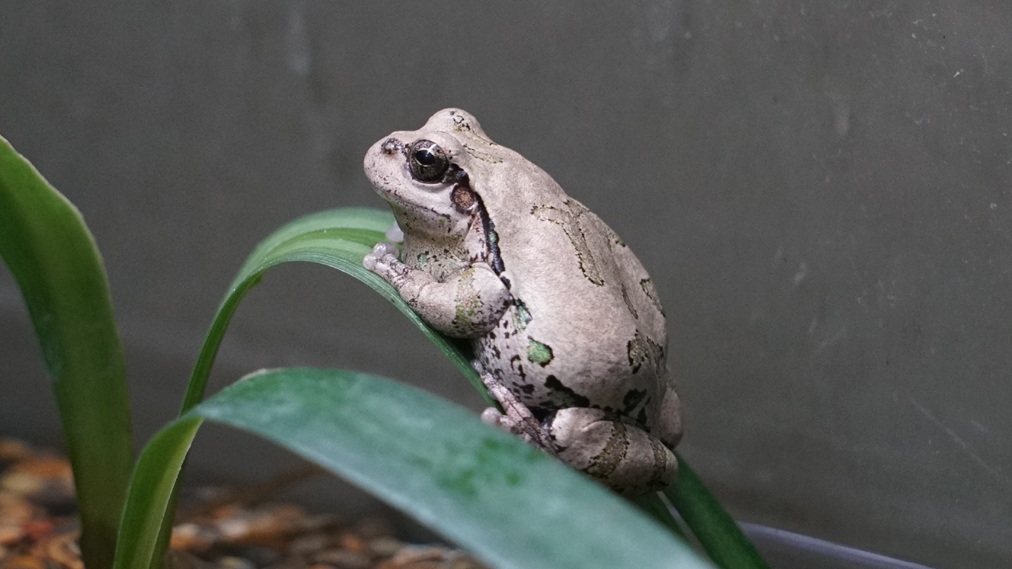
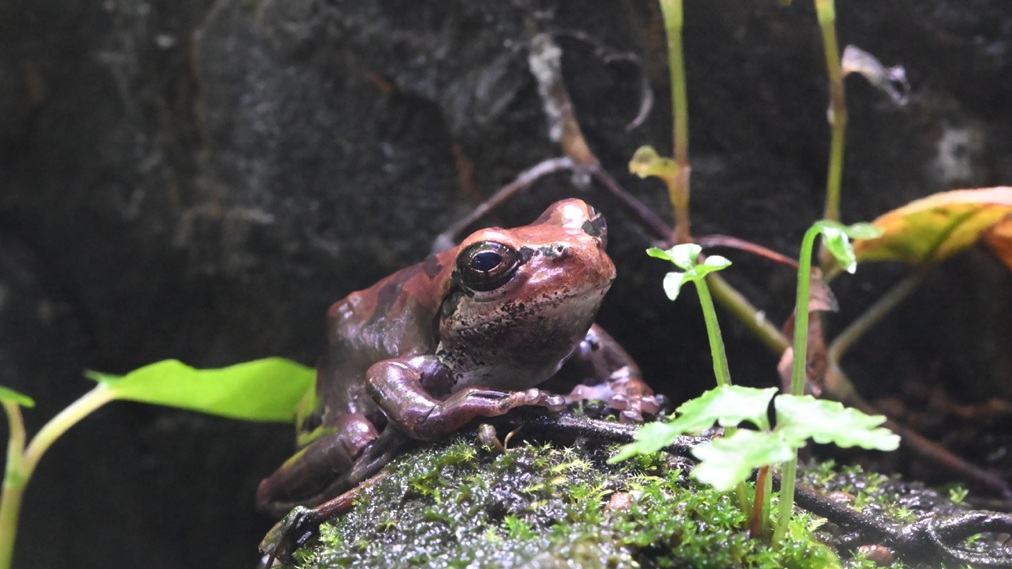
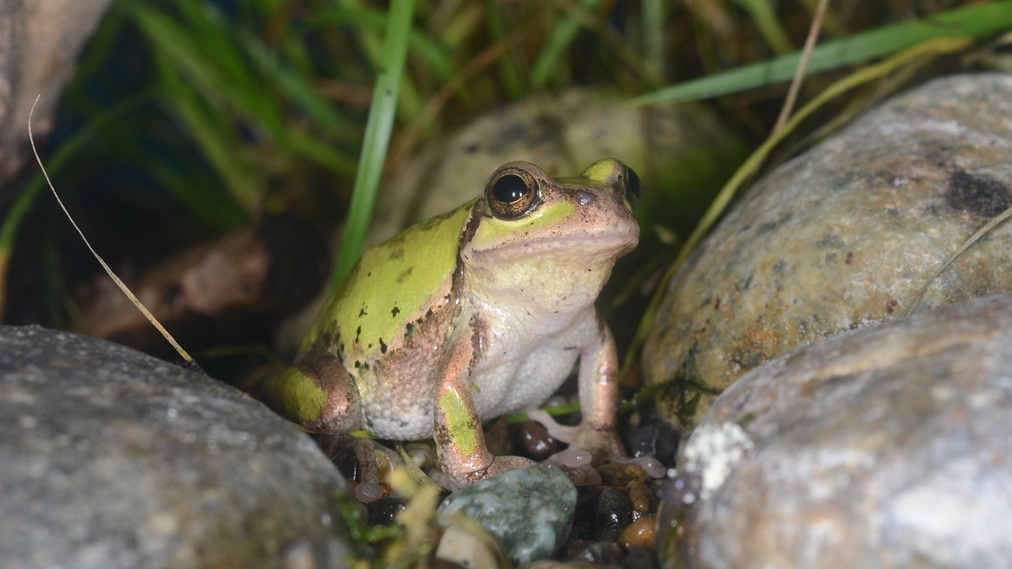
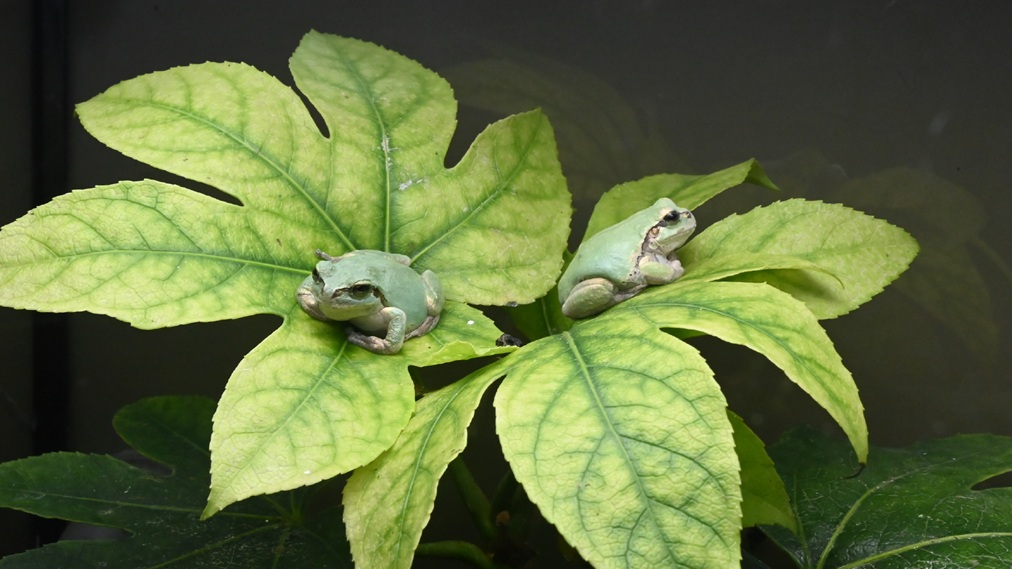
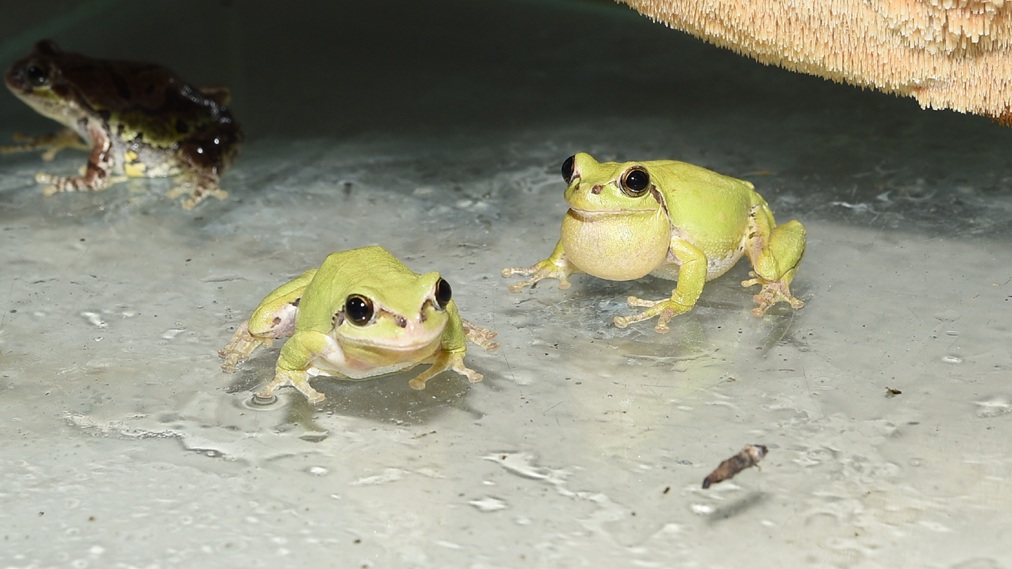
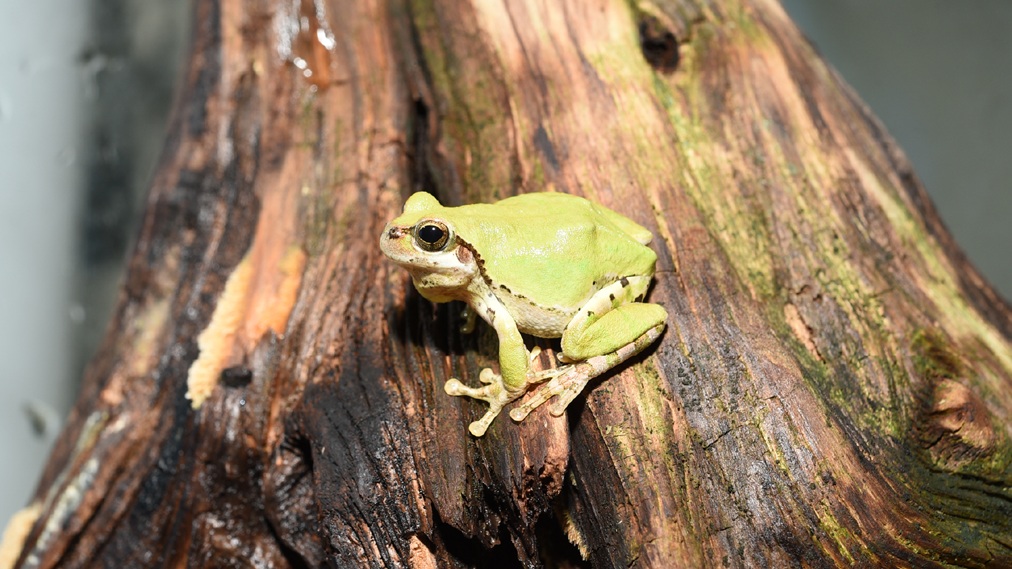
It got its name from the fact that males often cry when it starts to rain. They are usually green, but change color to suit their environment, turning grayish-brown on tree trunks. Japanese Tree Frog were previously thought to be a single species, but in 2016 it was reported that there were genetic differences between the eastern and western parts of the Kinki region, and in 2025 those living in the eastern and western parts were listed as separate species.
| classification | Amphibians, Anura, Hylidae |
|---|---|
| English name | East Japan Tree Frog |
| distribution | Japanese archipelago (east of the Kinki region), Sakhalin |
| Residence | On shrubs and herbs |
| Size |
Body length: Males 2.2–3.9 cm, females 2.6–4.5 cm
|
| food | Larvae: Omnivorous, eating algae, detritus, animal carcasses, etc. After metamorphosis: Eats spiders, insects, and other animals |
| Red List |
IUCN: LC (Least Concern)
|
fingertip suction cups
Each fingertip has a suction cup that allows it to stick to walls and trees and climb skillfully.