

Until Azure-winged Magpie Magpie's Nest is Completed - Part 2: "The Story of 2025"
March 2, 2026
At Inokashira Park Zoo two Azure-winged Magpie were kept together in the "Wild Bird Forest" from 2022, and in November 2023, they were moved to the "Japanese Bird House," where they could be kept as a pair. In the first installment of this series, we reported on the nest-building efforts of Azure-winged Magpie-winged Magpie pair kept in the Japanese Bird House in 2023 and 2024. This time, we will report on the nests Azure-winged Magpie built in 2025.
Initiatives for 2025
Based on the previous year's nesting experience, we had planned to breed the birds in the same cage again in 2025. However, due to construction work on the Japanese bird enclosure from January to April, we had to temporarily move the two birds to another location. Taking advantage of the time when the two birds were away, we installed two pieces of trical netting inside the cage to serve as nesting platforms.
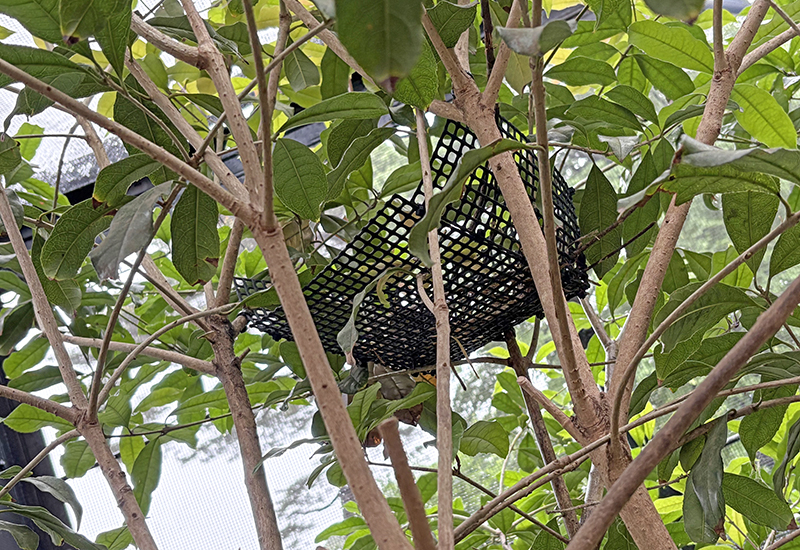
One nest was placed in a higher location along the wall where they had built a nest the previous year, and the other in a location that blends into the wood, similar to the environment of a wild nest. Furthermore, the size of the nest platform was made smaller to more closely resemble the size of a wild nest. These are improvements based on last year's experience.
Furthermore, during the breeding season (May to August), the amount of food given to the females was gradually increased, eventually reaching approximately 3 to 5 times the normal amount. By adding calcium supplements and providing larger quantities of insects that are not normally given, nutritional supplementation can be enhanced, improving the condition of the eggshells and supporting the physical strength of the females, who are expended during egg-laying.
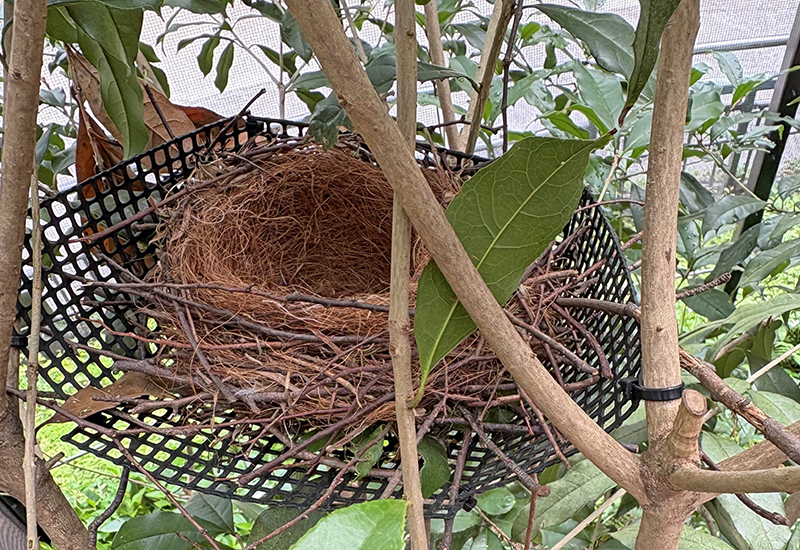
After the construction was finished, we returned the two birds to their cage. When May arrived, the breeding season, the two birds began gathering branches for the nest platform. The location they chose was the nest platform that we had set up to blend in with the tree, as shown in the photo above. Last year, it took about two weeks to complete the nest, but this time it was completed in about 10 days. This may be because we made the nest platform smaller.
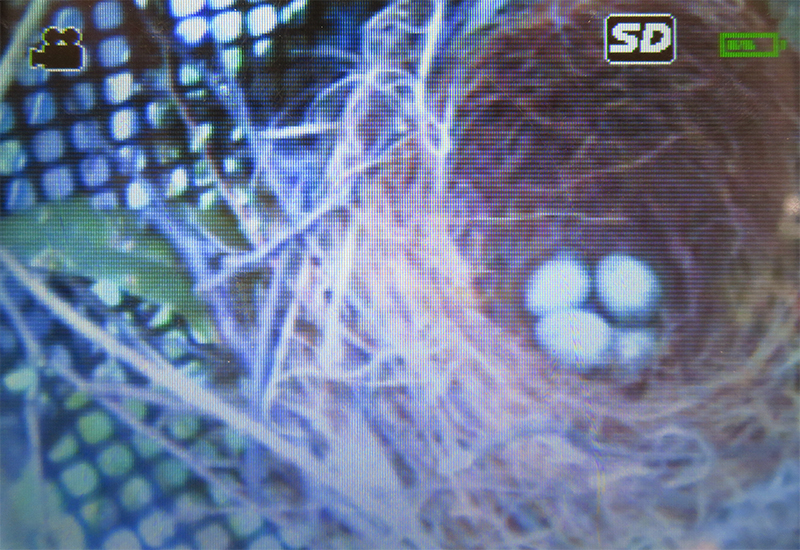
About five days after the nest was completed, I used a scope camera (a small camera with a lens at the end of a long, thin cable) to take a look inside to see what kind of nest it was. I found that four eggs had been laid in the nest. Two days later, the female sat on top of the nest and began to incubate the eggs.
Wild Azure-winged Magpie build their nests by weaving branches together in thickets of trees about 3 to 5 meters high. While it's difficult to replicate this height in captivity, the fact that they built their nest in a location that seemed as peaceful as possible was a very pleasing result for the zookeepers.
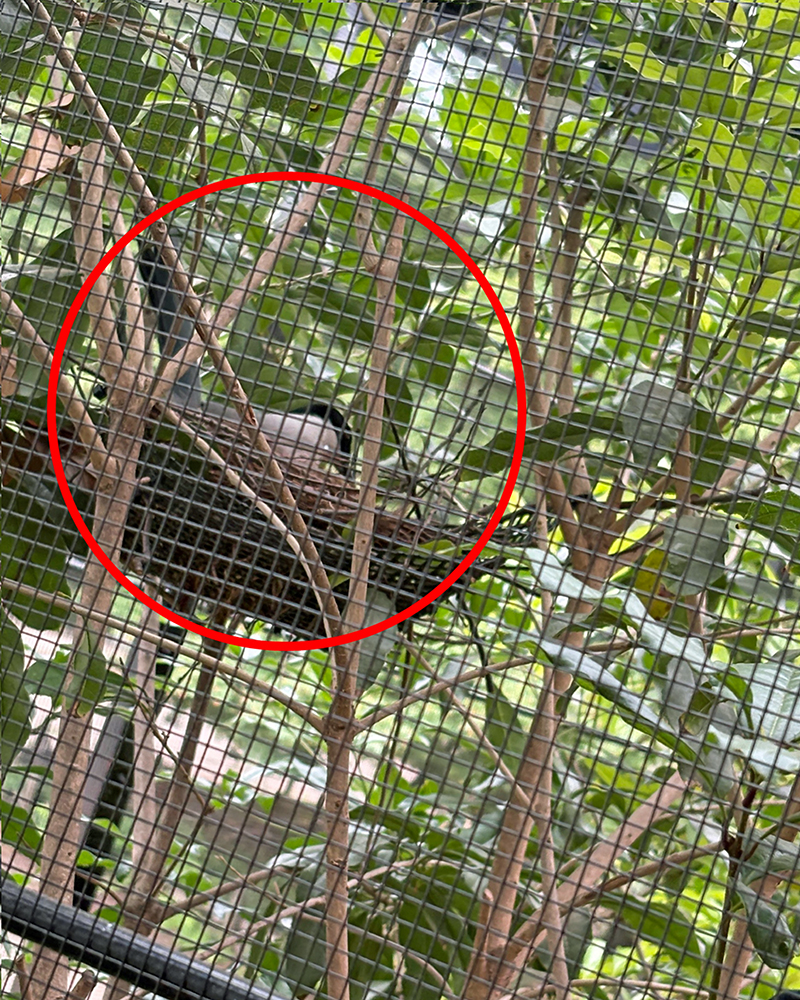
The female continued to incubate the eggs for about 20 more days, but unfortunately, they did not hatch. It is thought that the eggs were not adequately warmed because the female frequently left the nest.
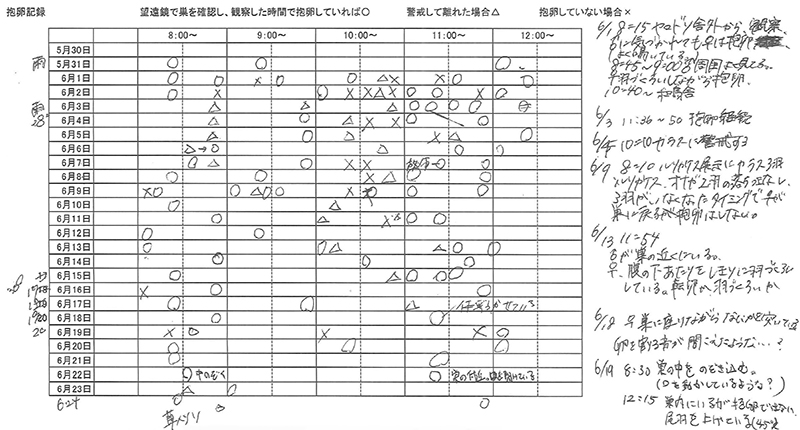
As was the case the previous year, Azure-winged Magpie become especially wary during the breeding season. When we recorded the behavior of the females incubating their eggs, we found that they would leave the nest whenever a staff member even briefly entered their field of vision, and then return to the nest to incubate the eggs again. There were hardly any days when they remained calm and incubating the eggs all day long.
We checked the nest 20 days later. The initial four eggs had decreased to three, for reasons unknown. Two of the collected eggs were fertilized, but unfortunately, their development had stopped midway. Even with staff performing necessary tasks such as feeding and checking on the birds, creating an environment where Azure-winged Magpie can safely incubate their eggs has become our next challenge.
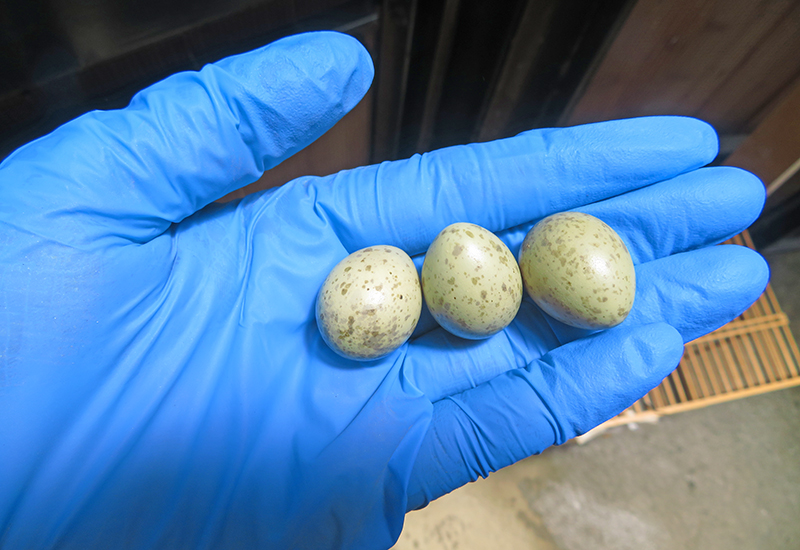
Although the result was disappointing, Azure-winged Magpie managed to build a magnificent nest similar to a wild nest, as shown in the photo, laid eggs inside, and successfully incubated all three eggs without breaking them. Seeing the nest-building process, where the two birds overcame challenges to create such a nest after gradually improving their environment since 2023, gave us confidence that the environment we provided was the right one.
Azure-winged Magpie 's breeding season occurs only once a year. While tackling new challenges, we will continue to strive to provide a better environment for Azure-winged Magpie as we aim for their continued breeding.
[Inokashira Park Zoo Zoo and Zoo Exhibitor]
(March 2, 2026)