

Until Azure-winged Magpie Magpie's Nest is Completed - Part 1: "Stories Up to 2024"
December 24, 2025
Azure-winged Magpie-winged Magpie is a type of crow characterized by its blue-gray body, black cap-like head, and long tail feathers. Despite its beautiful appearance, it is also known for its noisy "gyu-gyu" cry. They live in flocks of a few to 20 birds, and in Japan they are found mainly on the eastern side of Honshu.
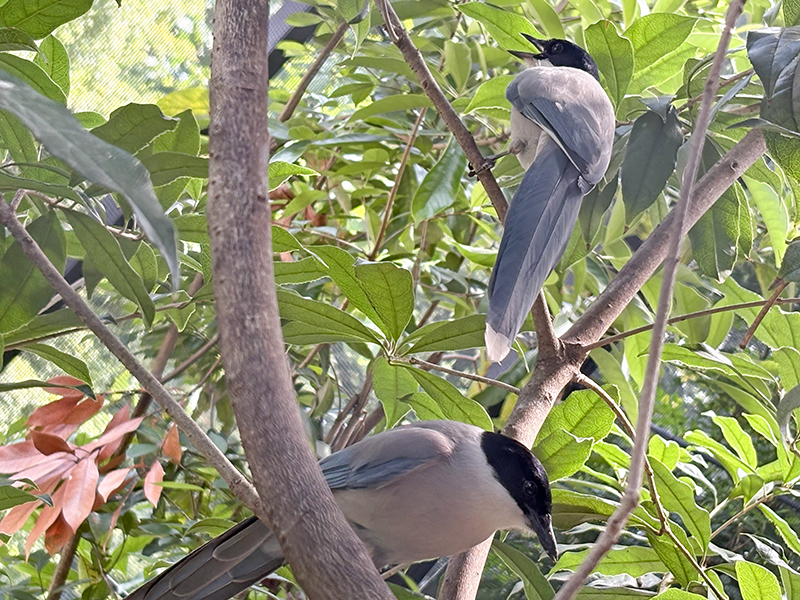
Since 2022, Inokashira Park Zoo has been housing two Azure-winged Magpie Magpies in its Wild Bird Forest, where they have been exhibited alongside other birds such as pheasants and starlings. These two birds were rescued due to illness or injury, but despite being rescued in different years and locations, they get along well and have been frequently seen together since being housed together. In this two-part article, we will be reporting on the nest-building process of these two birds during their breeding season.
Breeding in 2023
The breeding season for Azure-winged Magpie winged Magpies is from May to August. During the breeding season, the female will first sing to ask for food, and the male will then hand it over to her (courtship feeding), and the pair will then work together to build a nest. In June 2023, about a year after they began living together, breeding behavior was confirmed for the first time at the Wild Bird Forest.
During this time, Azure-winged Magpie-winged Azure-winged Magpie become more aggressive than usual. The pair repeatedly threatened and attacked other birds living with them, particularly pheasants. Unable to build a nest in a calm environment, they carried the branches they needed for nesting material all over the place, making it impossible to settle on a specific location.
So, staff members tried to build a nesting platform out of branches in a place where branches were relatively often transported, and set it up. However, perhaps because people had entered during the breeding season when the birds are more wary, the nesting platform was not used, and the birds did not build a nest on their own.
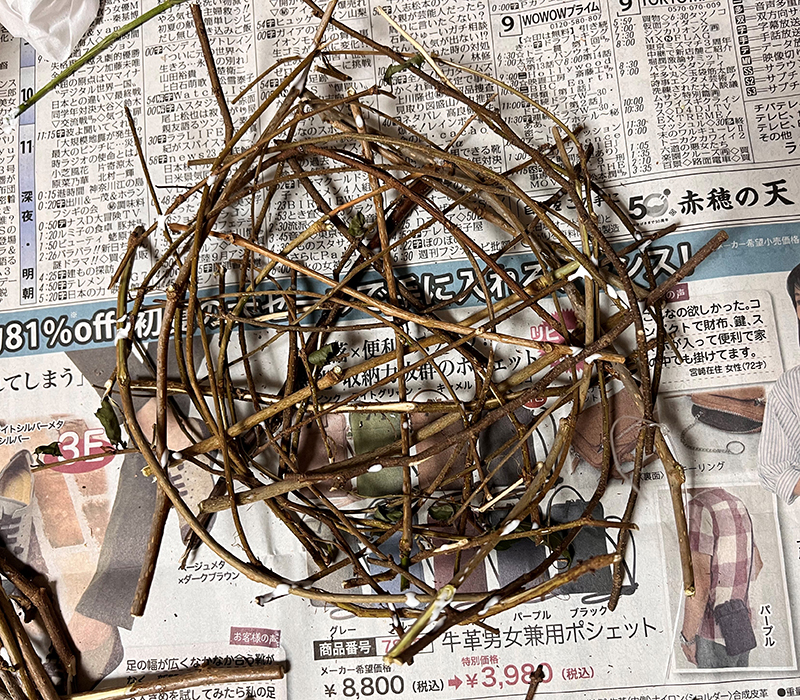
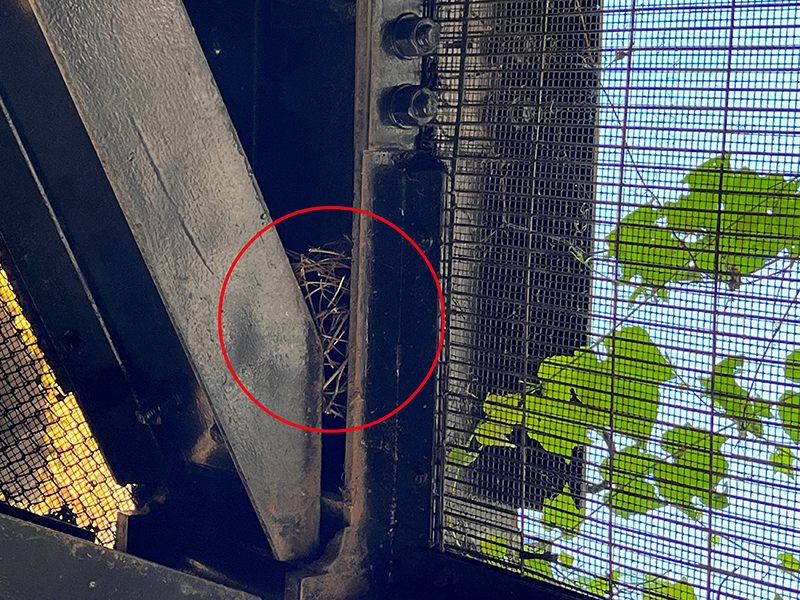
(Looking up from below)
In the end, the birds laid eggs on the ground and on feeders, bringing the breeding season to an end in 2023. As the two birds showed no interest in the eggs, staff collected them and warmed them in an incubator, and one egg was able to hatch, but unfortunately it died five days after hatching.
In the end, the birds laid eggs on the ground and on feeders, bringing the breeding season to an end in 2023. As the two birds showed no interest in the eggs, staff collected them and warmed them in an incubator, and one egg was able to hatch, but unfortunately it died five days after hatching.
There has never been a record of a pair of Azure-winged Azure-winged Magpie ever being seen mating or even mating at our zoo. Therefore, I had to consider how to create a breeding environment within the zoo's facilities. First, I set out to create an environment where Azure-winged Magpie could concentrate on breeding, and began working on this in preparation for next year's breeding season.
Initiatives for 2024: Aiming for an environment where people can concentrate
To eliminate the impact on other birds, they were moved to the Japanese Bird House, where they can be kept alone, in November 2023. Furthermore, since the female did not use the nest last time, it was thought that there must have been a problem with the nesting platform, so before moving the two birds, staff decided to install a nesting platform in a location where Azure-winged Magpie was likely to build a nest.
Three locations were chosen, including a round bamboo basket placed on top of a tree fork and a plastic net placed high up along a wall. The two birds climbed onto the nesting platform to test their comfort, and ultimately chose the plastic netting nesting platform along the wall. The birds were supported in building their nests by being given twigs and unraveled fibers from commercially available palm rope every day as nesting material.
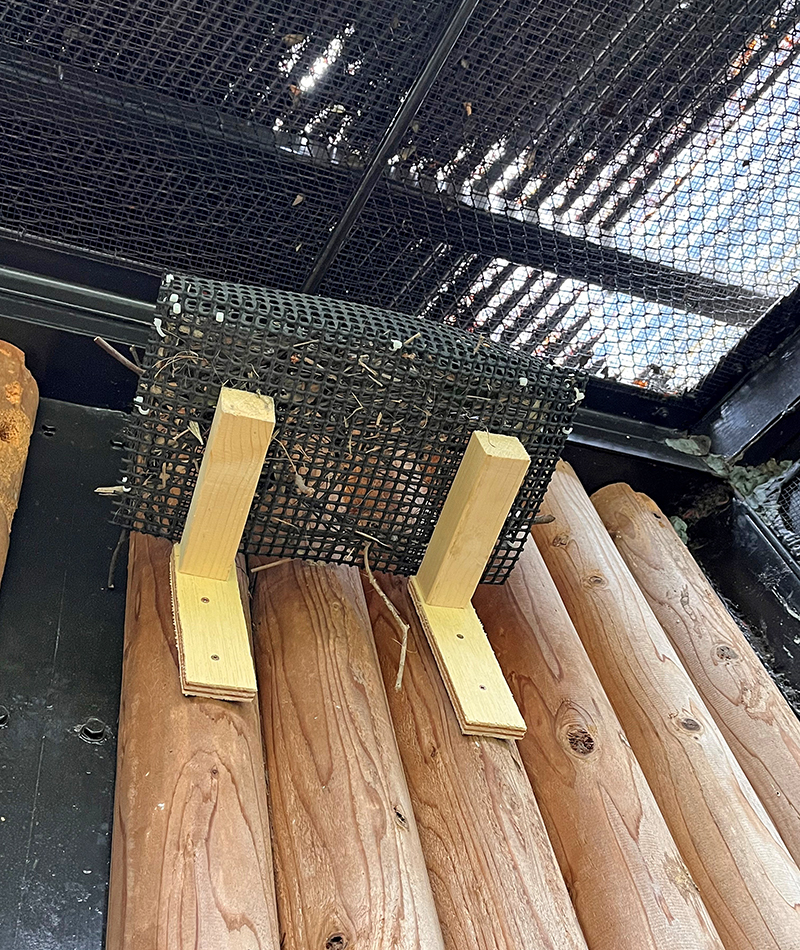
In the wild, Azure-winged Azure-winged Magpie live in groups, with other males acting as "helpers" to help build nests and raise young. Therefore, I was skeptical about whether two birds could build a sturdy nest without helpers.
When we observed the two birds during the breeding season, we noticed that they had started carrying nesting materials such as branches and palms, and within about two weeks had built a magnificent nest like the one pictured. We were relieved, but at the same time, we were amazed that they were able to build a nest without any helpers.
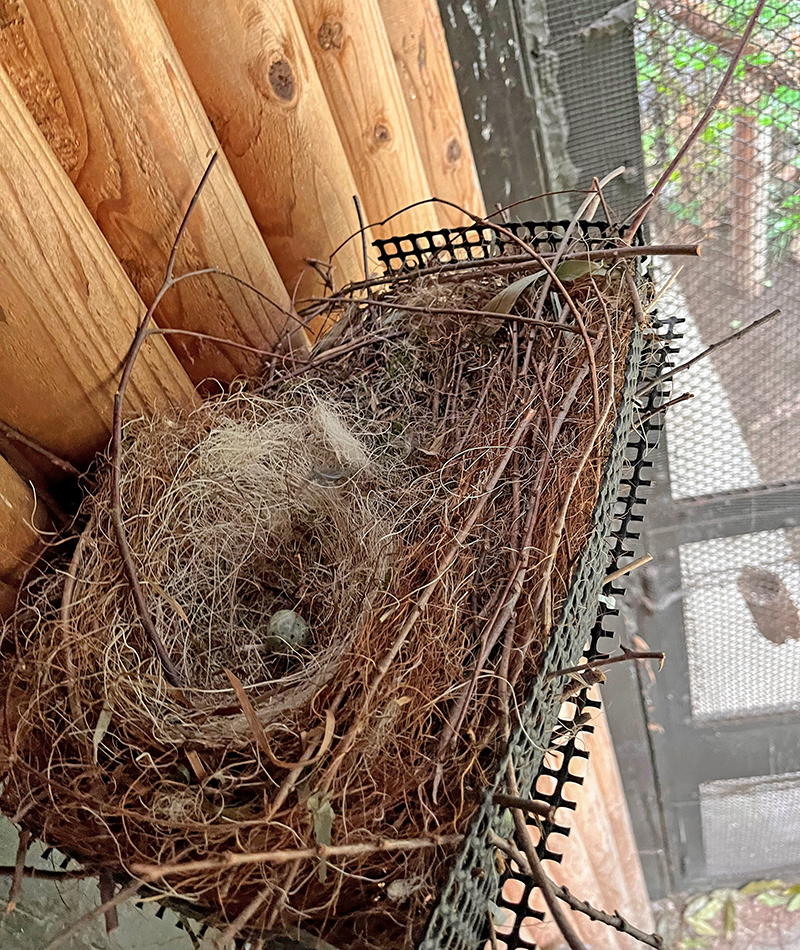
I hoped that this would lead to successful breeding, but as soon as the nest was built, the female seemed to lose interest in it, and my hunch was correct. Just like the previous year, the female laid her eggs on the ground instead of in the nest. This indicated that the nest was not a safe place for Azure-winged Magpie winged Magpie to lay eggs. So I once placed dummy eggs (fake eggs that resembled the real thing) in the built nest to induce egg-laying in the nest, but the result was the same.
Possible reasons for this include the lack of places to hide around the nest and the large size of the nest platform, which made it difficult for them to settle in. However, the fact that the environment was changed from the previous year and the two birds were able to complete a fine nest can be said to be a major step forward towards breeding.
For the 2025 breeding season, the next challenge was to create an environment conducive to nest building and egg laying. What were the results of tackling this challenge? We'll tell you more in Part 2 (Click here for Part 2).
[Inokashira Park Zoo Zoo and Zoo Exhibitor]